Meal Prep Ideas
Back to Home Page

Thai Peanut Chicken Bowls

Make Thai Peanut Chicken Bowls with tender chicken, fresh vegetables, rice, and creamy peanut sauce. An easy, flavorful meal prep recipe!

Thai Peanut Chicken Bowls with noodles, sesame seeds, and sliced green onions in a ceramic bowl.

Get This Recipe Summarized by AI

Ask your favorite AI assistant to summarize this recipe, suggest swaps, or scale it up — one click away.

We copy the prompt to your clipboard too — just paste (Ctrl/Cmd+V) if it doesn't appear automatically.

Thai Peanut Chicken Bowls combine tender chicken, fresh vegetables, fluffy rice, and creamy peanut sauce in one satisfying meal. The sauce combines savory soy sauce, sweet honey, tangy lime juice, and rich peanut butter for a balanced flavor in every bite. The chicken is seasoned and cooked until golden, then coated in homemade Thai peanut sauce. Served over rice with crunchy vegetables and fresh toppings, these bowls are perfect for lunch, dinner, or meal prep.

What Makes These Thai Peanut Chicken Bowls So Satisfying?

  • Creamy Thai peanut sauce: Peanut butter, lime juice, soy sauce, and honey create a smooth sauce with a balanced sweet and savory flavor.
  • Tender, juicy chicken: Bite-sized chicken pieces cook quickly and absorb the seasoning for plenty of flavor.
  • Fresh, crunchy vegetables: Cabbage, carrots, cucumber, and bell peppers add color, freshness, and texture.
  • Easy to prepare: Simple ingredients and straightforward steps make this recipe ideal for busy days.
  • Great for meal prep: Prepare the chicken, rice, vegetables, and sauce ahead of time for convenient meals throughout the week.
  • Easy to customize: Switch up the protein, vegetables, grains, and toppings to suit your preferences.

If you enjoy flavorful chicken dinners with a savory sauce, Sesame Chicken is another delicious option to add to your weekly meal plan.
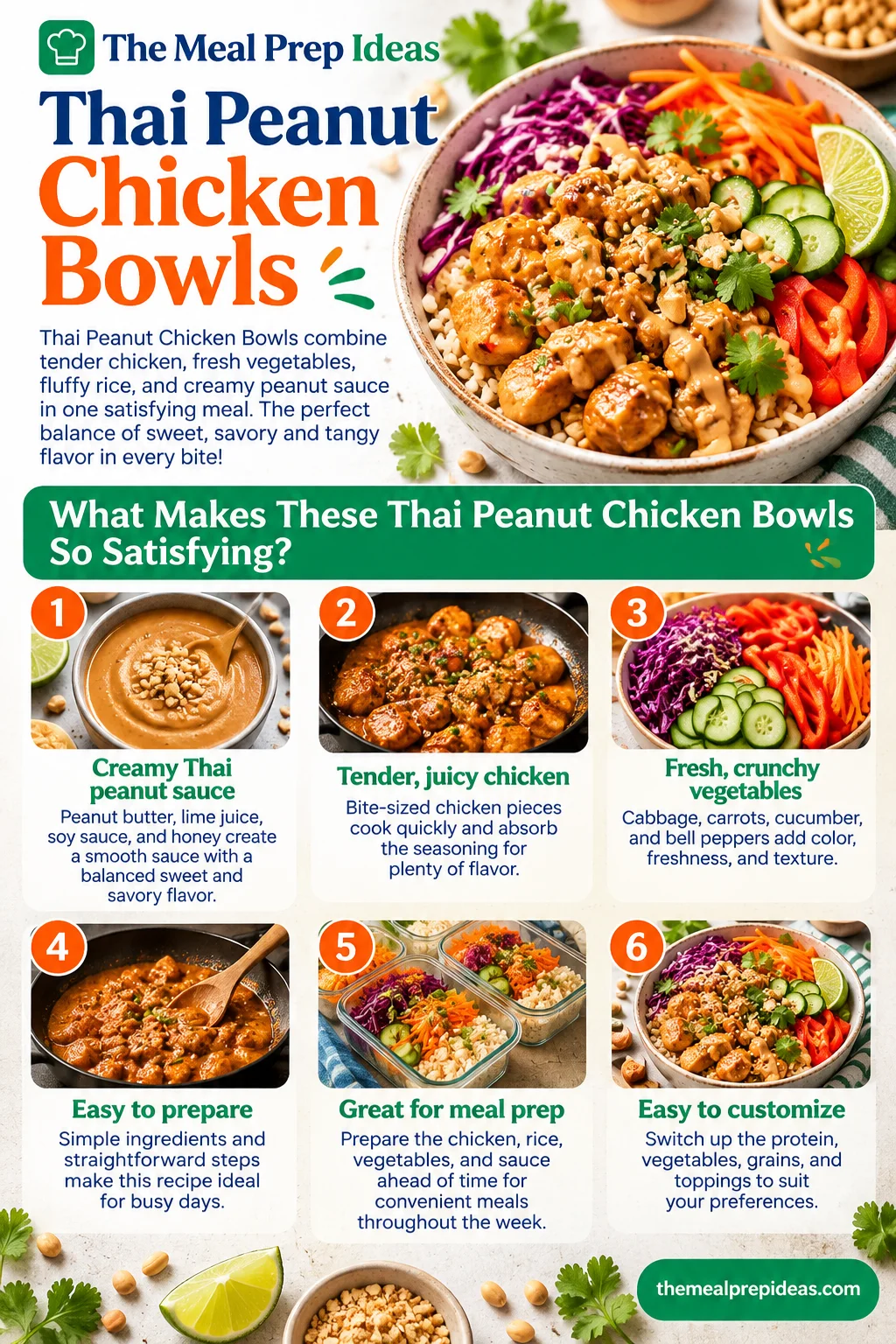
Thai Peanut Chicken Bowls with tender chicken, colorful vegetables, rice, and creamy peanut sauce.

Thai Peanut Chicken Bowls Recipe

Time

  • Prep Time: 15 minutes
  • Cook Time: 20 minutes
  • Total Time: 35 minutes
  • Servings: 4

Ingredients

For the chicken:

  • 1 lb (450 g) boneless, skinless chicken breast, cut into bite-sized pieces
  • 1 tablespoon olive oil
  • 1 tablespoon soy sauce
  • 1 teaspoon garlic powder
  • ½ teaspoon ground ginger
  • ¼ teaspoon black pepper

For the Thai peanut sauce:

  • ½ cup creamy peanut butter
  • 3 tablespoons low-sodium soy sauce
  • 2 tablespoons lime juice
  • 1 tablespoon honey
  • 1 tablespoon rice vinegar
  • 1 teaspoon sesame oil
  • 2 cloves garlic, minced
  • 1 teaspoon freshly grated ginger
  • ¼ cup warm water, or as needed
  • 1 teaspoon sriracha (optional)

For the bowls:

  • 2 cups uncooked jasmine rice
  • 1 medium carrot, shredded
  • 1 cup red cabbage, thinly sliced
  • 1 medium cucumber, sliced
  • 1 red bell pepper, thinly sliced
  • 2 green onions, sliced

Optional toppings:

  • ¼ cup chopped roasted peanuts
  • 2 tablespoons fresh cilantro, chopped
  • Lime wedges
  • Sesame seeds
  • Extra peanut sauce

Instructions

  1. 1Cook the rice: Rinse the jasmine rice under cold water until the water runs mostly clear. Cook according to the package instructions, fluff with a fork, and set aside.
  2. 2Season the chicken: Place the chicken pieces in a bowl with olive oil, soy sauce, garlic powder, ground ginger, and black pepper. Toss until evenly coated.
  3. 3Make the peanut sauce: Whisk together the peanut butter, soy sauce, lime juice, honey, rice vinegar, sesame oil, garlic, ginger, and sriracha, if using. Gradually add warm water until the sauce is smooth and pourable.
  4. 4Cook the chicken: Heat a large skillet over medium-high heat. Add the seasoned chicken in a single layer and cook for about 6–8 minutes, stirring occasionally, until golden and cooked through to an internal temperature of 165°F (74°C).
  5. 5Coat with sauce: Reduce the heat to low and add about half of the peanut sauce to the cooked chicken. Stir gently until the chicken is evenly coated and warmed through.
  6. 6Prepare the vegetables: Shred the carrot and cabbage, slice the cucumber and bell pepper, and chop the green onions and cilantro.
  7. 7Assemble the bowls: Divide the cooked rice between four bowls. Add the chicken, cabbage, carrots, cucumber, and bell pepper.
  8. 8Add toppings and serve: Drizzle the remaining peanut sauce over the bowls. Finish with chopped peanuts, green onions, cilantro, sesame seeds, and lime wedges, if desired. Serve immediately.

Notes

  • Use creamy peanut butter: Smooth peanut butter makes a silky sauce that coats the chicken evenly.
  • Adjust the sauce consistency: Add warm water gradually until the sauce is easy to drizzle without becoming too thin.
  • Avoid overcooking the chicken: Cut the chicken into evenly sized pieces and cook until it reaches an internal temperature of 165°F (74°C).
  • Balance the flavors: Add more lime juice for tanginess, honey for sweetness, or soy sauce for a deeper savory flavor.
  • Control the spice: Sriracha is optional, so leave it out for a milder sauce or add more if you prefer extra heat.
  • Keep the vegetables fresh: Slice the vegetables shortly before serving to maintain their crunch.
  • Store the sauce separately: When preparing bowls ahead of time, keep the peanut sauce in a separate container to preserve the texture of the other ingredients.
  • Check ingredient labels: Use suitable gluten-free soy sauce or tamari if needed, and check packaged ingredients for potential allergens.

Nutrition

Estimated nutrition per serving:

  • Calories: 650 kcal
  • Protein: 43 g
  • Carbohydrates: 73 g
  • Fat: 22 g
  • Fiber: 6 g
  • Sugar: 12 g
  • Sodium: 850 mg

These values are estimates and may vary depending on the ingredients, brands, serving sizes, and amount of peanut sauce used.

Dietary

  • Dairy-Free: This recipe is naturally dairy-free when prepared with suitable ingredients and packaged products.
  • Gluten-Free: Replace regular soy sauce with certified gluten-free tamari and check all sauces and seasonings for gluten.
  • Lower-Sodium: Use reduced-sodium soy sauce and unsalted peanut butter, and adjust the added seasoning to taste.
  • Nut-Free Alternative: Replace peanut butter with sunflower seed butter and omit the chopped peanuts. Check product labels for cross-contact warnings.
  • Lower-Sugar: Reduce the honey or use a suitable alternative, keeping in mind that this will change the sauce's flavor.
  • Vegetarian: Replace the chicken with firm tofu or edamame and serve with the same peanut sauce and your preferred vegetables.

How to Make Thai Peanut Chicken Bowls

Prepare the Chicken

Cut the boneless, skinless chicken breast into evenly sized, bite-sized pieces. This helps the chicken cook consistently and makes it easier to portion into the bowls. Place the chicken in a mixing bowl and add the olive oil, soy sauce, garlic powder, ground ginger, and black pepper. Toss until the pieces are evenly coated. Set aside while you prepare the sauce and vegetables.

Make the Thai Peanut Sauce

Add the creamy peanut butter, soy sauce, lime juice, honey, rice vinegar, sesame oil, minced garlic, and freshly grated ginger to a medium bowl. Whisk until the ingredients begin to combine into a thick sauce. Gradually add warm water, one tablespoon at a time, while whisking. Continue mixing until the sauce becomes smooth and pourable. Add sriracha if you prefer extra heat. Taste the sauce and adjust the flavors as needed. Extra lime juice adds tanginess, while a little more honey makes it sweeter. Set aside half of the sauce for drizzling over the finished bowls.

Cook the Chicken

Heat a large skillet over medium-high heat and add the seasoned chicken in a single layer. Cook for approximately 6–8 minutes, turning the pieces occasionally so they brown evenly. Once the chicken reaches an internal temperature of 165°F (74°C), reduce the heat to low. Add about half of the prepared peanut sauce and stir gently until the chicken is well coated. Let the chicken warm in the sauce for another minute, then remove the skillet from the heat. Avoid cooking the sauce for too long, as it can become too thick.

Prepare the Rice and Vegetables

While the chicken cooks, prepare the rice and vegetables. Rinse the jasmine rice and cook it according to the package instructions. Once ready, fluff it with a fork and keep it warm. Shred the carrot and red cabbage, slice the cucumber and bell pepper, and chop the green onions and cilantro. Arrange the vegetables separately so they can be distributed evenly between the bowls. Prepare any additional toppings, such as chopped roasted peanuts, sesame seeds, and lime wedges.

Assemble and Serve

Divide the warm rice evenly between four bowls. Arrange the peanut-coated chicken on top, then add the shredded cabbage, carrots, cucumber, and sliced bell pepper. Drizzle the remaining peanut sauce over the chicken and vegetables. Finish with green onions, fresh cilantro, chopped peanuts, and sesame seeds. Serve immediately with lime wedges on the side. The warm chicken and rice pair beautifully with the cool, crunchy vegetables and creamy peanut sauce.
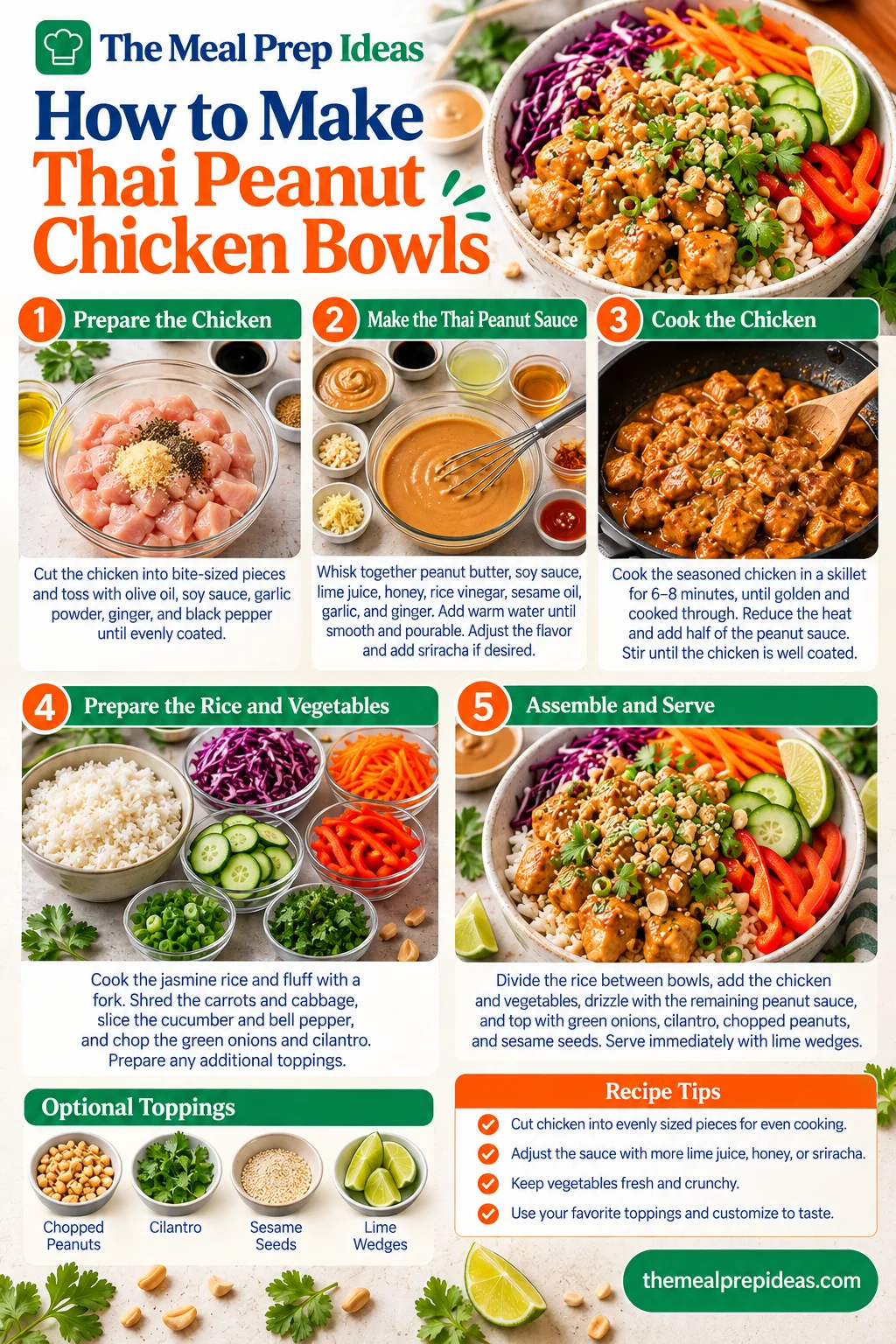
Step-by-step guide to preparing chicken, mixing Thai peanut sauce, cooking rice, and assembling the bowls.

Thai Peanut Chicken Bowl Variations

Chicken and Protein Options

Chicken breast is a convenient choice because it cooks quickly and absorbs the peanut sauce well. You can also switch up the protein to create a different version of these bowls.

  • Chicken thighs: Boneless, skinless chicken thighs offer a richer flavor and stay juicy when cooked.
  • Shredded chicken: Use cooked shredded chicken for a quicker meal, warming it in the skillet with the peanut sauce.
  • Grilled chicken: Grill the seasoned chicken for a lightly smoky flavor before adding it to the bowls.
  • Ground chicken: Cook ground chicken with the same seasonings, then coat it with the peanut sauce.
  • Tofu: Use firm or extra-firm tofu for a vegetarian alternative. Press out excess moisture and cook until golden.
  • Shrimp: Use peeled and deveined shrimp, cooking until opaque and fully cooked before coating with the sauce.

Vegetable Options

Fresh vegetables add crunch, color, and variety to Thai peanut chicken bowls. Mix and match them depending on what's available.

  • Broccoli: Lightly steamed or stir-fried broccoli adds a tender texture.
  • Snap peas: Provide a fresh crunch and naturally sweet flavor.
  • Edamame: Adds a tender texture and plant-based protein.
  • Baby spinach: Provides leafy greens that complement the warm rice and chicken.
  • Bean sprouts: Add a crisp texture and mild flavor.
  • Red cabbage: Gives the bowls a crunchy texture and vibrant color.
  • Zucchini: Thinly sliced or lightly sautéed zucchini makes a mild addition.
  • Mango: Fresh mango adds fruity sweetness that pairs well with the tangy peanut sauce.

Use a combination of raw and cooked vegetables to create different textures in each bowl.
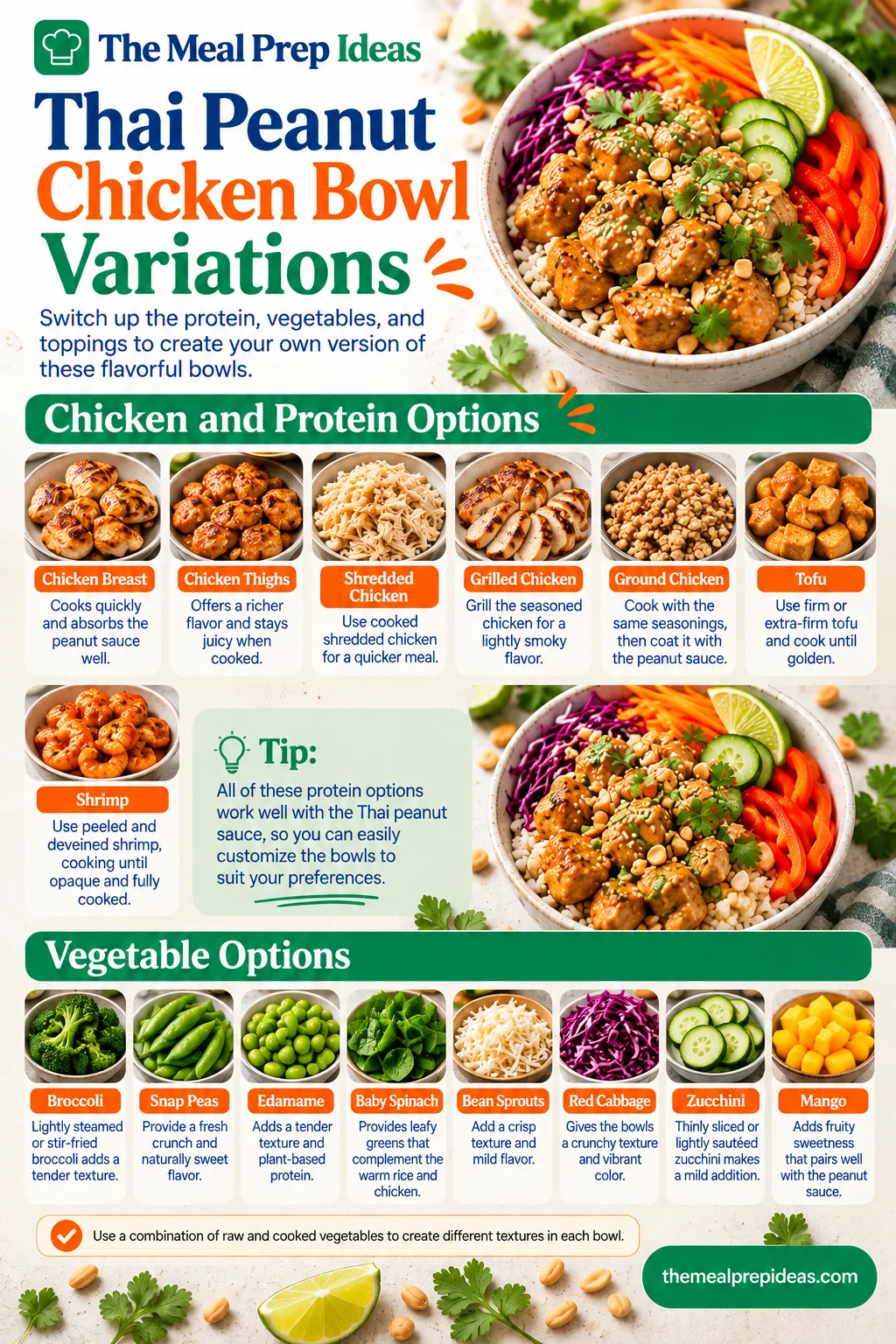
Thai Peanut Chicken Bowls with alternative proteins including chicken thighs, shredded chicken, grilled chicken, tofu, and shrimp.

Thai Peanut Sauce Variations

The peanut sauce is the main flavor component of this recipe. A few simple adjustments can give it a different taste or consistency.

  • Extra-creamy sauce: Add a little more peanut butter and warm water for a richer, creamier texture.
  • Spicy peanut sauce: Mix in sriracha, chili garlic sauce, or red pepper flakes for extra heat.
  • Citrus peanut sauce: Add more fresh lime juice for a brighter, tangier flavor.
  • Honey peanut sauce: Increase the honey slightly for a sweeter balance.
  • Ginger peanut sauce: Add extra freshly grated ginger for a more aromatic flavor.
  • Almond butter sauce: Replace peanut butter with almond butter for a different nutty taste, if suitable for your dietary needs.
  • Sunflower seed sauce: Use sunflower seed butter as an alternative for those avoiding peanuts and tree nuts. Check product labels for cross-contact warnings.

Whisk the ingredients thoroughly and adjust the water gradually to achieve your preferred consistency.

Rice and Grain Options

Jasmine rice is a classic base for these bowls, but other grains and alternatives work well with the creamy peanut sauce.

  • Brown rice: Adds a slightly nutty flavor and firmer texture.
  • Basmati rice: Provides fluffy grains with a light aroma.
  • Coconut rice: Adds subtle sweetness that complements the peanut sauce.
  • Quinoa: Offers a different texture and adds plant-based protein.
  • Rice noodles: Create a noodle-based version with similar flavors.
  • Cauliflower rice: Provides a vegetable-based alternative to regular rice.
  • Farro: Offers a chewy texture and hearty grain option.

Cook your chosen grain according to its package instructions before assembling the bowls. For another meal with Thai-inspired peanut flavors, try Thai Peanut Quinoa Salad when you want a fresh alternative for lunch or meal prep.

Topping Ideas

Toppings add a final touch of flavor, color, and texture to each bowl.

  • Chopped roasted peanuts: Provide crunch and a stronger nutty flavor.
  • Fresh cilantro: Adds a bright, herbal taste.
  • Green onions: Bring a mild onion flavor and fresh finish.
  • Sesame seeds: Add a subtle nutty flavor and visual appeal.
  • Lime wedges: Provide extra tanginess when squeezed over the bowls.
  • Fresh chili: Adds extra heat for those who enjoy spicy food.
  • Crispy shallots: Give the bowls a crunchy texture and savory flavor.
  • Fresh mango: Adds sweetness and a juicy contrast to the creamy sauce.

Add delicate toppings just before serving to keep them fresh and flavorful.
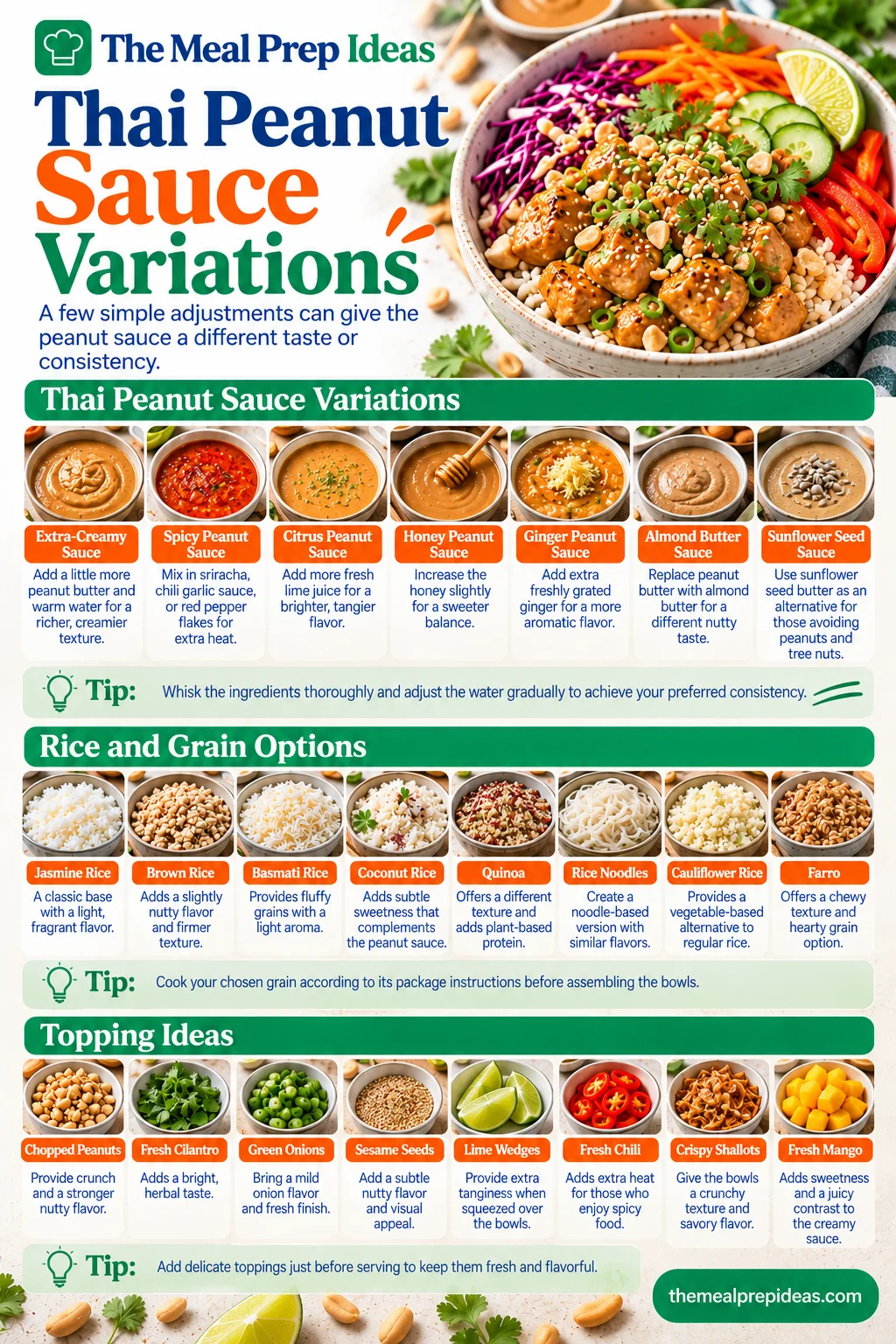
Creamy peanut sauce variations, rice and grain options, and fresh toppings for customizable bowls.

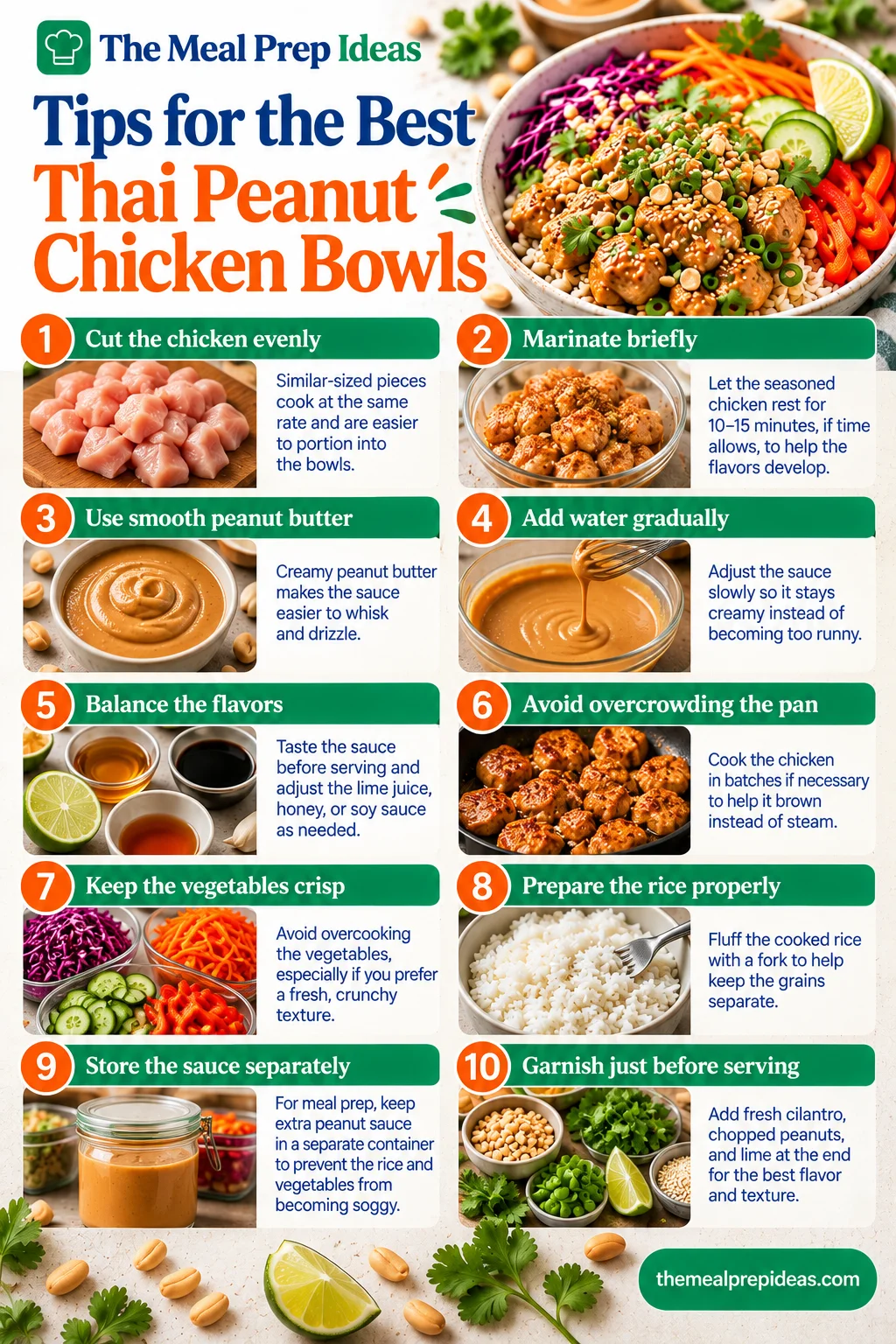
Tips for the Best Thai Peanut Chicken Bowls

  • Cut the chicken evenly: Similar-sized pieces cook at the same rate and are easier to portion into the bowls.
  • Marinate briefly: Let the seasoned chicken rest for 10–15 minutes, if time allows, to help the flavors develop.
  • Use smooth peanut butter: Creamy peanut butter makes the sauce easier to whisk and drizzle.
  • Add water gradually: Adjust the sauce slowly so it stays creamy instead of becoming too runny.
  • Balance the flavors: Taste the sauce before serving and adjust the lime juice, honey, or soy sauce as needed.
  • Avoid overcrowding the pan: Cook the chicken in batches if necessary to help it brown instead of steam.
  • Keep the vegetables crisp: Avoid overcooking the vegetables, especially if you prefer a fresh, crunchy texture.
  • Prepare the rice properly: Fluff the cooked rice with a fork to help keep the grains separate.
  • Store the sauce separately: For meal prep, keep extra peanut sauce in a separate container to prevent the rice and vegetables from becoming soggy.
  • Garnish just before serving: Add fresh cilantro, chopped peanuts, and lime at the end for the best flavor and texture.
Practical tips for evenly cooking chicken, preparing creamy peanut sauce, keeping vegetables crisp, and assembling flavorful bowls.

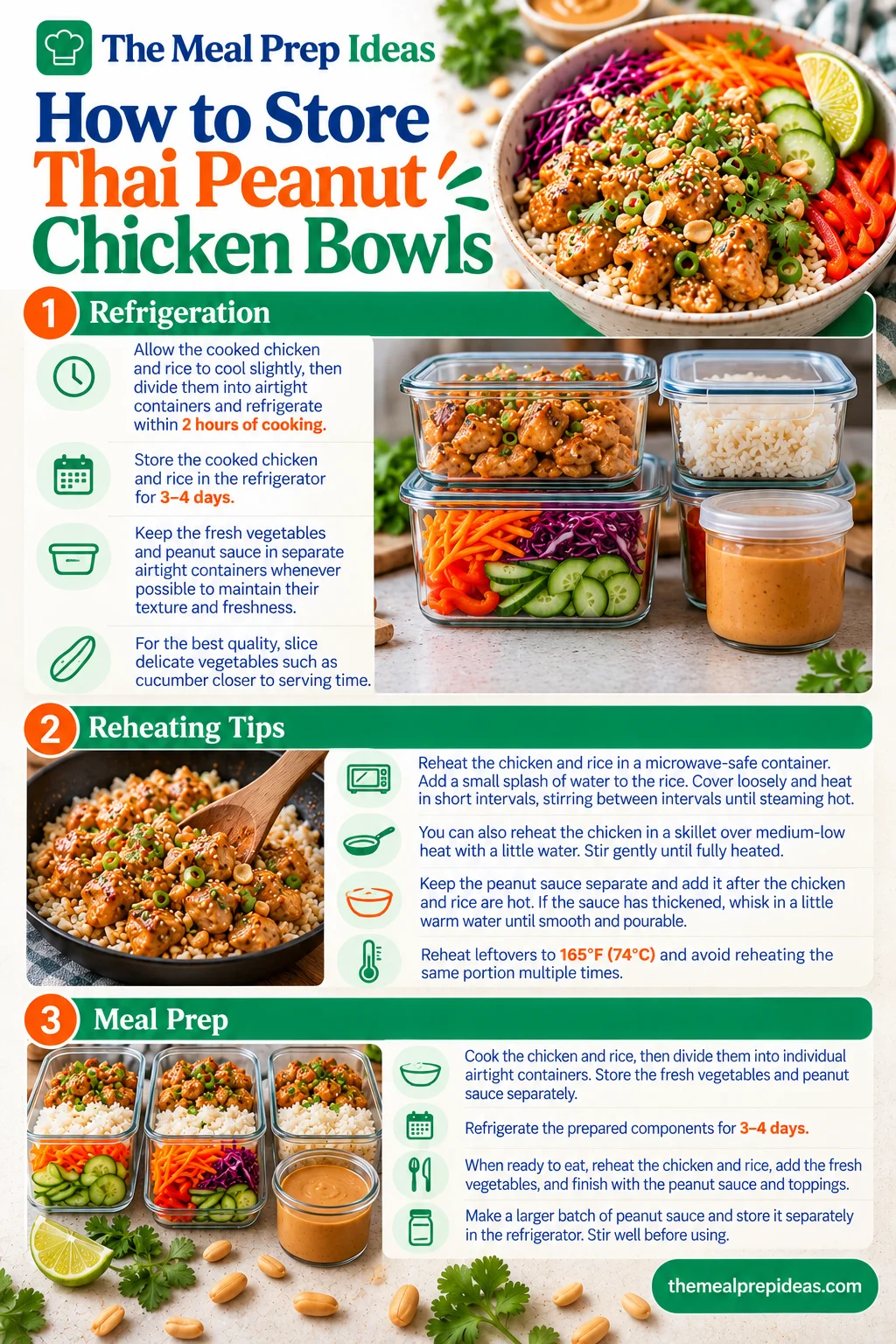
How to Store Thai Peanut Chicken Bowls

Refrigeration

Allow the cooked chicken and rice to cool slightly, then divide them into airtight containers and refrigerate within 2 hours of cooking. Store the cooked chicken and rice in the refrigerator for 3–4 days. Keep the fresh vegetables and peanut sauce in separate airtight containers whenever possible to maintain their texture and freshness. For the best quality, slice delicate vegetables such as cucumber closer to serving time.

Reheating Tips

Reheat the chicken and rice in a microwave-safe container. Add a small splash of water to the rice to help prevent it from drying out. Cover loosely and heat in short intervals, stirring between intervals until steaming hot throughout. You can also reheat the chicken in a skillet over medium-low heat with a little water. Stir gently until fully heated.

Keep the peanut sauce separate during reheating and add it after the chicken and rice are hot. If the sauce has thickened in the refrigerator, whisk in a little warm water until it reaches a smooth, pourable consistency. Reheat leftovers to 165°F (74°C) and avoid reheating the same portion multiple times.

Meal Prep

Thai peanut chicken bowls are ideal for meal prep because the chicken, rice, vegetables, and sauce can all be prepared ahead of time. Cook the chicken and rice, then divide them into individual airtight containers. Store the fresh vegetables and peanut sauce separately so the ingredients retain their original texture.

Refrigerate the prepared components for 3–4 days. When you're ready to eat, reheat the chicken and rice, add the fresh vegetables, and finish with the peanut sauce and toppings. For easier preparation, make a larger batch of peanut sauce and store it separately in the refrigerator. Stir well before using. If you enjoy preparing balanced bowls ahead of time, Meal Prep Fajita Bowls are another convenient option for organizing lunches and dinners throughout the week.

Meal prep containers filled with chicken and rice, fresh vegetables, and separate peanut sauce for refrigeration and reheating.

Frequently Asked Questions

What Goes Well with Thai Peanut Chicken?

Thai peanut chicken pairs well with jasmine rice, brown rice, rice noodles, or quinoa. Fresh vegetables such as shredded cabbage, carrots, cucumber, bell peppers, and snap peas complement the creamy sauce. You can also serve it with steamed broccoli, edamame, fresh mango, or a light cucumber salad.

Can I Make Thai Peanut Chicken Bowls Ahead of Time?

Yes, these bowls are great for make-ahead lunches and dinners. Cook the chicken and rice, prepare the peanut sauce, and chop the vegetables in advance. Store the cooked components, fresh vegetables, and sauce separately in airtight containers in the refrigerator for 3–4 days. Reheat the chicken and rice before assembling, then add the fresh vegetables and sauce just before serving.

Can I Use Another Nut Butter Instead of Peanut Butter?

Yes, you can replace peanut butter with almond butter or cashew butter for a slightly different flavor and texture. Sunflower seed butter is another option for people avoiding peanuts and tree nuts, although the flavor may differ. Choose a smooth, unsweetened variety when possible and adjust the warm water to achieve a creamy, pourable sauce. Check ingredient labels for potential allergens and cross-contact warnings.

What Vegetables Can I Add to the Bowl?

You can add a variety of fresh or cooked vegetables to Thai peanut chicken bowls. Carrots, red cabbage, cucumber, bell peppers, broccoli, snap peas, edamame, spinach, and bean sprouts are all suitable choices. Raw vegetables provide refreshing crunch, while lightly cooked vegetables add warmth and tenderness. Choose a mix of colors and textures to make each bowl more enjoyable.

How Long Do Thai Peanut Chicken Bowls Last in the Fridge?

Thai peanut chicken bowls generally last 3–4 days in the refrigerator when stored in airtight containers at 40°F (4°C) or below. For the best texture, keep the peanut sauce and fresh vegetables separate from the cooked chicken and rice. Refrigerate the food within 2 hours of cooking and reheat the chicken and rice to 165°F (74°C) before serving.

No ratings yet

Thai Peanut Chicken Bowls

Make Thai Peanut Chicken Bowls with tender chicken, fresh vegetables, rice, and creamy peanut sauce. An easy, flavorful meal prep recipe!

Thai Peanut Chicken Bowls with noodles, sesame seeds, and sliced green onions in a ceramic bowl.the meal
prep ideas
15 minPrep
20 minCook
35 minTotal
Makes 4Servings
Print recipe

How to prepare

  1. 1Cook the rice: Rinse the jasmine rice under cold water until the water runs mostly clear. Cook according to the package instructions, fluff with a fork, and set aside.
  2. 2Season the chicken: Place the chicken pieces in a bowl with olive oil, soy sauce, garlic powder, ground ginger, and black pepper. Toss until evenly coated.
  3. 3Make the peanut sauce: Whisk together the peanut butter, soy sauce, lime juice, honey, rice vinegar, sesame oil, garlic, ginger, and sriracha, if using. Gradually add warm water until the sauce is smooth and pourable.
  4. 4Cook the chicken: Heat a large skillet over medium-high heat. Add the seasoned chicken in a single layer and cook for about 6–8 minutes, stirring occasionally, until golden and cooked through to an internal temperature of 165°F (74°C).
  5. 5Coat with sauce: Reduce the heat to low and add about half of the peanut sauce to the cooked chicken. Stir gently until the chicken is evenly coated and warmed through.
  6. 6Prepare the vegetables: Shred the carrot and cabbage, slice the cucumber and bell pepper, and chop the green onions and cilantro.
  7. 7Assemble the bowls: Divide the cooked rice between four bowls. Add the chicken, cabbage, carrots, cucumber, and bell pepper.
  8. 8Add toppings and serve: Drizzle the remaining peanut sauce over the bowls. Finish with chopped peanuts, green onions, cilantro, sesame seeds, and lime wedges, if desired. Serve immediately.

Good to know

  • Use creamy peanut butter: Smooth peanut butter makes a silky sauce that coats the chicken evenly.
  • Adjust the sauce consistency: Add warm water gradually until the sauce is easy to drizzle without becoming too thin.
  • Avoid overcooking the chicken: Cut the chicken into evenly sized pieces and cook until it reaches an internal temperature of 165°F (74°C).
  • Balance the flavors: Add more lime juice for tanginess, honey for sweetness, or soy sauce for a deeper savory flavor.
  • Control the spice: Sriracha is optional, so leave it out for a milder sauce or add more if you prefer extra heat.
  • Keep the vegetables fresh: Slice the vegetables shortly before serving to maintain their crunch.
  • Store the sauce separately: When preparing bowls ahead of time, keep the peanut sauce in a separate container to preserve the texture of the other ingredients.
  • Check ingredient labels: Use suitable gluten-free soy sauce or tamari if needed, and check packaged ingredients for potential allergens.
  • Chicken breast is a convenient choice because it cooks quickly and absorbs the peanut sauce well. You can also switch up the protein to create a different version of these bowls.
  • Fresh vegetables add crunch, color, and variety to Thai peanut chicken bowls. Mix and match them depending on what's available.
  • Use a combination of raw and cooked vegetables to create different textures in each bowl.
  • The peanut sauce is the main flavor component of this recipe. A few simple adjustments can give it a different taste or consistency.
  • Whisk the ingredients thoroughly and adjust the water gradually to achieve your preferred consistency.
  • Jasmine rice is a classic base for these bowls, but other grains and alternatives work well with the creamy peanut sauce.
  • Cook your chosen grain according to its package instructions before assembling the bowls. For another meal with Thai-inspired peanut flavors, try Thai Peanut Quinoa Salad when you want a fresh alternative for lunch or meal prep.
  • Toppings add a final touch of flavor, color, and texture to each bowl.
  • Add delicate toppings just before serving to keep them fresh and flavorful.
  • Allow the cooked chicken and rice to cool slightly, then divide them into airtight containers and refrigerate within 2 hours of cooking. Store the cooked chicken and rice in the refrigerator for 3–4 days. Keep the fresh vegetables and peanut sauce in separate airtight containers whenever possible to maintain their texture and freshness. For the best quality, slice delicate vegetables such as cucumber closer to serving time.
  • Reheat the chicken and rice in a microwave-safe container. Add a small splash of water to the rice to help prevent it from drying out. Cover loosely and heat in short intervals, stirring between intervals until steaming hot throughout. You can also reheat the chicken in a skillet over medium-low heat with a little water. Stir gently until fully heated.
  • Keep the peanut sauce separate during reheating and add it after the chicken and rice are hot. If the sauce has thickened in the refrigerator, whisk in a little warm water until it reaches a smooth, pourable consistency. Reheat leftovers to 165°F (74°C) and avoid reheating the same portion multiple times.
  • Thai peanut chicken bowls are ideal for meal prep because the chicken, rice, vegetables, and sauce can all be prepared ahead of time. Cook the chicken and rice, then divide them into individual airtight containers. Store the fresh vegetables and peanut sauce separately so the ingredients retain their original texture.
  • Refrigerate the prepared components for 3–4 days. When you're ready to eat, reheat the chicken and rice, add the fresh vegetables, and finish with the peanut sauce and toppings. For easier preparation, make a larger batch of peanut sauce and store it separately in the refrigerator. Stir well before using. If you enjoy preparing balanced bowls ahead of time, Meal Prep Fajita Bowls are another convenient option for organizing lunches and dinners throughout the week.
Dairy-FreeGluten-FreeLower-SodiumNut-Free AlternativeLower-SugarVegetarian

Made this recipe?

Tag @themealprepideas on Instagram — we love seeing what you made.

Tag us

Reviews & Comments

Be the first to rate, review, or ask a question about this recipe.

No comments yet

Be the first cook to share feedback or ask a question about this recipe!

Leave a Review & Rating

Tap to rate

Comments are moderated for community safety. External links are filtered.

Keep Cooking

You Might Also Like

Steak Stir Fry

Steak Stir Fry

Make this easy steak stir fry with tender beef, crisp vegetables, and savory garlic sauce. Ready in 30 minutes for a quick weeknight dinner!

15 min
Get Recipe

Taco Pasta Skillet

Taco Pasta Skillet

Make this easy Taco Pasta Skillet with seasoned ground beef, tender pasta, tomato sauce, and melted cheese. Ready in just 35 minutes!

10 min
Get Recipe

Meal Prep Meatballs

Meal Prep Meatballs

Make easy Meal Prep Meatballs with ground beef, herbs, and simple seasonings. Perfect for make-ahead lunches, dinners, and freezer-friendly meals!

15 min
Get Recipe

Get Your Free 7-Day Meal Prep Plan

Join 50,000+ subscribers getting weekly meal prep ideas, shopping lists, and time-saving tips straight to their inbox.

No spam. Unsubscribe anytime.