Meal Prep Ideas
Back to Home Page

Sesame Chicken

Make easy Sesame Chicken in 30 minutes with tender chicken and a sweet, savory sesame sauce. Perfect for weeknight dinners with rice or noodles.

Sesame Chicken served with steamed white rice and colorful vegetables on a plate.

Get This Recipe Summarized by AI

Ask your favorite AI assistant to summarize this recipe, suggest swaps, or scale it up — one click away.

We copy the prompt to your clipboard too — just paste (Ctrl/Cmd+V) if it doesn't appear automatically.

Sesame Chicken is a popular takeout-style dish made with tender chicken pieces coated in a glossy, sweet and savory sauce. A light cornstarch coating helps create a golden exterior, while toasted sesame seeds add a nutty finish. Soy sauce, honey, garlic, ginger, and rice vinegar combine to give the sauce its signature balance of sweetness, saltiness, and tang.

This homemade recipe comes together in about 30 minutes, making it a practical choice for weeknight dinners and family meals. Serve it over steamed rice, toss it with vegetables, or add it to a noodle bowl for a satisfying meal with restaurant-inspired flavor.

If you enjoy homemade takeout-style meals, our Chicken Stir Fry is another quick and flavorful dinner worth trying.
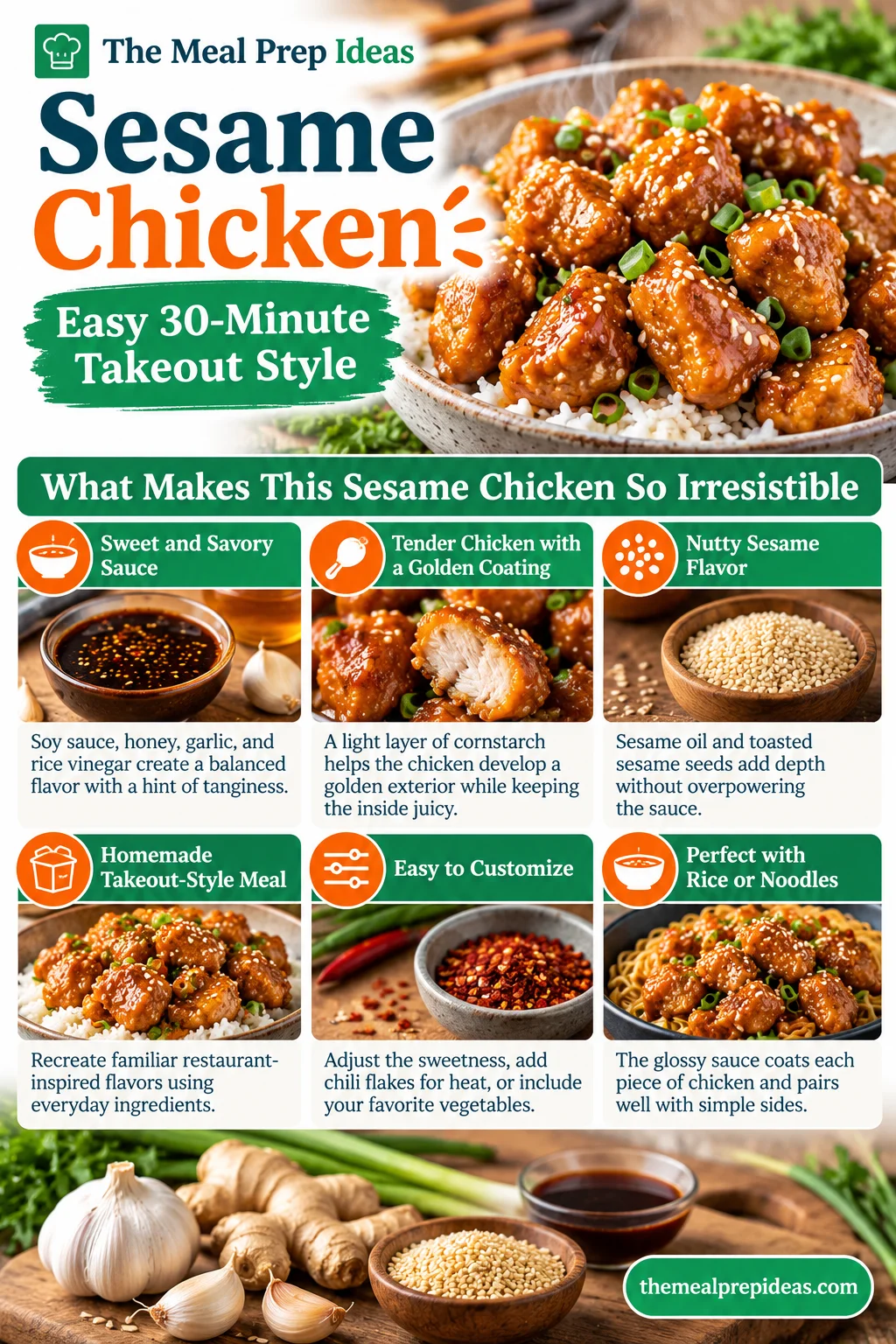
What Makes This Sesame Chicken So Irresistible

  • Sweet and savory sauce: Soy sauce, honey, garlic, and rice vinegar create a balanced flavor with a hint of tanginess.
  • Tender chicken with a golden coating: A light layer of cornstarch helps the chicken develop a golden exterior while keeping the inside juicy.
  • Nutty sesame flavor: Sesame oil and toasted sesame seeds add depth without overpowering the sauce.
  • Homemade takeout-style meal: Recreate familiar restaurant-inspired flavors using everyday ingredients.
  • Easy to customize: Adjust the sweetness, add chili flakes for heat, or include your favorite vegetables.
  • Perfect with rice or noodles: The glossy sauce coats each piece of chicken and pairs well with simple sides.
Sesame Chicken coated in a glossy sweet and savory sauce with toasted sesame seeds and green onions.

Sesame Chicken Recipe

Time

  • Prep Time: 15 minutes
  • Cook Time: 15 minutes
  • Total Time: 30 minutes
  • Servings: 4

Cooking time may vary depending on the size of the chicken pieces, the number of batches, and the heat of your skillet. Always check the internal temperature to ensure the chicken is fully cooked.

Ingredients

For the chicken:

  • 1½ pounds boneless, skinless chicken breasts or thighs, cut into bite-sized pieces
  • ½ cup cornstarch
  • 1 large egg, beaten
  • ½ teaspoon salt
  • ¼ teaspoon black pepper
  • 3–4 tablespoons neutral cooking oil, for pan-frying

For the sesame sauce:

  • ¼ cup low-sodium soy sauce
  • 3 tablespoons honey
  • 2 tablespoons rice vinegar
  • 1 tablespoon sesame oil
  • 2 cloves garlic, minced
  • 1 teaspoon freshly grated ginger
  • ¼ cup water
  • 1 tablespoon cornstarch
  • 1 tablespoon water, for the cornstarch slurry
  • 1 teaspoon chili flakes, optional

For garnish:

  • 1 tablespoon toasted sesame seeds
  • 2 tablespoons sliced green onions

Instructions

  1. 1Prepare the chicken: Cut the chicken into evenly sized, bite-sized pieces. Pat them dry with paper towels and season with salt and black pepper.
  2. 2Coat the chicken: Dip each piece into the beaten egg, allowing any excess to drip off. Toss the pieces in cornstarch until lightly coated, then shake off the excess.
  3. 3Prepare the sauce: In a bowl, whisk together the soy sauce, honey, rice vinegar, sesame oil, garlic, ginger, and ¼ cup water. In a separate small bowl, mix 1 tablespoon cornstarch with 1 tablespoon water until smooth to make the slurry.
  4. 4Pan-fry the chicken: Heat the cooking oil in a large skillet over medium heat. Add the chicken in batches, leaving space between the pieces. Cook for approximately 3–4 minutes per side, turning as needed, until golden and cooked through. Use a food thermometer to confirm that the thickest pieces reach 165°F (74°C). Transfer the chicken to a clean plate.
  5. 5Thicken the sauce: Carefully remove excess oil from the skillet, leaving a thin coating. Pour in the prepared sauce and bring it to a gentle simmer. Stir the cornstarch slurry again, add it gradually, and cook for 1–2 minutes, stirring until the sauce becomes glossy and slightly thickened.
  6. 6Coat the chicken: Return the cooked chicken to the skillet and toss gently until every piece is evenly coated in the sauce.
  7. 7Garnish and serve: Sprinkle with toasted sesame seeds and sliced green onions. Serve immediately with steamed rice, noodles, or your favorite vegetables.

Notes

  • Cut the chicken evenly: Similar-sized pieces cook more consistently and help prevent smaller pieces from drying out.
  • Pat the chicken dry: Removing excess moisture helps the egg and cornstarch coating adhere more effectively.
  • Cook in batches: Overcrowding the skillet can cause the chicken to steam instead of brown.
  • Control the saltiness: Use low-sodium soy sauce if you want more control over the finished flavor.
  • Measure the sesame oil carefully: Its concentrated flavor can overpower the sauce if you use too much.
  • Adjust the sauce gradually: Add the cornstarch slurry a little at a time to control thickness. The sauce will continue to thicken slightly as it cools.
  • Coat just before serving: Tossing the chicken in the sauce right before serving helps preserve its golden exterior.
  • Check the internal temperature: Always confirm that the thickest chicken pieces reach 165°F (74°C).

Nutrition

Estimated nutrition per serving, based on four servings without rice or additional sides:

  • Calories: 430 kcal
  • Protein: 37 g
  • Carbohydrates: 35 g
  • Fat: 17 g
  • Saturated Fat: 3 g
  • Fiber: 1 g
  • Sugar: 14 g
  • Sodium: 780 mg

Nutrition values are approximate and may vary depending on the chicken cut, oil absorption, ingredient quantities, and the brands of soy sauce and honey used. Serving the dish with rice, noodles, or additional toppings will change the overall nutritional values.

Dietary

  • Dairy-Free: The recipe contains no dairy when prepared with dairy-free ingredients.
  • High-Protein: Chicken provides a substantial amount of protein per serving.
  • Gluten-Free Option: Replace regular soy sauce with certified gluten-free tamari and check the labels of all packaged ingredients.
  • Lower-Sugar Option: Reduce the honey or use a suitable alternative, keeping in mind that this may change the sauce's flavor and consistency.
  • Contains Sesame: Sesame oil and sesame seeds are key ingredients, so this recipe is unsuitable for anyone who needs to avoid sesame.

How to Make Sesame Chicken

Prepare the Chicken

Start by cutting the chicken into evenly sized, bite-sized pieces. Keeping the pieces similar in size helps them cook at a consistent rate and prevents smaller pieces from drying out before the larger ones are done.

Pat the chicken dry with paper towels and season with salt and black pepper. Dip each piece into beaten egg, allowing any excess to drip off, then coat it lightly in cornstarch.

The egg helps the cornstarch adhere to the chicken, while the starch creates a light, golden exterior during pan-frying. Avoid using too much cornstarch, as a thick or clumpy coating can cook unevenly.

Make the Sesame Sauce

In a medium bowl, combine the soy sauce, honey, rice vinegar, sesame oil, minced garlic, grated ginger, and ¼ cup water. Whisk until the honey is fully incorporated and the sauce is well combined.

In a separate small bowl, mix 1 tablespoon cornstarch with 1 tablespoon water to create a smooth slurry. This mixture thickens the sauce as it heats and helps it cling to the chicken.

Preparing both mixtures before you start cooking makes the process easier. Once the chicken is cooked, you can thicken the sauce without stopping to measure additional ingredients.
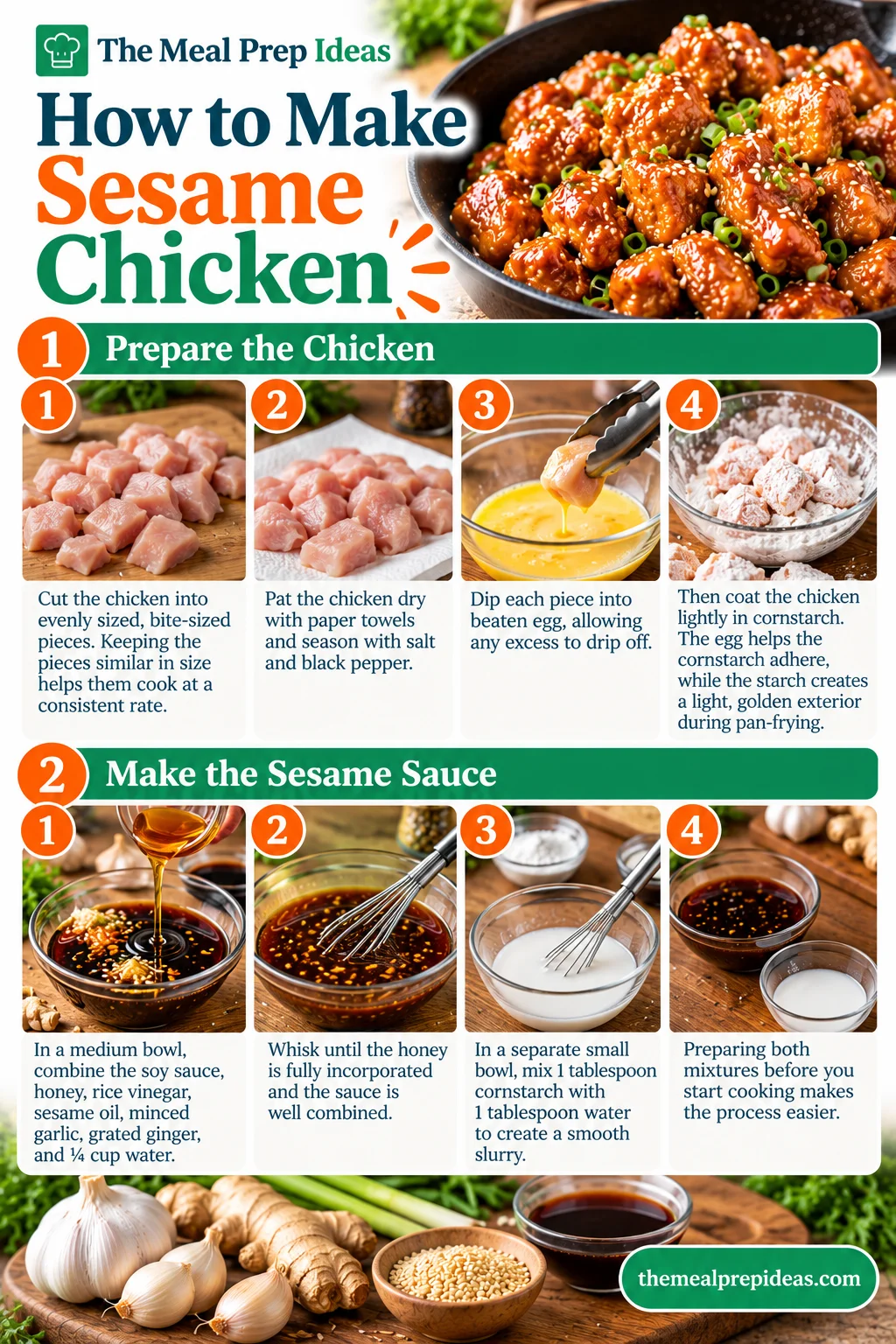
Sesame Chicken preparation showing bite-sized chicken pieces coated with egg and cornstarch alongside sesame sauce ingredients.

Cook the Chicken

Heat a thin layer of neutral cooking oil in a large skillet over medium heat. Once the oil is hot, arrange the coated chicken pieces in a single layer, leaving enough space between them to brown properly.

Cook the chicken in batches if necessary, turning the pieces as they develop a golden coating. Avoid moving them constantly, as allowing each side to brown helps create a better texture.

Check the thickest pieces with a food thermometer. The chicken must reach an internal temperature of 165°F (74°C) before serving. Transfer each cooked batch to a clean plate while you prepare the sauce.

Coat the Chicken in Sauce

Carefully remove excess oil from the skillet, leaving just enough to lightly coat the surface. Pour in the prepared soy sauce mixture and bring it to a gentle simmer.

Stir the cornstarch slurry again, then gradually add it to the skillet. Cook for 1–2 minutes, stirring continuously, until the sauce becomes glossy and thick enough to coat a spoon.

Return the cooked chicken to the skillet and toss gently until the sauce evenly coats each piece. Avoid simmering the chicken for too long after adding the sauce, as the coating can soften as it absorbs moisture.

Garnish and Serve

Turn off the heat and sprinkle the chicken with toasted sesame seeds and sliced green onions. Serve immediately while warm to enjoy the best possible texture.

Pair the dish with steamed jasmine rice, brown rice, noodles, or stir-fried vegetables. A little extra green onion and a sprinkle of sesame seeds add a fresh finish without requiring much additional preparation.

For another satisfying meal with tender meat and flavorful sauce, try our Steak Stir Fry for an easy weeknight dinner.
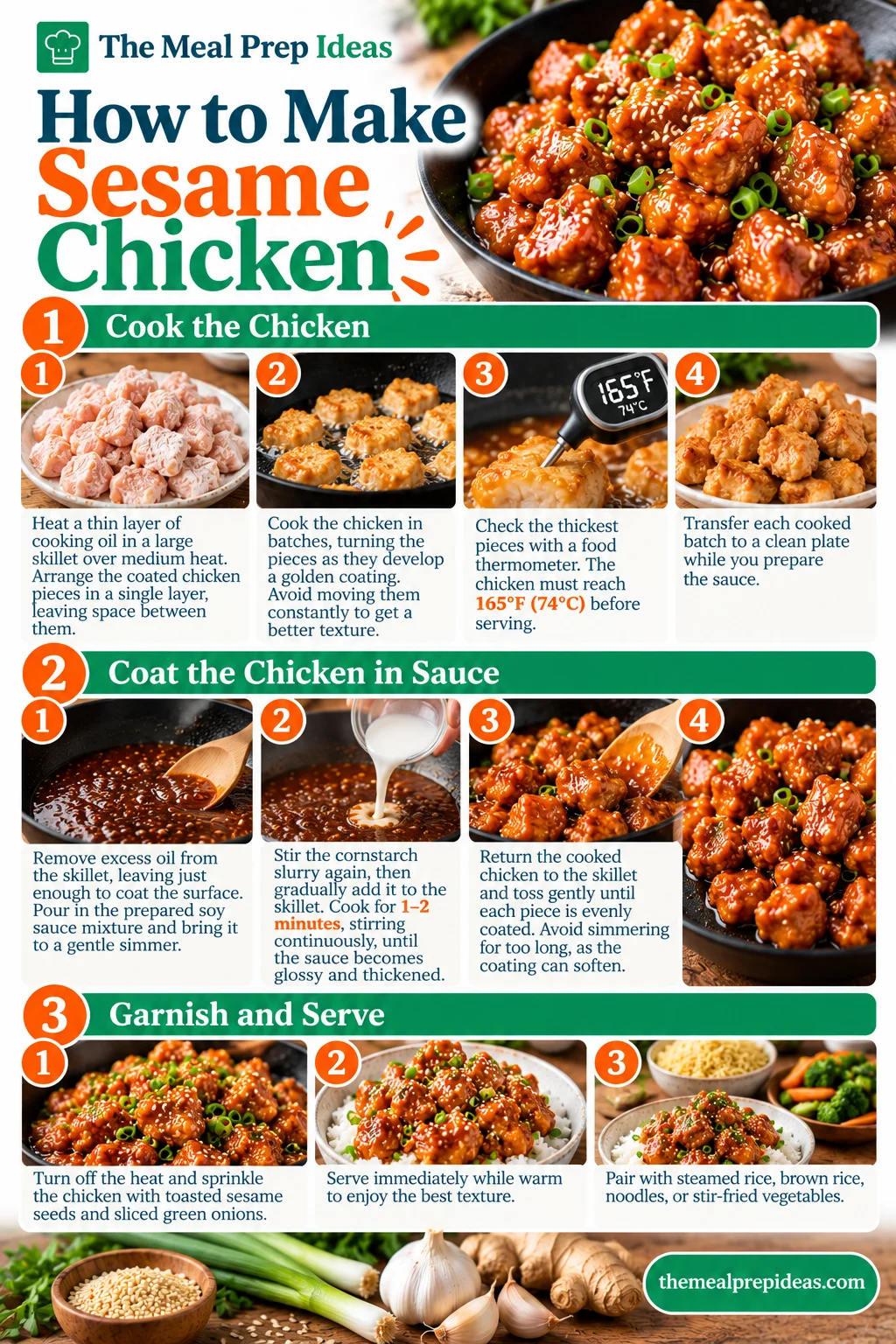
Sesame Chicken cooking in a skillet with thickened sauce, sesame seeds, and sliced green onions.

Sesame Chicken Variations

Chicken Options

You can use different ingredients depending on your preferred texture and dietary needs.

  • Chicken breast: A lean option that works well when cut into small, evenly sized pieces and cooked carefully.
  • Chicken thighs: A richer alternative that tends to stay juicy during cooking.
  • Boneless chicken tenders: A convenient option that is easy to cut into bite-sized pieces and coat.
  • Tofu: For a vegetarian alternative, use firm or extra-firm tofu. Press out excess moisture, coat it with cornstarch, and pan-fry until golden. Prepare the sauce using suitable vegetarian ingredients.

Whichever option you choose, avoid overcrowding the pan so the pieces can brown evenly. Tofu will have a different texture from chicken, but the sesame sauce provides a similar sweet and savory flavor.

Sauce Adjustments

The sesame sauce is easy to customize without changing the main cooking method.

  • Sweeter sauce: Add a little extra honey for a more pronounced sweet flavor.
  • More tangy: Increase the rice vinegar slightly for additional brightness.
  • Extra savory: Add a small amount of soy sauce, tasting as you go to avoid excessive saltiness.
  • Spicy Sesame Chicken: Mix in chili flakes or a little chili garlic sauce for extra heat.
  • Stronger sesame flavor: Add a small amount of toasted sesame oil at the end.
  • Thicker sauce: Gradually add a little more cornstarch slurry until you reach your desired consistency.

Make small adjustments and taste the sauce before tossing it with the chicken. This helps maintain a balanced combination of sweetness, saltiness, and acidity.

Vegetable Add-Ins

Vegetables add color, texture, and variety to Sesame Chicken. They also make it easy to turn the dish into a more complete meal.

  • Broccoli: Small florets pair well with the sweet and savory sauce.
  • Bell peppers: Add mild sweetness and vibrant color.
  • Snap peas: Provide a crisp texture and fresh flavor.
  • Carrots: Thinly sliced carrots contribute natural sweetness and a slight crunch.
  • Mushrooms: Bring an earthy, savory note.
  • Green onions: Add freshness and a mild onion flavor.

For the best texture, stir-fry the vegetables separately until just tender. Add them to the skillet with the cooked chicken and sauce, then toss briefly to combine. This helps prevent the vegetables from becoming too soft.

For another easy stir-fry dinner with plenty of vegetables, try our Ground Beef Stir Fry.

Serving Ideas

Sesame Chicken pairs well with a variety of sides, whether you're preparing a quick lunch or a family dinner.

  • Steamed rice: Jasmine or brown rice absorbs the glossy sauce.
  • Noodles: Serve over egg noodles, rice noodles, or another favorite variety.
  • Rice bowls: Combine the chicken with rice and steamed vegetables for a satisfying meal.

If you enjoy chicken and rice bowls, our Thai Peanut Chicken Bowls offer another delicious option with a rich, savory sauce.
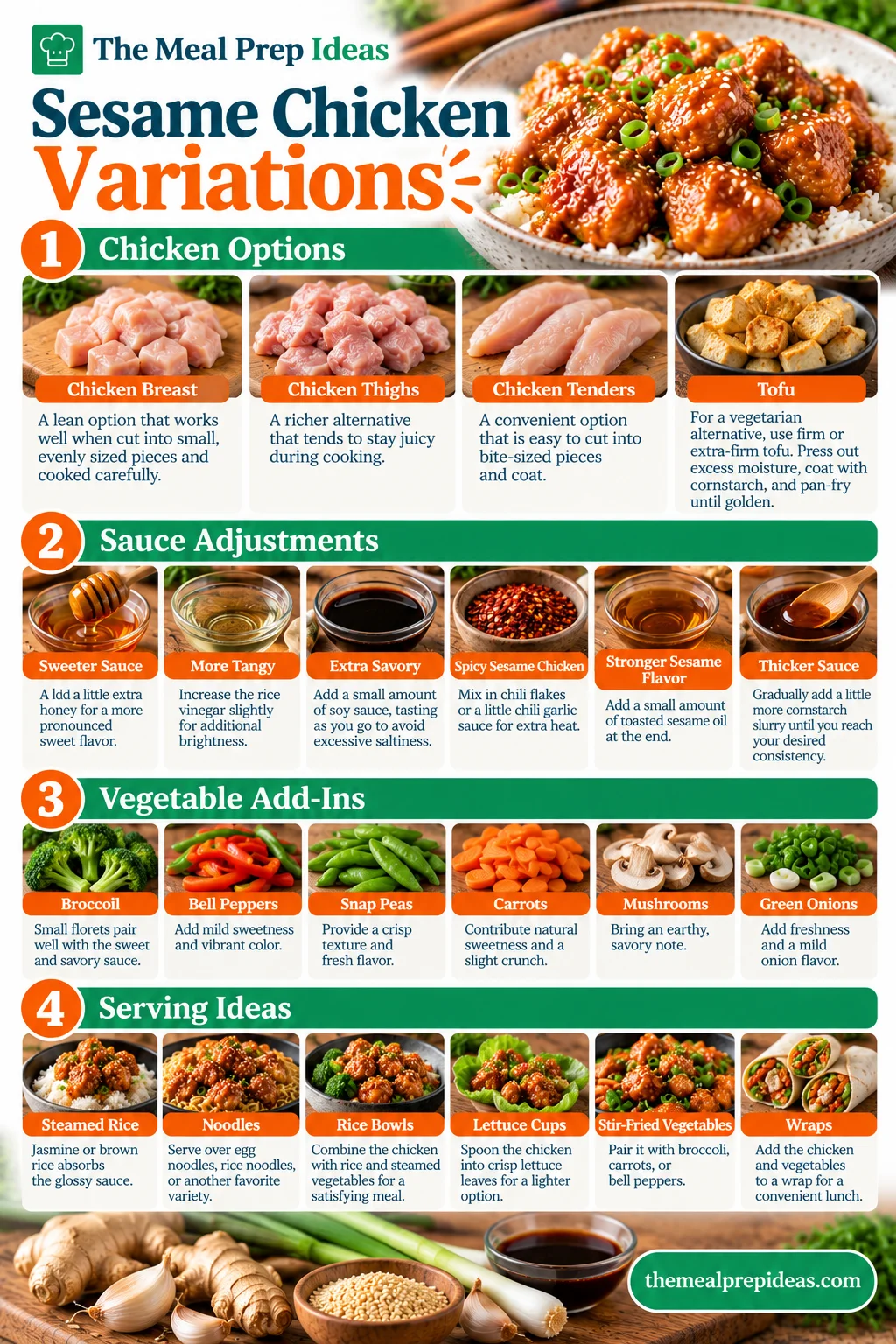
  • Lettuce cups: Spoon the chicken into crisp lettuce leaves for a lighter serving option.
  • Stir-fried vegetables: Pair it with broccoli, carrots, or bell peppers.
  • Wraps: Add the chicken and vegetables to a wrap for a convenient lunch.
Sesame Chicken variations featuring chicken breast, chicken thighs, tofu, sauce options, vegetables, and serving ideas.

Tips for the Best Sesame Chicken

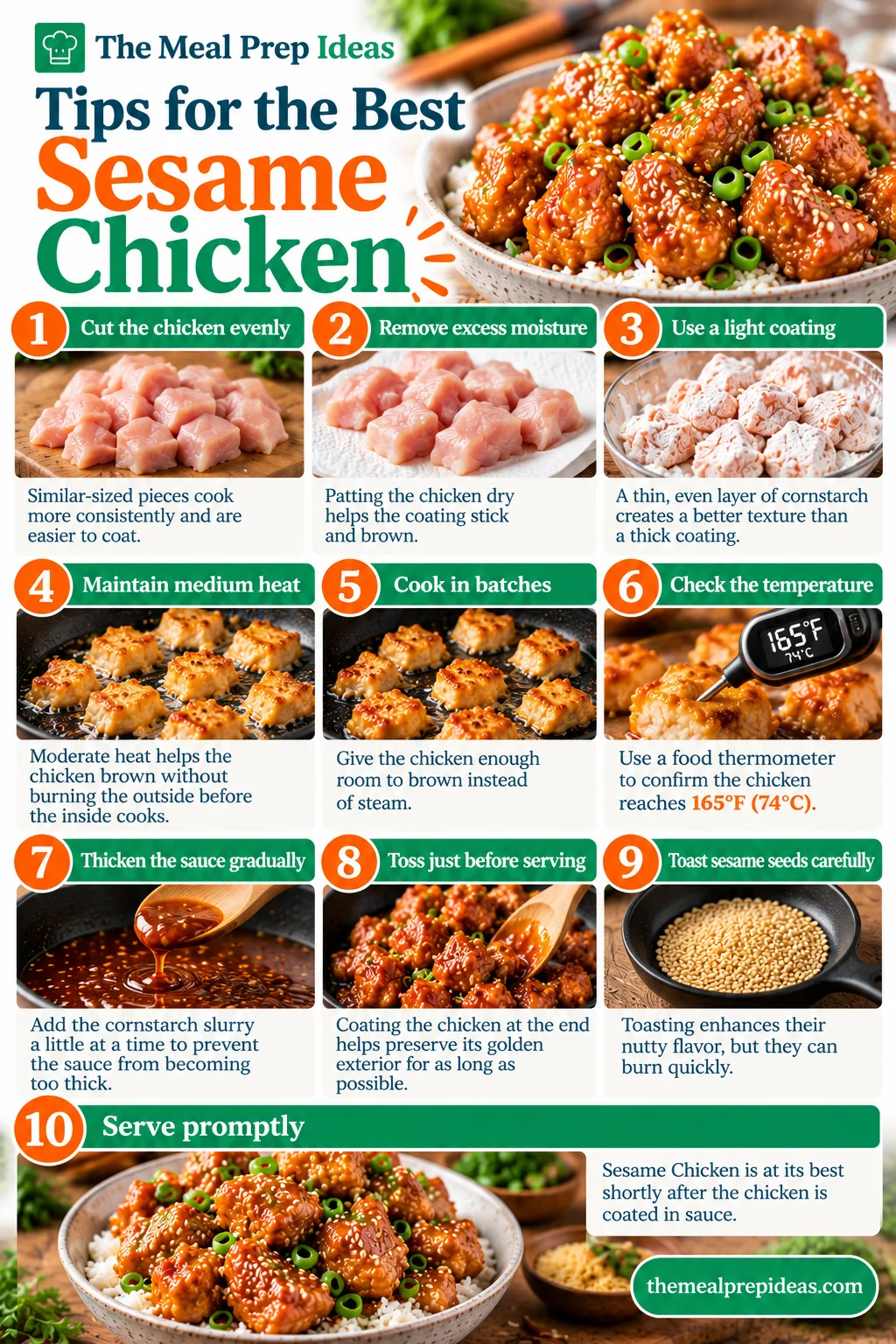
  • Cut the chicken evenly: Similar-sized pieces cook more consistently and are easier to coat.
  • Remove excess moisture: Patting the chicken dry helps the coating stick and brown.
  • Use a light coating: A thin, even layer of cornstarch creates a better texture than a thick coating.
  • Maintain medium heat: Moderate heat helps the chicken brown without burning the outside before the inside cooks.
  • Cook in batches: Give the chicken enough room to brown instead of steam.
  • Check the temperature: Use a food thermometer to confirm the chicken reaches 165°F (74°C).
  • Thicken the sauce gradually: Add the cornstarch slurry a little at a time to prevent the sauce from becoming too thick.
  • Toss just before serving: Coating the chicken at the end helps preserve its golden exterior for as long as possible.
  • Toast sesame seeds carefully: Toasting enhances their nutty flavor, but they can burn quickly.
  • Serve promptly: Sesame Chicken is at its best shortly after the chicken is coated in sauce.
Sesame Chicken cooking tips for even browning, safe internal temperature, thick sauce, and toasted sesame seeds.

How to Store Sesame Chicken

Refrigeration

Allow leftover Sesame Chicken to cool slightly, then transfer it to a shallow, airtight container. Refrigerate it within 2 hours of cooking, or within 1 hour if the surrounding temperature is above 90°F (32°C).

Store leftovers at 40°F (4°C) or below and use them within 3–4 days. When possible, keep rice and other side dishes in separate containers to help maintain their texture.

Reheating Tips

For the best results, reheat Sesame Chicken in a skillet over medium-low heat. Add a small splash of water to loosen the sauce, then stir gently until the chicken is heated evenly.

You can also reheat individual portions in a microwave-safe dish. Cover loosely, heat in short intervals, and stir halfway through. Reheat leftovers to an internal temperature of 165°F (74°C) before eating.

The coating may soften after refrigeration, but reheating in a skillet can help improve the texture. Avoid reheating the same portion multiple times.

Meal Prep

Sesame Chicken can be prepared ahead for convenient lunches and dinners. Cook the chicken and sauce, then divide them into individual airtight containers.

For better texture, store the cooked chicken and sauce separately if practical, combining them when reheating. Add freshly toasted sesame seeds and sliced green onions just before serving for a fresher finish.

For another convenient make-ahead meal, our Sheet Pan Chicken Meal Prep is a great option for preparing lunches and dinners in advance.

Refrigerate portions promptly and use them within 3–4 days. If you need to keep the meal longer, freeze it in suitable airtight containers.

You can also add variety to your weekly meal plan with our Teriyaki Salmon Bowls, a flavorful option for lunch or dinner.
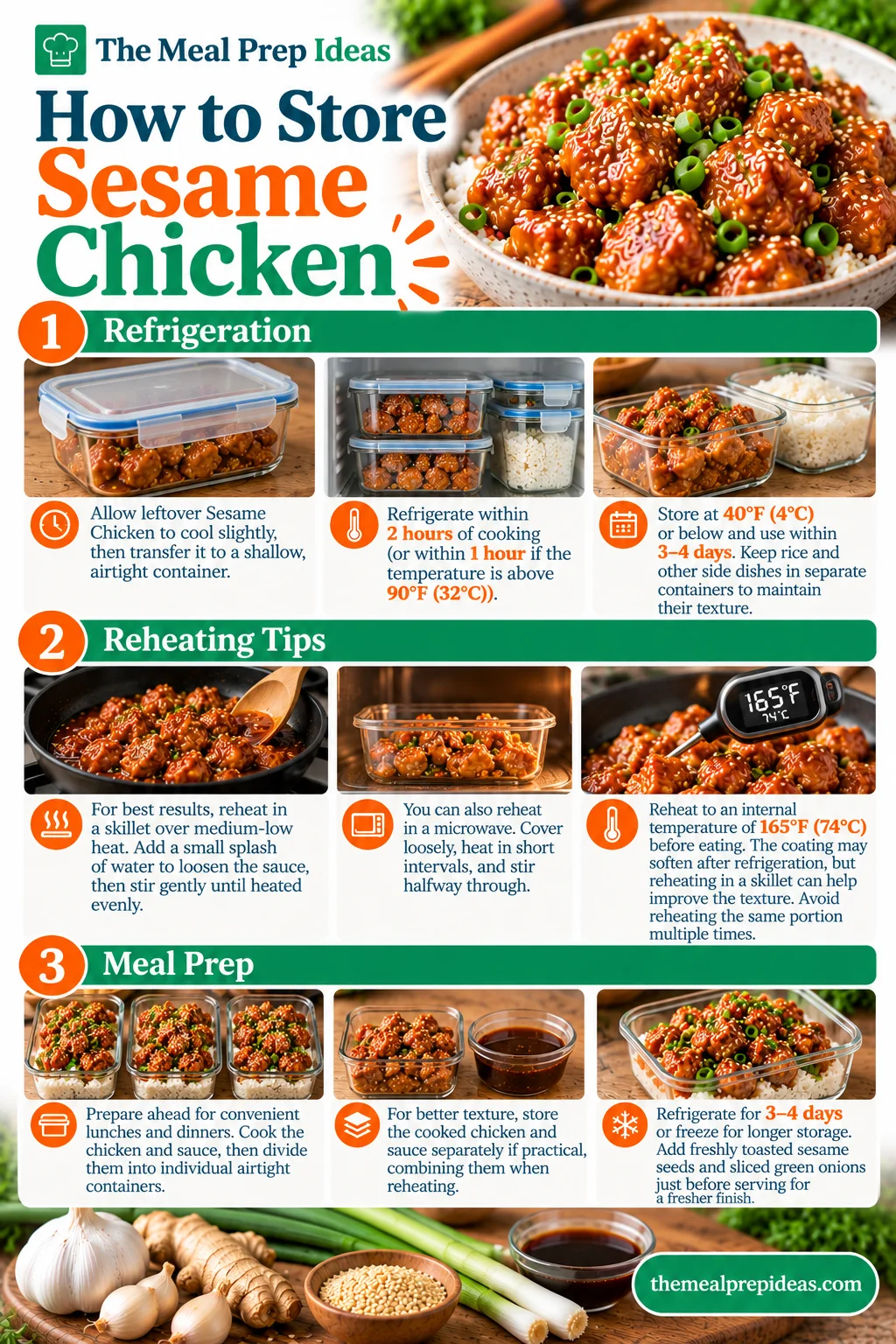
Cooked chicken stored in airtight containers with refrigeration, reheating, and meal prep tips.

Frequently Asked Questions

What Does Sesame Chicken Sauce Taste Like?

Sesame Chicken sauce is typically sweet, savory, slightly tangy, and nutty. Soy sauce provides a salty, savory base, honey adds sweetness, and rice vinegar brings acidity. Garlic, ginger, and sesame oil contribute extra depth and aroma. The final flavor depends on the ingredient proportions and any optional spices you add.

Can I Bake Instead of Frying the Chicken?

Yes. Arrange the egg- and cornstarch-coated chicken pieces on a lightly oiled baking sheet in a single layer. Lightly brush or spray the pieces with oil and bake at 425°F (220°C), turning once, until golden and the thickest pieces reach 165°F (74°C). This may take around 18–25 minutes, depending on their size and your oven.

Toss the cooked chicken in the prepared sesame sauce just before serving. The baked version may be less crisp than pan-fried chicken.

What Vegetables Pair Well with Sesame Chicken?

Broccoli, bell peppers, carrots, snap peas, mushrooms, and green onions all pair well with Sesame Chicken. They provide a mix of sweetness, freshness, and crunch that complements the glossy sauce. Cook the vegetables until just tender before combining them with the chicken to help preserve their texture.

What Should I Serve with Sesame Chicken?

Steamed jasmine rice is a classic choice because it absorbs the sauce. Brown rice, noodles, stir-fried vegetables, and lettuce cups are also suitable options. For a more complete meal, add broccoli, carrots, or another vegetable side.

If you prefer a noodle-based meal, our Sesame Noodle Bowls are another delicious option for a quick lunch or dinner.

Can I Make Sesame Chicken Ahead of Time?

Yes. You can prepare the sauce and cut the chicken ahead of time, storing them separately in the refrigerator. For the best texture, coat and cook the chicken shortly before serving.

You can also prepare the complete dish in advance and refrigerate it for 3–4 days. Reheat leftovers to 165°F (74°C) before serving, keeping in mind that the coating may soften during storage.

No ratings yet

Sesame Chicken

Make easy Sesame Chicken in 30 minutes with tender chicken and a sweet, savory sesame sauce. Perfect for weeknight dinners with rice or noodles.

Sesame Chicken served with steamed white rice and colorful vegetables on a plate.the meal
prep ideas
15 minPrep
15 minCook
30 minTotal
Makes 4Servings
Print recipe

How to prepare

  1. 1Prepare the chicken: Cut the chicken into evenly sized, bite-sized pieces. Pat them dry with paper towels and season with salt and black pepper.
  2. 2Coat the chicken: Dip each piece into the beaten egg, allowing any excess to drip off. Toss the pieces in cornstarch until lightly coated, then shake off the excess.
  3. 3Prepare the sauce: In a bowl, whisk together the soy sauce, honey, rice vinegar, sesame oil, garlic, ginger, and ¼ cup water. In a separate small bowl, mix 1 tablespoon cornstarch with 1 tablespoon water until smooth to make the slurry.
  4. 4Pan-fry the chicken: Heat the cooking oil in a large skillet over medium heat. Add the chicken in batches, leaving space between the pieces. Cook for approximately 3–4 minutes per side, turning as needed, until golden and cooked through. Use a food thermometer to confirm that the thickest pieces reach 165°F (74°C). Transfer the chicken to a clean plate.
  5. 5Thicken the sauce: Carefully remove excess oil from the skillet, leaving a thin coating. Pour in the prepared sauce and bring it to a gentle simmer. Stir the cornstarch slurry again, add it gradually, and cook for 1–2 minutes, stirring until the sauce becomes glossy and slightly thickened.
  6. 6Coat the chicken: Return the cooked chicken to the skillet and toss gently until every piece is evenly coated in the sauce.
  7. 7Garnish and serve: Sprinkle with toasted sesame seeds and sliced green onions. Serve immediately with steamed rice, noodles, or your favorite vegetables.

Good to know

  • Cut the chicken evenly: Similar-sized pieces cook more consistently and help prevent smaller pieces from drying out.
  • Pat the chicken dry: Removing excess moisture helps the egg and cornstarch coating adhere more effectively.
  • Cook in batches: Overcrowding the skillet can cause the chicken to steam instead of brown.
  • Control the saltiness: Use low-sodium soy sauce if you want more control over the finished flavor.
  • Measure the sesame oil carefully: Its concentrated flavor can overpower the sauce if you use too much.
  • Adjust the sauce gradually: Add the cornstarch slurry a little at a time to control thickness. The sauce will continue to thicken slightly as it cools.
  • Coat just before serving: Tossing the chicken in the sauce right before serving helps preserve its golden exterior.
  • Check the internal temperature: Always confirm that the thickest chicken pieces reach 165°F (74°C).
  • You can use different ingredients depending on your preferred texture and dietary needs.
  • Whichever option you choose, avoid overcrowding the pan so the pieces can brown evenly. Tofu will have a different texture from chicken, but the sesame sauce provides a similar sweet and savory flavor.
  • The sesame sauce is easy to customize without changing the main cooking method.
  • Make small adjustments and taste the sauce before tossing it with the chicken. This helps maintain a balanced combination of sweetness, saltiness, and acidity.
  • Vegetables add color, texture, and variety to Sesame Chicken. They also make it easy to turn the dish into a more complete meal.
  • For the best texture, stir-fry the vegetables separately until just tender. Add them to the skillet with the cooked chicken and sauce, then toss briefly to combine. This helps prevent the vegetables from becoming too soft.
  • For another easy stir-fry dinner with plenty of vegetables, try our Ground Beef Stir Fry.
  • Sesame Chicken pairs well with a variety of sides, whether you're preparing a quick lunch or a family dinner.
  • If you enjoy chicken and rice bowls, our Thai Peanut Chicken Bowls offer another delicious option with a rich, savory sauce.
  • Allow leftover Sesame Chicken to cool slightly, then transfer it to a shallow, airtight container. Refrigerate it within 2 hours of cooking, or within 1 hour if the surrounding temperature is above 90°F (32°C).
  • Store leftovers at 40°F (4°C) or below and use them within 3–4 days. When possible, keep rice and other side dishes in separate containers to help maintain their texture.
  • For the best results, reheat Sesame Chicken in a skillet over medium-low heat. Add a small splash of water to loosen the sauce, then stir gently until the chicken is heated evenly.
  • You can also reheat individual portions in a microwave-safe dish. Cover loosely, heat in short intervals, and stir halfway through. Reheat leftovers to an internal temperature of 165°F (74°C) before eating.
  • The coating may soften after refrigeration, but reheating in a skillet can help improve the texture. Avoid reheating the same portion multiple times.
  • Sesame Chicken can be prepared ahead for convenient lunches and dinners. Cook the chicken and sauce, then divide them into individual airtight containers.
  • For better texture, store the cooked chicken and sauce separately if practical, combining them when reheating. Add freshly toasted sesame seeds and sliced green onions just before serving for a fresher finish.
  • For another convenient make-ahead meal, our Sheet Pan Chicken Meal Prep is a great option for preparing lunches and dinners in advance.
  • Refrigerate portions promptly and use them within 3–4 days. If you need to keep the meal longer, freeze it in suitable airtight containers.
  • You can also add variety to your weekly meal plan with our Teriyaki Salmon Bowls, a flavorful option for lunch or dinner.
Dairy-FreeHigh-ProteinGluten-Free OptionLower-Sugar OptionContains Sesame

Made this recipe?

Tag @themealprepideas on Instagram — we love seeing what you made.

Tag us

Reviews & Comments

Be the first to rate, review, or ask a question about this recipe.

No comments yet

Be the first cook to share feedback or ask a question about this recipe!

Leave a Review & Rating

Tap to rate

Comments are moderated for community safety. External links are filtered.

Keep Cooking

You Might Also Like

Steak Stir Fry

Steak Stir Fry

Make this easy steak stir fry with tender beef, crisp vegetables, and savory garlic sauce. Ready in 30 minutes for a quick weeknight dinner!

15 min
Get Recipe

Taco Pasta Skillet

Taco Pasta Skillet

Make this easy Taco Pasta Skillet with seasoned ground beef, tender pasta, tomato sauce, and melted cheese. Ready in just 35 minutes!

10 min
Get Recipe

Meal Prep Meatballs

Meal Prep Meatballs

Make easy Meal Prep Meatballs with ground beef, herbs, and simple seasonings. Perfect for make-ahead lunches, dinners, and freezer-friendly meals!

15 min
Get Recipe

Get Your Free 7-Day Meal Prep Plan

Join 50,000+ subscribers getting weekly meal prep ideas, shopping lists, and time-saving tips straight to their inbox.

No spam. Unsubscribe anytime.