Meal Prep Ideas
Back to Home Page

Sheet Pan Pancakes

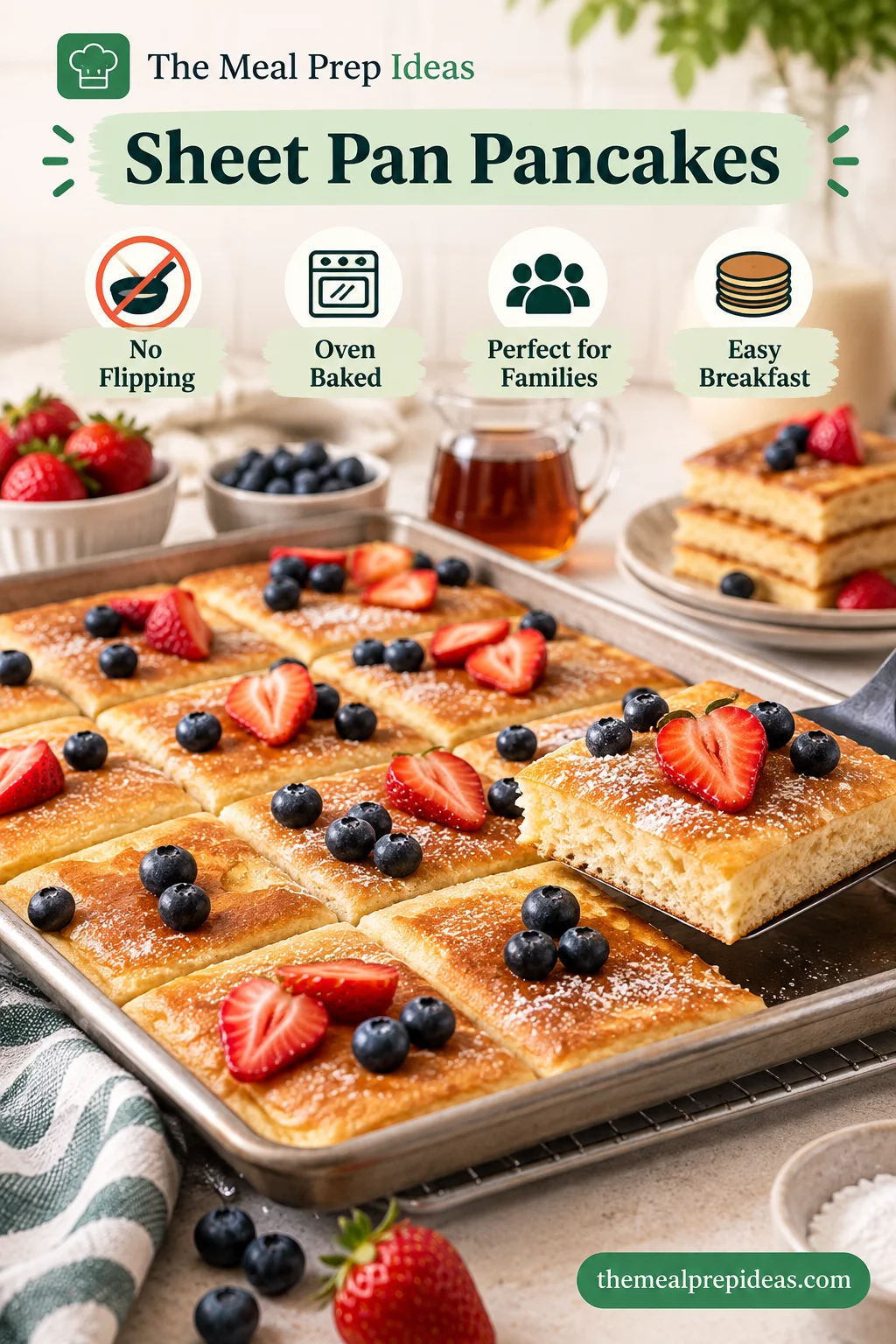
Make fluffy Sheet Pan Pancakes in the oven with no flipping. This easy breakfast is perfect for families, meal prep, and busy mornings.

Sheet Pan Pancakes stacked on a wooden board with powdered sugar falling over them, featuring a pancake caught mid-air against a dark background for a dramatic, appetizing breakfast presentation.

Get This Recipe Summarized by AI

Ask your favorite AI assistant to summarize this recipe, suggest swaps, or scale it up — one click away.

We copy the prompt to your clipboard too — just paste (Ctrl/Cmd+V) if it doesn't appear automatically.

If you love pancakes but don’t love standing by the stove flipping one pancake after another, this sheet pan pancakes recipe is a much easier option. Instead of cooking each pancake in a skillet, you spread the batter on a baking sheet and let the oven do the work.

The result is a batch of soft, fluffy pancakes with lightly golden edges that you can cut into easy-to-serve pieces. It’s a great easy breakfast for a busy morning, a relaxed weekend, or a family breakfast when you need enough pancakes for everyone at once.

The best part is the no flipping. Once the batter is in the pan, you can step away while it bakes. That makes these oven baked pancakes a handy choice for breakfast for a crowd and a simple option for make-ahead mornings. If you want homemade pancakes with less hands-on cooking, this sheet pan pancake recipe is a great place to start.

Sheet Pan Pancakes stacked on a wooden board with powdered sugar falling over them, creating a fluffy, homemade breakfast presentation against a dark background.

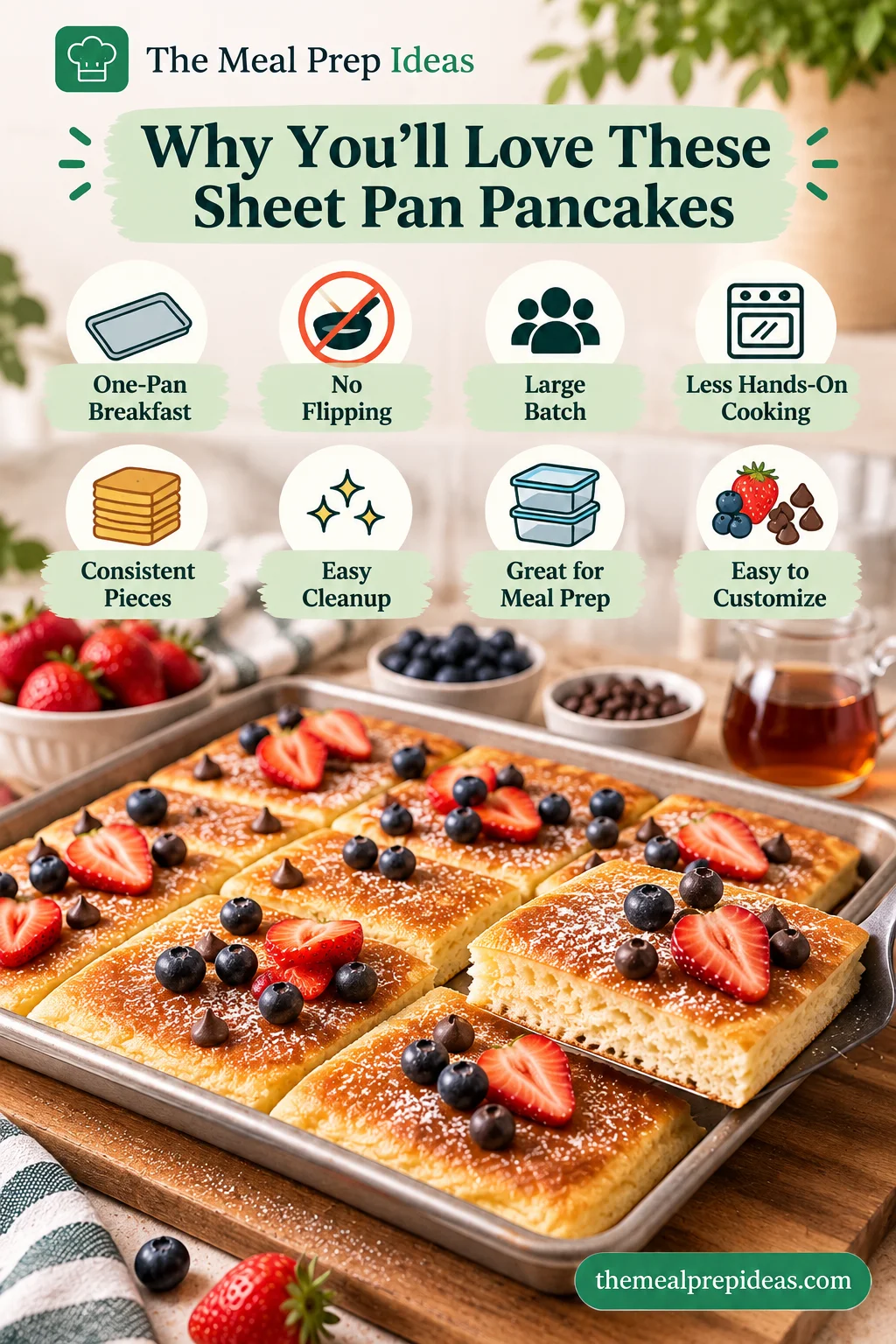
Why You’ll Love These Sheet Pan Pancakes

These oven-baked pancakes make breakfast easier without giving up the soft, fluffy texture you want from homemade pancakes. Instead of cooking pancakes one by one, you get a whole batch at once.

  • One-pan breakfast: Everything cooks in one baking pan, so there’s less work at the stove.
  • No flipping: These are easy no-flip pancakes, which means you don’t have to watch and turn individual pancakes.
  • Large batch: You can make enough large batch pancakes to serve the whole family at once.
  • Less hands-on cooking: The oven handles most of the work, giving you more time to prepare coffee, fruit, or other breakfast dishes.
  • Consistent pieces: Baking the batter in one pan gives you evenly cooked pancakes that are easy to cut into similar-sized pieces.
  • Easy cleanup: With just one main pan to clean, this easy breakfast recipe creates less mess than cooking multiple batches in a skillet.
  • Great for meal prep: Leftover pancakes can be portioned and saved for a quick meal prep breakfast during the week.
  • Easy to customize: You can add different fruits, chocolate chips, or other toppings so everyone can enjoy their favorite version.

It’s a simple family breakfast that also works well when you’re feeding a group or planning breakfast for a crowd.

Sheet Pan Pancakes baked in one tray and cut into even pieces, highlighting an easy no-flip breakfast for families, meal prep, and feeding a crowd.

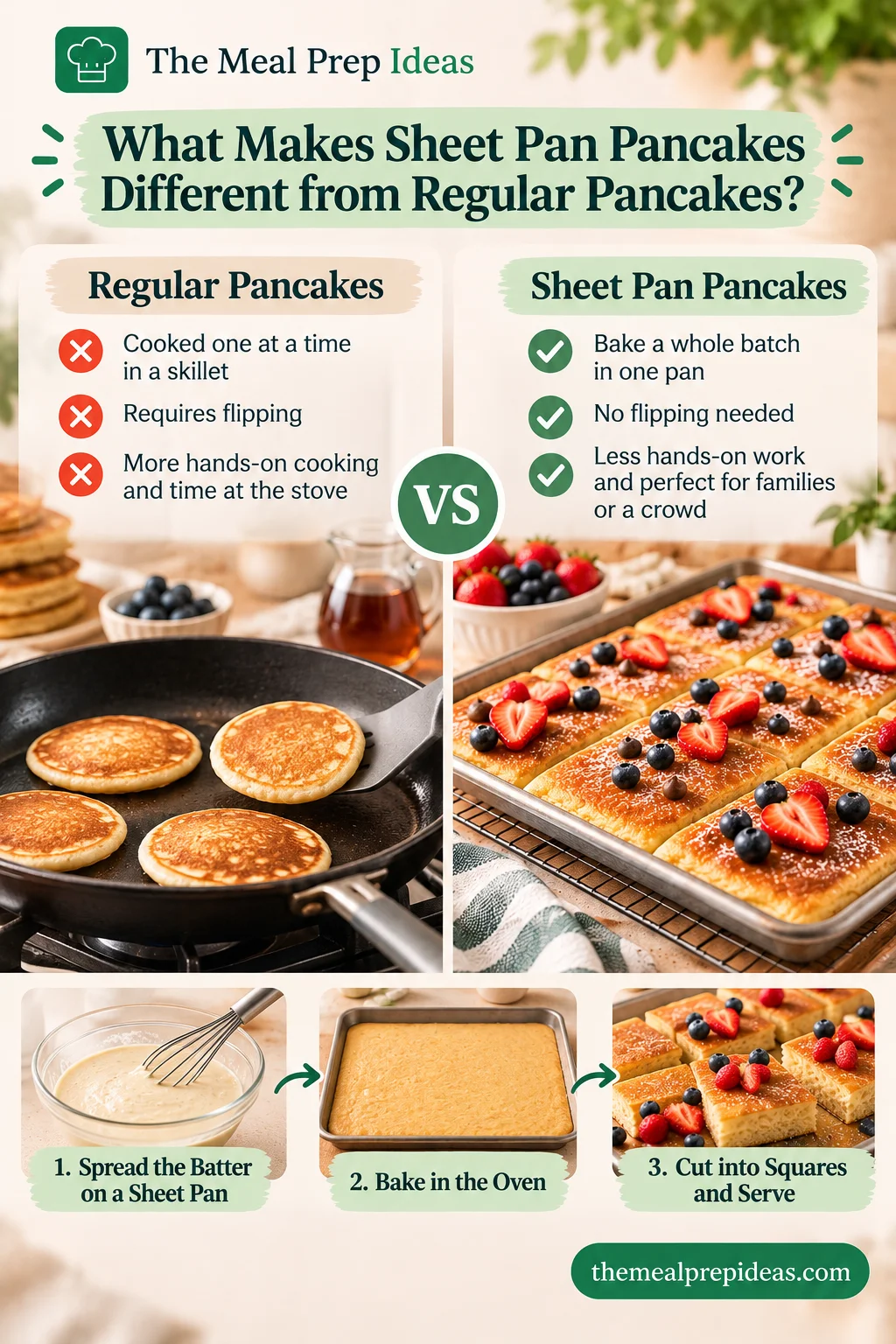
What Makes Sheet Pan Pancakes Different from Regular Pancakes?

Traditional pancakes are usually cooked one or a few at a time in a skillet. You have to watch each pancake, wait for bubbles to form and flip it before cooking the other side. That means more time standing at the stove, especially when you’re making breakfast for several people.

With pancakes on a sheet pan, the process is much simpler. You spread the batter into one pan and bake the whole batch together. These pancakes in the oven don’t need to be flipped, so you can step away while they cook.

Once the baked pancakes are done, simply let them cool for a few minutes and cut them into squares or rectangles. This makes pancakes without flipping a convenient choice when you’re feeding a family or a larger group.

The sheet pan method is also useful if you want pancakes without a skillet. Instead of managing several rounds on the stovetop, you get one evenly baked batch with less hands-on work and easier serving.

Sheet Pan Pancakes baking together in a rimmed baking sheet, showing how oven baking eliminates flipping individual pancakes and makes serving easier.

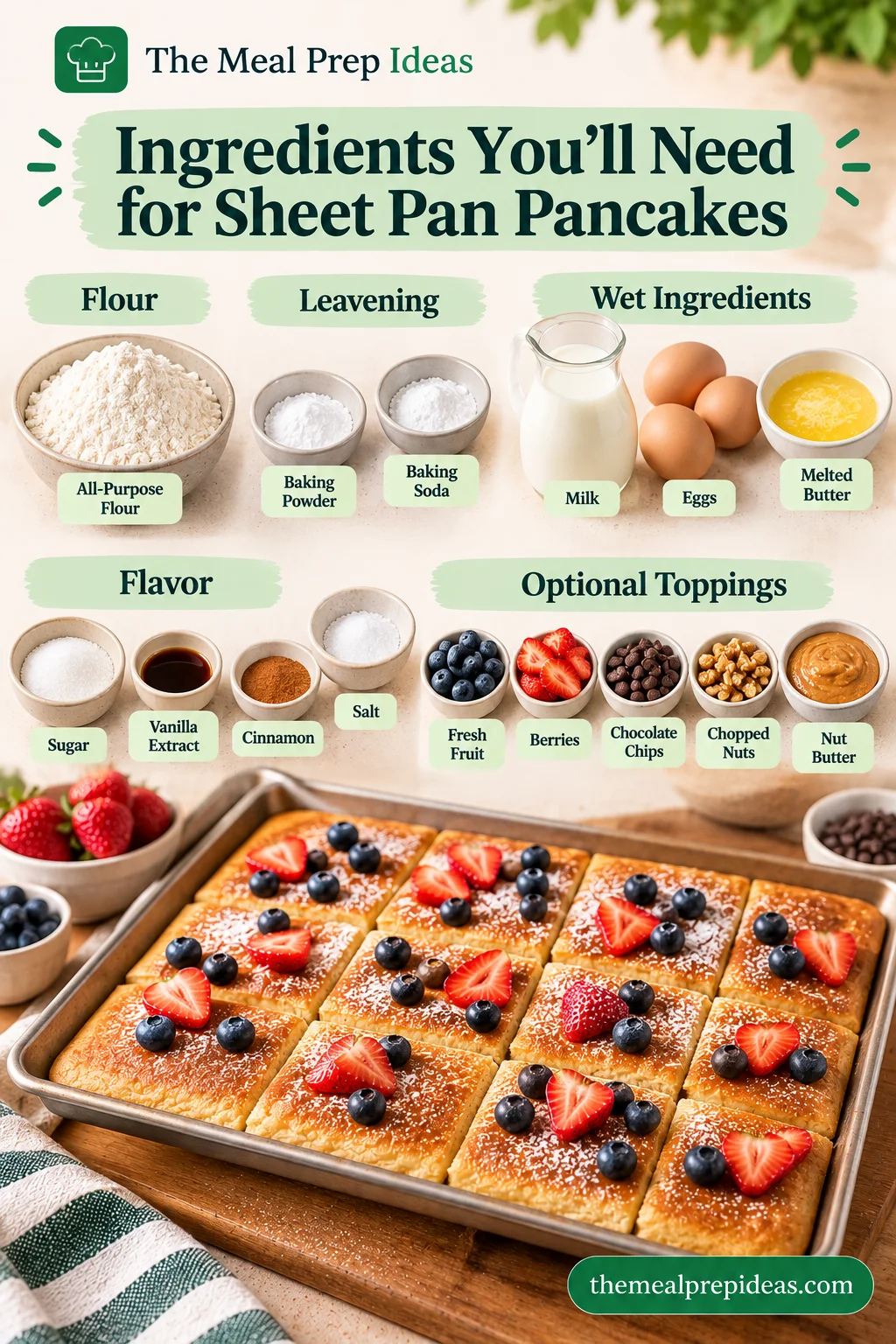
Ingredients You’ll Need for Sheet Pan Pancakes

The ingredients are similar to those used in classic homemade pancakes, but each one has an important job. The flour gives the batter structure, while the leavening agents help the pancakes rise and stay light.

Flour

All-purpose flour is the main base for the pancake batter. It gives the pancakes a soft texture while still providing enough structure to hold their shape after baking. If you use another type of flour, keep in mind that it can change the texture and may require adjustments to the liquid.

Leavening

Baking powder helps the pancakes rise as they bake, giving them a light and fluffy texture. If the recipe also uses baking soda, it works with the acidic ingredients to add more lift and browning.

Wet Ingredients

Eggs help bind the batter and add structure, while milk provides the liquid needed to create a smooth batter. If you’re using buttermilk, it also adds a slight tang and works with the leavening ingredients.

Melted butter adds richness and helps keep the pancakes tender. Unsalted butter is useful when you want more control over the overall saltiness of the recipe.

Flavor

Sugar adds gentle sweetness and helps the pancakes develop lightly golden edges as they bake. Vanilla extract gives the batter a warm, familiar pancake flavor, while salt balances the sweetness. A little cinnamon can also add extra warmth if you enjoy a more flavorful pancake.

Optional Toppings

You can keep the batter simple and add toppings before baking, such as fresh fruit, blueberries, chocolate chips, chopped nuts, or nut butter. These are easy ways to customize different parts of the pan without changing the basic pancake batter.

heet Pan Pancakes ingredients including all-purpose flour, baking powder, eggs, milk, melted butter, sugar, vanilla extract, salt, and optional fruit and chocolate chips.

Sheet Pan Pancakes Recipe

Time

  • Prep Time: 10 minutes
  • Bake Time: 15–18 minutes
  • Total Time: 25–28 minutes
  • Servings: 12

Ingredients

  • 2 cups all-purpose flour
  • 2 teaspoons baking powder
  • ½ teaspoon baking soda
  • ¼ cup granulated sugar
  • ½ teaspoon salt
  • 2 large eggs
  • 1½ cups buttermilk
  • ¼ cup unsalted butter, melted and slightly cooled
  • 2 teaspoons vanilla extract
  • ½ teaspoon cinnamon, optional
  • Nonstick spray or butter, for greasing the pan

Instructions

  1. 1Preheat the oven to 425°F (220°C).
  2. 2Grease a 13 × 18-inch rimmed baking sheet with nonstick spray or butter. You can also line it with parchment paper.
  3. 3In a large bowl, whisk together the flour, baking powder, baking soda, sugar, salt and cinnamon if using.
  4. 4In a separate bowl, whisk the eggs, buttermilk, melted butter and vanilla extract until combined.
  5. 5Pour the wet ingredients into the dry ingredients and gently stir until just combined. Do not overmix; a few small lumps are fine.
  6. 6Pour the pancake batter into the prepared baking sheet and spread it evenly into the corners with a spatula.
  7. 7Add any desired toppings, such as blueberries or chocolate chips, over the batter.
  8. 8Bake for 15–18 minutes, or until the top is set, the edges are lightly golden brown and the center feels springy.
  9. 9Let the pancake cool for a few minutes, then cut into squares or rectangles and serve warm.

Notes

  • Use a 13 × 18-inch rimmed baking sheet for the best thickness and even cooking.
  • The batter should be medium-thick but pourable. Spread it evenly so the center and edges cook at the same rate.
  • Don’t overmix the batter. A few small lumps are completely fine.
  • Add toppings before baking so they cook into the pancake.
  • The pancake is ready when the top is set, the edges are lightly golden and the center no longer jiggles.
  • Let it cool briefly before cutting so the pieces hold their shape more easily.

Nutrition

Estimated per serving:

  • Calories: 177
  • Protein: 5 g
  • Carbohydrates: 25 g
  • Fat: 6 g
  • Fiber: 1 g

Dietary

  • Vegetarian: Yes
  • Dairy-free: No
  • Gluten-free: No
  • Whole wheat: No

How to Make Sheet Pan Pancakes

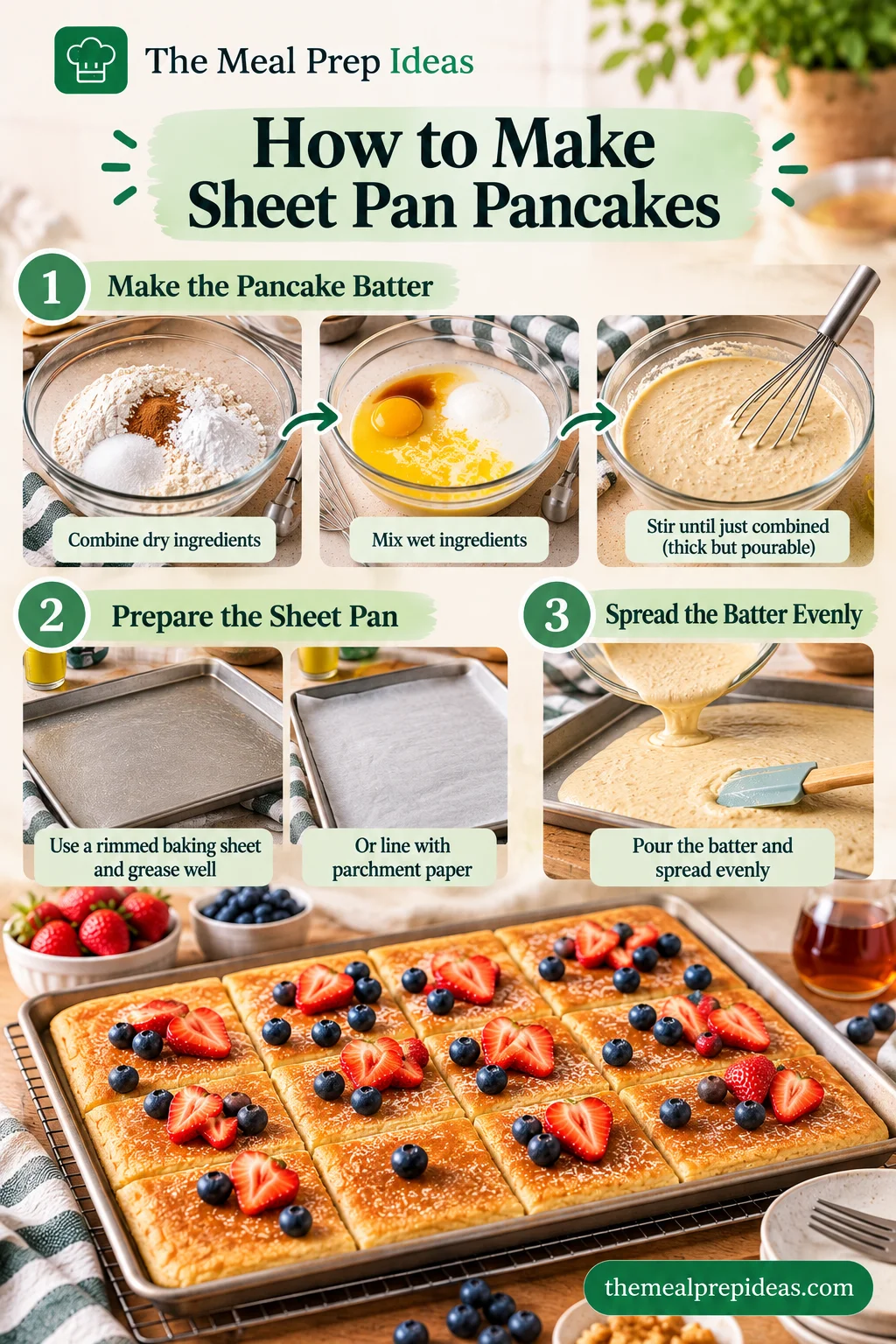
Making these pancakes is mostly about getting the batter to the right consistency, spreading it evenly and baking it until the center is fully set. Once the pan goes into the oven, there’s no need to flip individual pancakes.

Make the Pancake Batter

Start by combining the dry ingredients in one bowl and the wet ingredients in another. This helps distribute the baking powder, baking soda, sugar and salt evenly before they are mixed into the batter.

Add the wet mixture to the dry ingredients and stir just until combined. Don’t worry if you see a few small lumps. Overmixing can make the finished pancakes less tender.

The finished pancake batter should be thick but pourable. It should spread across the pan without running like a thin liquid. If the batter is extremely thick, it may be harder to spread evenly and can bake unevenly.

Prepare the Sheet Pan

Use a rimmed baking sheet so the batter stays contained while it spreads and bakes. A half sheet pan is a common choice for making a large batch.

Grease the sheet pan well with nonstick spray or butter, paying extra attention to the corners and edges. You can also line the pan with parchment paper for easier removal and cleanup.

A properly prepared pan helps prevent the baked pancake from sticking when you’re ready to cut and serve it.

Spread the Batter Evenly

Pour the batter into the center of the prepared pan, then gently spread the batter toward the corners with a spatula.

Try to keep the thickness as even as possible. If some areas are much thicker than others, they may need more time to cook while thinner areas can become dry. Avoid pushing too much batter into the corners or leaving very thin edges.

Sheet Pan Pancakes preparation showing pancake batter mixed in a bowl, spread evenly across a greased rimmed baking sheet, and baked until golden.

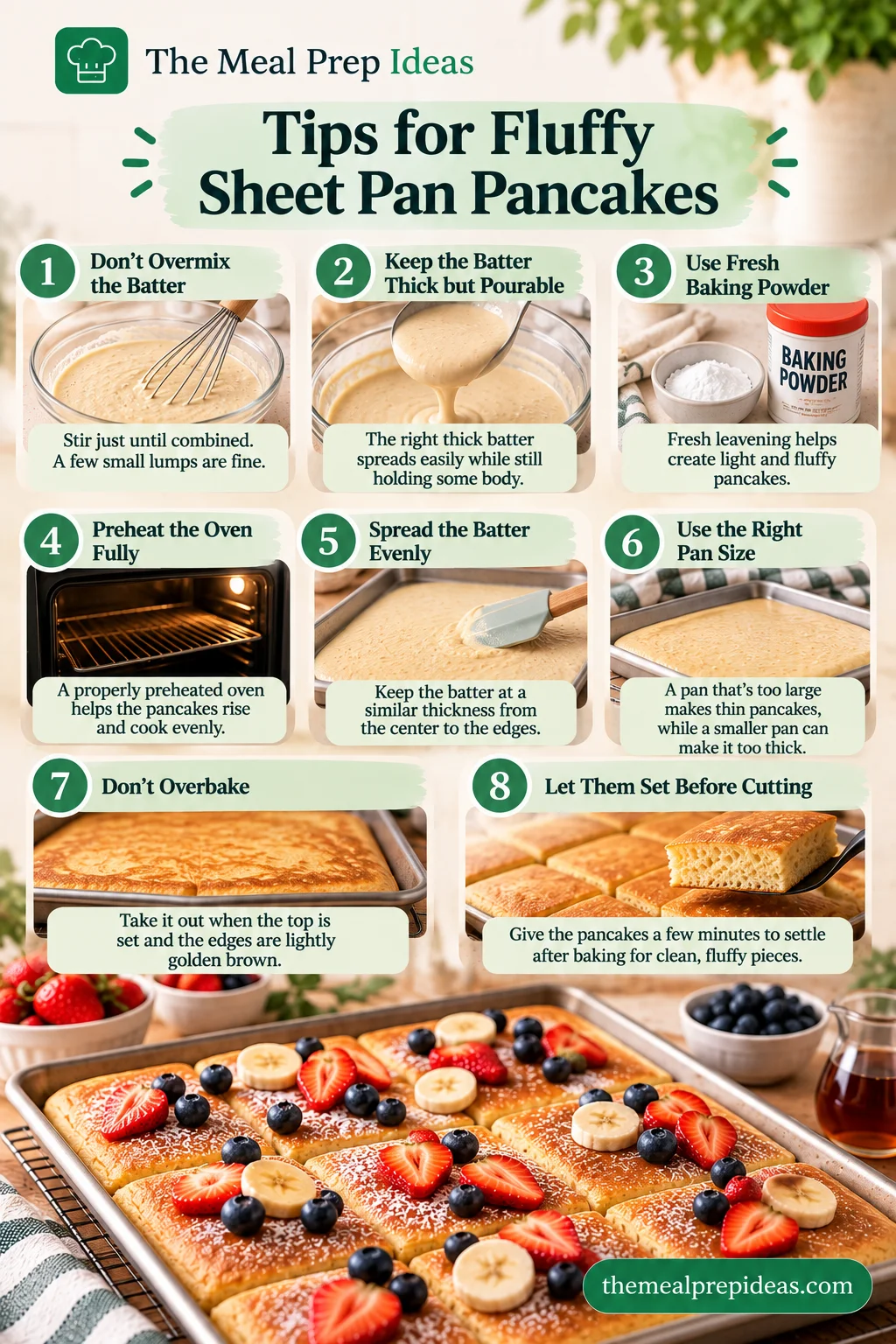
Tips for Fluffy Sheet Pan Pancakes

Getting fluffy pancakes in the oven is mostly about the batter, pan and baking time. A few small details can make the difference between soft, tender pancakes and a batch that feels flat or dry.

  • Don’t overmix the batter: Stir the wet and dry ingredients just until they come together. A few small lumps are fine. Overmixing can make the pancakes less tender.
  • Keep the batter thick but pourable: A very thin batter can spread too much and produce flatter pancakes. The right thick batter should spread easily while still holding some body.
  • Use fresh baking powder: Old baking powder may not give the batter enough lift. Fresh leavening helps create light pancakes with a softer texture.
  • Preheat the oven fully: Put the pan into a properly preheated oven so the pancakes start cooking at the correct temperature right away.
  • Spread the batter evenly: Try to keep the batter at a similar thickness from the center to the edges. This helps the pancakes cook evenly instead of having thin, dry edges and a thick center.
  • Use the right pan size: A pan that’s too large can make the batter too thin, while a smaller pan can make it too thick. The correct size helps you get the right pancake texture.
  • Don’t overbake: Take the pancakes out when the top is set and the edges are lightly golden brown. Leaving them in the oven too long can turn soft pancakes dry.
  • Let them set before cutting: Give the baked pancake a few minutes to settle after coming out of the oven. This makes it easier to cut clean pieces without tearing the fluffy pancakes.
Tips for fluffy oven-baked pancakes, including avoiding overmixing, using fresh baking powder, preheating the oven, spreading batter evenly, and preventing overbaking.

Add Toppings and Mix-Ins

Add your favorite toppings and mix-ins before the pan goes into the oven. Chocolate chips, fresh berries, blueberries, or chopped nuts all work well.

For a family breakfast, you can even divide the pan into sections and use different toppings in each area. Just avoid adding so many toppings that they weigh down the batter or cover the entire surface.

Bake Until Golden and Set

Place the pan in a preheated oven and bake until the top is set and the edges are lightly golden brown.

The center should look cooked rather than wet or jiggly. If you gently press the center, it should feel set and spring back slightly. These signs are more useful than relying on baking time alone because ovens and pan sizes can vary.

Slice and Serve

Let the baked pancake cool briefly before cutting it. Use a sharp knife or spatula to cut into squares or rectangles, depending on how you want to serve it.

Serve the pieces warm with your favorite toppings. Because the whole batch is baked together, it’s easy to slice into pieces and serve everyone at the same time—perfect for a relaxed family breakfast.

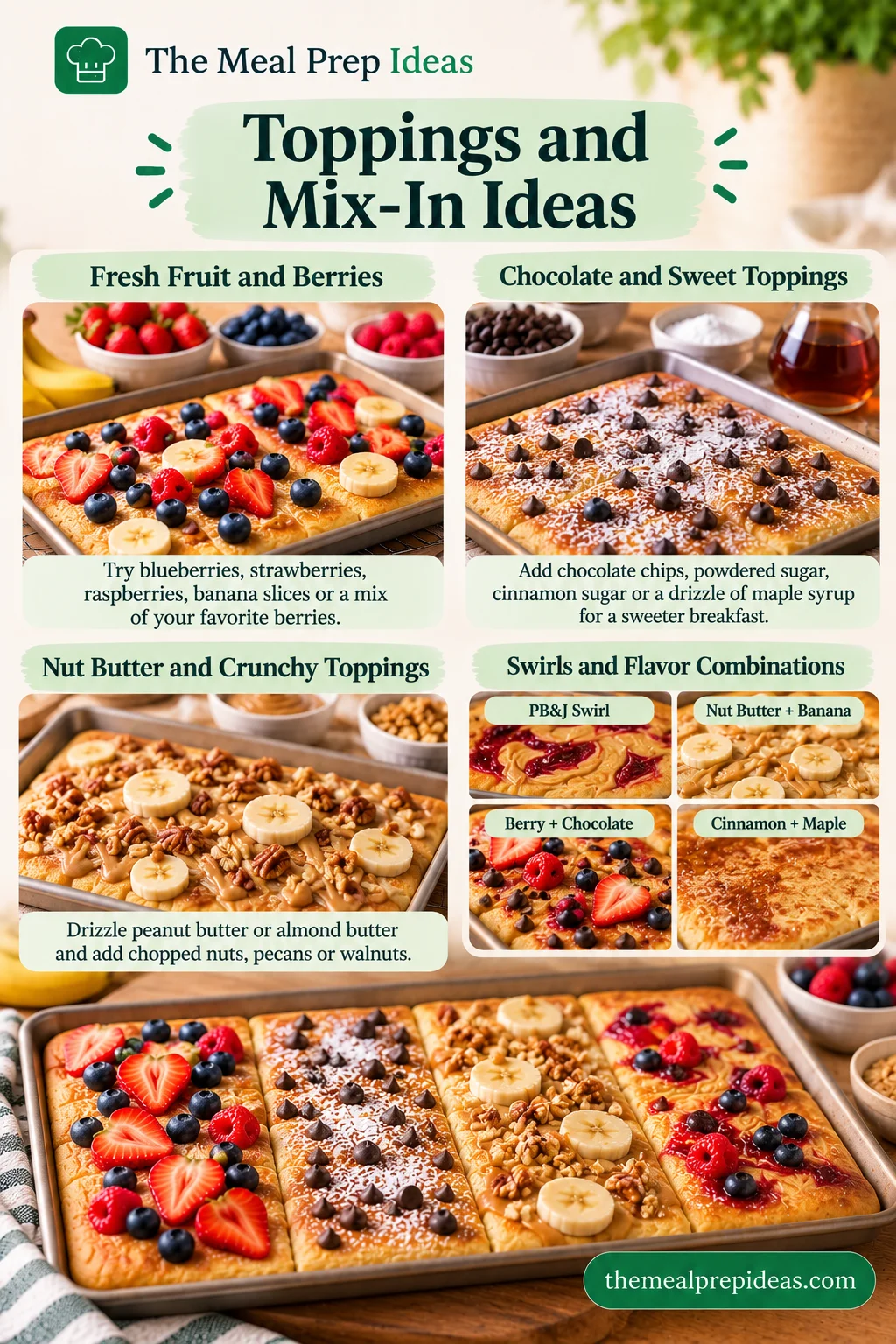
Sheet-pan pancakes topped with fresh berries, banana slices, chocolate chips, powdered sugar, nut butter, chopped nuts, and different flavor combinations.

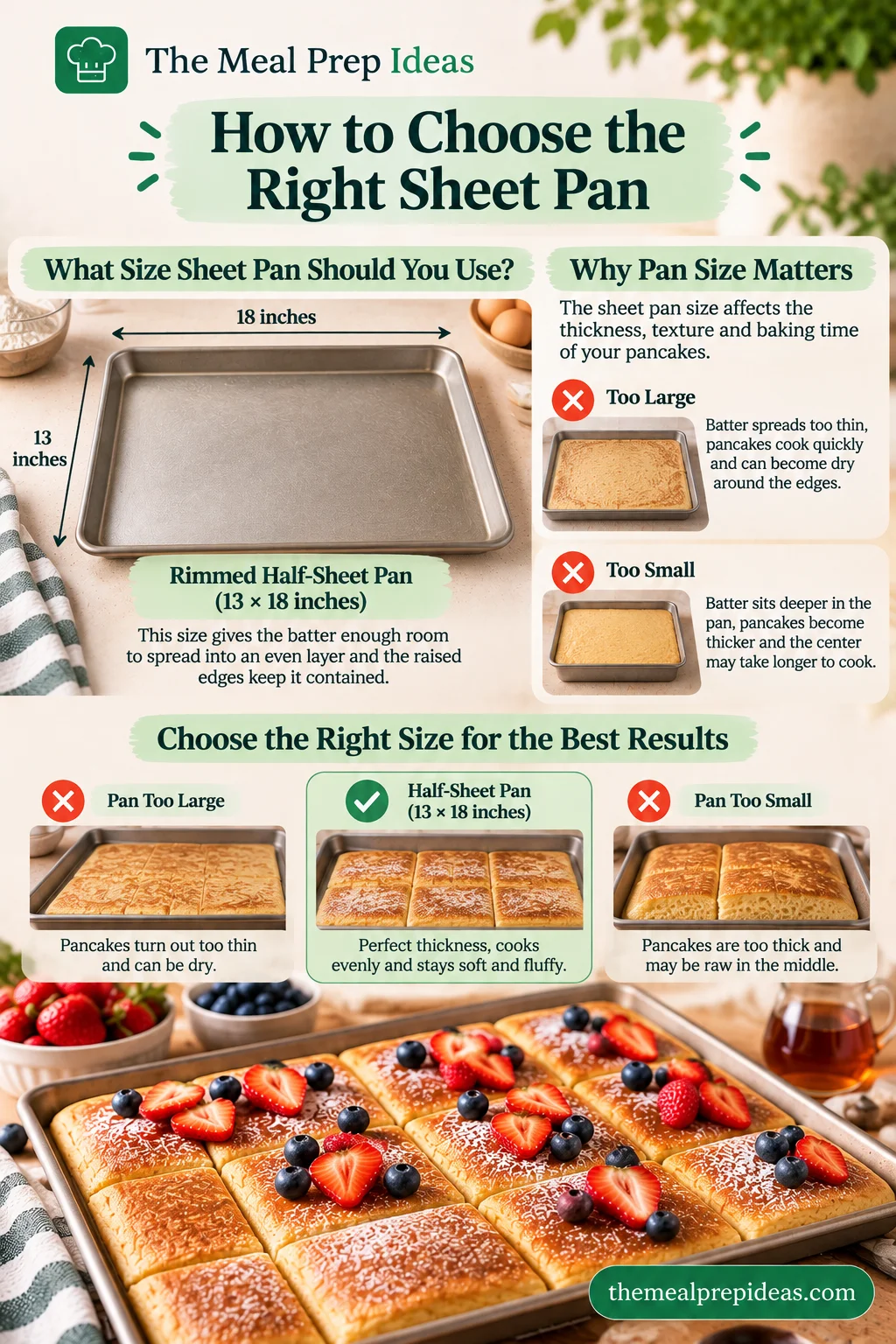
How to Choose the Right Sheet Pan

The sheet pan size can change the thickness and texture of your pancakes more than you might expect. Using the right pan helps the batter spread to the correct depth, so the pancakes cook evenly without becoming too thin or too thick.

What Size Sheet Pan Should You Use?

For this recipe, use a rimmed half-sheet pan, ideally around 13 × 18 inches. The raised edges keep the pancake batter contained while giving it enough room to spread into an even layer.

If you’re checking your baking sheet size, make sure the pan has enough surface area for the amount of batter in the recipe. A different-sized pan can still work, but the pancakes may be thicker or thinner, so the baking time may need to change.

Why Pan Size Matters

The right pan helps control the final thickness of the pancakes.

  • Too large: The batter spreads too thin, which can make the pancakes cook quickly and become dry around the edges.
  • Too small: The batter sits deeper in the pan, so the pancakes become thicker and the center may take longer to cook.

If the batter is too thick because of a small pan, you may end up with pancakes raw in the middle while the outside looks done. On the other hand, a very large pan can create pancakes too thin to stay soft and fluffy.

So, if you want consistent results, stick close to the recommended half sheet pan size rather than choosing a pan based only on what you have available.

Comparison of baking sheet sizes showing a 13 × 18-inch rimmed half-sheet pan and how pan size affects pancake thickness and even baking.

How to Tell When Sheet Pan Pancakes Are Done

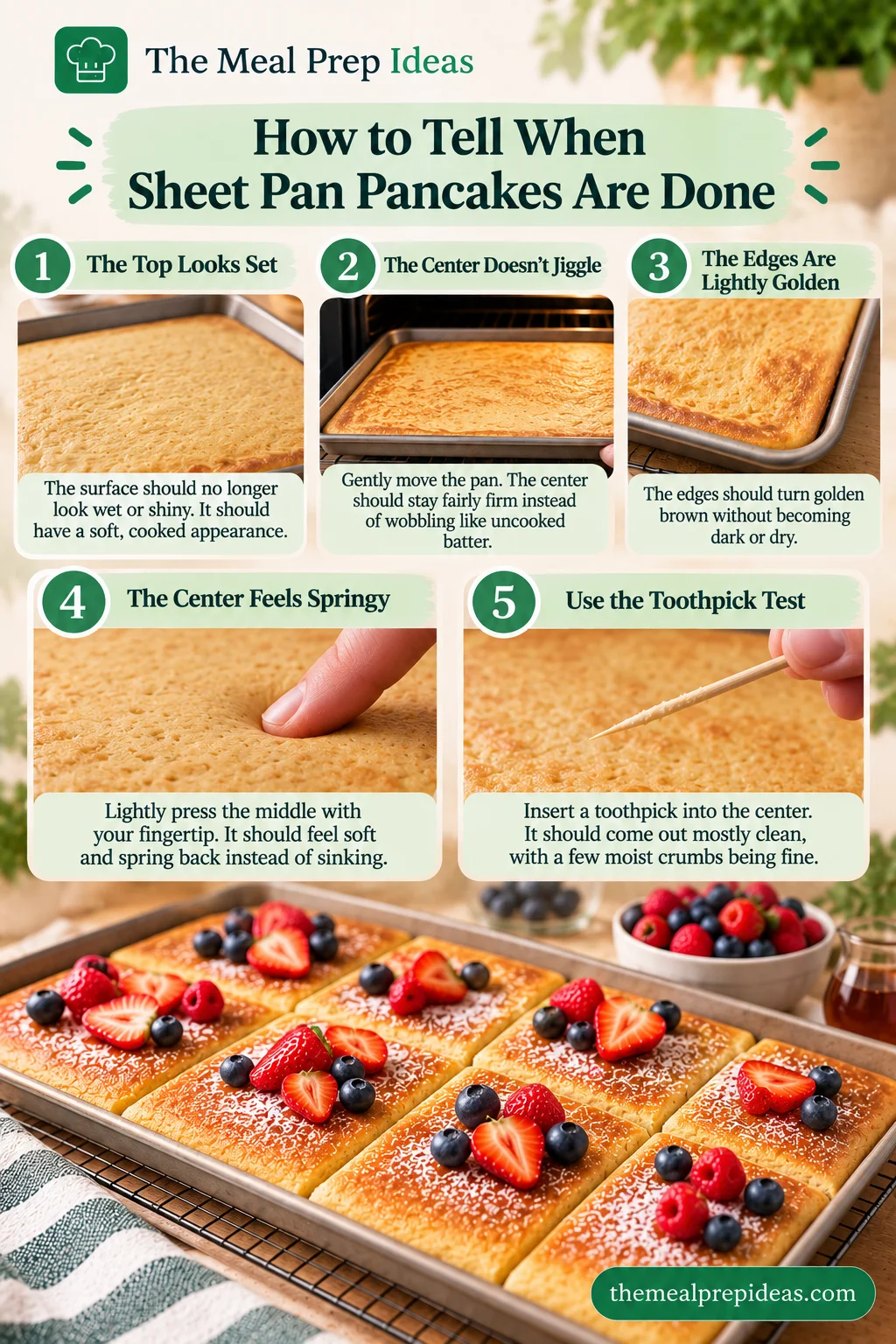
Knowing when pancakes are done is easier when you look at the pancake rather than relying only on the clock. Baking time can vary slightly depending on your oven, pan size and how evenly the batter is spread.

Look for these signs:

  • The top looks set: The surface should no longer look wet or shiny. It should have a soft, cooked appearance.
  • The center doesn’t jiggle: Gently move the pan. The center should stay fairly firm instead of wobbling like uncooked batter.
  • The edges are lightly golden: The edges should turn golden brown without becoming dark or dry.
  • The center feels springy: Lightly press the middle with your fingertip. It should feel soft and spring back instead of sinking.
  • Use the toothpick test: Insert a toothpick into the center. It should come out mostly clean, with a few moist crumbs being fine.

So, how long do sheet pan pancakes take? Follow the recipe's recommended baking time as a starting point, but use these visual and texture signs to decide when they’re ready.

If the center still looks wet or the toothpick comes out with raw batter, the pancakes are not cooked through yet. Give them a little more time and check again. This helps prevent serving undercooked pancakes while also avoiding unnecessary overbaking.

Five doneness checks showing a set surface, firm center, lightly golden edges, springy texture, and a toothpick that comes out mostly clean.

Toppings and Mix-In Ideas

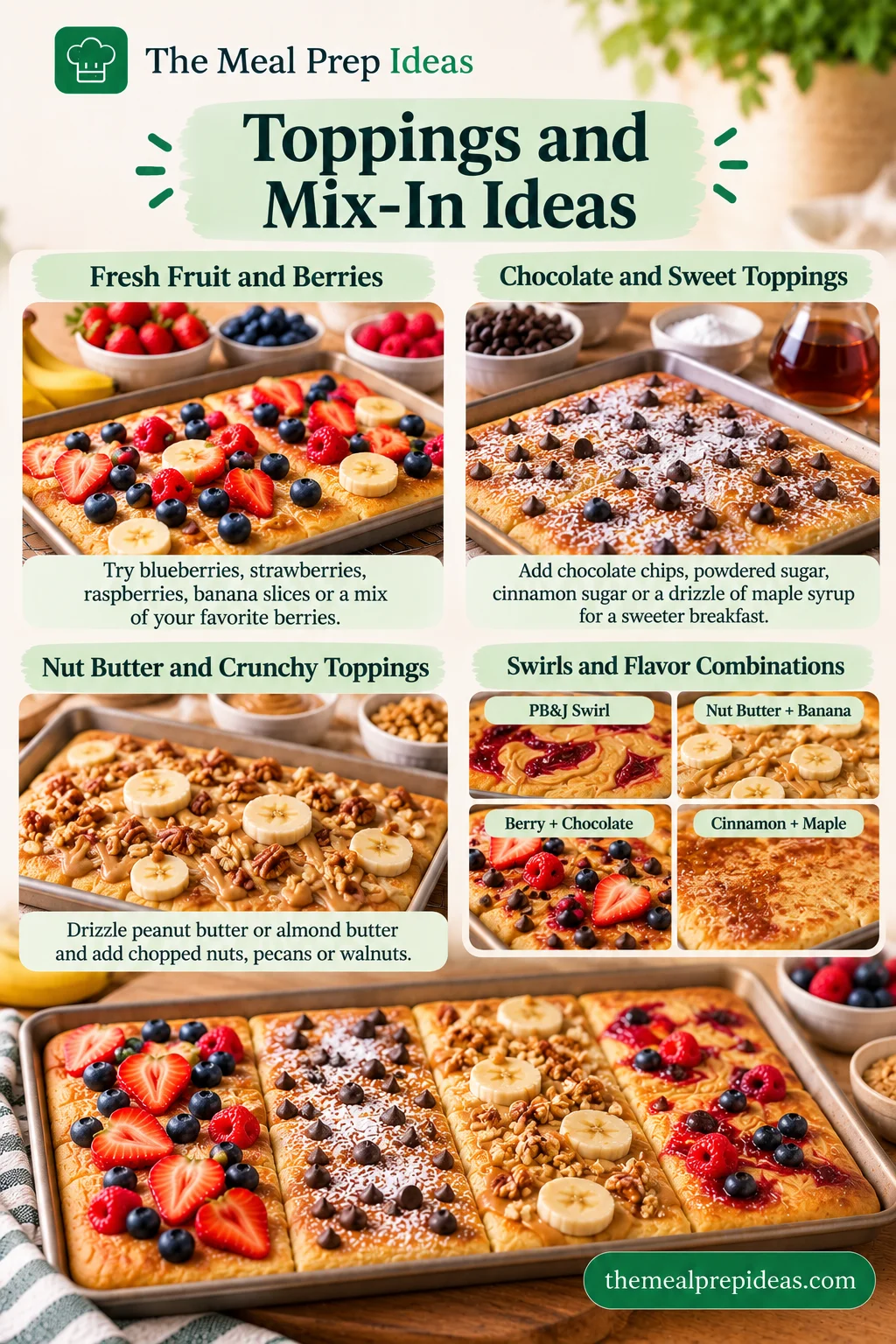
One of the best things about this recipe is how easy it is to customize. You can keep the whole batch simple or divide the batter into sections and give each part a different topping.

Fresh Fruit and Berries

Fresh fruit adds natural sweetness, color and a little freshness to the pancakes. Try blueberries, strawberries, raspberries, banana slices, or a mix of your favorite berries.

For larger fruit such as strawberries, cut them into small pieces so they don’t weigh down the batter. Mixed berries also work well when you want a few different flavors in one pan. For another homemade pancake option with a naturally sweet banana flavor, try Banana Oatmeal Pancakes, made with simple ingredients for an easy breakfast.

Chocolate and Sweet Toppings

For a sweeter breakfast, sprinkle chocolate chips over the batter before baking. After baking, you can finish the pancakes with powdered sugar, cinnamon sugar, or a drizzle of maple syrup.

These simple sweet toppings are especially good when serving pancakes to kids or anyone who prefers a dessert-like breakfast.

Nut Butter and Crunchy Toppings

Peanut butter and almond butter pair especially well with bananas and berries. You can drizzle a little over the baked pancakes or add small spoonfuls to the batter before baking.

For some crunch, sprinkle chopped nuts, pecans, or walnuts over the top. Keep the pieces fairly small so they’re easy to eat and don’t make the pancake difficult to slice.

Swirls and Flavor Combinations

You can also combine toppings to create different flavors in the same pan. A few easy combinations include:

  • PB&J swirl: Add small spoonfuls of peanut butter and your favorite berry jam, then gently swirl them into the batter.
  • Nut butter + banana: Add banana slices and a light drizzle of peanut or almond butter.
  • Berry + chocolate: Combine fresh berries with a few chocolate chips for a sweet-tart flavor.
  • Cinnamon + maple: Sprinkle cinnamon over the batter and serve the baked pancakes with warm maple syrup.

These pancake toppings and mix-ins make it easy to create different flavor combinations without changing the basic recipe.

Five doneness checks showing a set surface, firm center, lightly golden edges, springy texture, and a toothpick that comes out mostly clean.

Variations and Substitutions

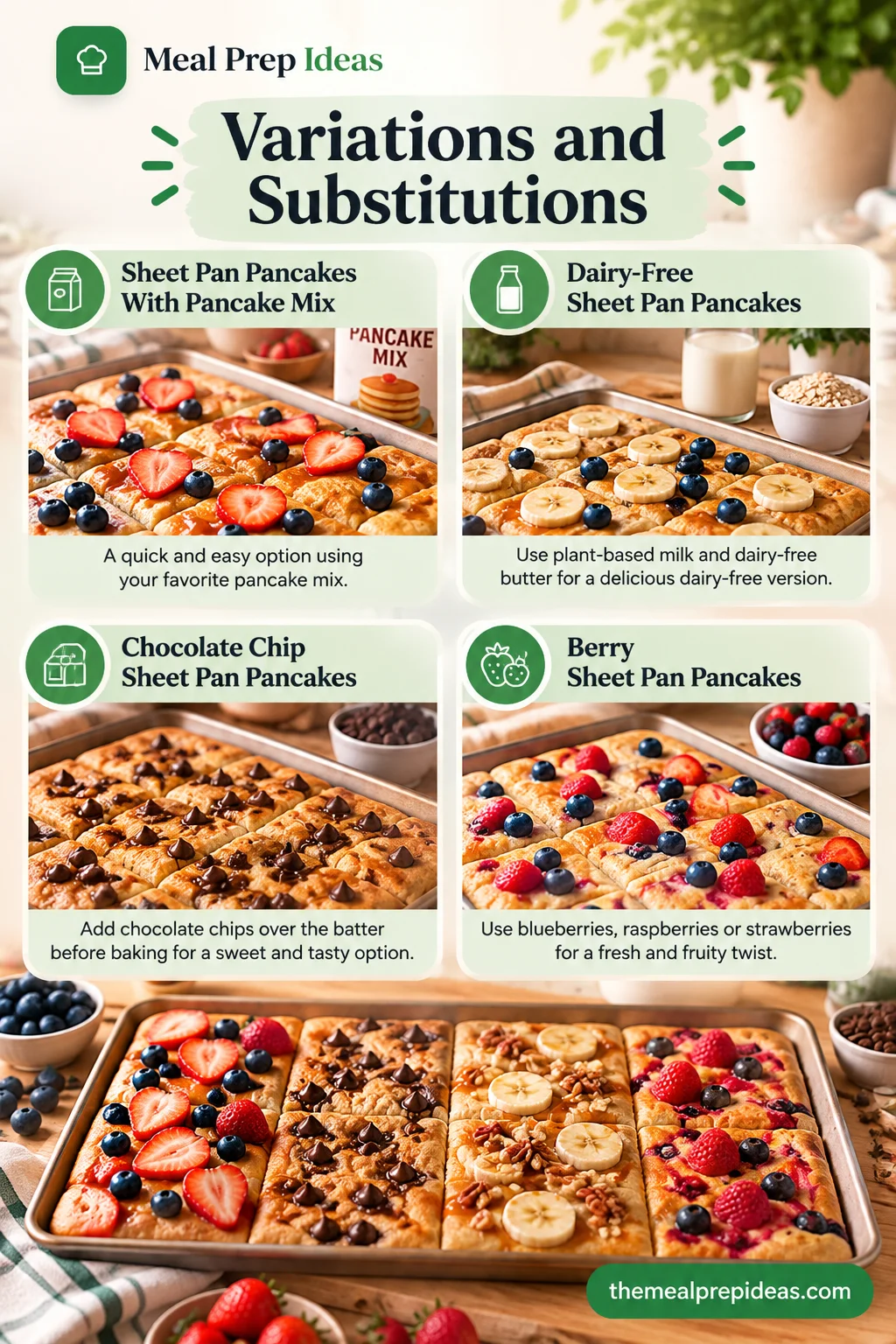
Sheet Pan Pancakes With Pancake Mix

Yes, you can make sheet pan pancakes with pancake mix when you want a quicker shortcut. Prepare the pancake mix according to the package directions, then check the consistency before spreading it into the pan.

The batter should be thick enough to spread into an even layer without becoming watery. If it looks much thinner than the homemade batter, add a little more mix rather than using a large amount of extra liquid.

Use the same prepared sheet pan and spread the batter evenly. Since different mixes have different ingredients and instructions, start checking for doneness around the recommended baking time and look for a set center and lightly golden edges.

Dairy-Free Sheet Pan Pancakes

To make dairy-free sheet pan pancakes, replace the buttermilk with your preferred plant-based milk, such as unsweetened almond, oat, or soy milk.

You’ll also need to replace the butter with a neutral cooking oil or dairy-free butter. Check your toppings as well, especially chocolate chips, whipped toppings and other packaged ingredients, because some may contain dairy.

Chocolate Chip Sheet Pan Pancakes

For chocolate chip sheet pan pancakes, sprinkle chocolate chips evenly over the batter just before baking. You can use regular, mini, dark, or semi-sweet chocolate chips depending on how sweet you want the pancakes.

Avoid covering the entire surface with a very thick layer of chocolate, as exposed chips can brown quickly in the oven. A light, even sprinkle gives you chocolate in every few bites without overpowering the pancakes.

Berry Sheet Pan Pancakes

For berry sheet pan pancakes, scatter blueberries, raspberries, or small pieces of strawberries over the batter before baking.

Fresh berries are easy to use, but frozen berries can work too. Add frozen fruit directly from the freezer rather than thawing it first, since thawed berries can release extra liquid and make parts of the pancake soggy.

For the best texture, use smaller berries or cut larger fruit into bite-sized pieces and spread them evenly across the batter.

Variations and Substitutions for Sheet Pan Pancakes, featuring pancake mix, dairy-free pancakes made with plant-based milk, chocolate chip pancakes, and berry pancakes topped with fresh strawberries, blueberries, and raspberries.

Meal Prep, Storage and Reheating

Make-Ahead and Meal Prep

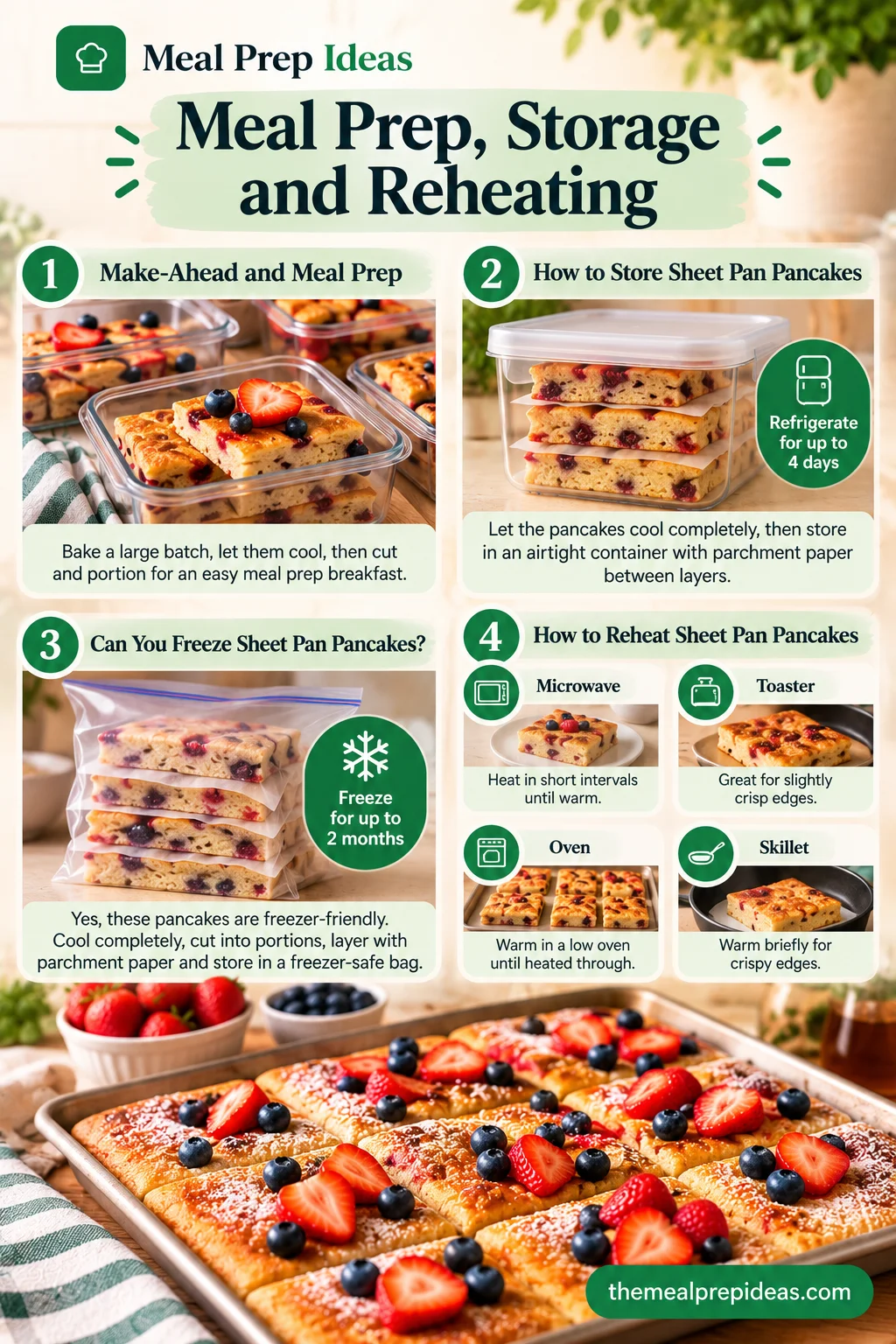
These pancakes are a convenient meal prep breakfast because you can bake one large batch and portion it for several mornings. Let the pancakes cool completely, then cut them into individual squares or rectangles.

Place the portions in an airtight container and keep them refrigerated until you’re ready to eat. This make-ahead breakfast approach works especially well on busy weekdays when you want a quick batch breakfast without cooking from scratch each morning.

For easier meal prep, portion only what you expect to eat within a few days and freeze the rest. If you enjoy preparing breakfast in batches, Healthy Baked Oatmeal is another convenient make-ahead option for busy mornings.

How to Store Sheet Pan Pancakes

Let the pancakes cool completely before storing them. Place the pieces in an airtight container and refrigerate them for up to 4 days. If you’re stacking several pieces, place a small sheet of parchment paper between the layers to keep them from sticking together. When you’re ready to eat, simply reheat the amount you need.

Can You Freeze Sheet Pan Pancakes?

Yes, these pancakes are freezer-friendly pancakes and can be frozen for a quick freezer breakfast.

First, let the pancakes cool completely and cut them into individual portions. Place a piece of parchment paper between the portions, then transfer them to a freezer-safe bag or airtight container.

Freezing the pancakes in individual portions makes it easier to take out only what you need instead of thawing the entire batch. For the best quality, use them within about 2 months.

How to Reheat Sheet Pan Pancakes

You can reheat these pancakes in several easy ways:

  • Microwave: Place one or two pieces on a microwave-safe plate and heat in short intervals until warm. Avoid overheating, which can make them dry.
  • Toaster: Smaller pieces can be warmed in a toaster for slightly crisp edges.
  • Oven: Place several portions on a baking sheet and warm them in a low oven until heated through.
  • Skillet: Warm a piece briefly in a lightly greased skillet if you want the edges to become slightly crisp.

If the pancakes seem a little dry after refrigeration or freezing, a small drizzle of maple syrup or a little butter can help bring back some moisture.

Baked pancake squares portioned into airtight containers and freezer bags, with storage tips and reheating options using a microwave, toaster, oven, or skillet.

Troubleshooting Sheet Pan Pancakes

Why Are My Sheet Pan Pancakes Dry?

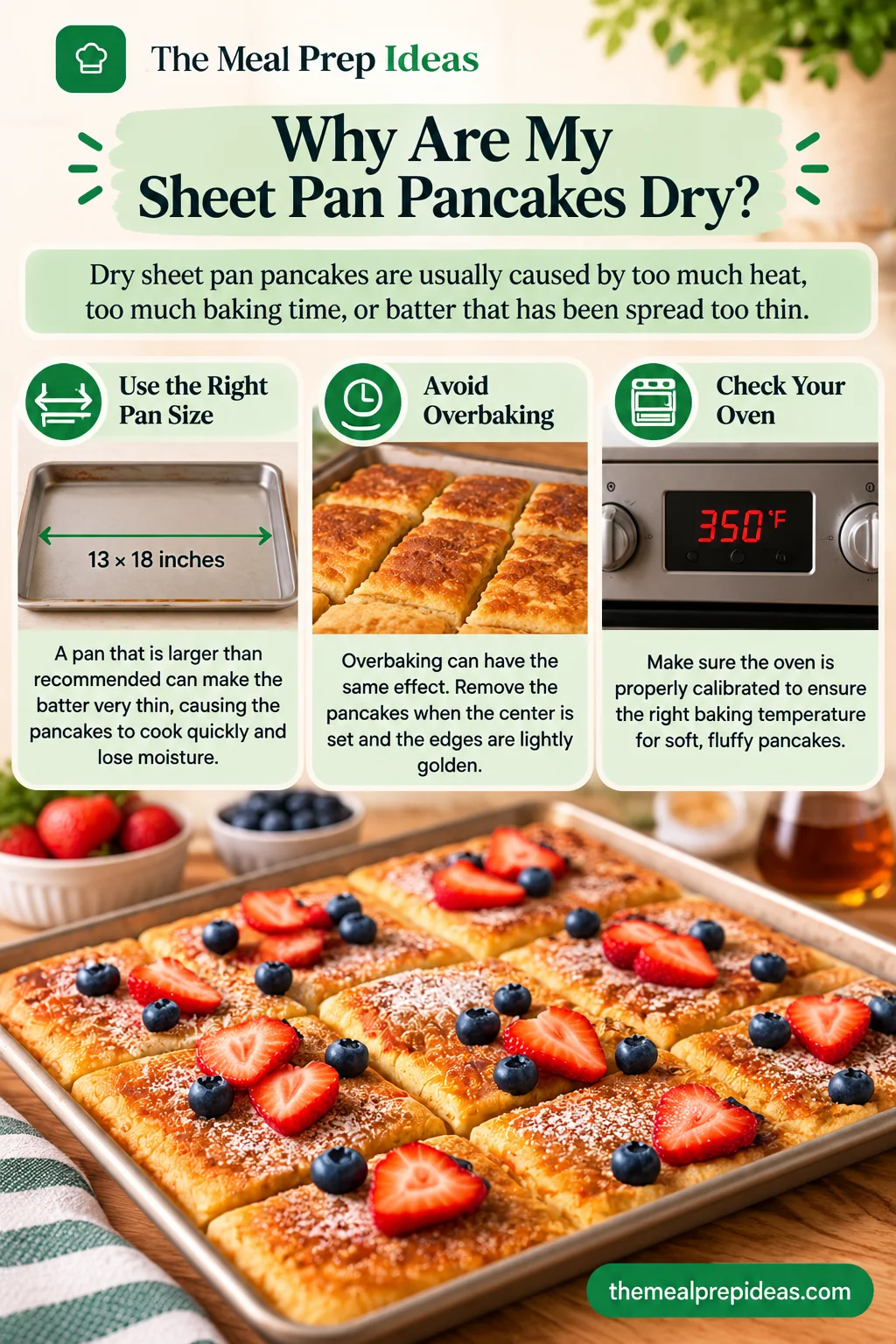
Dry sheet pan pancakes are usually caused by too much heat, too much baking time, or batter that has been spread too thin.

A pan that is larger than recommended can make the batter very thin, causing the pancakes to cook quickly and lose moisture. Overbaking can have the same effect. Make sure the oven is properly calibrated, use the recommended pan size and remove the pancakes once the center is set and the edges are lightly golden.

Dry baked pancakes with tips for choosing the correct pan size, avoiding overbaking, and checking oven temperature to maintain a soft texture.

Why Are My Pancakes Raw in the Middle?

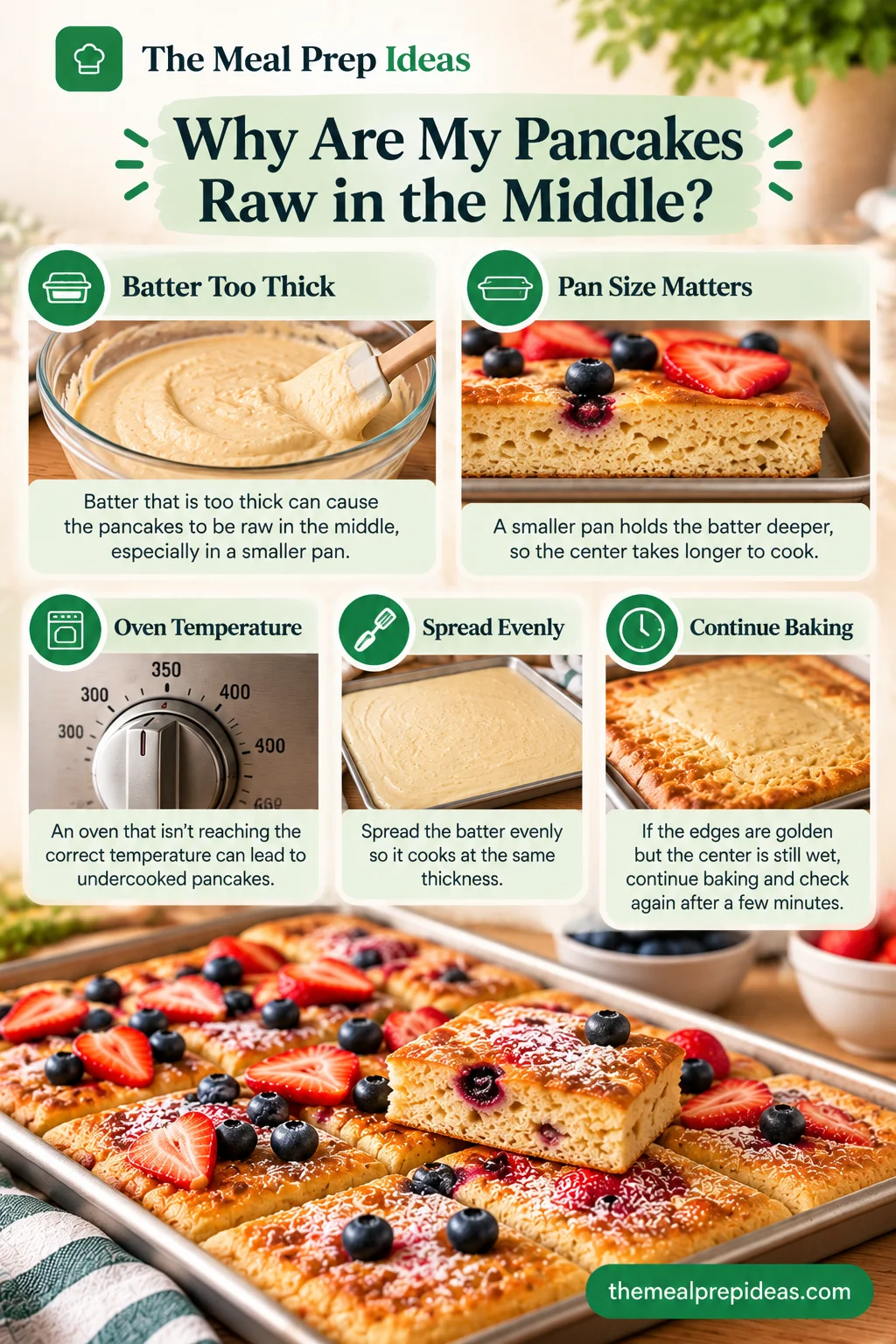
If your pancakes are raw in the middle, the batter may be too thick for the pan you’re using. A smaller pan holds the batter deeper, so the center takes longer to cook.

Too much batter, uneven spreading, or an oven that isn’t reaching the correct temperature can also cause undercooked pancakes. Spread the batter evenly and make sure the oven is fully preheated before baking.

If the edges are already golden but the center is still wet, continue baking and check again after a few minutes. The middle should look set and feel springy before you remove the pan.

Pancake troubleshooting guide showing thick batter, pan-size differences, oven temperature checks, even batter spreading, and additional baking time for a fully cooked center.

Why Are My Pancakes Sticking to the Pan?

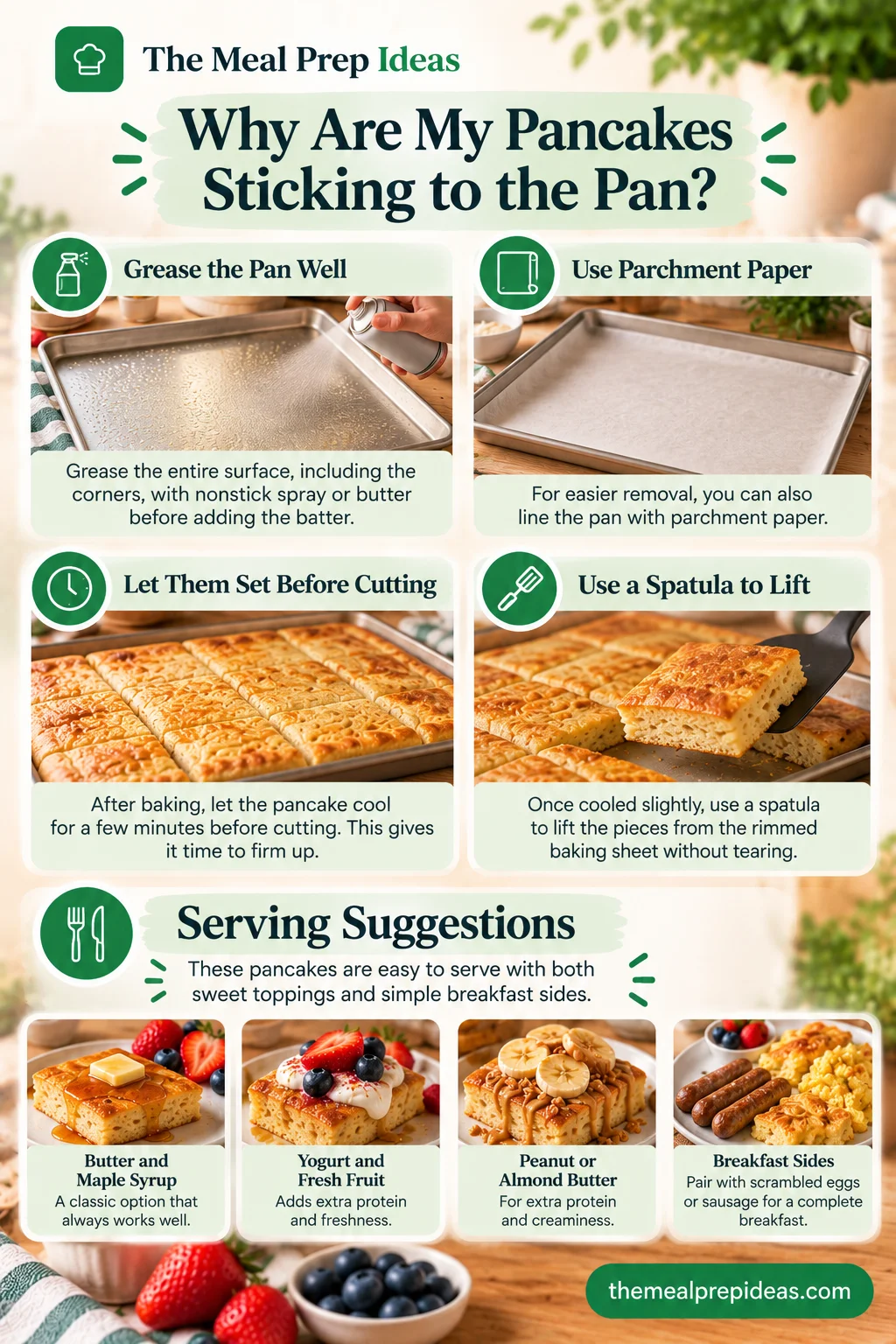
Pancakes sticking to the sheet pan usually means the pan wasn’t greased well enough or the pancakes were cut before they had a chance to set.

Grease the entire surface, including the corners, with nonstick spray or butter before adding the batter. For easier removal, you can also line the pan with parchment paper.

After baking, let the pancake cool for a few minutes before cutting. This gives it time to firm up and makes it easier to lift the pieces from the rimmed baking sheet without tearing.

Pancake troubleshooting guide showing thick batter, pan-size differences, oven temperature checks, even batter spreading, and additional baking time for a fully cooked center.

Serving Suggestions

These pancakes are easy to serve with both sweet toppings and simple breakfast sides. For a classic plate, add a little butter and maple syrup, then serve with fresh fruit on the side.

For extra protein and creaminess, try yogurt, peanut butter, or almond butter. If you’re serving a larger breakfast, pair the pancakes with scrambled eggs or breakfast sausage. If you want another filling breakfast option, try High-Protein Pancakes for a protein-rich twist on a classic morning favorite.

For a simple weekday breakfast, a cup of coffee or a glass of milk is all you need. You can also cut into squares and serve smaller pieces to kids, making them easy to pick up and enjoy.

Frequently Asked Questions

Can You Make Sheet Pan Pancakes with Pancake Mix?

Yes. You can make sheet pan pancakes with pancake mix by preparing the mix according to the package directions and checking that the batter is thick enough to spread evenly. Avoid making it too thin.

Do You Have to Flip Sheet Pan Pancakes?

No. These are baked in the oven, so there’s no need to flip individual pancakes. The batter cooks as one large batch, making these convenient no flip pancakes.

What Size Sheet Pan Is Best for Pancakes?

A 13 × 18-inch rimmed half sheet pan works well for this recipe. Using a different sheet pan size can change the pancake thickness and may affect the baking time.

Can You Make Sheet Pan Pancakes Ahead of Time?

Yes. You can make sheet pan pancakes ahead of time, let them cool completely, cut them into portions and refrigerate them for up to 4 days. They’re a convenient make-ahead breakfast for busy mornings.

How Long Do Sheet Pan Pancakes Last in the Refrigerator?

Stored properly in an airtight container, leftover pancakes can last for up to 4 days in the refrigerator. Let them cool completely before storing and use parchment between layers if you’re stacking them.

Can You Freeze and Reheat Sheet Pan Pancakes?

Yes. You can freeze sheet pan pancakes in individual portions with parchment between the pieces. Store them in a freezer-safe bag or container for up to 2 months, then reheat them in the microwave, toaster, or oven.

No ratings yet

Sheet Pan Pancakes

Make fluffy Sheet Pan Pancakes in the oven with no flipping. This easy breakfast is perfect for families, meal prep, and busy mornings.

Sheet Pan Pancakes stacked on a wooden board with powdered sugar falling over them, featuring a pancake caught mid-air against a dark background for a dramatic, appetizing breakfast presentation.the meal
prep ideas
10 minPrep
10 minTotal
Makes 12Servings
Print recipe

Ingredients

0 of 11 gathered

How to prepare

  1. 1Preheat the oven to 425°F (220°C).
  2. 2Grease a 13 × 18-inch rimmed baking sheet with nonstick spray or butter. You can also line it with parchment paper.
  3. 3In a large bowl, whisk together the flour, baking powder, baking soda, sugar, salt and cinnamon if using.
  4. 4In a separate bowl, whisk the eggs, buttermilk, melted butter and vanilla extract until combined.
  5. 5Pour the wet ingredients into the dry ingredients and gently stir until just combined. Do not overmix; a few small lumps are fine.
  6. 6Pour the pancake batter into the prepared baking sheet and spread it evenly into the corners with a spatula.
  7. 7Add any desired toppings, such as blueberries or chocolate chips, over the batter.
  8. 8Bake for 15–18 minutes, or until the top is set, the edges are lightly golden brown and the center feels springy.
  9. 9Let the pancake cool for a few minutes, then cut into squares or rectangles and serve warm.

Good to know

  • Use a 13 × 18-inch rimmed baking sheet for the best thickness and even cooking.
  • The batter should be medium-thick but pourable. Spread it evenly so the center and edges cook at the same rate.
  • Don’t overmix the batter. A few small lumps are completely fine.
  • Add toppings before baking so they cook into the pancake.
  • The pancake is ready when the top is set, the edges are lightly golden and the center no longer jiggles.
  • Let it cool briefly before cutting so the pieces hold their shape more easily.
  • Getting fluffy pancakes in the oven is mostly about the batter, pan and baking time. A few small details can make the difference between soft, tender pancakes and a batch that feels flat or dry.
  • Add your favorite toppings and mix-ins before the pan goes into the oven. Chocolate chips, fresh berries, blueberries, or chopped nuts all work well.
  • For a family breakfast, you can even divide the pan into sections and use different toppings in each area. Just avoid adding so many toppings that they weigh down the batter or cover the entire surface.
  • Place the pan in a preheated oven and bake until the top is set and the edges are lightly golden brown.
  • The center should look cooked rather than wet or jiggly. If you gently press the center, it should feel set and spring back slightly. These signs are more useful than relying on baking time alone because ovens and pan sizes can vary.
  • Let the baked pancake cool briefly before cutting it. Use a sharp knife or spatula to cut into squares or rectangles, depending on how you want to serve it.
  • Serve the pieces warm with your favorite toppings. Because the whole batch is baked together, it’s easy to slice into pieces and serve everyone at the same time—perfect for a relaxed family breakfast.
  • The sheet pan size can change the thickness and texture of your pancakes more than you might expect. Using the right pan helps the batter spread to the correct depth, so the pancakes cook evenly without becoming too thin or too thick.
  • For this recipe, use a rimmed half-sheet pan, ideally around 13 × 18 inches. The raised edges keep the pancake batter contained while giving it enough room to spread into an even layer.
  • If you’re checking your baking sheet size, make sure the pan has enough surface area for the amount of batter in the recipe. A different-sized pan can still work, but the pancakes may be thicker or thinner, so the baking time may need to change.
  • The right pan helps control the final thickness of the pancakes.
  • If the batter is too thick because of a small pan, you may end up with pancakes raw in the middle while the outside looks done. On the other hand, a very large pan can create pancakes too thin to stay soft and fluffy.
  • So, if you want consistent results, stick close to the recommended half sheet pan size rather than choosing a pan based only on what you have available.
  • Knowing when pancakes are done is easier when you look at the pancake rather than relying only on the clock. Baking time can vary slightly depending on your oven, pan size and how evenly the batter is spread.
  • Look for these signs:
  • So, how long do sheet pan pancakes take? Follow the recipe's recommended baking time as a starting point, but use these visual and texture signs to decide when they’re ready.
  • If the center still looks wet or the toothpick comes out with raw batter, the pancakes are not cooked through yet. Give them a little more time and check again. This helps prevent serving undercooked pancakes while also avoiding unnecessary overbaking.
  • One of the best things about this recipe is how easy it is to customize. You can keep the whole batch simple or divide the batter into sections and give each part a different topping.
  • Fresh fruit adds natural sweetness, color and a little freshness to the pancakes. Try blueberries, strawberries, raspberries, banana slices, or a mix of your favorite berries.
  • For larger fruit such as strawberries, cut them into small pieces so they don’t weigh down the batter. Mixed berries also work well when you want a few different flavors in one pan. For another homemade pancake option with a naturally sweet banana flavor, try Banana Oatmeal Pancakes, made with simple ingredients for an easy breakfast.
  • For a sweeter breakfast, sprinkle chocolate chips over the batter before baking. After baking, you can finish the pancakes with powdered sugar, cinnamon sugar, or a drizzle of maple syrup.
  • These simple sweet toppings are especially good when serving pancakes to kids or anyone who prefers a dessert-like breakfast.
  • Peanut butter and almond butter pair especially well with bananas and berries. You can drizzle a little over the baked pancakes or add small spoonfuls to the batter before baking.
  • For some crunch, sprinkle chopped nuts, pecans, or walnuts over the top. Keep the pieces fairly small so they’re easy to eat and don’t make the pancake difficult to slice.
  • You can also combine toppings to create different flavors in the same pan. A few easy combinations include:
  • These pancake toppings and mix-ins make it easy to create different flavor combinations without changing the basic recipe.
  • Yes, you can make sheet pan pancakes with pancake mix when you want a quicker shortcut. Prepare the pancake mix according to the package directions, then check the consistency before spreading it into the pan.
  • The batter should be thick enough to spread into an even layer without becoming watery. If it looks much thinner than the homemade batter, add a little more mix rather than using a large amount of extra liquid.
  • Use the same prepared sheet pan and spread the batter evenly. Since different mixes have different ingredients and instructions, start checking for doneness around the recommended baking time and look for a set center and lightly golden edges.
  • To make dairy-free sheet pan pancakes, replace the buttermilk with your preferred plant-based milk, such as unsweetened almond, oat, or soy milk.
  • You’ll also need to replace the butter with a neutral cooking oil or dairy-free butter. Check your toppings as well, especially chocolate chips, whipped toppings and other packaged ingredients, because some may contain dairy.
  • For chocolate chip sheet pan pancakes, sprinkle chocolate chips evenly over the batter just before baking. You can use regular, mini, dark, or semi-sweet chocolate chips depending on how sweet you want the pancakes.
  • Avoid covering the entire surface with a very thick layer of chocolate, as exposed chips can brown quickly in the oven. A light, even sprinkle gives you chocolate in every few bites without overpowering the pancakes.
  • For berry sheet pan pancakes, scatter blueberries, raspberries, or small pieces of strawberries over the batter before baking.
  • Fresh berries are easy to use, but frozen berries can work too. Add frozen fruit directly from the freezer rather than thawing it first, since thawed berries can release extra liquid and make parts of the pancake soggy.
  • For the best texture, use smaller berries or cut larger fruit into bite-sized pieces and spread them evenly across the batter.
  • These pancakes are a convenient meal prep breakfast because you can bake one large batch and portion it for several mornings. Let the pancakes cool completely, then cut them into individual squares or rectangles.
  • Place the portions in an airtight container and keep them refrigerated until you’re ready to eat. This make-ahead breakfast approach works especially well on busy weekdays when you want a quick batch breakfast without cooking from scratch each morning.
  • For easier meal prep, portion only what you expect to eat within a few days and freeze the rest. If you enjoy preparing breakfast in batches, Healthy Baked Oatmeal is another convenient make-ahead option for busy mornings.
  • Let the pancakes cool completely before storing them. Place the pieces in an airtight container and refrigerate them for up to 4 days. If you’re stacking several pieces, place a small sheet of parchment paper between the layers to keep them from sticking together. When you’re ready to eat, simply reheat the amount you need.
  • Yes, these pancakes are freezer-friendly pancakes and can be frozen for a quick freezer breakfast.
  • First, let the pancakes cool completely and cut them into individual portions. Place a piece of parchment paper between the portions, then transfer them to a freezer-safe bag or airtight container.
  • Freezing the pancakes in individual portions makes it easier to take out only what you need instead of thawing the entire batch. For the best quality, use them within about 2 months.
  • You can reheat these pancakes in several easy ways:
  • If the pancakes seem a little dry after refrigeration or freezing, a small drizzle of maple syrup or a little butter can help bring back some moisture.
  • Dry sheet pan pancakes are usually caused by too much heat, too much baking time, or batter that has been spread too thin.
  • A pan that is larger than recommended can make the batter very thin, causing the pancakes to cook quickly and lose moisture. Overbaking can have the same effect. Make sure the oven is properly calibrated, use the recommended pan size and remove the pancakes once the center is set and the edges are lightly golden.
  • If your pancakes are raw in the middle, the batter may be too thick for the pan you’re using. A smaller pan holds the batter deeper, so the center takes longer to cook.
  • Too much batter, uneven spreading, or an oven that isn’t reaching the correct temperature can also cause undercooked pancakes. Spread the batter evenly and make sure the oven is fully preheated before baking.
  • If the edges are already golden but the center is still wet, continue baking and check again after a few minutes. The middle should look set and feel springy before you remove the pan.
  • Pancakes sticking to the sheet pan usually means the pan wasn’t greased well enough or the pancakes were cut before they had a chance to set.
  • Grease the entire surface, including the corners, with nonstick spray or butter before adding the batter. For easier removal, you can also line the pan with parchment paper.
  • After baking, let the pancake cool for a few minutes before cutting. This gives it time to firm up and makes it easier to lift the pieces from the rimmed baking sheet without tearing.
  • These pancakes are easy to serve with both sweet toppings and simple breakfast sides. For a classic plate, add a little butter and maple syrup, then serve with fresh fruit on the side.
  • For extra protein and creaminess, try yogurt, peanut butter, or almond butter. If you’re serving a larger breakfast, pair the pancakes with scrambled eggs or breakfast sausage. If you want another filling breakfast option, try High-Protein Pancakes for a protein-rich twist on a classic morning favorite.
  • For a simple weekday breakfast, a cup of coffee or a glass of milk is all you need. You can also cut into squares and serve smaller pieces to kids, making them easy to pick up and enjoy.
VegetarianDairy-freeGluten-freeWhole wheat

Made this recipe?

Tag @themealprepideas on Instagram — we love seeing what you made.

Tag us

Reviews & Comments

Be the first to rate, review, or ask a question about this recipe.

No comments yet

Be the first cook to share feedback or ask a question about this recipe!

Leave a Review & Rating

Tap to rate

Comments are moderated for community safety. External links are filtered.

Keep Cooking

You Might Also Like

Peanut Butter Overnight Oats With Yogurt

Peanut Butter Overnight Oats With Yogurt

Creamy peanut butter overnight oats with yogurt, made with simple ingredients for an easy, healthy, make-ahead breakfast.

5 min
Get Recipe

Hard-Boiled Eggs

5
Hard-Boiled Eggs

Make perfect hard-boiled eggs with firm whites, tender yolks, easy peeling, and simple tips for breakfast, snacks, and meal prep.

5 min
Get Recipe

High Protein Pancakes

High Protein Pancakes

Make fluffy High Protein Pancakes with cottage cheese, oats, eggs, and protein powder for an easy, protein-packed breakfast perfect for meal prep!

10 min
Get Recipe

Get Your Free 7-Day Meal Prep Plan

Join 50,000+ subscribers getting weekly meal prep ideas, shopping lists, and time-saving tips straight to their inbox.

No spam. Unsubscribe anytime.