Meal Prep Ideas
Back to Home Page

High Protein Pancakes

Make fluffy High Protein Pancakes with cottage cheese, oats, eggs, and protein powder for an easy, protein-packed breakfast perfect for meal prep!

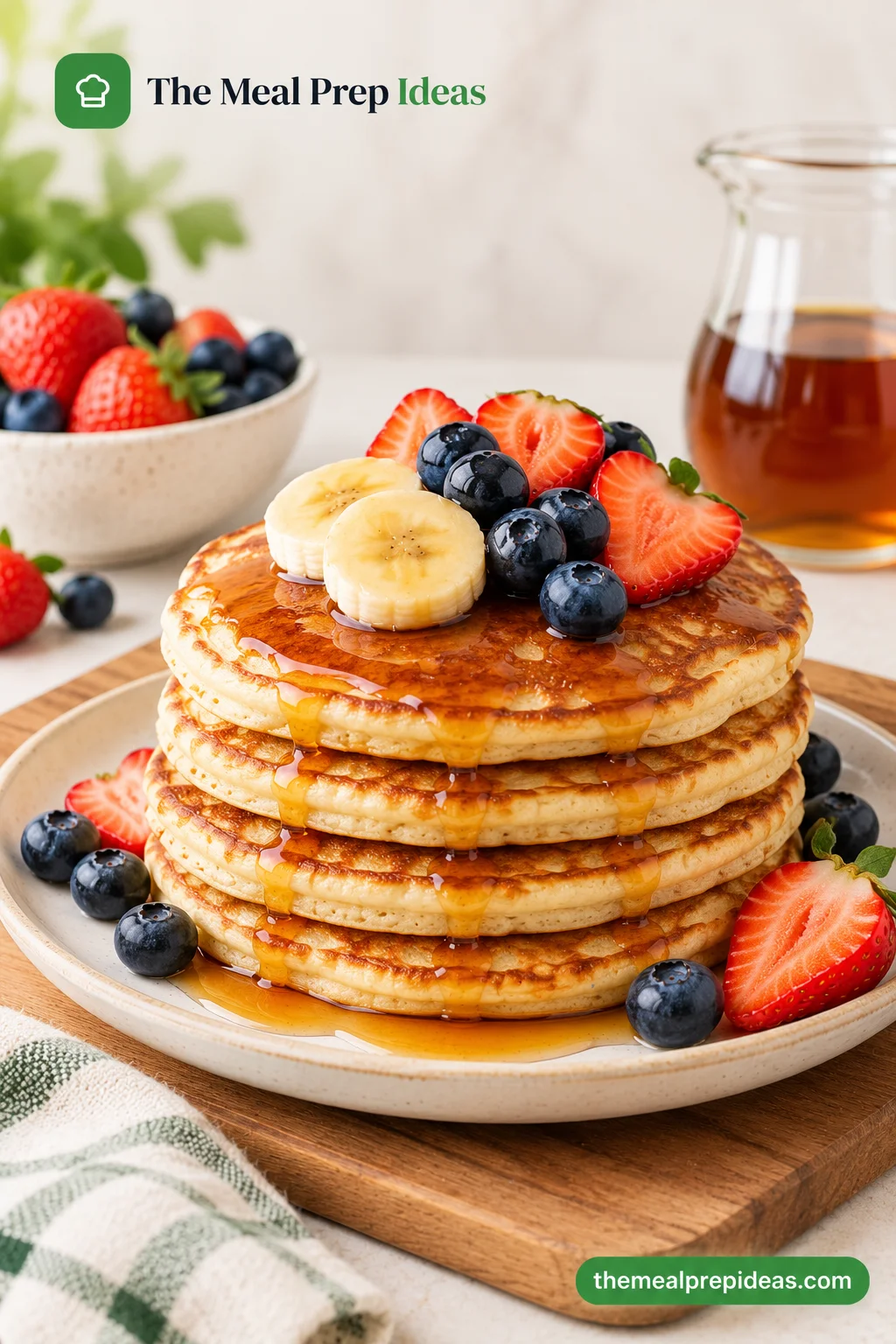
High Protein Pancakes stacked on a white plate with golden-brown edges, while a hand drizzles honey over the fluffy pancakes.

Get This Recipe Summarized by AI

Ask your favorite AI assistant to summarize this recipe, suggest swaps, or scale it up — one click away.

We copy the prompt to your clipboard too — just paste (Ctrl/Cmd+V) if it doesn't appear automatically.

Looking for a breakfast that tastes like a treat but still helps you get more protein? These high protein pancakes are a simple way to make your morning meal more filling and satisfying.

They have the soft, fluffy texture you want from good pancakes while adding more protein than a typical pancake breakfast. That makes them a great choice for a protein-rich breakfast when you want something easy, tasty and filling without making your morning complicated.

Whether you are making breakfast for the family or preparing a quick meal before a busy day, these protein pancakes are an easy option to keep on hand. They are comforting enough for a weekend breakfast but simple enough for a quick weekday meal.

High Protein Pancakes stacked on a plate with maple syrup, fresh strawberries, blueberries, and banana slices for a fluffy, protein-rich breakfast.

Why You’ll Love These High Protein Pancakes

These high protein pancakes are the kind of breakfast you can make when you want something tasty without spending a lot of time in the kitchen. They are quick, easy and have the soft texture that makes pancakes so enjoyable.

  • Quick to prepare: Great for busy mornings when you want a homemade breakfast without a lot of work.
  • Fluffy and soft: The pancakes have a light, tender texture instead of feeling heavy or dry.
  • A protein-rich breakfast: They make it easier to add more protein to your morning meal and stay satisfied longer.
  • Simple and family-friendly: They are easy enough for a weekday breakfast and tasty enough for the whole family.
  • Great for meal prep: Make a batch ahead of time and have an easy meal prep breakfast ready for busy mornings.
  • Freezer-friendly: Extra pancakes can be stored for later, so you do not have to cook breakfast from scratch every time.
  • More filling: Compared with a basic stack of pancakes, these protein-packed pancakes can make a more satisfying breakfast.
  • Easy to customize: Add your favorite fruit, yogurt, nut butter, or other toppings to make them your own.
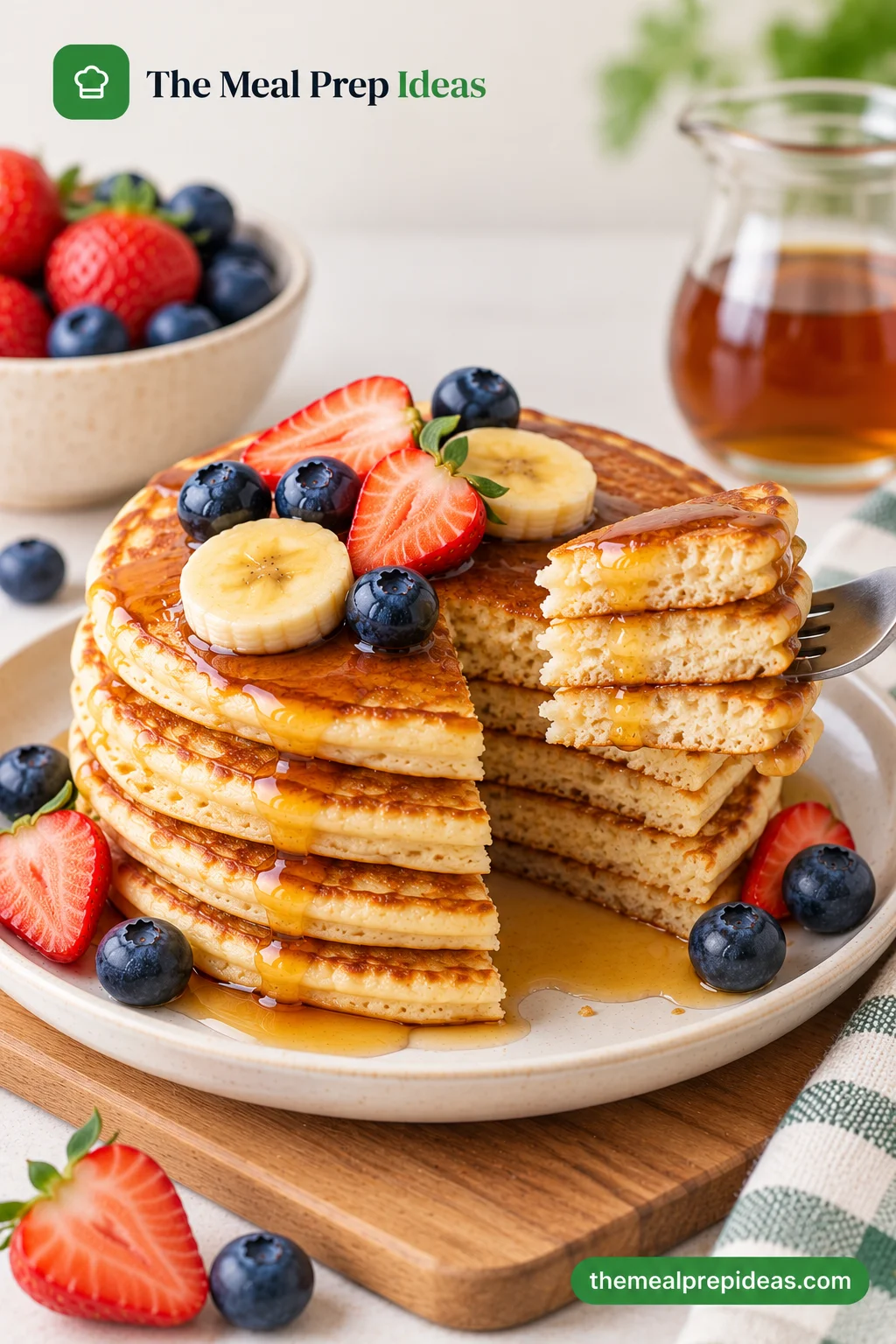
High Protein Pancakes topped with fresh berries, banana slices, and syrup, highlighting their fluffy texture and easy meal prep benefits.

What Makes These Pancakes High in Protein?

What makes high protein pancakes different from regular pancakes? The simple answer is that several ingredients work together to add more protein to each serving.

Eggs and egg whites are useful protein sources, while ingredients such as Greek yogurt or cottage cheese can add even more protein while helping keep the pancakes soft. If the recipe includes protein powder, it can give the batter an extra protein boost without needing a large amount of food.

Other ingredients can contribute too. Milk adds some protein along with moisture and oats provide a smaller amount while adding fiber and helping create a hearty texture. You do not need to rely on just one ingredient to reach your protein goals.

That is also why the protein per serving matters more than simply looking at one ingredient. The total grams of protein come from everything in the recipe added together. The exact amount will depend on the ingredients and serving size, so the final nutrition information should be checked from the complete recipe rather than guessed.

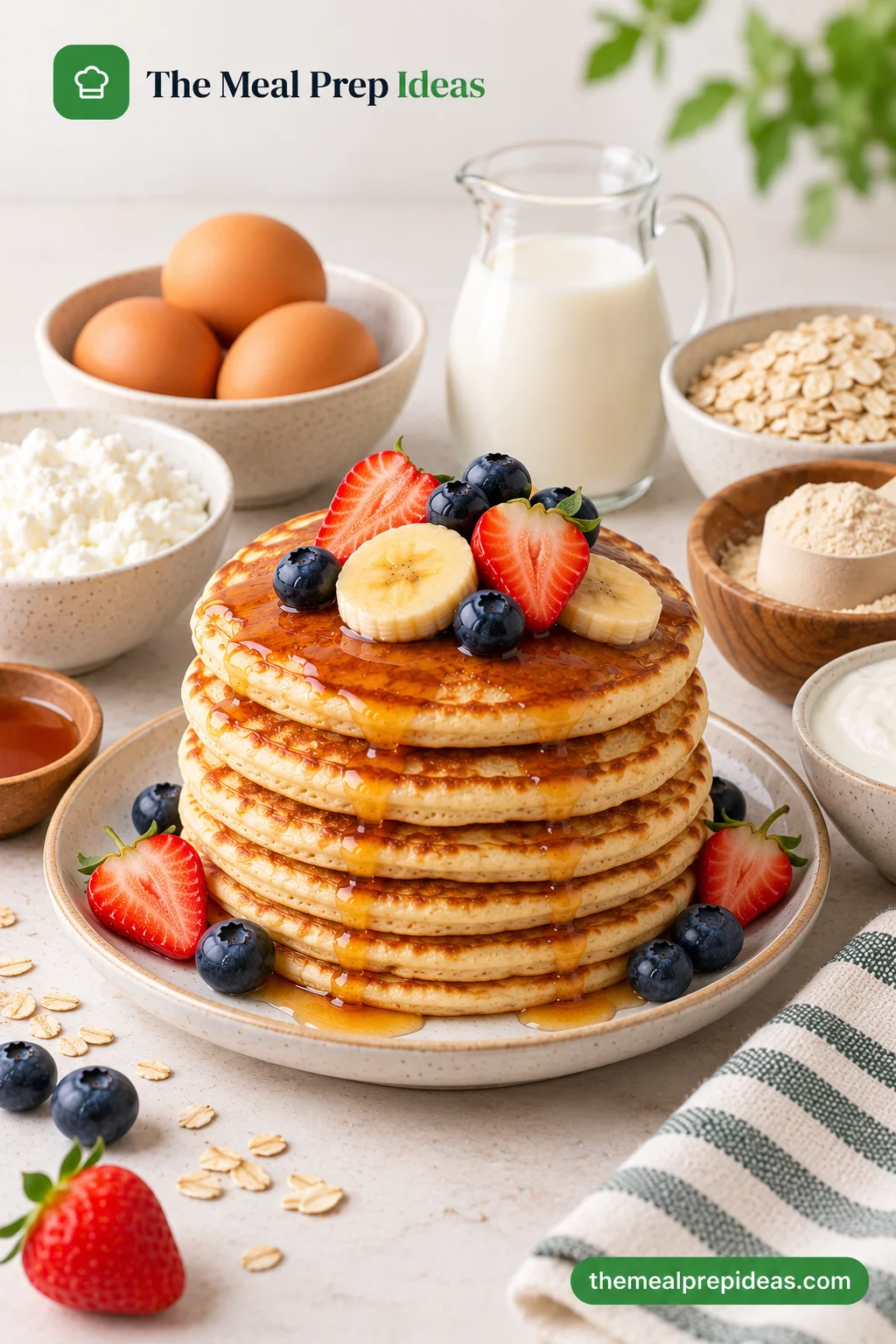
High Protein Pancakes surrounded by eggs, milk, oats, cottage cheese, protein powder, and Greek yogurt as protein-rich ingredients.

Ingredients for High Protein Pancakes

The right ingredients do more than add protein. They also help give these pancakes a soft, fluffy texture and a good balance of flavor. Here is what each ingredient does and why it matters.

Protein Ingredients

  • Eggs and egg whites: These add protein and help hold the pancakes together. Egg whites can also increase the protein without adding much extra fat.
  • Protein powder: This is an easy way to boost the protein content. Whey protein powder usually works well, but a plant-based protein powder can also be used if it fits the recipe. Different powders can absorb liquid differently, so the batter may need a small adjustment.
  • Greek yogurt or cottage cheese: Both can add protein while helping keep the pancakes moist and tender. Cottage cheese can be blended into the batter if you want a smoother texture.
  • Milk: Milk adds moisture and a little protein. You can use the type of milk that works best for your recipe.

Pancake Base

  • Oats or oat flour: Rolled oats can be blended into flour, or you can use ready-made oat flour. They add a hearty texture and some protein and fiber.
  • Flour: If your recipe uses regular or another type of flour, it helps give the pancakes structure and keeps the batter from becoming too soft.
  • Baking powder: This helps the pancakes rise and gives them a lighter, fluffy texture.
  • Salt: Just a small amount helps bring out the flavor of the other ingredients.

Flavor Ingredients

  • Banana: A ripe banana can add natural sweetness and moisture if you are using it in the recipe.
  • Vanilla extract: A little vanilla gives the pancakes a warmer, sweeter flavor.
  • Cinnamon: This adds a simple touch of spice that works especially well with banana and oats.
  • Maple syrup or honey: These are optional if you want extra sweetness. You can also save them for serving.

For these high protein pancakes, each ingredient has a job. The protein sources help increase the protein content, while the flour, oats, eggs and leavening ingredients help create the texture you expect from a good stack of pancakes.

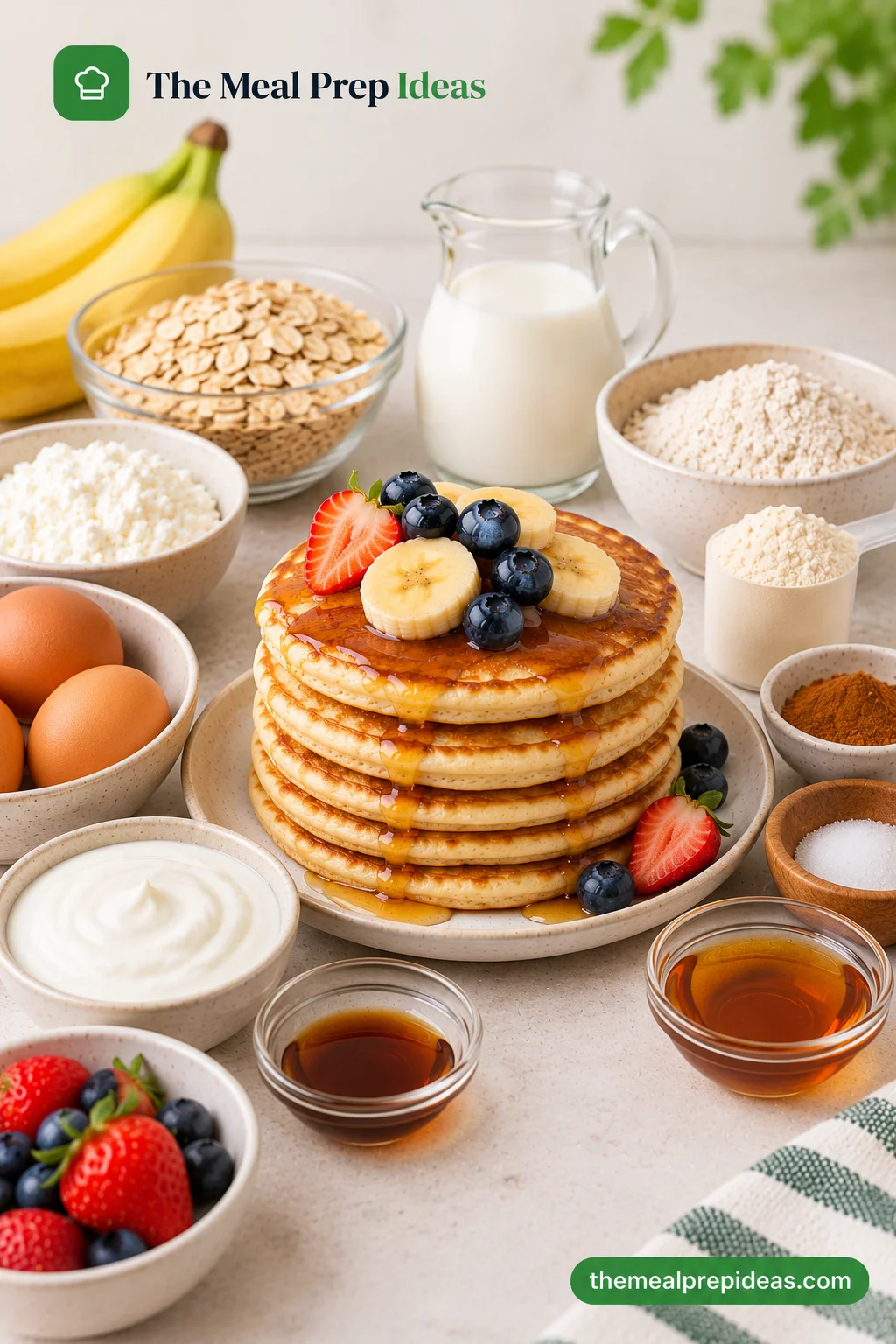
High Protein Pancakes served with oats, eggs, milk, cottage cheese, Greek yogurt, protein powder, vanilla, cinnamon, and fresh fruit.

High Protein Pancakes Recipe

Time

  • Prep Time: 10 minutes
  • Cook Time: 15 minutes
  • Total Time: 25 minutes
  • Servings: 4 servings (about 12 small pancakes)

Ingredients

  • 1 cup rolled oats
  • 1 cup cottage cheese
  • 2 large eggs
  • 1/2 cup milk
  • 1 scoop vanilla protein powder
  • 1 teaspoon baking powder
  • 1 teaspoon vanilla extract
  • 1/2 teaspoon cinnamon
  • 1/4 teaspoon salt
  • Cooking spray or a little butter, for the pan

Instructions

  1. 1Add the rolled oats to a blender and blend until they look like a fine flour.
  2. 2Add the cottage cheese, eggs, milk, protein powder, baking powder, vanilla extract, cinnamon and salt.
  3. 3Blend until the mixture is mostly smooth and forms a thick but pourable pancake batter. Let it sit for 2–3 minutes so the oats can absorb some of the liquid.
  4. 4Heat a nonstick skillet over medium heat and lightly grease it with cooking spray or butter.
  5. 5Pour about 1/4 cup of batter onto the pan for each pancake.
  6. 6Cook for about 2–3 minutes, or until small bubbles appear on the surface and the edges look set.
  7. 7Carefully flip and cook the other side for another 1–2 minutes, until golden brown and cooked through.
  8. 8Repeat with the remaining batter, lightly greasing the pan again if needed. Serve warm with your favorite toppings.

Notes

  • If the pancake batter looks too thick after resting, add 1–2 tablespoons of milk to loosen it.
  • Different protein powders absorb liquid differently, so a small adjustment may be needed.
  • Keep the skillet over medium heat. Very high heat can brown the outside before the center is fully cooked.
  • For the best fluffy pancakes, avoid pressing them down with your spatula while they cook.
  • Serve with fresh berries, Greek yogurt, nut butter, or a small drizzle of maple syrup.

Nutrition

Approximate nutrition per serving, based on the ingredients above and without toppings:

  • Calories: 300
  • Protein: 25g
  • Carbohydrates: 30g
  • Fat: 10g
  • Fiber: 4g

Nutrition can vary depending on the brand of protein powder, cottage cheese, milk and other ingredients used.

Dietary

  • Vegetarian: Yes
  • Gluten-Free: Use certified gluten-free oats and a gluten-free protein powder.
  • Dairy-Free: Not as written, because the recipe uses cottage cheese and milk.

How to Make High Protein Pancakes

Making these high protein pancakes is pretty simple. The key is to get the batter right and cook the pancakes over steady heat so they turn out soft and fluffy.

1. Prepare the Batter

Start by combining the wet ingredients in a bowl. In a separate bowl, mix the dry ingredients, then add them to the wet mixture.

If you are using protein powder or oats, make sure they are mixed in well. Stir just until everything comes together. Try not to overmix the pancake batter, as this can make the pancakes heavy instead of light and tender.

2. Check the Batter Consistency

The batter should be thick enough to sit on the pan but still easy to pour. If it looks too thick, add a small splash of milk or another liquid. If it seems too thin, give it a moment because protein powder and oats can absorb more liquid as the batter rests.

You are looking for a smooth batter that spreads slightly when poured onto the pan.

3. Heat the Pan

Place a nonstick skillet or griddle over medium heat and let it warm up. Lightly grease it with cooking spray, butter, or a little oil.

Avoid very high heat. A pan that is too hot can brown the outside before the middle has enough time to cook.

4. Cook the Pancakes

Pour the batter onto the warm pan, leaving enough space between each pancake. Let them cook until bubbles appear on the surface and the edges start to look set.

This is usually a good sign that the first side is ready. Gently flip the pancakes and let the other side cook.

5. Finish Cooking

Cook the second side until it is golden brown and the center is cooked through. The pancakes should feel set but still soft.

Try not to press them down with your spatula while they cook. This can push out the air and make them less fluffy. Once both sides are cooked evenly, transfer them to a plate and serve warm.

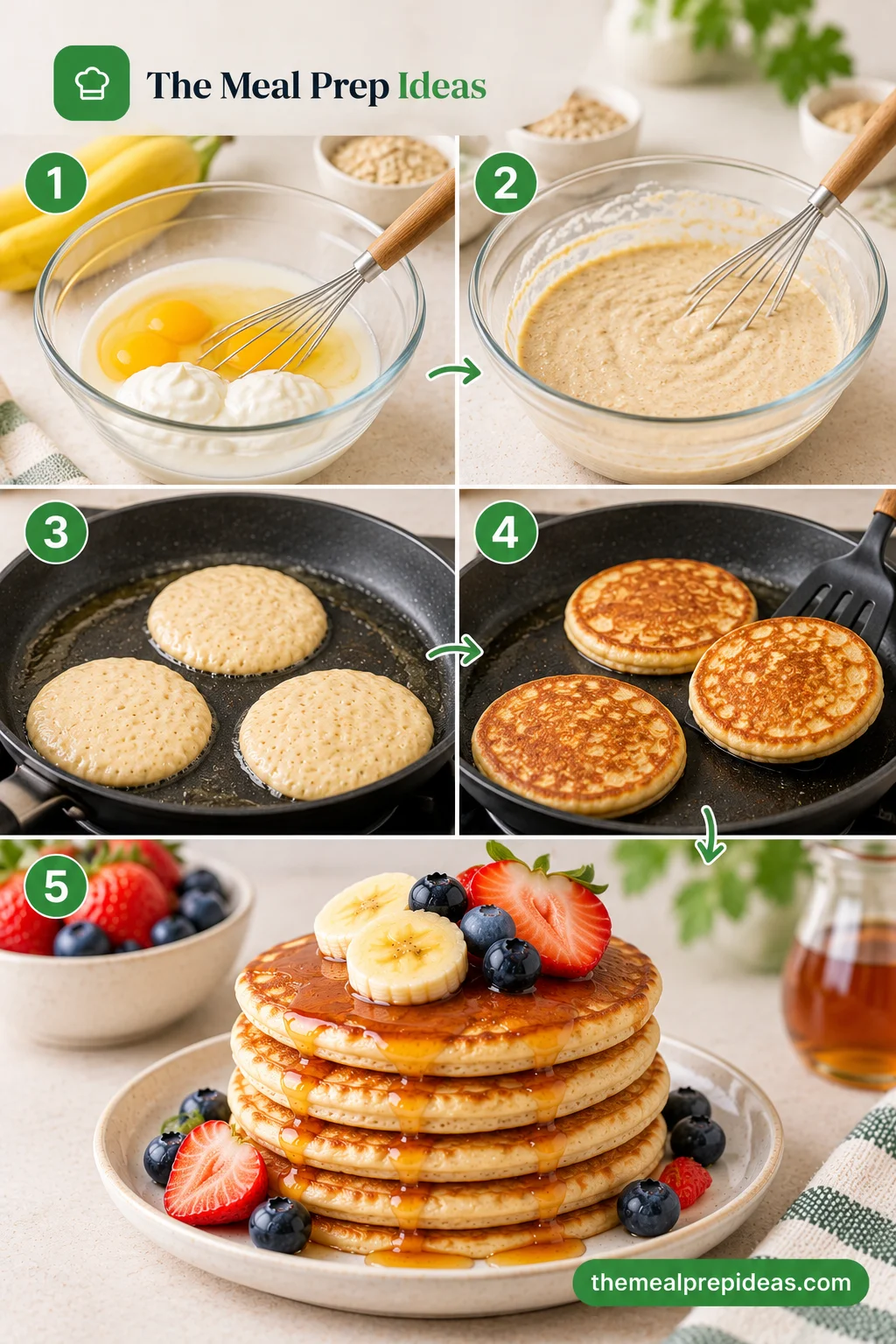
High Protein Pancakes recipe steps showing batter preparation, mixing, cooking pancakes in a skillet, flipping until golden brown, and serving with fruit.

Tips for Fluffy Protein Pancakes

Getting fluffy protein pancakes is mostly about the little things. A few simple changes can make a big difference in the pancake texture and help you get soft, tender pancakes instead of a heavy or rubbery stack.

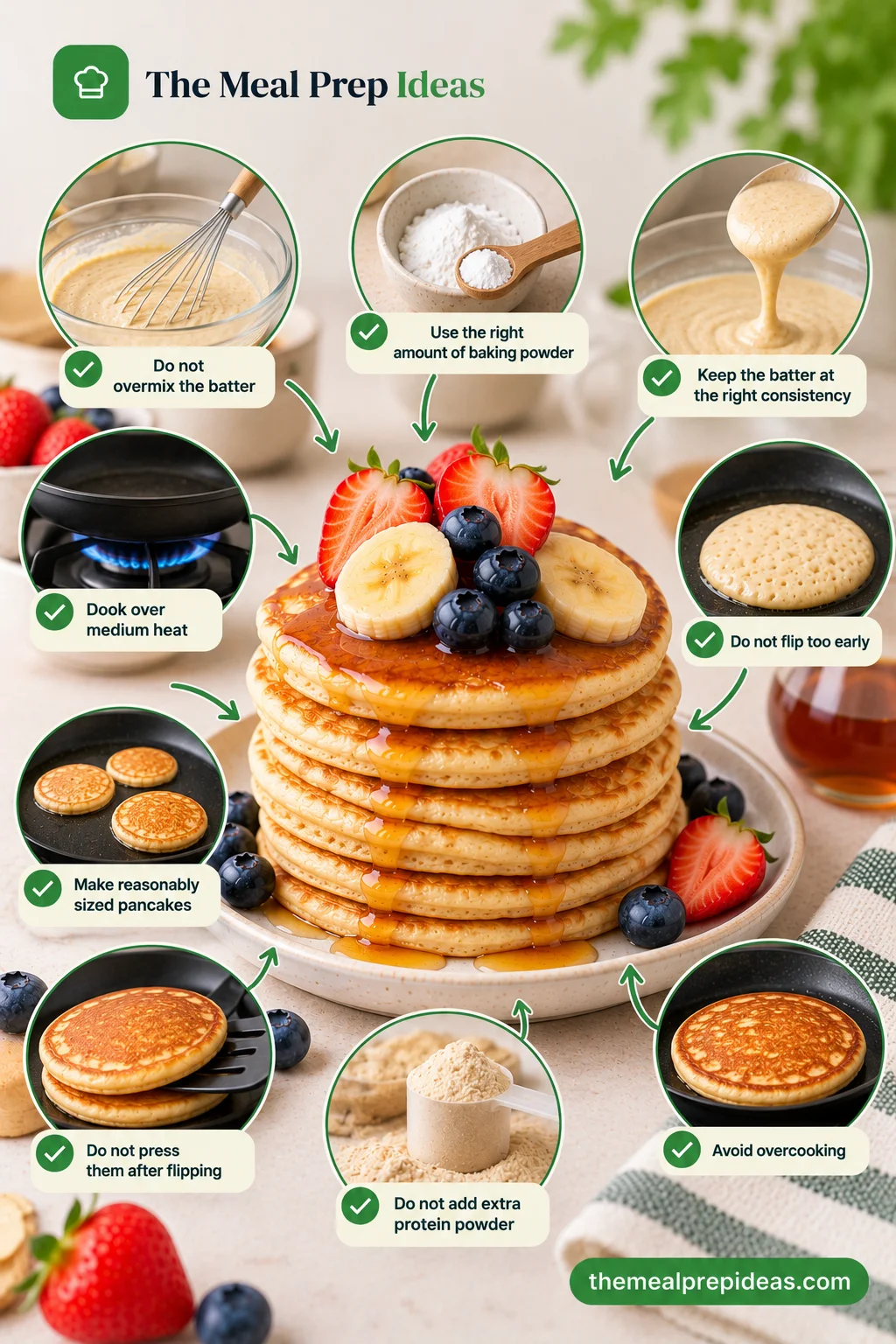
  • Do not overmix the batter. Stir just until the ingredients come together. A few small lumps are fine. Overmixing can make the pancakes dense.
  • Use the right amount of baking powder. It helps the batter rise and gives the pancakes a lighter, fluffy texture. Too much, however, can affect the taste and texture.
  • Keep the batter at the right consistency. It should be thick enough to hold its shape but still easy to pour. If it becomes too thick, a small splash of milk can help.
  • Cook over medium heat. Gentle, steady heat gives the middle enough time to cook before the outside gets too dark.
  • Make reasonably sized pancakes. Very large pancakes can be harder to flip and may cook unevenly. Smaller pancakes are easier to handle and tend to cook more evenly.
  • Do not flip too early. Wait until you see bubbles forming on the surface and the edges look set. This helps the pancakes stay together when you turn them.
  • Do not press them after flipping. It may be tempting, but pressing the pancakes can push out the air that helps keep them light and fluffy.
  • Do not add extra protein powder just to increase the protein. Too much can change the batter and make the pancakes dry or chewy. Stick to the recipe's ratio for the best balance.
  • Avoid overcooking. Once the pancakes are cooked through and lightly golden brown, take them off the heat. Cooking them for too long can make even a good batter dry.

These small steps help you get light and fluffy pancakes while keeping the protein-rich batter enjoyable to eat.

Cooking tips showing pancake batter consistency, baking powder, medium heat, properly sized pancakes, and techniques for preventing dry or dense pancakes.

Protein Pancake Toppings and Serving Ideas

A good stack is even better with the right toppings. You can keep it simple with fruit and yogurt or make it a little more indulgent when you are in the mood for something sweet.

Fresh Fruit and Berries

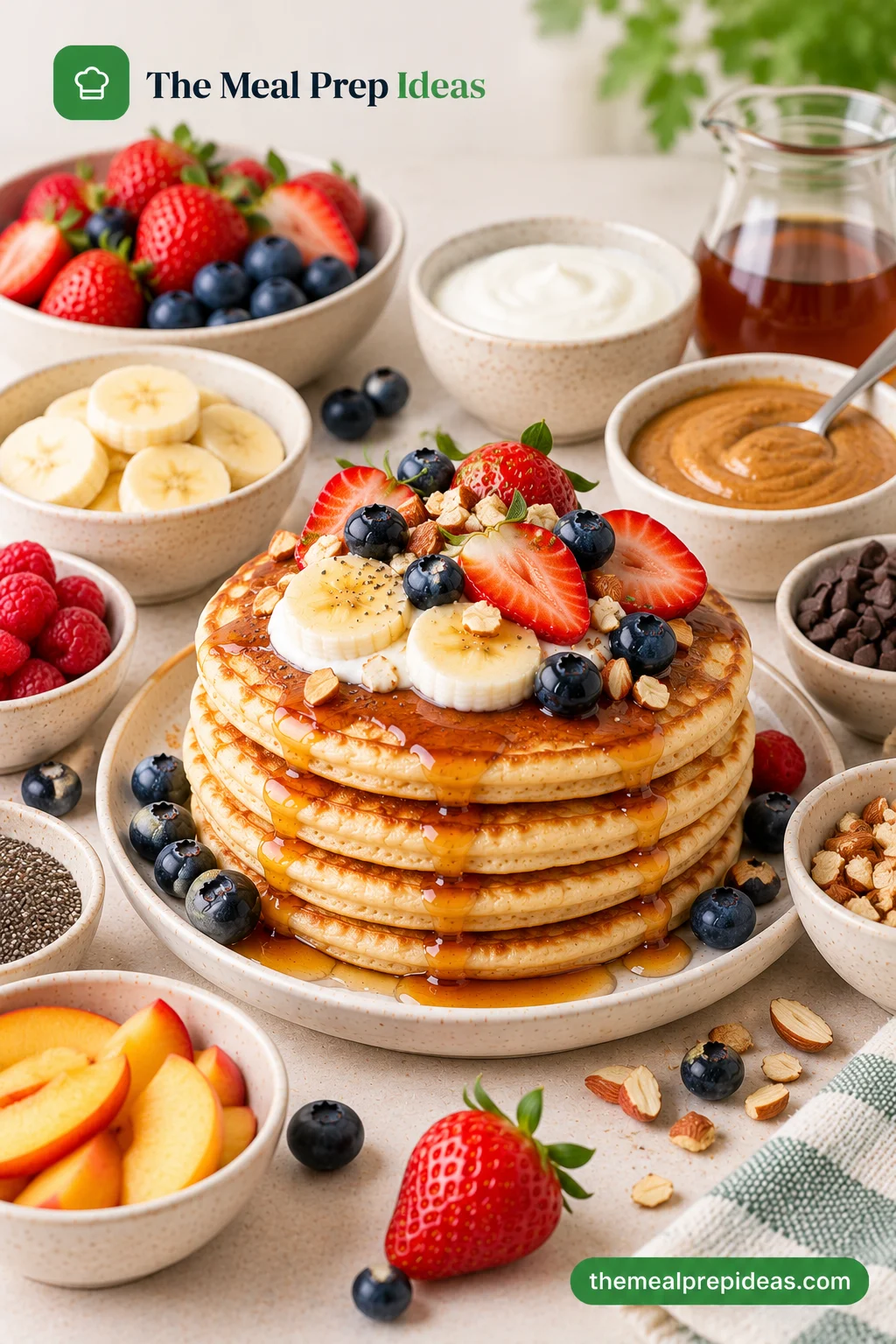
Add blueberries, strawberries, or banana slices for fresh flavor and a little natural sweetness. You can also use raspberries, blackberries, sliced peaches, or whatever fruit you already have at home. If you enjoy pancakes made with oats and naturally sweet banana, Banana Oatmeal Pancakes are another delicious breakfast option to try.

Greek Yogurt and Nut Butter

A spoonful of Greek yogurt adds a cool, creamy contrast to warm pancakes. For a richer topping, try peanut butter, almond butter, or another nut butter. You can even swirl the two together for an easy topping.

Maple Syrup and Other Toppings

For a classic finish, add a light drizzle of maple syrup or honey. If you want something more dessert-like, try a few chocolate chips or a sprinkle of chopped nuts.

Fluffy pancakes topped with Greek yogurt, banana slices, strawberries, blueberries, chopped nuts, nut butter, chocolate chips, and maple syrup.

Variations and Substitutions

The recipe is easy to adjust if you need to change an ingredient or simply want to try a different version.

Protein Pancakes Without Protein Powder

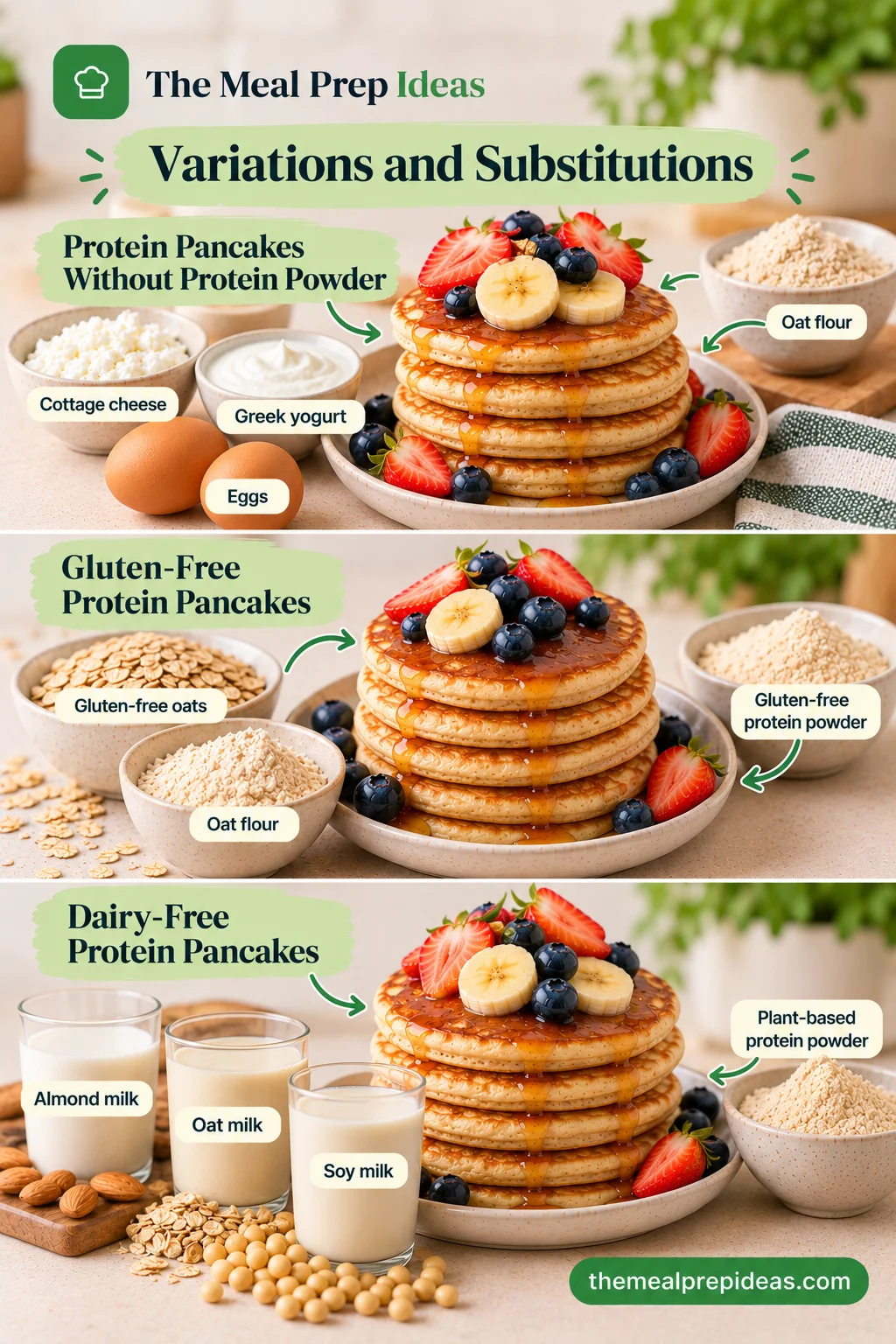
You can make protein pancakes without protein powder by relying more on real-food protein sources such as cottage cheese, Greek yogurt and eggs. Since protein powder also affects the thickness of the batter, you may need a little extra oat flour or another dry ingredient to get the right consistency.

Keep in mind that removing the protein powder will change the protein per serving, so the finished pancakes may not have the same protein content as the original recipe.

Gluten-Free Protein Pancakes

For gluten-free protein pancakes, use certified gluten-free oats or oat flour and check that your protein powder is also labeled gluten-free. This is especially important if you need to avoid gluten strictly.

If using oat flour, the batter may have a slightly different texture, but it should still cook into soft, fluffy pancakes.

Dairy-Free Protein Pancakes

To make dairy-free protein pancakes, replace the regular milk with an unsweetened dairy-free milk such as almond, soy, or oat milk.

Because this recipe uses cottage cheese, you will also need a suitable dairy-free alternative. A plant-based protein powder can help replace some of the protein that would otherwise come from dairy ingredients. Keep an eye on the batter as you make these swaps, since different ingredients can change its thickness and texture.

Protein pancake variations featuring cottage cheese, Greek yogurt, eggs, gluten-free oats, oat flour, dairy-free milk, and plant-based protein powder.

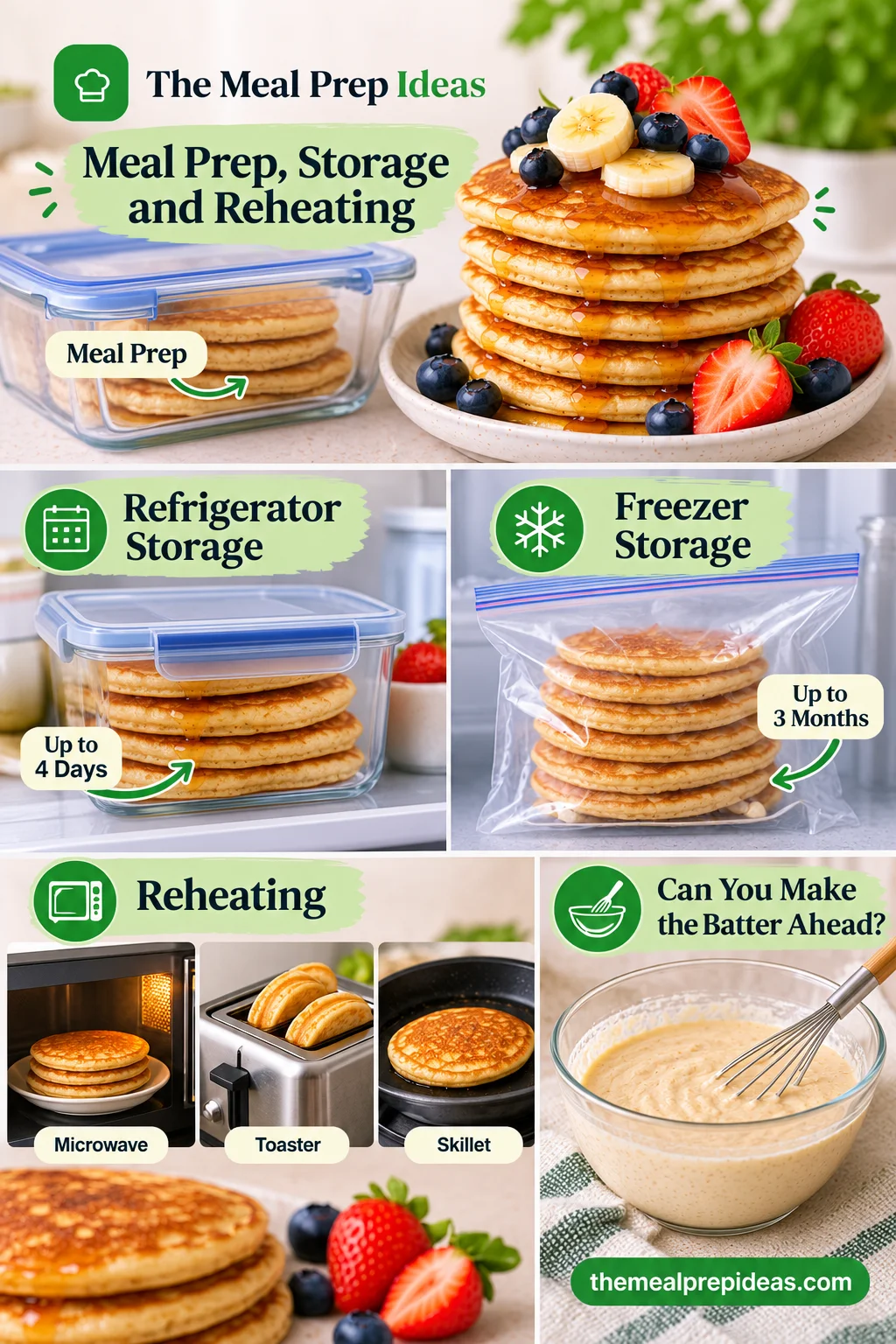
Meal Prep, Storage and Reheating

These pancakes work well for meal prep because you can cook a full batch at once and have breakfast ready for the next few days. If you prefer a no-cook breakfast on especially busy mornings, Peanut Butter Overnight Oats with Yogurt are another convenient make-ahead option.

Meal Prep

Let the cooked pancakes cool completely before storing them. If you are making a protein pancake meal prep, divide them into individual portions so you can grab only what you need each morning.

For a simple make-ahead breakfast, place a few pancakes in each container or storage bag. This makes busy mornings much easier and helps keep the pancakes from being handled over and over.

Refrigerator Storage

Once cooled, place the pancakes in an airtight container and refrigerate them for up to 4 days. Keep them chilled until you are ready to eat them.

For the best texture, avoid stacking them while they are still warm. Trapped steam can make them softer than you want.

Freezer Storage

These are freezer-friendly pancakes, so making an extra batch is a great way to save time later.

To freeze protein pancakes, first arrange the cooled pancakes in a single layer on a baking sheet or plate. Freeze them until firm, then transfer them to a freezer-safe bag or container. Separating them before stacking makes it much easier to take out one or two at a time.

They can be kept in the freezer for up to 3 months for the best quality.

Reheating

You can reheat the pancakes straight from the refrigerator or freezer.

  • Microwave: Heat in short intervals until warm. If frozen, they may need a little extra time.
  • Toaster: A toaster works well for a quick breakfast and can give the edges a slightly firmer texture.
  • Skillet: Warm them in a skillet over low to medium heat for a few minutes, turning once.

Avoid overheating them, as too much heat can make the pancakes dry.

Can You Make the Batter Ahead?

You can prepare the pancake batter a little ahead of time, but freshly mixed batter usually gives the best texture. Oats and protein powder can continue absorbing liquid as the batter sits, which may make it thicker.

If the batter has become too thick, stir in a small splash of milk before cooking. For longer-term pancake batter meal prep, it is usually easier to cook the pancakes first and store the finished pancakes instead.

Pancakes stored in meal prep containers and freezer bags, with examples of refrigerator storage, freezing, microwave reheating, toaster reheating, and skillet warming.

Why Are My Protein Pancakes Dry or Rubbery?

If your pancakes turn out dry, chewy, or rubbery, the problem is usually easy to fix. Protein powder, cooking time and batter consistency can all affect the final texture.

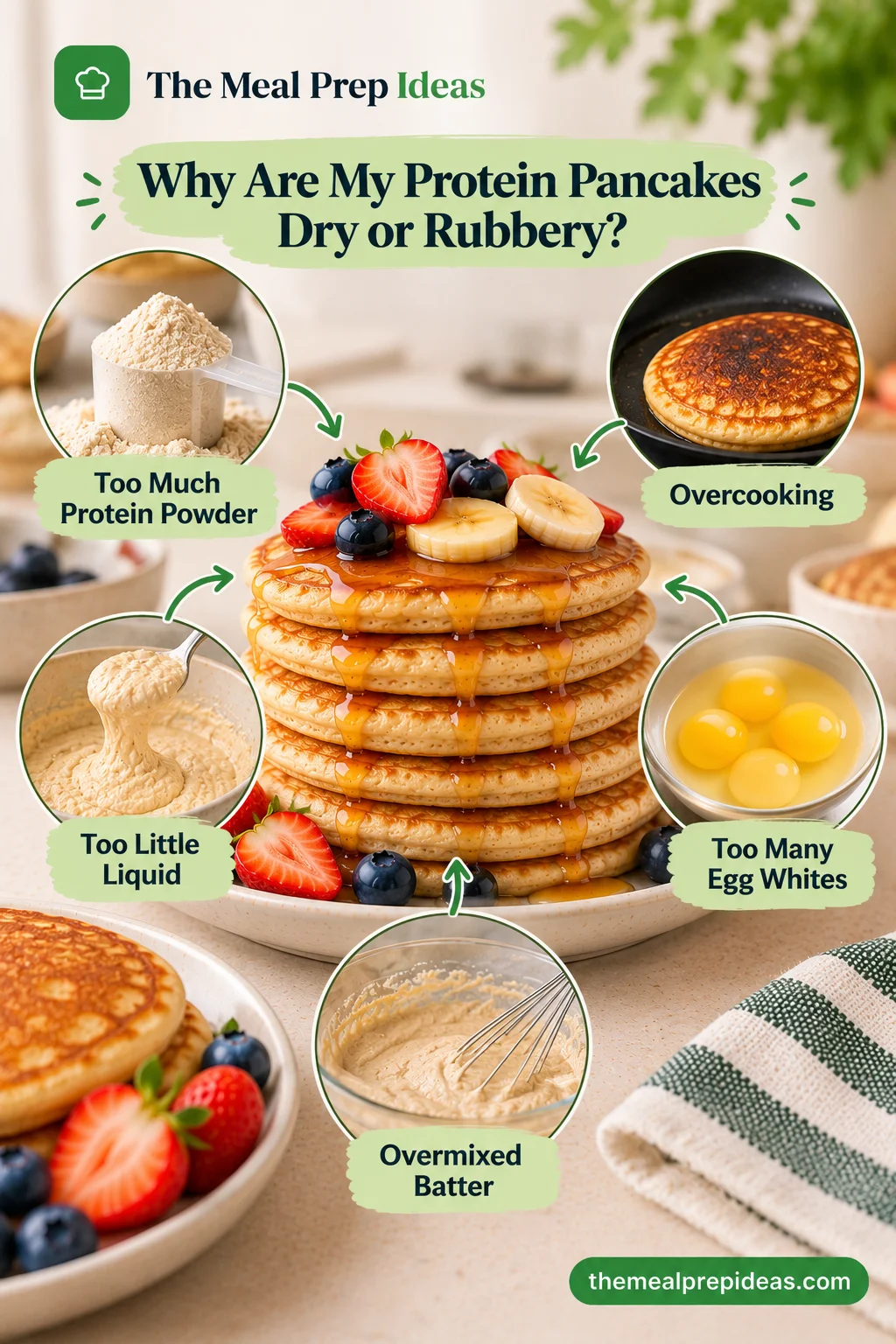
Too Much Protein Powder

Adding extra protein powder may sound like a good idea, but too much can make the batter absorb more liquid. This can lead to dry protein pancakes with a firm or rubbery texture. Stick to the amount called for in the recipe for the best balance.

Overcooking

Cooking the pancakes for too long can remove too much moisture. Very high heat can also brown the outside before the center is ready. Use medium heat and take the pancakes off the pan once they are cooked through and lightly golden.

Too Little Liquid

If the batter is extremely thick, the pancakes may turn out dense and dry. Thick pancake batter is not always a problem, but it should still be easy to scoop and pour. Add a small amount of milk if the mixture looks unusually stiff.

Too Many Egg Whites

Egg whites add protein, but using too many can make the texture firm and slightly rubbery. This is one reason it is important to keep the recipe balanced instead of adding extra egg whites just to increase the protein.

Overmixed Batter

Mixing the batter too much can make the pancakes heavy. Stir just until the ingredients are combined. A few small lumps are fine and they are better than ending up with dense pancakes.

More High Protein Breakfast Recipes

If you enjoy easy high protein breakfast recipes, these are great options to add to your breakfast rotation:

These protein breakfast ideas give you a few different ways to keep breakfast interesting while still having practical options for busy days.

Troubleshooting pancake texture issues caused by excess protein powder, overcooking, thick batter, too many egg whites, and overmixing.

Frequently Asked Questions

How Do You Add Protein to Pancakes?

You can add protein through ingredients such as protein powder, eggs, Greek yogurt, cottage cheese and milk. Using more than one protein source can help increase the protein content while keeping the pancakes soft and enjoyable.

Can You Make High Protein Pancakes Without Protein Powder?

Yes, you can make high protein pancakes without protein powder by using real-food protein sources such as eggs, cottage cheese and Greek yogurt. Keep in mind that removing the protein powder will change the final protein amount and may also require a small adjustment to the batter.

Are High Protein Pancakes Healthy?

High protein pancakes can be part of a healthy breakfast when made with balanced ingredients and served in a suitable portion. The overall nutrition depends on the recipe, toppings and serving size, so check the calories, protein and other nutrients rather than focusing on protein alone.

Can You Freeze High Protein Pancakes?

Yes. High protein pancakes can be frozen after they have cooled completely. Freeze them in a single layer first, then transfer them to a freezer-safe bag or container so you can easily take out only what you need.

How Do You Keep Protein Pancakes from Sticking?

Use a good nonstick skillet, lightly grease the surface with cooking spray or butter and cook over medium heat. Let the pancakes cook until the edges look set before trying to flip them.

Why Are My Protein Pancakes Dry or Rubbery?

The most common reasons are too much protein powder, too little liquid, overmixing, or overcooking pancakes. Check the batter consistency and cooking temperature and follow the ingredient amounts closely for a softer texture.

No ratings yet

High Protein Pancakes

Make fluffy High Protein Pancakes with cottage cheese, oats, eggs, and protein powder for an easy, protein-packed breakfast perfect for meal prep!

High Protein Pancakes stacked on a white plate with golden-brown edges, while a hand drizzles honey over the fluffy pancakes.the meal
prep ideas
10 minPrep
15 minCook
25 minTotal
Makes 4Servings
Print recipe

Ingredients

0 of 4 gathered

How to prepare

  1. 1Add the rolled oats to a blender and blend until they look like a fine flour.
  2. 2Add the cottage cheese, eggs, milk, protein powder, baking powder, vanilla extract, cinnamon and salt.
  3. 3Blend until the mixture is mostly smooth and forms a thick but pourable pancake batter. Let it sit for 2–3 minutes so the oats can absorb some of the liquid.
  4. 4Heat a nonstick skillet over medium heat and lightly grease it with cooking spray or butter.
  5. 5Pour about 1/4 cup of batter onto the pan for each pancake.
  6. 6Cook for about 2–3 minutes, or until small bubbles appear on the surface and the edges look set.
  7. 7Carefully flip and cook the other side for another 1–2 minutes, until golden brown and cooked through.
  8. 8Repeat with the remaining batter, lightly greasing the pan again if needed. Serve warm with your favorite toppings.

Good to know

  • If the pancake batter looks too thick after resting, add 1–2 tablespoons of milk to loosen it.
  • Different protein powders absorb liquid differently, so a small adjustment may be needed.
  • Keep the skillet over medium heat. Very high heat can brown the outside before the center is fully cooked.
  • For the best fluffy pancakes, avoid pressing them down with your spatula while they cook.
  • Serve with fresh berries, Greek yogurt, nut butter, or a small drizzle of maple syrup.
  • Getting fluffy protein pancakes is mostly about the little things. A few simple changes can make a big difference in the pancake texture and help you get soft, tender pancakes instead of a heavy or rubbery stack.
  • These small steps help you get light and fluffy pancakes while keeping the protein-rich batter enjoyable to eat.
  • A good stack is even better with the right toppings. You can keep it simple with fruit and yogurt or make it a little more indulgent when you are in the mood for something sweet.
  • Add blueberries, strawberries, or banana slices for fresh flavor and a little natural sweetness. You can also use raspberries, blackberries, sliced peaches, or whatever fruit you already have at home. If you enjoy pancakes made with oats and naturally sweet banana, Banana Oatmeal Pancakes are another delicious breakfast option to try.
  • A spoonful of Greek yogurt adds a cool, creamy contrast to warm pancakes. For a richer topping, try peanut butter, almond butter, or another nut butter. You can even swirl the two together for an easy topping.
  • For a classic finish, add a light drizzle of maple syrup or honey. If you want something more dessert-like, try a few chocolate chips or a sprinkle of chopped nuts.
  • The recipe is easy to adjust if you need to change an ingredient or simply want to try a different version.
  • You can make protein pancakes without protein powder by relying more on real-food protein sources such as cottage cheese, Greek yogurt and eggs. Since protein powder also affects the thickness of the batter, you may need a little extra oat flour or another dry ingredient to get the right consistency.
  • Keep in mind that removing the protein powder will change the protein per serving, so the finished pancakes may not have the same protein content as the original recipe.
  • For gluten-free protein pancakes, use certified gluten-free oats or oat flour and check that your protein powder is also labeled gluten-free. This is especially important if you need to avoid gluten strictly.
  • If using oat flour, the batter may have a slightly different texture, but it should still cook into soft, fluffy pancakes.
  • To make dairy-free protein pancakes, replace the regular milk with an unsweetened dairy-free milk such as almond, soy, or oat milk.
  • Because this recipe uses cottage cheese, you will also need a suitable dairy-free alternative. A plant-based protein powder can help replace some of the protein that would otherwise come from dairy ingredients. Keep an eye on the batter as you make these swaps, since different ingredients can change its thickness and texture.
  • These pancakes work well for meal prep because you can cook a full batch at once and have breakfast ready for the next few days. If you prefer a no-cook breakfast on especially busy mornings, Peanut Butter Overnight Oats with Yogurt are another convenient make-ahead option.
  • Let the cooked pancakes cool completely before storing them. If you are making a protein pancake meal prep, divide them into individual portions so you can grab only what you need each morning.
  • For a simple make-ahead breakfast, place a few pancakes in each container or storage bag. This makes busy mornings much easier and helps keep the pancakes from being handled over and over.
  • Once cooled, place the pancakes in an airtight container and refrigerate them for up to 4 days. Keep them chilled until you are ready to eat them.
  • For the best texture, avoid stacking them while they are still warm. Trapped steam can make them softer than you want.
  • These are freezer-friendly pancakes, so making an extra batch is a great way to save time later.
  • To freeze protein pancakes, first arrange the cooled pancakes in a single layer on a baking sheet or plate. Freeze them until firm, then transfer them to a freezer-safe bag or container. Separating them before stacking makes it much easier to take out one or two at a time.
  • They can be kept in the freezer for up to 3 months for the best quality.
  • You can reheat the pancakes straight from the refrigerator or freezer.
  • Avoid overheating them, as too much heat can make the pancakes dry.
  • You can prepare the pancake batter a little ahead of time, but freshly mixed batter usually gives the best texture. Oats and protein powder can continue absorbing liquid as the batter sits, which may make it thicker.
  • If the batter has become too thick, stir in a small splash of milk before cooking. For longer-term pancake batter meal prep, it is usually easier to cook the pancakes first and store the finished pancakes instead.
  • If your pancakes turn out dry, chewy, or rubbery, the problem is usually easy to fix. Protein powder, cooking time and batter consistency can all affect the final texture.
  • Adding extra protein powder may sound like a good idea, but too much can make the batter absorb more liquid. This can lead to dry protein pancakes with a firm or rubbery texture. Stick to the amount called for in the recipe for the best balance.
  • Cooking the pancakes for too long can remove too much moisture. Very high heat can also brown the outside before the center is ready. Use medium heat and take the pancakes off the pan once they are cooked through and lightly golden.
  • If the batter is extremely thick, the pancakes may turn out dense and dry. Thick pancake batter is not always a problem, but it should still be easy to scoop and pour. Add a small amount of milk if the mixture looks unusually stiff.
  • Egg whites add protein, but using too many can make the texture firm and slightly rubbery. This is one reason it is important to keep the recipe balanced instead of adding extra egg whites just to increase the protein.
  • Mixing the batter too much can make the pancakes heavy. Stir just until the ingredients are combined. A few small lumps are fine and they are better than ending up with dense pancakes.
  • More High Protein Breakfast Recipes
  • If you enjoy easy high protein breakfast recipes, these are great options to add to your breakfast rotation:
  • These protein breakfast ideas give you a few different ways to keep breakfast interesting while still having practical options for busy days.
VegetarianGluten-FreeDairy-Free

Made this recipe?

Tag @themealprepideas on Instagram — we love seeing what you made.

Tag us

Reviews & Comments

Be the first to rate, review, or ask a question about this recipe.

No comments yet

Be the first cook to share feedback or ask a question about this recipe!

Leave a Review & Rating

Tap to rate

Comments are moderated for community safety. External links are filtered.

Keep Cooking

You Might Also Like

Peanut Butter Overnight Oats With Yogurt

Peanut Butter Overnight Oats With Yogurt

Creamy peanut butter overnight oats with yogurt, made with simple ingredients for an easy, healthy, make-ahead breakfast.

5 min
Get Recipe

Hard-Boiled Eggs

5
Hard-Boiled Eggs

Make perfect hard-boiled eggs with firm whites, tender yolks, easy peeling, and simple tips for breakfast, snacks, and meal prep.

5 min
Get Recipe

Mini Baked Egg Cups

Mini Baked Egg Cups

Make Mini Baked Egg Cups with eggs, fresh vegetables, and cheddar for an easy, protein-rich breakfast perfect for meal prep.

10 min
Get Recipe

Get Your Free 7-Day Meal Prep Plan

Join 50,000+ subscribers getting weekly meal prep ideas, shopping lists, and time-saving tips straight to their inbox.

No spam. Unsubscribe anytime.