Chicken and Chickpea Curry

Make this easy Chicken and Chickpea Curry with tender chicken, hearty chickpeas and a rich, flavorful sauce. Perfect for a quick weeknight dinner.
15 min
Make Sheet Pan Honey Garlic Shrimp with juicy shrimp, roasted vegetables, and sweet honey garlic sauce. An easy weeknight dinner in 35 minutes.
 Sarah Bennett· Meal Prep Expert & Recipe DeveloperSeptember 8, 2026

Ask your favorite AI assistant to summarize this recipe, suggest swaps, or scale it up — one click away.
We copy the prompt to your clipboard too — just paste (Ctrl/Cmd+V) if it doesn't appear automatically.
Sheet Pan Honey Garlic Shrimp is an easy dinner made with tender shrimp, a sweet and savory honey garlic sauce and colorful roasted vegetables. Everything cooks on one sheet pan, making it a practical option for busy weeknights when you want a flavorful meal without a pile of dishes.
The best part is how easy it is to customize. You can use broccoli, bell peppers or your favorite vegetables, then serve everything with rice or another simple side. With a little attention to cooking time and spacing on the pan, you can get juicy shrimp and nicely roasted vegetables without making the shrimp tough or rubbery.
Sheet Pan Honey Garlic Shrimp also works well for meal prep because you can prepare the vegetables and sauce ahead of time. Prepare the sauce and chop the vegetables ahead of time, then cook everything when you're ready to eat. Below, you'll find helpful ingredient tips, step-by-step instructions and simple ways to adjust the flavor to suit your taste.
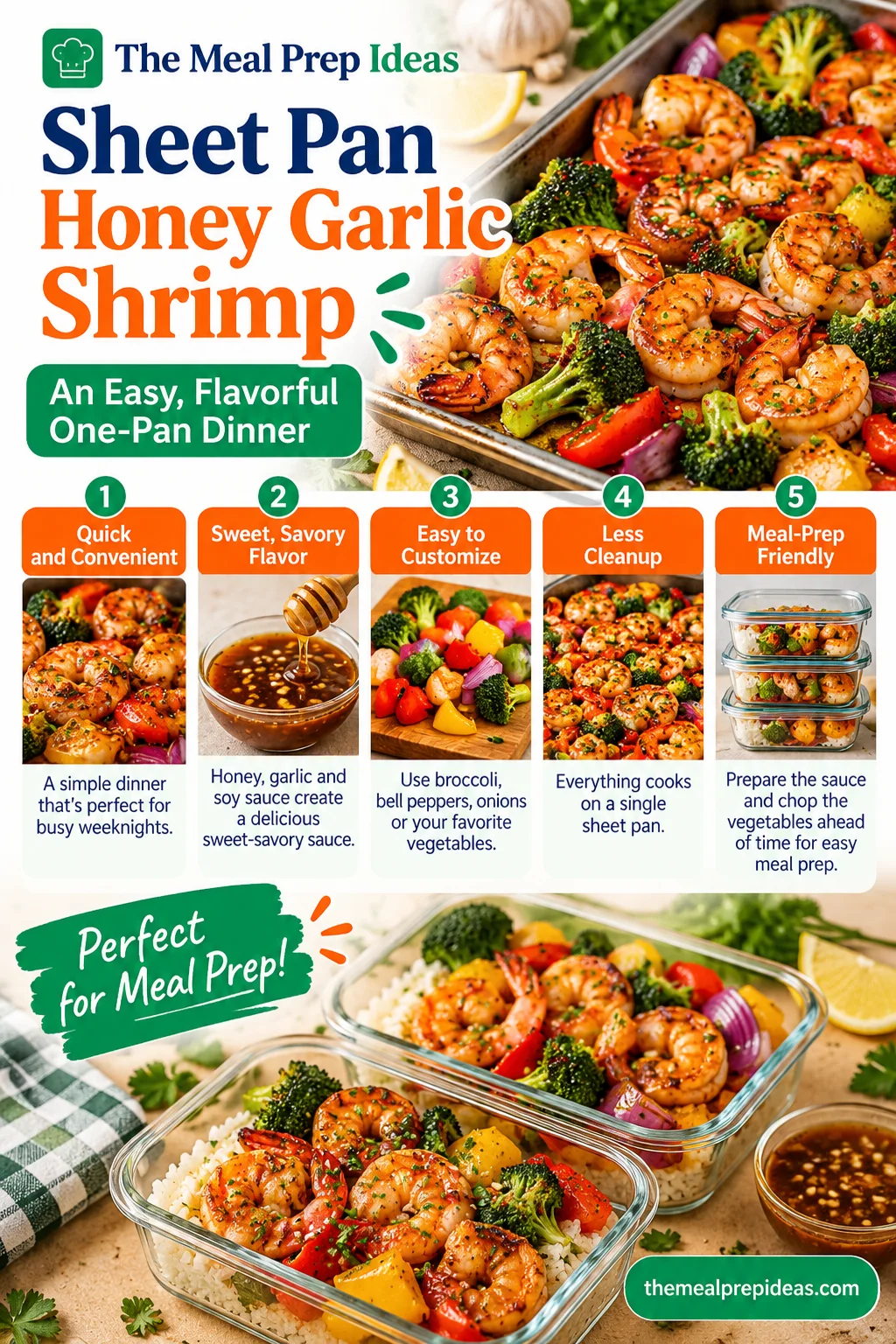
This Sheet Pan Honey Garlic Shrimp is a great choice when you want a flavorful dinner without spending a lot of time in the kitchen. With Sheet Pan Honey Garlic Shrimp, the shrimp, vegetables and sweet-savory sauce come together on one pan, making cleanup simple and saving you time after dinner.
If you enjoy easy dinners with minimal cleanup, Sheet Pan Chicken Meal Prep is another practical option for preparing flavorful meals ahead of a busy week.
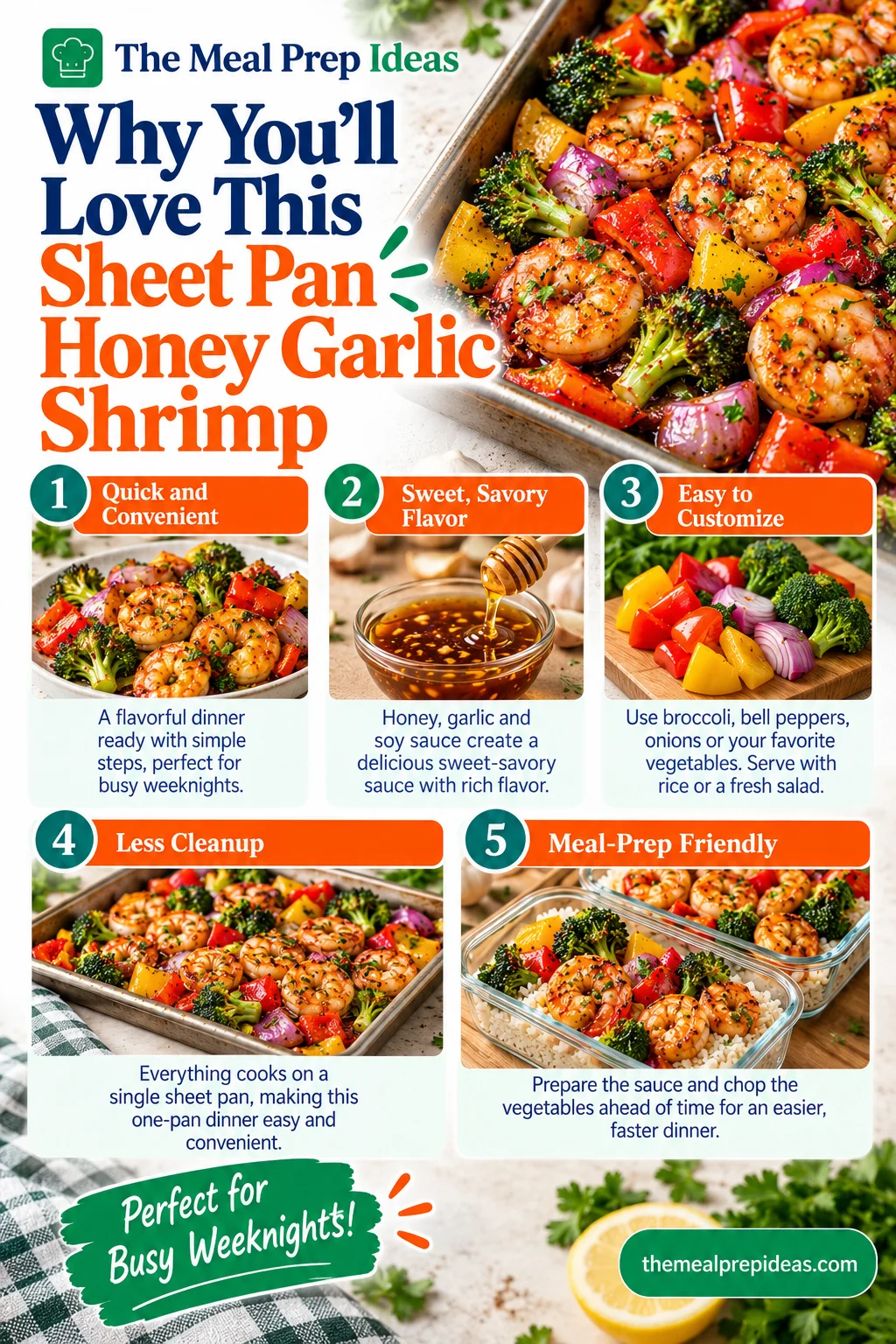
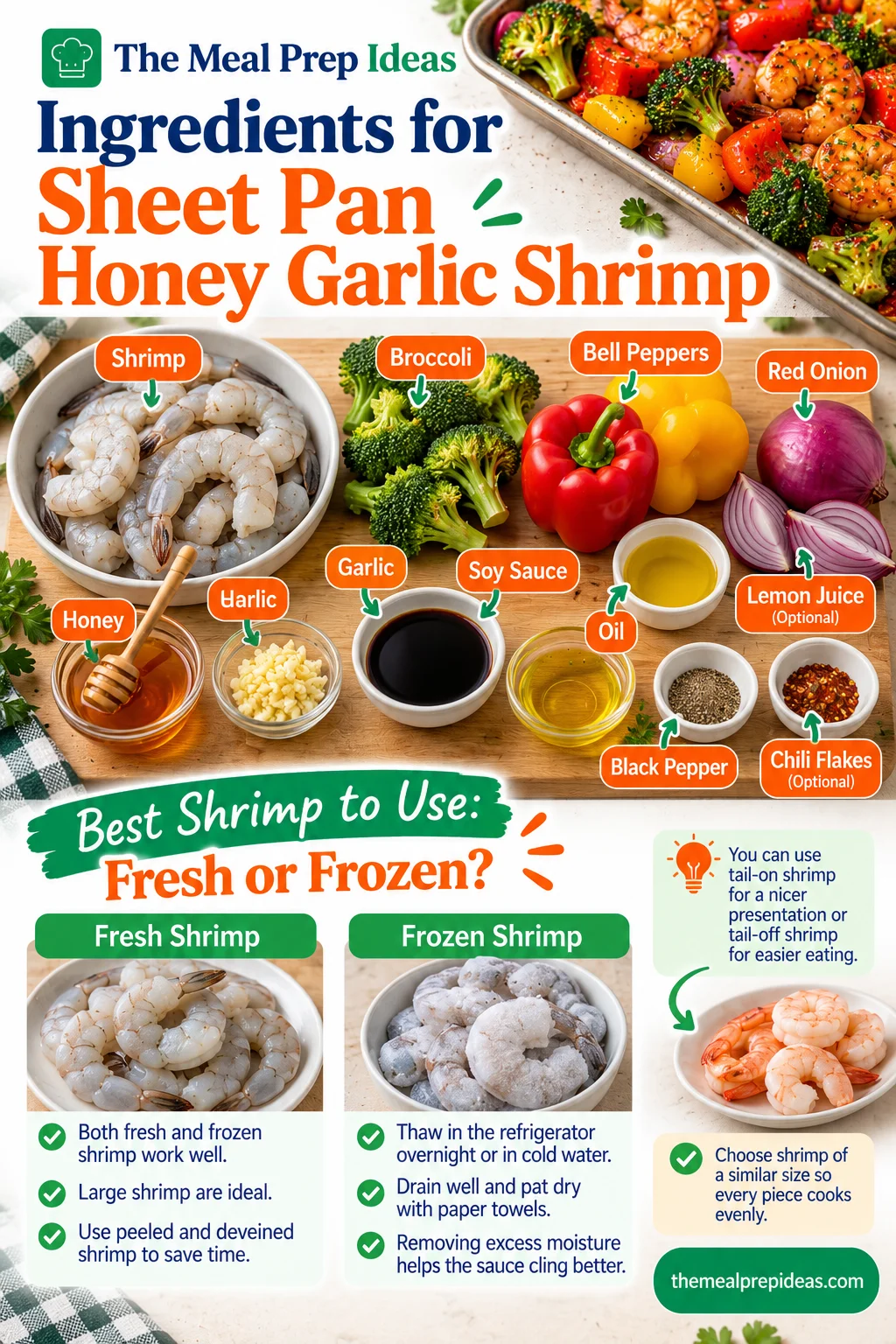
The best ingredients for Sheet Pan Honey Garlic Shrimp are simple: shrimp, fresh vegetables and a honey garlic sauce that balances sweet and savory flavors. Each ingredient in Sheet Pan Honey Garlic Shrimp has a purpose, from adding flavor to the shrimp to giving the vegetables a lightly roasted finish. Choosing the right shrimp and cutting the vegetables evenly also helps everything cook more consistently.
Both fresh and frozen shrimp work well for this recipe. Large shrimp are a practical choice because they are easy to arrange on a sheet pan and less likely to overcook as quickly as smaller shrimp. Look for peeled and deveined shrimp to save preparation time, whether you buy them fresh or frozen.
If you're using frozen shrimp, thaw them in the refrigerator overnight or place them in a sealed bag in cold water until thawed. Drain well and pat the shrimp dry with paper towels before adding the sauce. Removing excess moisture helps the sauce cling better and reduces the amount of liquid released onto the pan.
You can use tail-on shrimp for a more attractive presentation or tail-off shrimp for easier eating, especially if you're serving the meal in rice bowls. For evenly cooked Sheet Pan Honey Garlic Shrimp, choose shrimp of a similar size so every piece finishes cooking at about the same time.
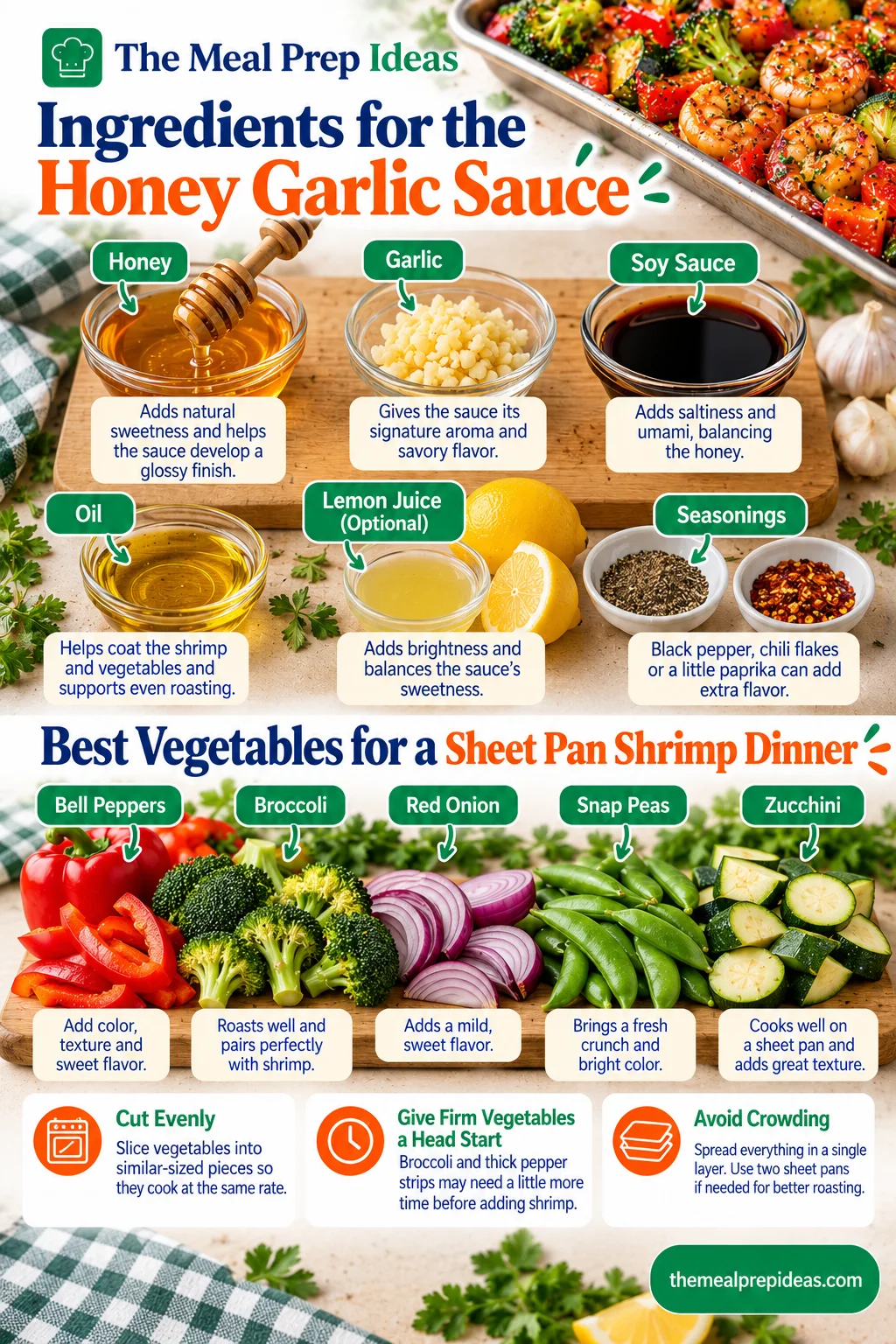
A good honey garlic sauce combines sweetness, savory depth and plenty of garlic flavor without overpowering the shrimp.
For the best flavor in Sheet Pan Honey Garlic Shrimp, whisk the honey garlic sauce until the honey and soy sauce are thoroughly combined. If you prefer a less sweet flavor, adjust the honey slightly and add a little lemon juice. For a soy-free alternative, consider coconut aminos, keeping in mind that the final flavor and saltiness may differ.
Bell peppers, broccoli, red onion, snap peas and zucchini are all useful options for a sheet pan shrimp and vegetables dinner. They add color, texture and flavor while making the meal more complete.
When preparing Sheet Pan Honey Garlic Shrimp, cut the vegetables into similar-sized pieces to help them roast evenly alongside the shrimp. Firmer vegetables, such as broccoli florets and thick pepper strips, may need extra time in the oven before you add the shrimp. Shrimp cooks quickly, so giving the vegetables a head start helps prevent overcooked seafood and undercooked vegetables.
Avoid crowding the pan. Spread everything in a single layer, using two sheet pans if necessary. Too much food packed together can trap steam, leaving the vegetables softer rather than roasted.
This quick shrimp dinner is a convenient option for busy evenings. Actual cooking time may vary depending on the size of the shrimp, the vegetables you choose and your oven.
For the honey garlic sauce:
Optional garnish:
These honey garlic shrimp ingredients combine sweet, savory and fresh flavors. The vegetables add color and texture, while large shrimp make the recipe easy to prepare and serve.
Estimated nutrition per serving: The figures below are illustrative estimates, not verified calculations. Actual values depend on ingredient brands, quantities and the final serving size.
For accurate honey garlic shrimp nutrition information, calculate the values using the exact ingredients and quantities in your final recipe, then divide by the number of servings.
Making Sheet Pan Honey Garlic Shrimp is straightforward when you prepare the vegetables first and add the shrimp later. This timing helps the vegetables become tender while keeping the shrimp juicy. Follow these steps for an easy oven-baked dinner with plenty of sweet and savory flavor.
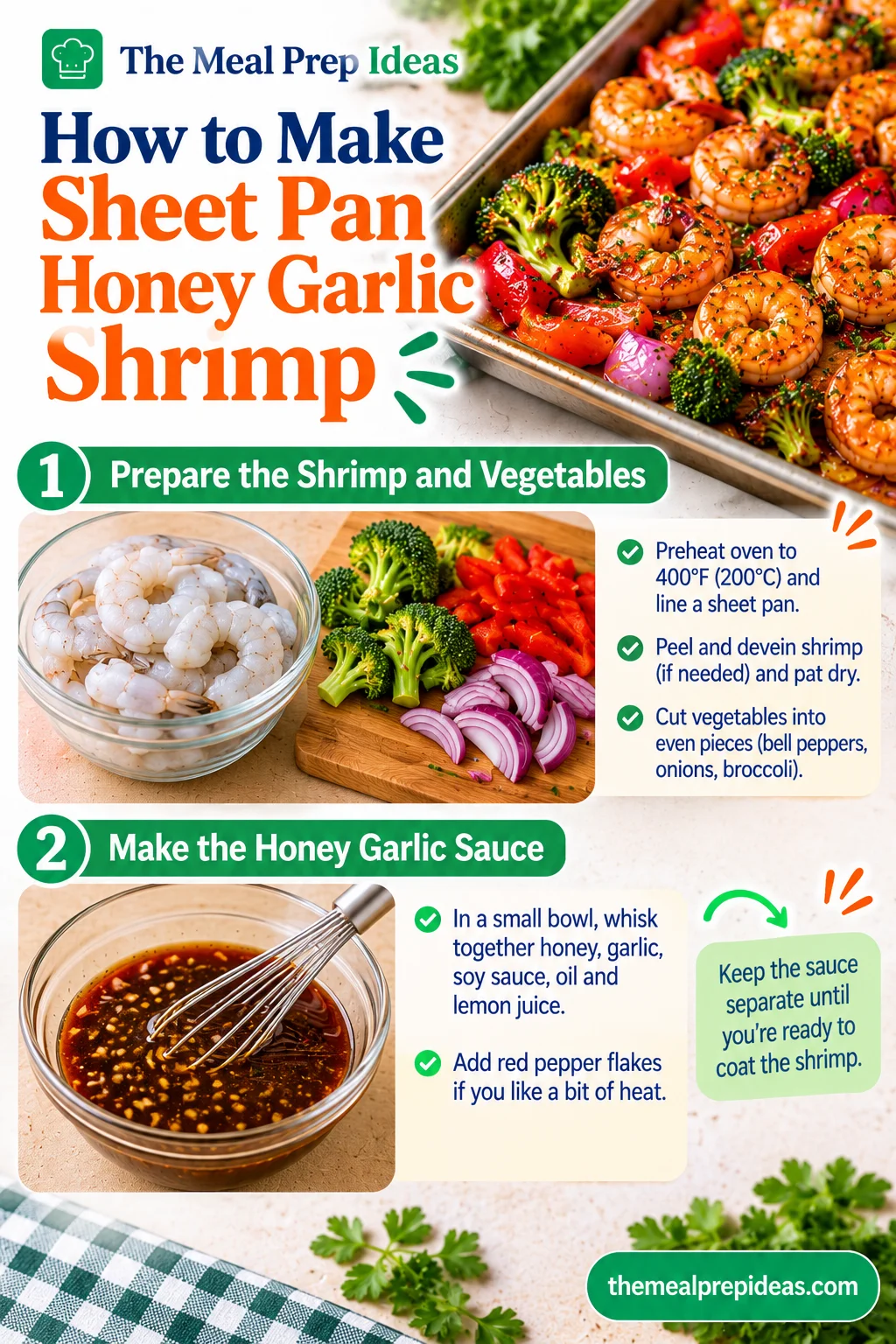
Preheat your oven to 400°F (200°C) and line a large sheet pan with parchment paper or lightly grease it with oil. If you're using frozen shrimp, thaw them completely, remove the shells if needed and make sure they are peeled and deveined. Pat the shrimp dry with paper towels to remove excess moisture.
To prepare Sheet Pan Honey Garlic Shrimp, wash the vegetables and cut them into evenly sized pieces for more consistent roasting. Slice the bell peppers and red onion into strips and cut the broccoli into bite-sized florets. Keeping the pieces similar in size helps them cook more evenly. Set the prepared shrimp and vegetables aside while you make the sauce.
In a small bowl, whisk together the honey, minced garlic, soy sauce, oil and optional lemon juice until the ingredients are evenly combined. If you enjoy a little heat, add a pinch of red pepper flakes.
For safe serving, reserve the finishing sauce for Sheet Pan Honey Garlic Shrimp before it comes into contact with raw shrimp. Use the remaining sauce to coat the shrimp just before adding it to the pan or follow the timing in your tested recipe. This keeps the flavors balanced and prevents you from accidentally serving sauce that has contacted raw seafood without cooking it.
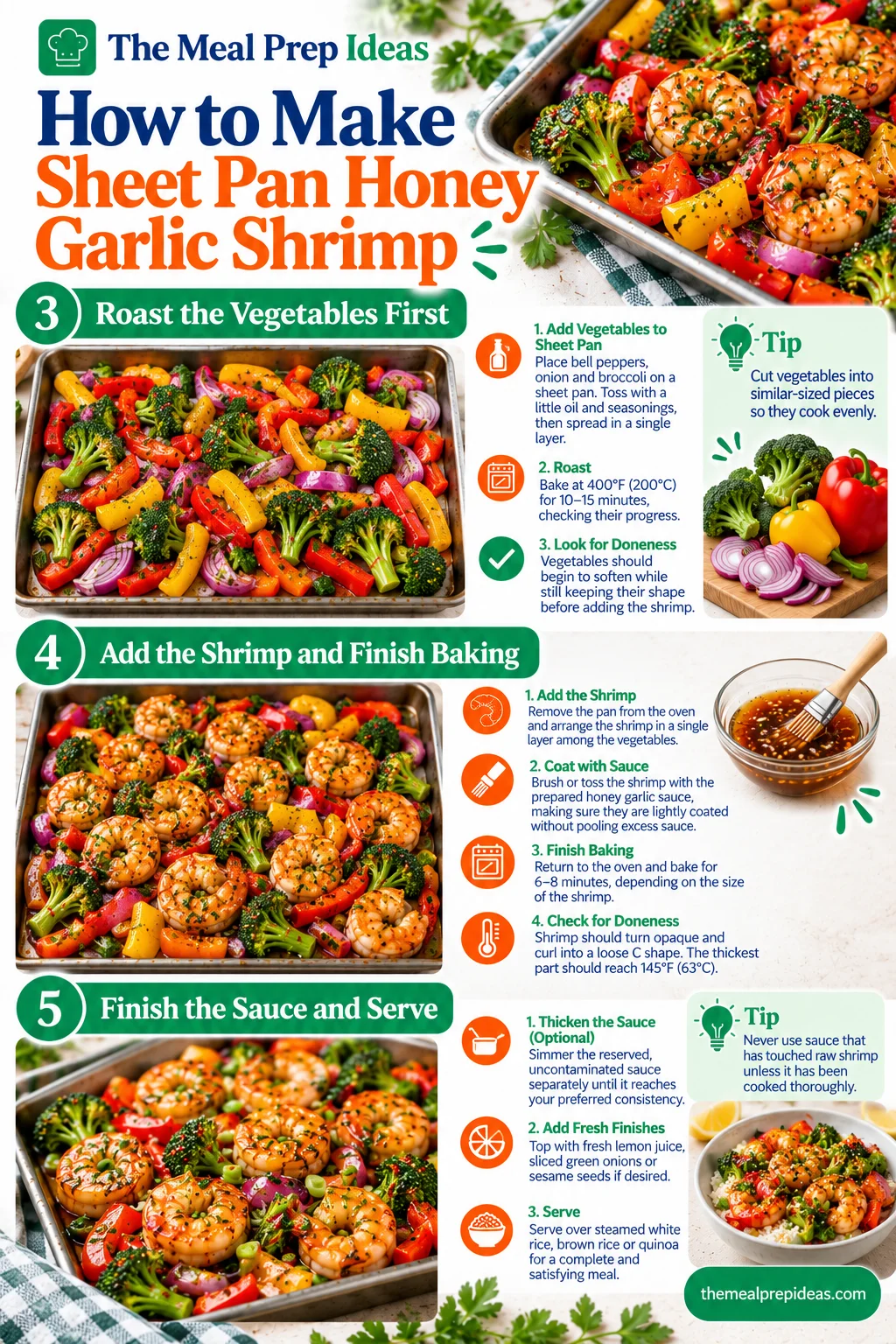
Place the prepared bell peppers, onion and broccoli on the sheet pan. Toss them with a little oil and your chosen seasonings, then spread them into a single layer.
Roast the vegetables for approximately 10-15 minutes, checking their progress before adding the shrimp. For properly cooked Sheet Pan Honey Garlic Shrimp, let the vegetables begin to soften while retaining their shape before adding the shrimp. Giving the vegetables a head start helps coordinate the cooking times and reduces the chance of overcooking the shrimp.
Remove the pan from the oven and arrange the shrimp in a single layer among the vegetables. Brush or toss the shrimp with the prepared honey garlic sauce, making sure the pieces are lightly coated without pooling excess sauce on the pan.
Return the pan to the oven and bake for approximately 6-8 minutes, depending on the size of the shrimp and your oven. Check the shrimp early when baking Sheet Pan Honey Garlic Shrimp, since smaller pieces may cook through before larger ones. The flesh should turn opaque and the shrimp should curl gently into a loose C shape. For food safety, confirm that the thickest part reaches 145°F (63°C) with an instant-read thermometer.
Once the shrimp are cooked through and the vegetables are tender, remove the pan from the oven. If you want a thicker sauce, simmer the reserved, uncontaminated sauce separately until it reaches your preferred consistency. Never drizzle sauce over the finished shrimp if it has touched raw seafood and has not been cooked thoroughly.
Finish with a squeeze of fresh lemon juice, sliced green onions or sesame seeds if desired. Serve Sheet Pan Honey Garlic Shrimp over steamed white rice, brown rice or quinoa for a satisfying dinner with roasted vegetables.
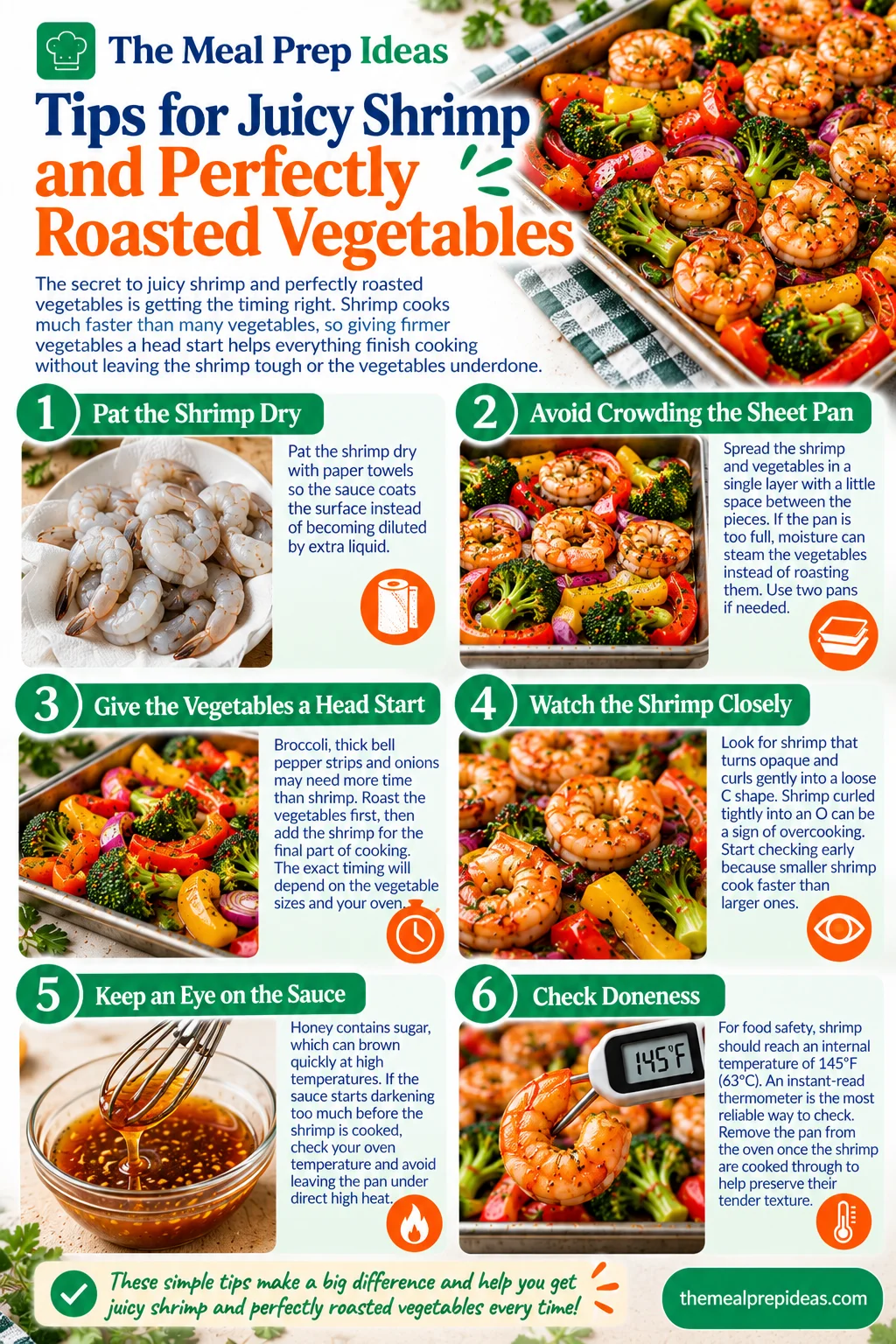
The secret to juicy shrimp and perfectly roasted vegetables is getting the timing right. Shrimp cooks much faster than many vegetables, so giving firmer vegetables a head start helps everything finish cooking without leaving the shrimp tough or the vegetables underdone.
These simple shrimp cooking tips make a difference, especially when preparing an easy sheet pan dinner for the first time.
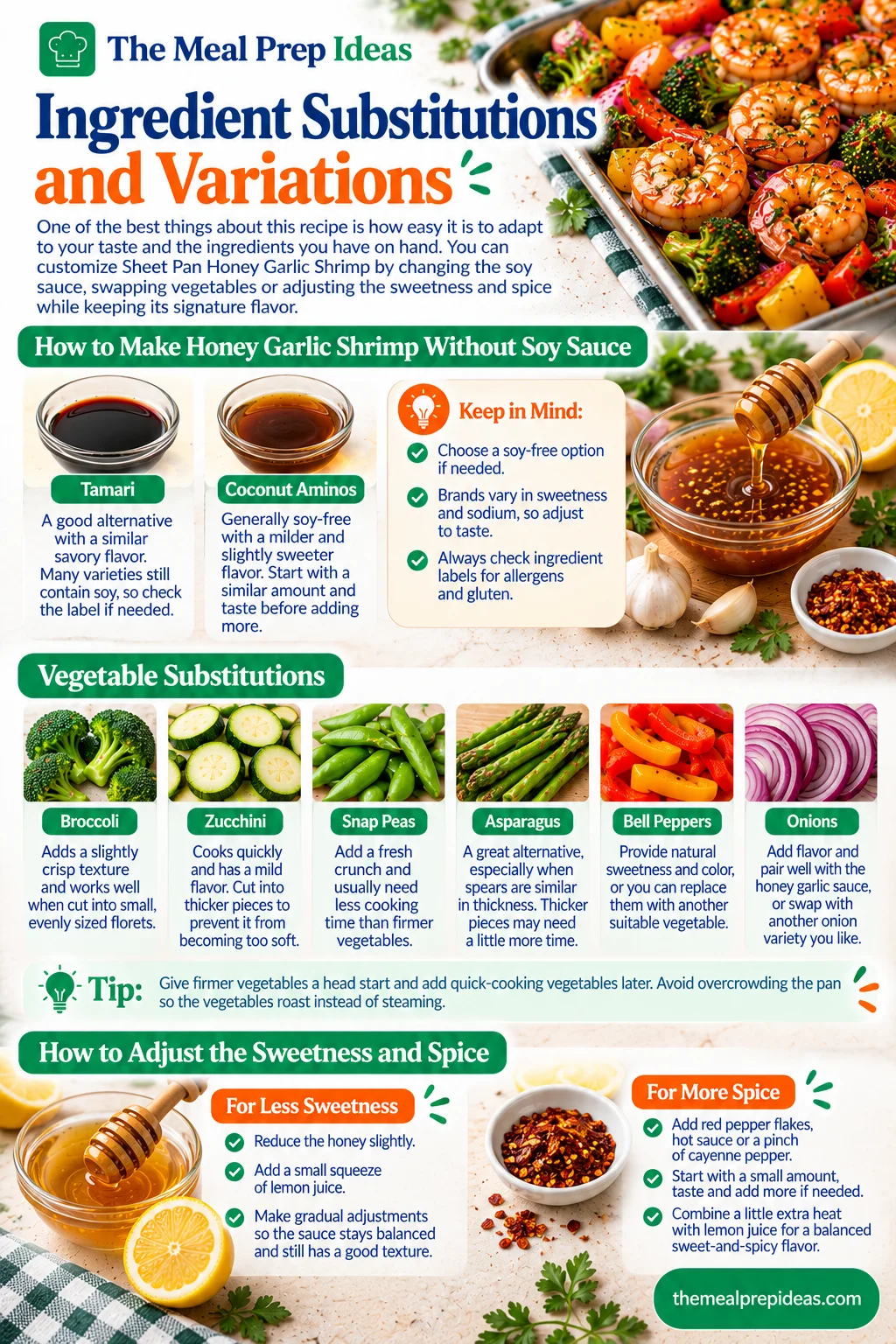
One of the best things about this recipe is how easy it is to adapt to your taste and the ingredients you have on hand. You can customize Sheet Pan Honey Garlic Shrimp by changing the soy sauce, swapping vegetables or adjusting the sweetness and spice while keeping its signature flavor. Make small changes at a time so the sauce stays balanced and coats the shrimp well.
If you need honey garlic shrimp without soy sauce, tamari or coconut aminos can be useful alternatives, depending on your dietary needs. Tamari often has a similar savory flavor to soy sauce, but many varieties still contain soy, so it is not automatically suitable for someone avoiding soy due to an allergy. Choose a product specifically labeled soy-free if necessary.
Coconut aminos are generally soy-free and often taste milder and sweeter than traditional soy sauce. Because brands differ in sweetness and sodium content, start with a similar amount and taste the sauce before adding more. Always check ingredient labels for potential allergens and gluten, especially if you're cooking for someone with dietary restrictions.
You can easily change the vegetables in this sheet pan shrimp and vegetables recipe to suit the season or use up what is already in your refrigerator.
For the best results, give firmer vegetables a head start and add quick-cooking vegetables later. Avoid packing too many vegetables onto the pan because excess moisture can prevent them from roasting properly.
The honey garlic sauce is easy to customize. If you prefer a less sweet honey garlic sauce, reduce the honey slightly and add a small squeeze of lemon juice to balance the savory flavors. Make gradual adjustments because honey also contributes to the sauce's body and glossy finish.
For spicy honey garlic shrimp, add red pepper flakes, a little hot sauce or a pinch of cayenne pepper. Start with a small amount, taste the sauce and add more if needed. You can also combine a little extra heat with lemon juice for a sweet-and-spicy flavor that does not taste overly sugary. For another simple oven-baked dinner with protein and vegetables, try Sheet Pan Chicken and Sweet Potato for an easy addition to your weekly meal plan.
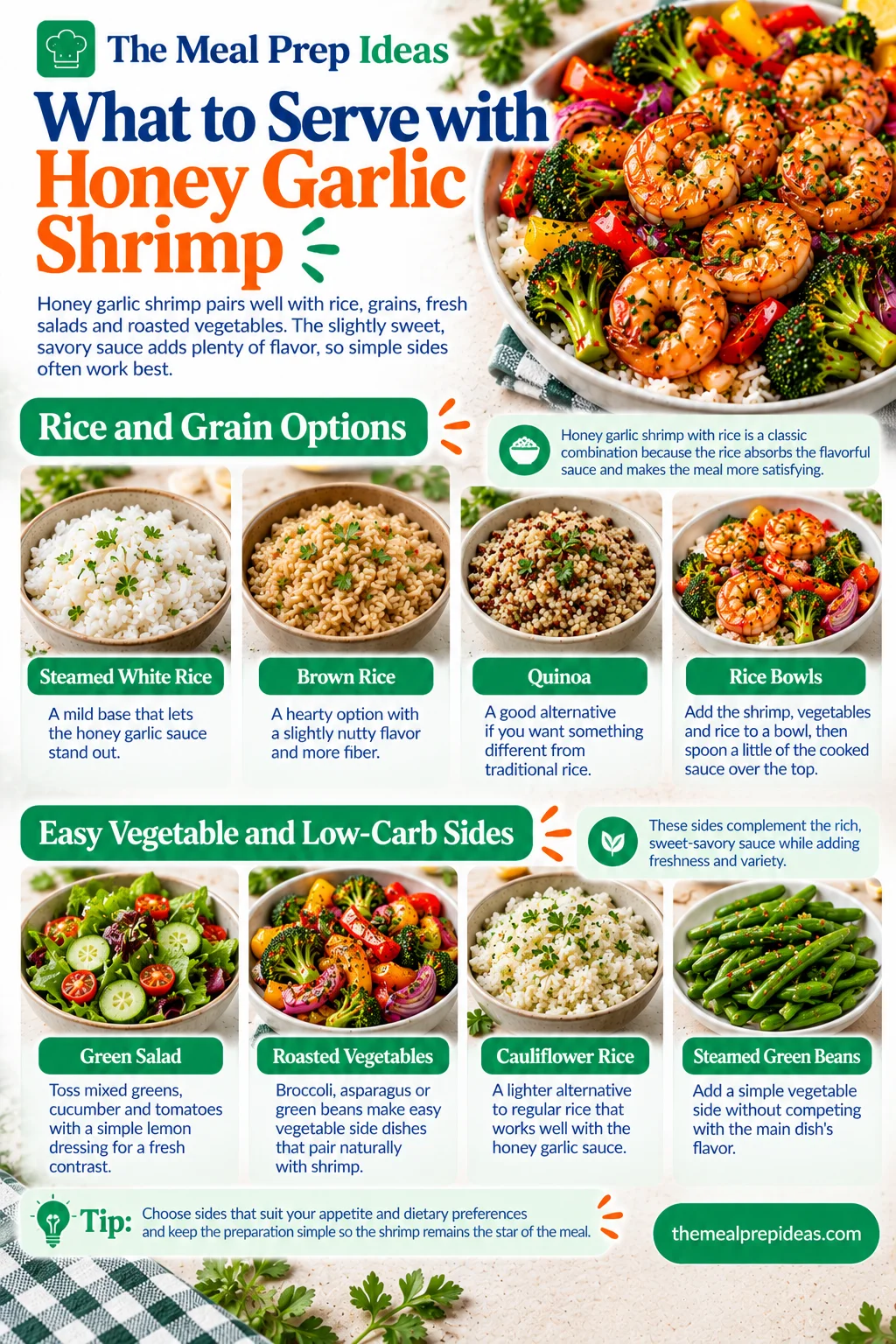
Honey garlic shrimp pairs well with rice, grains, fresh salads and roasted vegetables. The slightly sweet, savory sauce adds plenty of flavor, so simple sides often work best. Whether you want a filling dinner or a lighter meal, you can choose sides that complement the shrimp without making the plate feel too heavy.
Honey garlic shrimp with rice is a classic combination because the rice absorbs the flavorful sauce and makes the meal more satisfying. Steamed white rice is a quick, simple choice, while brown rice adds a heartier texture and more fiber. For a different option, serve the shrimp over quinoa or combine everything in a shrimp rice bowl with the roasted vegetables. If you enjoy seafood served with rice, Teriyaki Salmon Bowls are another flavorful meal-prep option to add to your lunch or dinner rotation.
Here are a few easy pairings to try:
If you prefer a lighter plate, serve the shrimp with a crisp green salad, extra roasted vegetables or cauliflower rice. These options complement the rich, sweet-savory sauce while adding freshness and variety.
Yes, honey garlic shrimp can be part of a balanced dinner. Shrimp provides protein, while vegetables add fiber, vitamins and minerals. Pairing the shrimp with brown rice, quinoa or another whole grain can make the meal more filling and add variety to your plate.
This healthy honey garlic shrimp recipe is also easy to customize based on your nutritional needs. Here are a few things to consider:
For a balanced weeknight dinner, serve the shrimp with plenty of vegetables and a suitable grain or lighter side. Check the recipe card's nutrition estimate for serving-specific information, keeping in mind that the final values depend on your exact ingredients and quantities.
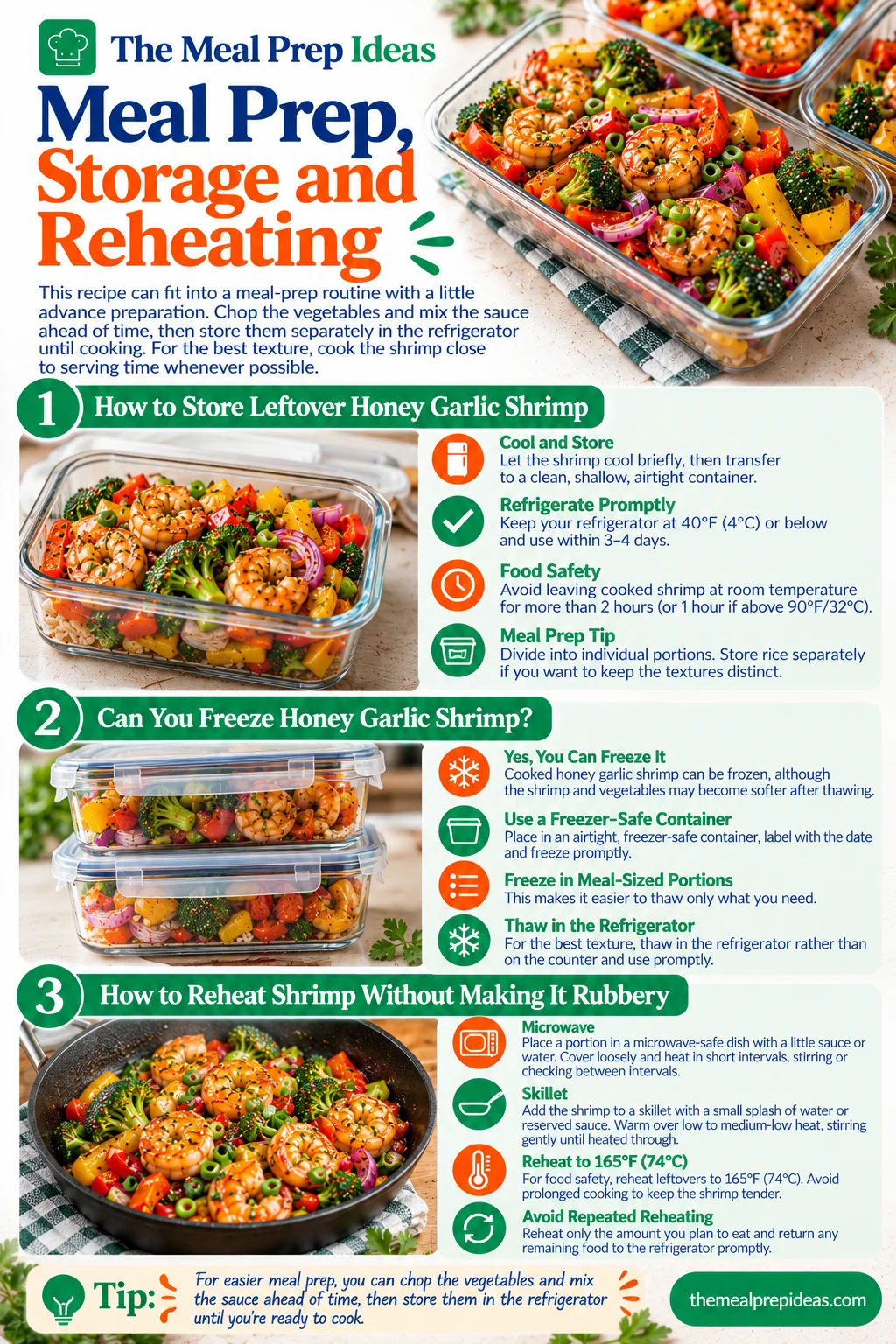
This recipe can fit into a meal-prep routine with a little advance preparation. To prepare Sheet Pan Honey Garlic Shrimp more efficiently, chop the vegetables and mix the sauce ahead of time, then store them separately in the refrigerator until cooking. For the best texture, cook the shrimp close to serving time whenever possible.
If you have leftovers, refrigerate them promptly and reheat only the portion you plan to eat. Shrimp cooks quickly, so gentle reheating helps keep it tender instead of dry or rubbery.
Let the shrimp cool briefly, then transfer the leftovers to a clean, shallow, airtight container and refrigerate them promptly. Keep your refrigerator at 40°F (4°C) or below and use cooked shrimp within 3-4 days.
Avoid leaving cooked shrimp at room temperature for more than two hours or more than one hour when the temperature is above 90°F (32°C). If leftovers have been left out longer than these limits, discard them rather than risking foodborne illness.
For easier meal prep, divide the shrimp and vegetables into individual portions. Store rice separately if you want to control portions or keep the textures distinct.
Yes, you can freeze cooked honey garlic shrimp, although the shrimp and vegetables may become softer after thawing. If you plan to freeze leftovers, place them in a freezer-safe airtight container, label the container with the date and freeze promptly.
For better results, freeze the shrimp and vegetables in meal-sized portions. Thaw them in the refrigerator rather than on the counter and use the thawed leftovers promptly. If you're preparing meals specifically for the freezer, cooking the shrimp fresh and freezing suitable sides separately may give you a better texture.
The key to reheating shrimp is to warm it gently and avoid prolonged cooking.
For food safety, reheat leftovers to 165°F (74°C). Check the temperature without leaving the shrimp on the heat longer than necessary, since excessive cooking can make the texture tough.
The full recipe takes about 31-38 minutes, including preparation and roasting the vegetables. At 400°F (200°C), the shrimp typically needs 6-8 minutes in the oven, depending on its size. Check that it reaches an internal temperature of 145°F (63°C) before serving.
Yes, frozen shrimp works well in this sheet pan shrimp recipe. Thaw it safely in the refrigerator or in cold water, following food-safety guidance, then drain and pat it dry before cooking. Removing excess moisture helps the shrimp cook properly without making the pan watery.
To keep shrimp juicy, pat it dry, use large shrimp for more forgiving cooking and monitor the cooking time closely. Remove it from the oven as soon as it reaches 145°F (63°C). Overcooked shrimp becomes firm and rubbery, so avoid leaving it in the oven longer than necessary.
Yes, shrimp and broccoli work well together on one sheet pan. Roast the broccoli first for about 10-15 minutes, then add the shrimp and sauce for the final 6-8 minutes. This gives the broccoli time to soften while helping prevent the shrimp from overcooking.
Simmer the honey garlic sauce gently in a small saucepan until it reduces to your preferred consistency. If you want a thicker sauce more quickly, you can use a small cornstarch slurry and cook it until thickened. Always keep sauce that has touched raw shrimp separate from ready-to-serve sauce or cook it thoroughly before serving.
Yes. Prepare the sauce and chop the vegetables ahead of time, storing them separately in the refrigerator. For the best texture, cook the shrimp close to serving time. You can also refrigerate cooked leftovers in an airtight container for 3-4 days and reheat them gently to 165°F (74°C) before eating.
Make Sheet Pan Honey Garlic Shrimp with juicy shrimp, roasted vegetables, and sweet honey garlic sauce. An easy weeknight dinner in 35 minutes.
the mealGood to know
Made this recipe?
Tag @themealprepideas on Instagram — we love seeing what you made.
Be the first to rate, review, or ask a question about this recipe.
No comments yet
Be the first cook to share feedback or ask a question about this recipe!
Keep Cooking
Make this easy Chicken and Chickpea Curry with tender chicken, hearty chickpeas and a rich, flavorful sauce. Perfect for a quick weeknight dinner.

Make this Crockpot Pot Roast with tender beef, hearty vegetables, and rich, savory gravy. An easy slow cooker dinner perfect for busy weeknights!

Easy Sheet Pan Chicken Pitas with Tzatziki! Tender lemon garlic chicken & roasted veggies wrapped in warm pita with creamy tzatziki. Great for meal prep!
Join 50,000+ subscribers getting weekly meal prep ideas, shopping lists, and time-saving tips straight to their inbox.