Meal Prep Ideas
Back to Home Page

Crockpot Pot Roast

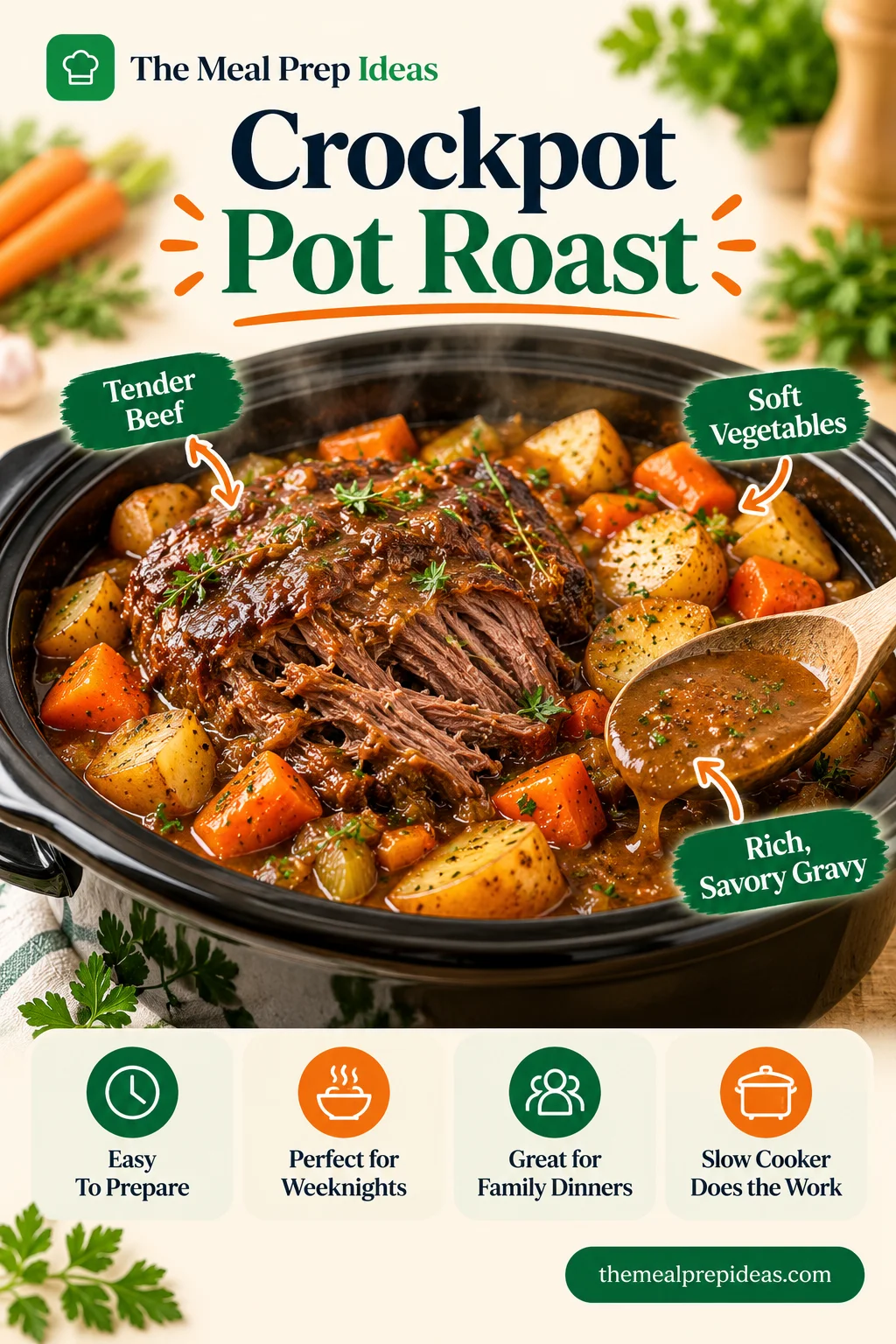
Make this Crockpot Pot Roast with tender beef, hearty vegetables, and rich, savory gravy. An easy slow cooker dinner perfect for busy weeknights!

Crockpot Pot Roast with tender shredded beef, potatoes, carrots, and rich brown gravy in a slow cooker.

Get This Recipe Summarized by AI

Ask your favorite AI assistant to summarize this recipe, suggest swaps, or scale it up — one click away.

We copy the prompt to your clipboard too — just paste (Ctrl/Cmd+V) if it doesn't appear automatically.

Crockpot Pot Roast is a warm, comforting meal made with tender beef, potatoes, carrots and rich, savory gravy. This Crockpot Pot Roast is easy to prepare because the slow cooker does most of the work, leaving you with tender beef, soft vegetables and rich gravy.

This easy pot roast recipe is perfect for busy weeknights when you want a filling homemade dinner without spending hours in the kitchen. It also makes a great Sunday dinner for the whole family. The beef slowly cooks with the vegetables and seasonings, giving everything plenty of time to develop a deep, rich flavor.

In this Crockpot Pot Roast guide, you’ll learn which beef cut works best, how long to cook it on low or high and how to make smooth, flavorful gravy.  You’ll also find simple tips for keeping the beef tender, storing leftovers and reheating them without drying out the meat.

Crockpot Pot Roast with tender shredded beef, potatoes, carrots, and rich brown gravy in a slow cooker

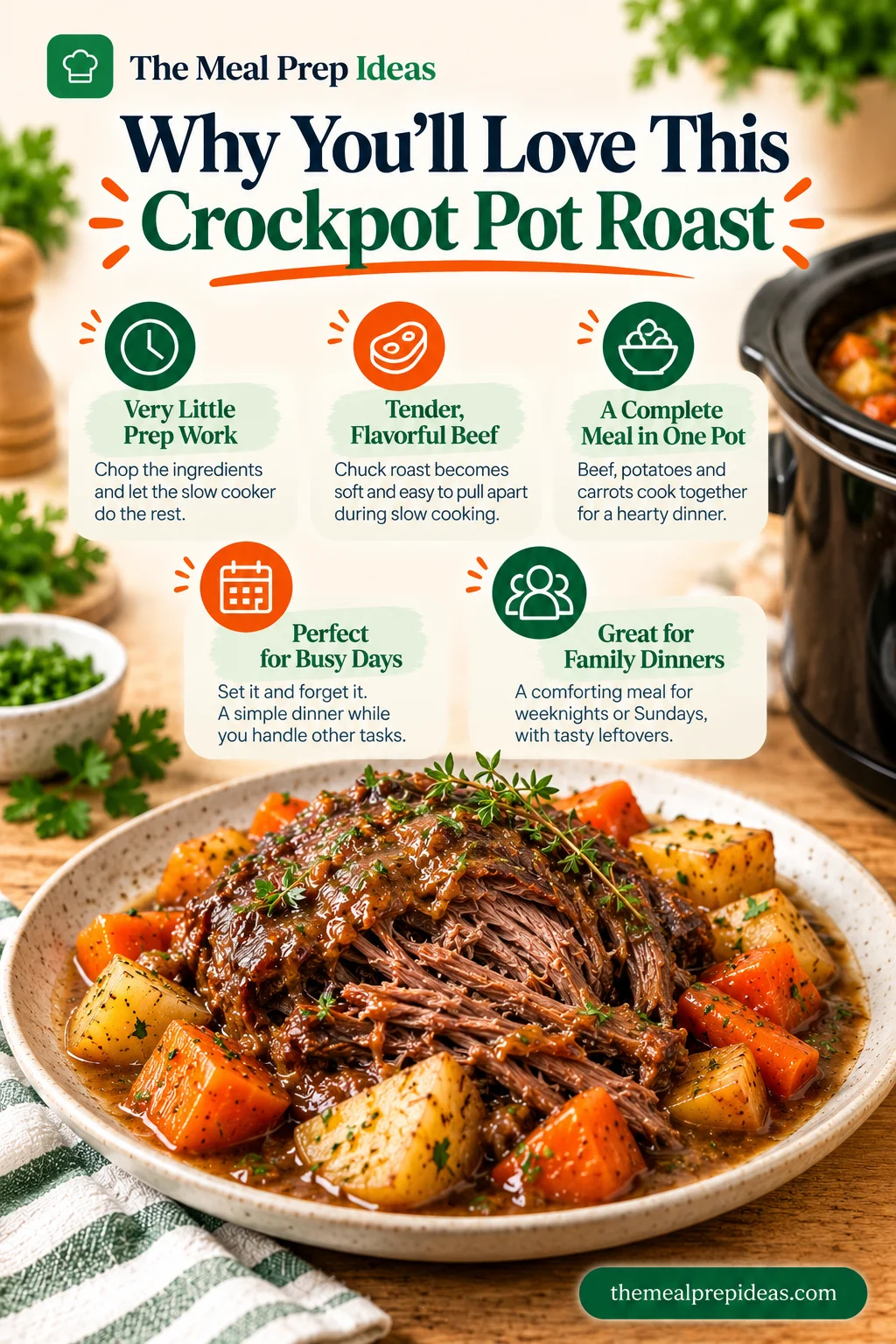
Why You’ll Love This Crockpot Pot Roast

There is a lot to love about this Crockpot Pot Roast, especially when you want a homemade dinner without spending the whole evening in the kitchen. Here are a few reasons to add it to your meal plan.

  • Very little prep work: You only need to prepare the beef, chop the vegetables and add the ingredients to your slow cooker. Once everything is ready, the Crockpot takes care of most of the cooking.
  • Tender, flavorful beef: A chuck roast is a great choice because its marbling and connective tissue help it become soft and tender during slow cooking. When cooked long enough, the beef becomes easy to pull apart with a fork.
  • A complete meal in one pot: The beef cooks alongside potatoes and carrots, so you get a hearty dinner without needing to prepare several separate dishes.
  • Perfect for busy days: This easy Crockpot Pot Roast recipe is useful when you have a busy schedule. Let it cook while you handle other tasks, then finish the meal with the rich cooking juices or homemade gravy.
  • Great for family dinners and leftovers: Serve this hearty comfort food for a relaxed Sunday dinner or a simple weeknight meal. Leftovers can also be portioned out for easy lunches over the next few days.

One of the best things about this Crockpot Pot Roast is how easy it is to serve for a family dinner. Add the beef and vegetables to a plate, spoon some gravy over the top and enjoy a homemade pot roast that feels like a special meal without requiring much hands-on work. If you enjoy easy slow cooker dinners, Crockpot Shredded Chicken is another convenient option for preparing flavorful meals with minimal hands-on effort.

Tender pot roast with potatoes and carrots served with savory gravy for a comforting family dinner

Best Cut of Beef for Crockpot Pot Roast

The best cut of beef for pot roast is usually chucking roast. It has a good amount of fat and connective tissue, which helps the meat become tender and flavorful during slow cooking. Choosing the right beef cut makes a big difference in Crockpot Pot Roast, as leaner cuts can turn out drier while chuck roast becomes tender during slow cooking.

Why Chuck Roast Works Best

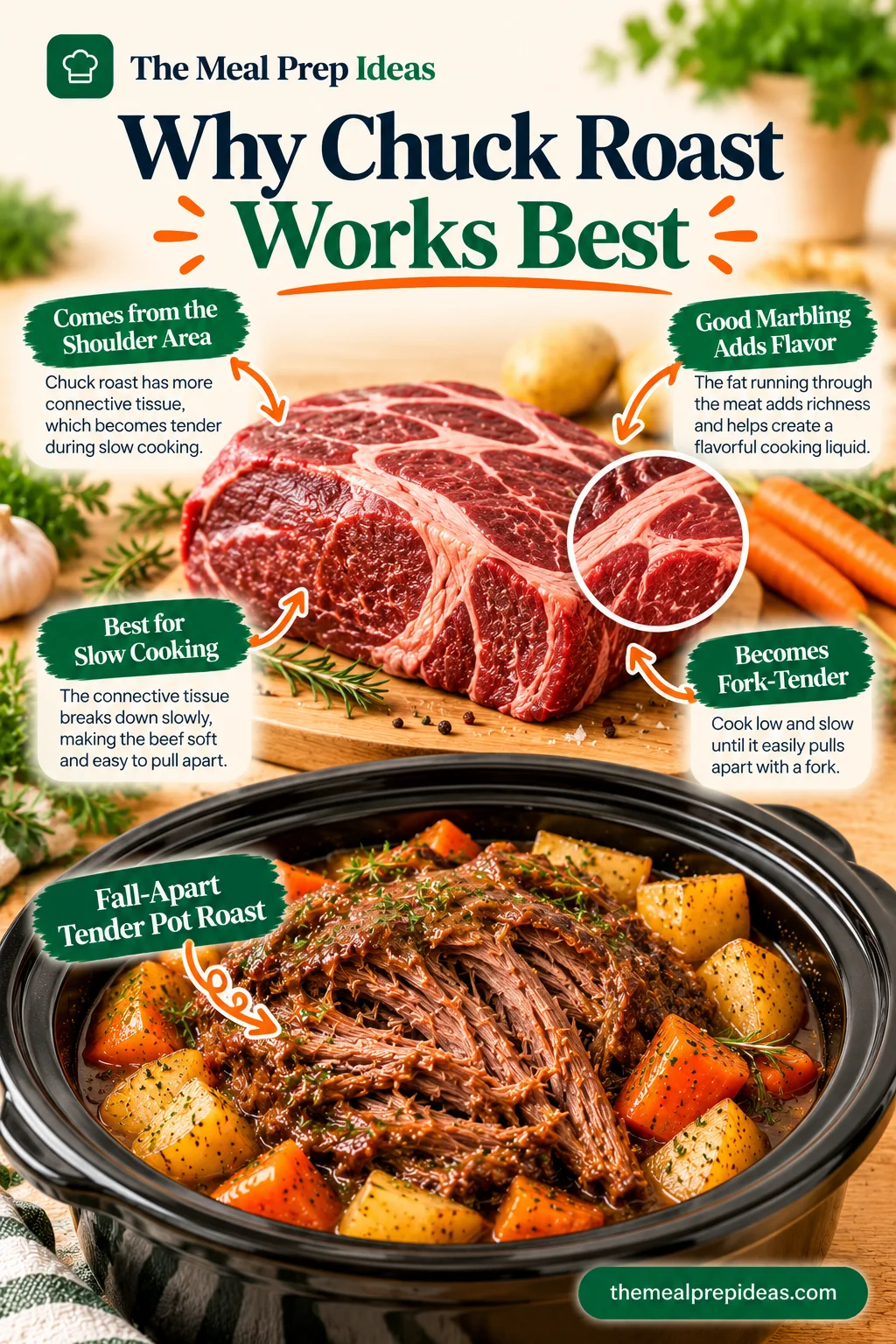
Beef chuck roast comes from the shoulder area of the cow. This part has more connective tissue than some leaner cuts, so it benefits from the long, gentle cooking of a slow cooker.

As the roast cooks, the connective tissue gradually breaks down, helping the meat become soft and easy to pull apart. The fat running through the meat, known as marbling, also adds flavor and helps create a rich cooking liquid.

For the best Crockpot Pot Roast, choose a boneless chuck roast or chuck shoulder roast with some visible marbling. A roast that is too lean may not give you the same juicy texture. Cook the beef until it is fork-tender, rather than relying only on a set cooking time. When it is ready, you should be able to pull the meat apart easily with a fork.

This is why chuck roast is such a reliable choice for a slow cooker beef roast. With enough time and moisture, it can become a fall-apart tender pot roast that pairs beautifully with potatoes, carrots and gravy.

Crockpot Pot Roast made with marbled chuck roast that cooks until tender and easy to pull apart.

Can You Use Rump Roast or Another Cut of Beef?

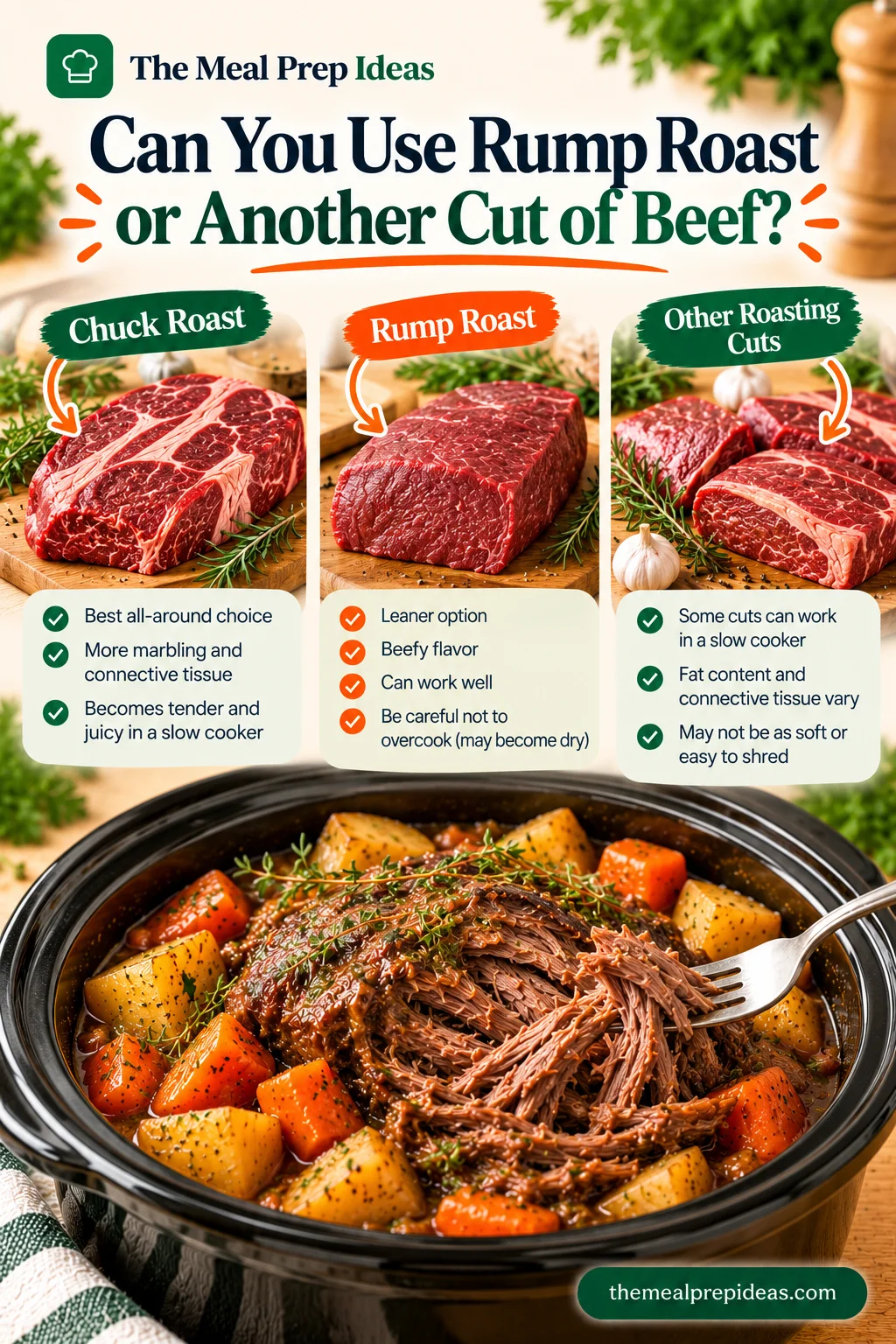
Yes, you can use other cuts of beef, but the final texture may be different. Rump roast is a common alternative to chuck roast. It is generally leaner, so it may produce meat that is firmer and less rich than a chuck roast cooked in the same way.

Here is a simple comparison:

  • Chuck roast: The best all-around choice for a tender, juicy pot roast because it contains more marbling and connective tissue.
  • Rump roast: A leaner option with a beefy flavor. It can work well, but take care not to overcook it, as it may become dry.
  • Other roasting cuts: Some cuts can work in a slow cooker, but their fat content and connective tissue vary. The results may not be as soft or easy to shred.

When deciding between chuck roast vs. rump roast, think about the texture you want. Chuck roast is usually the better choice for classic, pull-apart pot roast, while rump roast may suit you if you prefer a leaner slice of beef.

Whatever cut you choose, check the meat as it cooks. Slow cookers can vary and a roast's thickness also affects the cooking time. The most useful sign is tenderness: the beef should pull apart easily with a fork before you serve it.

Chuck roast and rump roast compared as beef cuts for slow cooking

Crockpot Pot Roast Ingredients and Substitutions

You only need a few simple ingredients to make a flavorful Crockpot Pot Roast. The beef provides a rich, savory taste, while the vegetables soften as they cook and soak up the cooking juices. A good broth, a few seasonings and fresh herbs bring everything together.

You can adjust a few ingredients in this Crockpot Pot Roast based on what you already have in your kitchen. Here is what to look for when choosing your vegetables, broth and seasonings.

Best Potatoes, Carrots and Vegetables

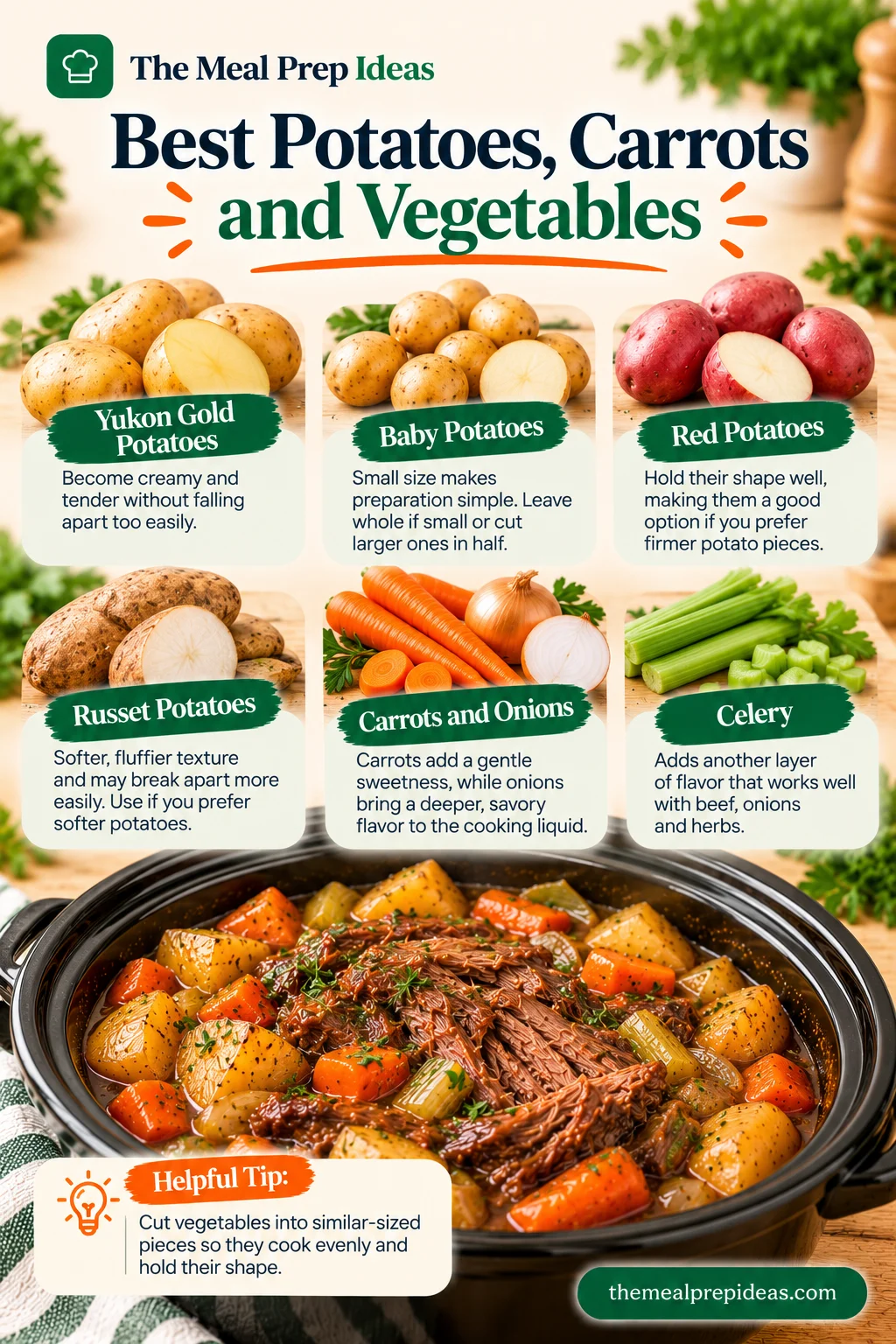
For a classic pot roast with potatoes and carrots, choose vegetables that can hold their shape during several hours of slow cooking.

  • Yukon Gold potatoes: These are a great choice because they become creamy and tender without falling apart too easily.
  • Baby potatoes: Their small size makes preparation simple. You can leave them whole if they are small enough or cut larger ones in half.
  • Red potatoes: These hold their shape well, making them a good option if you prefer firmer potato pieces.
  • Russet potatoes: These have a softer, fluffier texture and may break apart more easily during long cooking. Use them if you prefer softer potatoes, but check them for doneness as the meal cooks.
  • Carrots and onions: Carrots add a gentle sweetness, while onions bring a deeper, savory flavor to the cooking liquid.
  • Celery: A few celery stalks add another layer of flavor that works well with beef, onions and herbs.

For the best Crockpot Pot Roast, cut the potatoes and carrots into similar-sized pieces so they cook more evenly and hold their shape. Avoid cutting the potatoes and carrots too small, as they may become overly soft before the beef is ready. These simple choices help your slow-cooked vegetables stay tender while keeping their shape.

Crockpot Pot Roast ingredients featuring Yukon Gold potatoes, carrots, red potatoes, onions, and celery

Beef Broth, Seasonings and Fresh Herbs

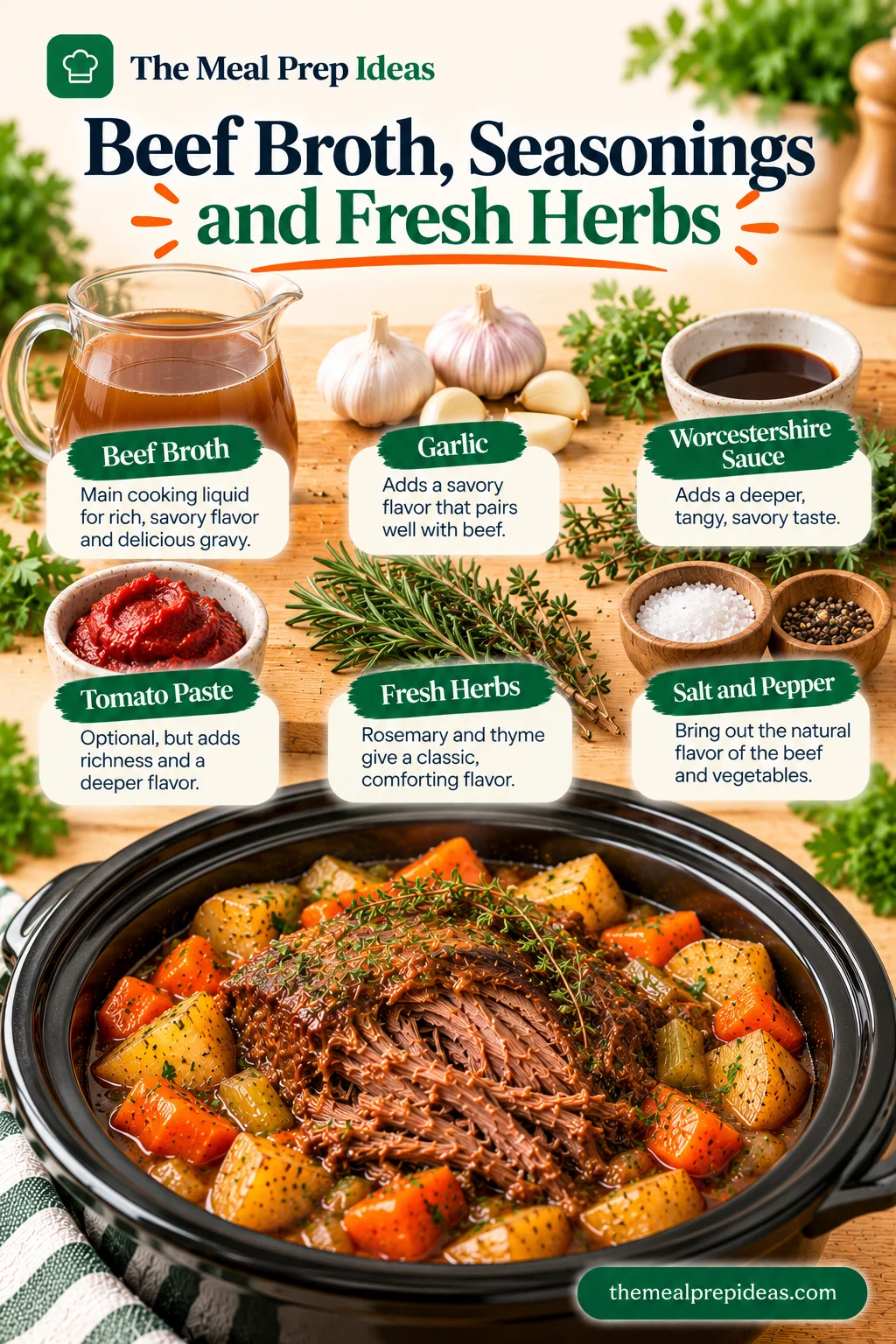
Beef broth is the main cooking liquid for this recipe. In Crockpot Pot Roast, beef broth combines with the juices from the meat and vegetables to create a savory base for the gravy. You do not need to cover the roast completely with liquid; the slow cooker traps moisture as the ingredients cook.

Here are a few ingredients that help build flavor:

  • Low-sodium beef broth: This is a useful choice because it lets you control the salt level more easily. You can always add more salt near the end if needed.
  • Garlic cloves: Fresh garlic adds a savory flavor that pairs naturally with beef and onions.
  • Worcestershire sauce: A small amount adds a deeper, tangy, savory taste. If you prefer a pot roast without Worcestershire sauce, you can leave it out or use a suitable alternative, such as a little soy sauce. Check the label if you need a gluten-free option.
  • Tomato paste: This is optional, but it can add richness and a deeper flavor to the cooking liquid.
  • Fresh rosemary and thyme: These herbs give the roast a classic, comforting flavor. If you do not have fresh herbs, dried versions can work too; use less because their flavor is more concentrated.
  • Kosher salt and black pepper: These simple seasonings bring out the natural flavor of the beef and vegetables.

If you do not have beef broth, vegetable broth can work as a substitute, although the final flavor will be a little lighter. You can also use water with suitable seasonings, but the gravy may have less depth.

The key is to keep the ingredients balanced. Start with the recommended amounts of salt and seasonings, especially when using packaged broth or sauces, then adjust the flavor before serving.

Beef broth, garlic, rosemary, thyme, black pepper, and Worcestershire sauce for pot roast seasoning

Crockpot Pot Roast Recipe

Time

  • Prep Time: 20 minutes
  • Cook Time: 8–9 hours on low or 4–5 hours on high
  • Total Time: About 8 hours 20 minutes on low
  • Servings: 8

Cooking time may vary depending on the size and thickness of the roast and your slow cooker. Cook until the beef is fork-tender.

Ingredients

For the pot roast:

  • 3 pounds beef chuck roast
  • 1½ pounds Yukon Gold or red potatoes, cut into large chunks
  • 4 medium carrots, peeled and cut into thick pieces
  • 1 large yellow onion, cut into wedges
  • 4 garlic cloves, minced
  • 2 cups low-sodium beef broth
  • 1 tablespoon Worcestershire sauce
  • 1 tablespoon olive oil, for searing
  • 1 teaspoon kosher salt, or to taste
  • ½ teaspoon black pepper
  • 1 teaspoon dried thyme
  • 1 teaspoon dried rosemary
  • 1 tablespoon tomato paste (optional)

For the gravy (optional):

  • 2 tablespoons cornstarch
  • 2 tablespoons cold water
  • 1–2 tablespoons chopped fresh parsley, for serving

Instructions

  1. 1Prepare the beef: Pat the chuck roast dry with paper towels. Season all sides with salt, black pepper, thyme and rosemary.
  2. 2Sear the roast: Heat olive oil in a large skillet over medium-high heat. Brown the beef on all sides, then transfer it to the slow cooker. This step adds flavor but can be skipped if you are short on time.
  3. 3Add the vegetables: Place the potatoes, carrots and onion in the bottom of the slow cooker. Set the beef on top.
  4. 4Add the cooking liquid: Mix the beef broth, garlic, Worcestershire sauce and optional tomato paste. Pour the mixture around the roast.
  5. 5Slow cook: Cover and cook on low for 8–9 hours or on high for 4–5 hours, or until the beef is fork-tender and the vegetables are cooked through. Check the roast toward the earlier end of the time range.
  6. 6Make the gravy: Transfer the beef and vegetables to a serving dish. If you want thicker gravy, strain the cooking liquid into a saucepan. Mix the cornstarch with cold water until smooth, then whisk it into the simmering liquid. Cook for a few minutes until the gravy thickens.
  7. 7Serve: Pull the beef apart with two forks or slice it across the grain. Serve with the potatoes, carrots and warm gravy. Sprinkle with fresh parsley if desired.

Notes

  • Choose chuck roast: Its marbling and connective tissue make it a great choice for tender, slow-cooked beef.
  • Searing is optional: Browning the meat first adds a deeper flavor, but you can skip this step to save preparation time.
  • Cut vegetables into large pieces: Larger chunks are less likely to become mushy during long cooking.
  • Adjust the seasoning: Low-sodium broth makes it easier to control the salt. Taste the gravy before adding more.
  • Make thicker gravy: Add the cornstarch slurry gradually. You may not need all of it, depending on how much cooking liquid remains.
  • Use another broth if needed: Vegetable broth can replace beef broth, although the gravy will have a milder beef flavor.

Nutrition

Estimated nutrition per serving, based on 8 servings and including the beef, vegetables and cooking liquid, but excluding optional gravy thickener and garnish:

  • Calories: Approximately 520
  • Protein: Approximately 42 g
  • Carbohydrates: Approximately 30 g
  • Fat: Approximately 25 g
  • Sodium: Approximately 500–700 mg

These values are estimates, not lab-tested figures. Actual nutrition will vary depending on the beef's fat content, how much cooking liquid and fat you consume and the brands of broth and seasonings used.

Dietary

  • Gluten-free: Use certified gluten-free beef broth and Worcestershire sauce and check all seasoning labels.
  • Dairy-free: This recipe is naturally dairy-free when made with the ingredients listed.
  • Lower-sodium: Choose low-sodium broth, reduce the added salt and taste the gravy before seasoning further.
  • Lower-carb option: Reduce or omit the potatoes and serve the beef with extra carrots or other suitable vegetables. Keep in mind that carrots and onions still contain carbohydrates.

How to Make Crockpot Pot Roast

Making a Crockpot Pot Roast is simple once you know a few basic steps. The key is to prepare the beef and vegetables properly, give the meat enough time to cook and avoid lifting the lid too often. These small details help the roast develop a rich flavor and become tender enough to pull apart with a fork.

Should You Sear the Roast Before Slow Cooking?

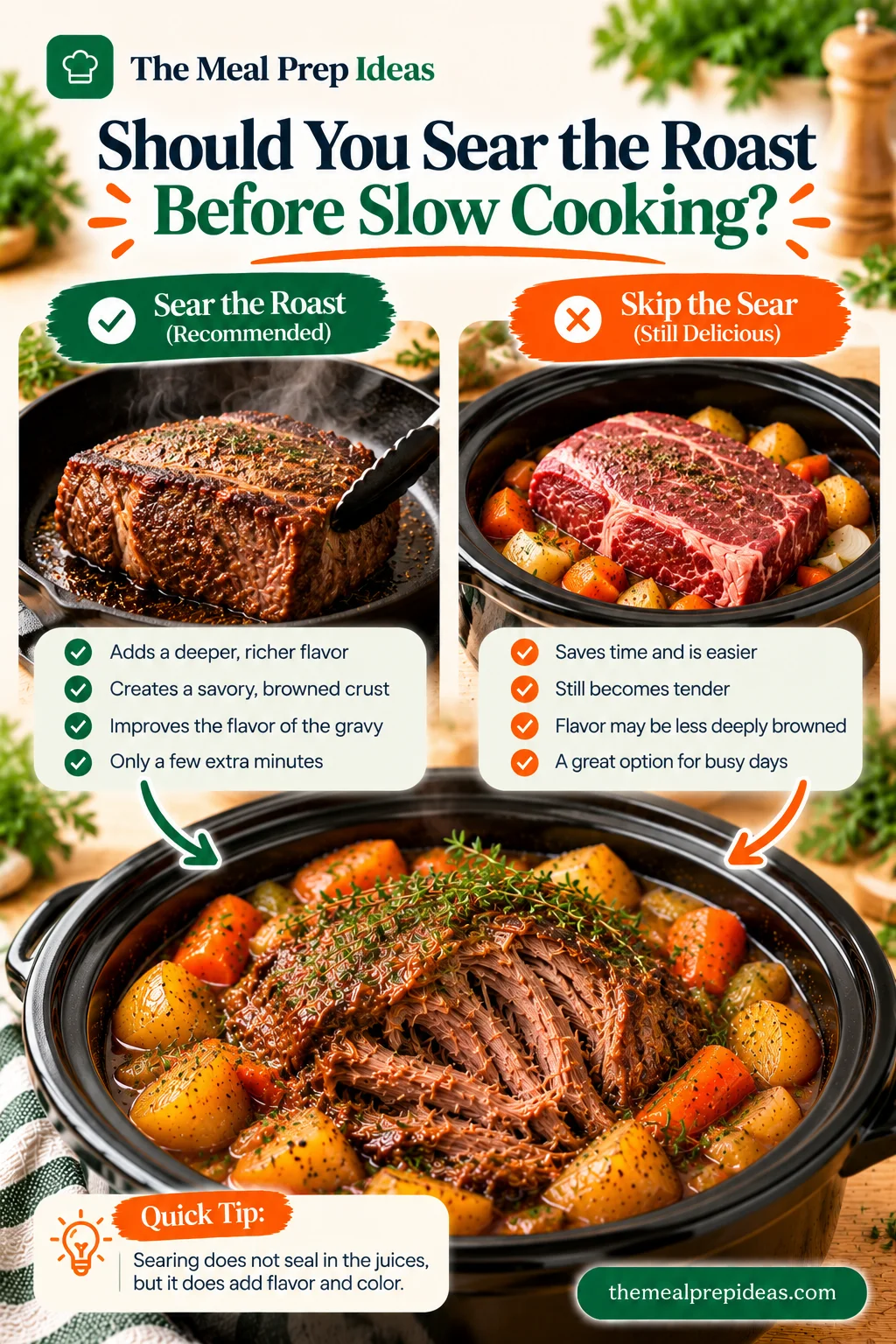
Searing the beef before slow cooking is optional, but it adds a deeper, richer flavor to the finished dish. When you brown the beef in a hot skillet, the surface develops a savory crust that adds extra flavor to the cooking liquid and gravy.

To prepare your Crockpot Pot Roast, pat the chuck roast dry, season it well and brown it in a hot skillet if you want a deeper flavor. Heat a little oil in a large skillet, then brown the beef on all sides. You do not need to cook it through at this stage because it will finish cooking in the slow cooker.

If you're short on time, you can make pot roast without searing the meat. Simply place the seasoned beef in the slow cooker and continue with the recipe. The result will still be tender when properly cooked, although the flavor may be less deeply browned.

One thing to remember: searing does not seal in the juices. Its main purpose is to develop flavor and color. If you have a few extra minutes, it is a worthwhile step, but skipping it can make preparation easier on busy days.

Crockpot Pot Roast with chuck beef browning in a hot skillet before slow cooking

How to Layer the Beef and Vegetables

For a flavorful slow cooker pot roast, arrange the ingredients so the vegetables cook evenly and the beef has enough time to become tender.

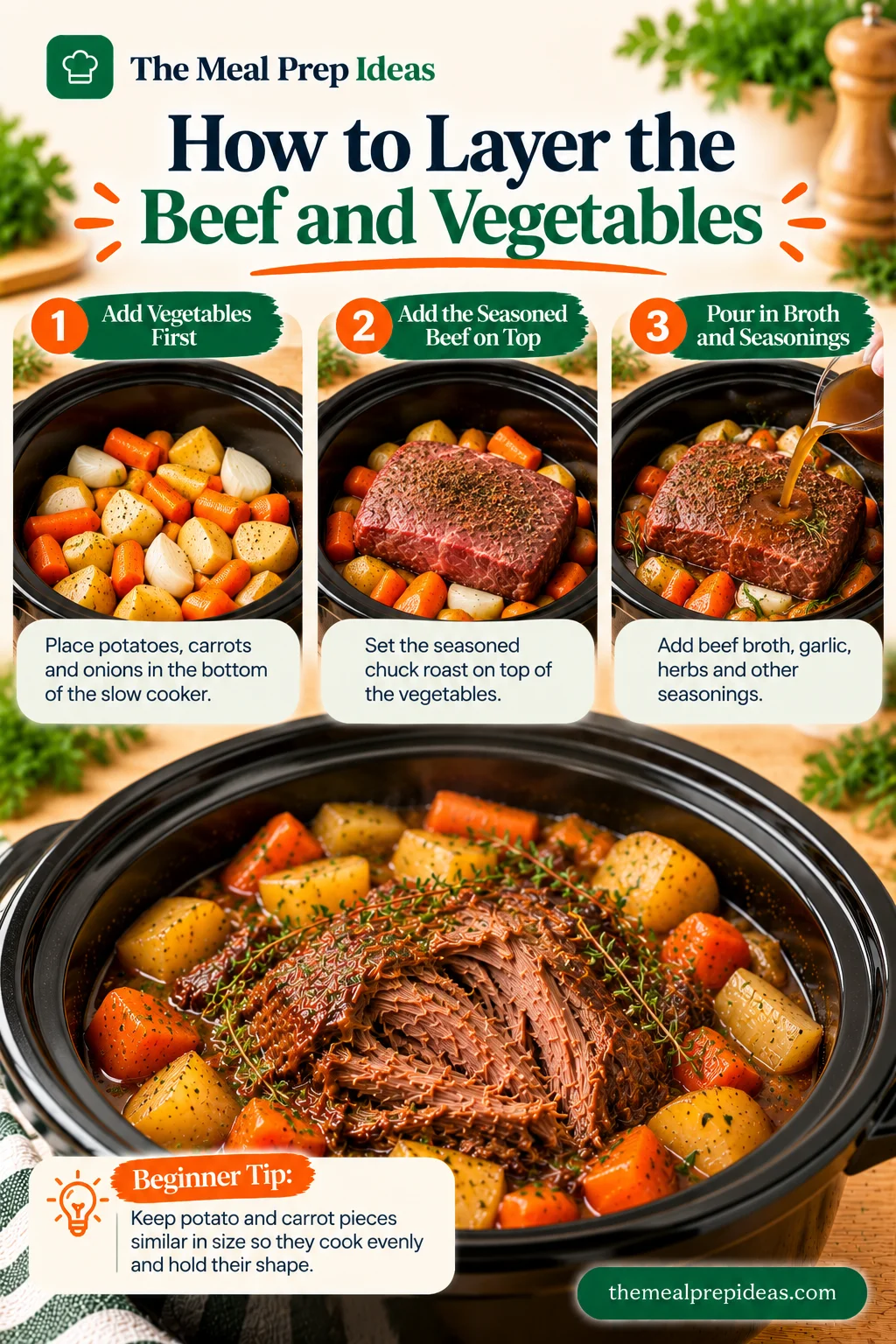
When preparing Crockpot Pot Roast, cut the potatoes, carrots and onions into large pieces so they are less likely to become mushy. Place the vegetables in the bottom of the slow cooker, then set the seasoned chuck roast on top. This arrangement helps keep the vegetables in the cooking liquid while allowing the beef to cook slowly above them.

Pour in the beef broth and add your garlic, herbs and other seasonings. The liquid should collect around the ingredients, but you do not need to cover the entire roast. The slow cooker retains moisture and the beef and vegetables will release additional juices as they cook.

Cover the slow cooker with its lid and cook on the recommended setting until the beef is tender. Try not to lift the lid repeatedly, because heat escapes each time you open it and can extend the cooking time.

Beginner tip: Keep the potato and carrot pieces similar in size. Very small pieces may become mushy before a large roast is ready, while larger chunks are more likely to hold their shape throughout the cooking process.

Potatoes, carrots, and onions layered beneath seasoned beef in a slow cooker.

How to Tell When the Pot Roast Is Tender

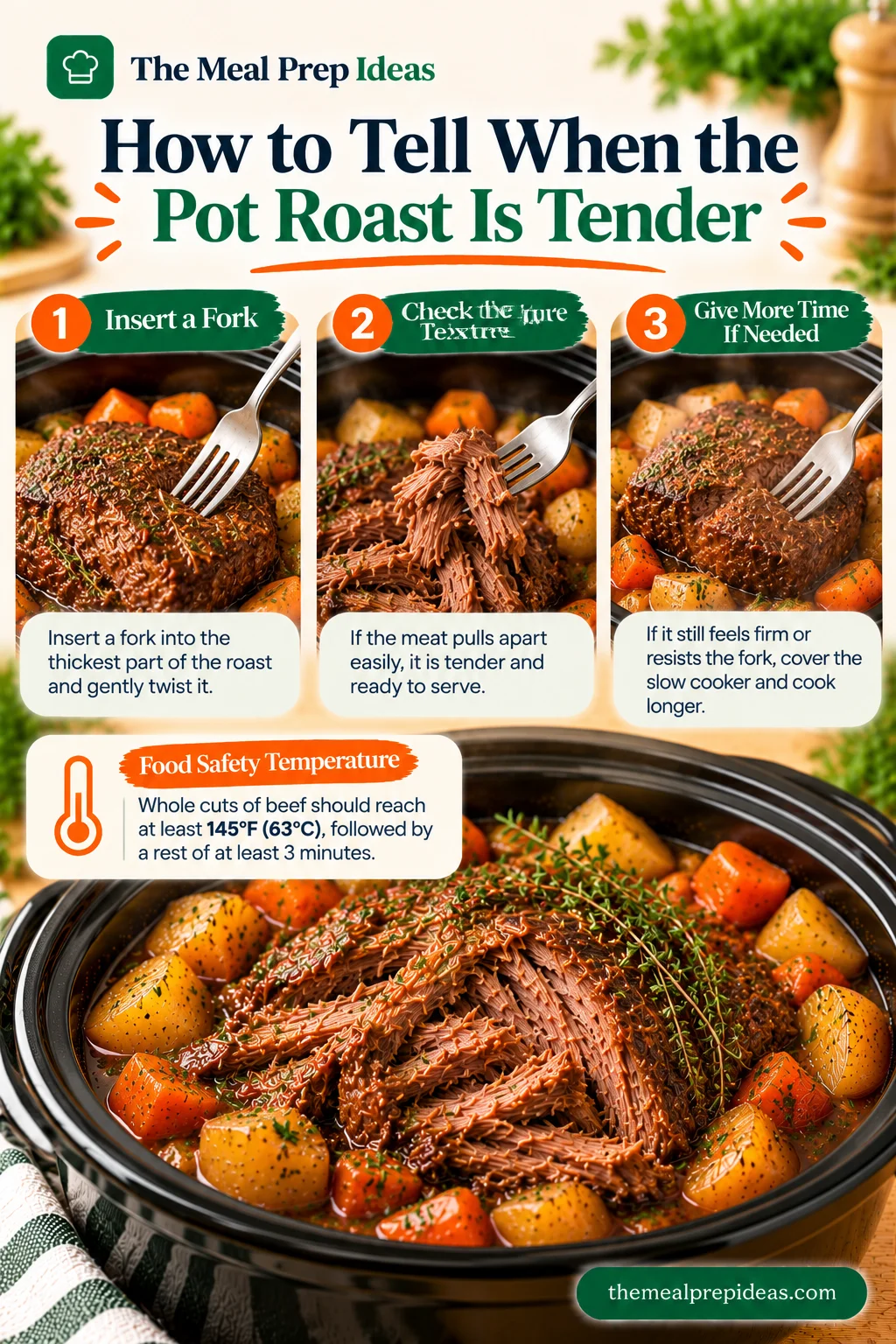
The best way to tell when your pot roast is ready is to check its texture, not just the clock. Properly cooked beef should be soft enough for a fork to slide in easily and separate the meat with little effort.

Insert a fork into the thickest part of the roast and gently twist it. If the meat pulls apart easily, it is likely ready to serve. If it still feels firm or resists the fork, cover the slow cooker and give it more time before checking again.

This is especially important when cooking chuck roast. Its connective tissue needs time to break down, which is why a roast can be safely cooked yet still feel tough. Safe cooking temperature and fall-apart tenderness are not the same thing: temperature helps assess food safety, while the fork test helps you judge the texture you want for pot roast.

For food safety, whole cuts of beef should reach at least 145°F (63°C), followed by a rest of at least 3 minutes. However, chuck roast cooked until it is tender enough to shred often needs a longer cooking period. Follow your recipe's cooking guidance and use both a food thermometer and the fork test.

If your Crockpot Pot Roast is still tough, don't assume it is ruined; the chuck roast may simply need more time to become fork-tender. It may simply need more time for the connective tissue to soften. Once it becomes tender, serve it with the vegetables and spoon the flavorful cooking juices over the top.

Crockpot Pot Roast being tested with a fork to check whether the beef pulls apart easily.

How to Make Rich, Flavorful Pot Roast Gravy

One of the best parts of a good pot roast is the gravy. As the beef and vegetables cook, their juices mix with the broth, garlic and herbs to create a rich, savory liquid. With just a little extra work, you can turn those cooking juices into homemade beef gravy that tastes delicious over the meat and vegetables.

Once the roast is tender, transfer the beef and vegetables to a serving dish. You can then prepare the gravy using the liquid left in the slow cooker. Taste it before adding extra salt, as the broth and cooking juices may already contain enough seasoning.

How to Thicken Gravy With Cornstarch

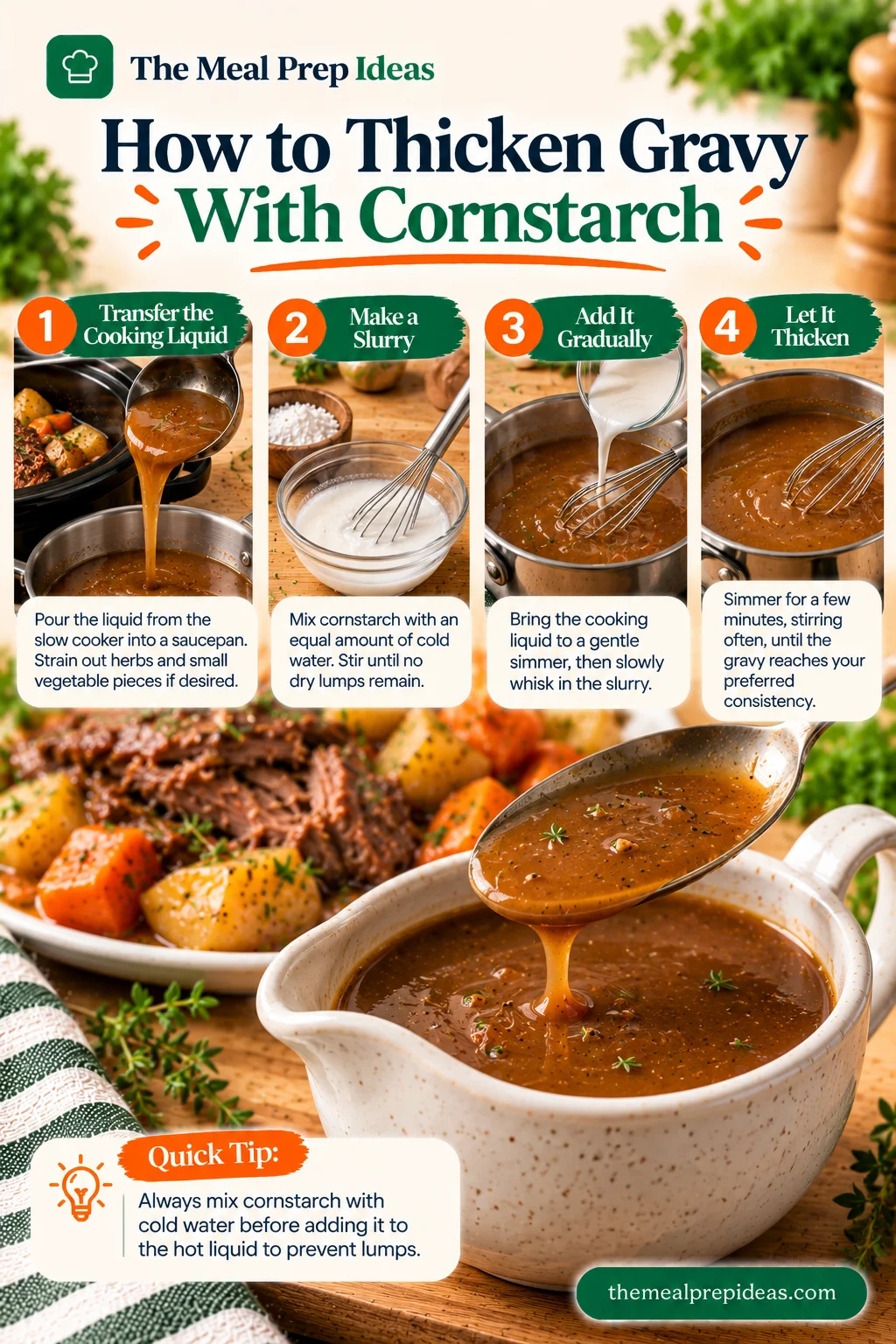
The easiest way to thicken pot roast gravy is with a cornstarch slurry. It takes only a few minutes and gives the gravy a smooth consistency without making it too heavy.

  1. 1Transfer the cooking liquid: Pour the liquid from the slow cooker into a saucepan. If you prefer a smoother gravy, strain out the herbs and small vegetable pieces first.
  2. 2Make a slurry: Mix cornstarch with an equal amount of cold water in a small bowl. Stir until no dry lumps remain.
  3. 3Add it gradually: Bring the cooking liquid to a gentle simmer, then slowly whisk in the slurry. Start with a small amount rather than adding it all at once.
  4. 4Let it thicken: Simmer gently for a few minutes, stirring often, until the gravy reaches your preferred consistency. Add a little more slurry if needed.

The key to how to thicken pot roast gravy is mixing the cornstarch with cold water before adding it to the hot liquid. Adding dry cornstarch directly to hot broth can create lumps.

For the best flavor, use the cooking juices from the roast rather than relying on broth alone. They contain the savory flavors released by the beef, vegetables and seasonings, giving your flavorful gravy a richer taste.

Cornstarch slurry whisked into savory beef cooking liquid to make smooth pot roast gravy

How to Fix Thin or Greasy Gravy

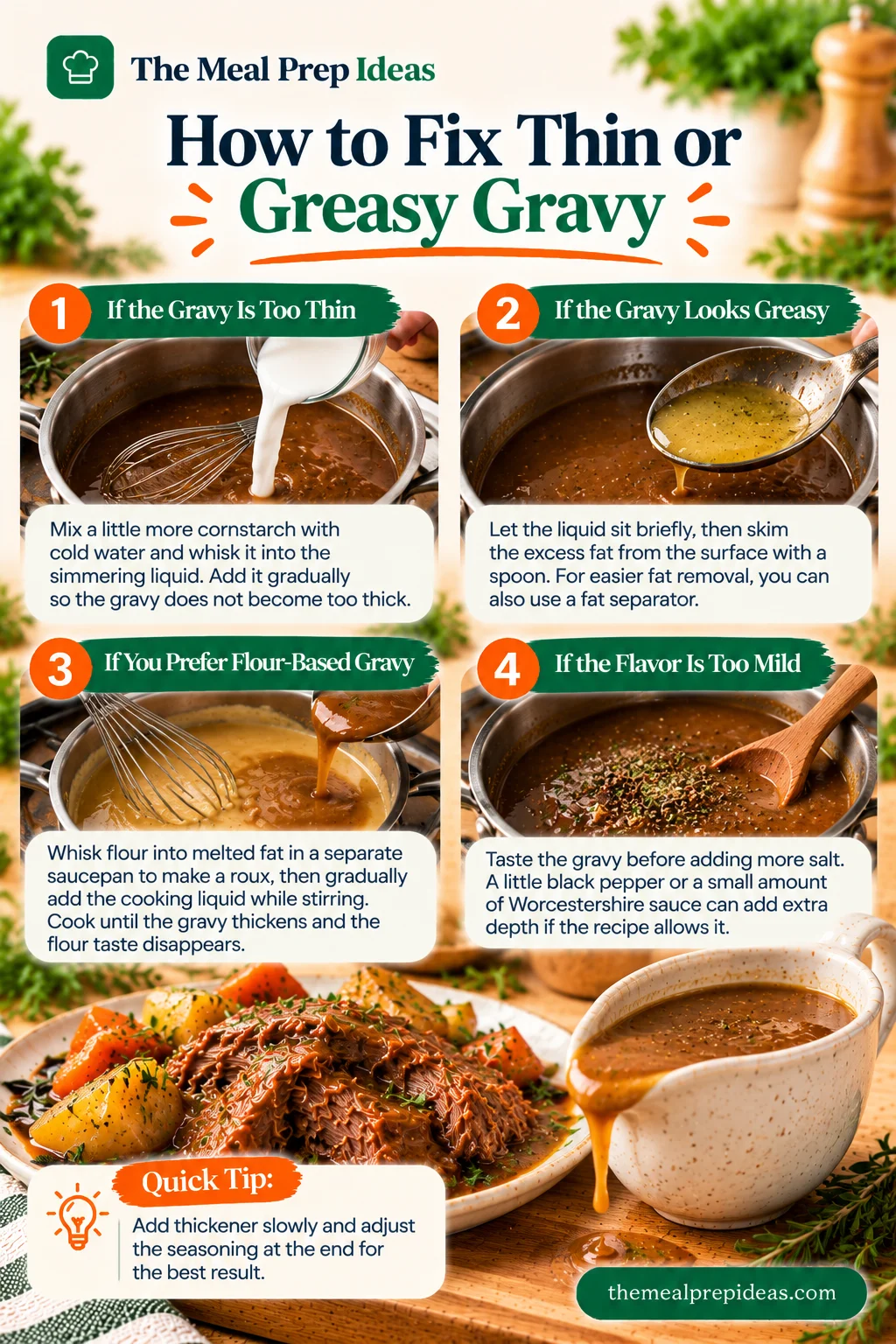
If your gravy turns out too thin or oily, there are a few easy ways to improve it. You do not need to start over; small adjustments are usually enough.

  • If the gravy is too thin: Mix a little more cornstarch with cold water and whisk it into the simmering liquid. Add it gradually so the gravy does not become too thick.
  • If the gravy looks greasy: Let the liquid sit briefly, then skim the excess fat from the surface with a spoon. For easier fat removal, you can also use a fat separator.
  • If you prefer flour-based gravy: Whisk flour into melted fat in a separate saucepan to make a roux, then gradually add the cooking liquid while stirring. Cook until the gravy thickens and the flour taste disappears.
  • If the flavor is too mild: Taste the gravy before adding more salt. A little black pepper or a small amount of Worcestershire sauce can add extra depth if the recipe allows it.

When learning how to make pot roast gravy from drippings, remember that the amount of liquid and fat can vary from one roast to another. Add thickener slowly and adjust the seasoning at the end for the best result.

Serve the gravy warm over the sliced or shredded beef, potatoes and carrots. It is also delicious spooned over mashed potatoes or served alongside homemade dinner rolls to soak up every last bit.

Crockpot Pot Roast served with thick brown gravy over tender beef, potatoes, and carrots.

Tips for Tender Beef and Perfectly Cooked Vegetables

A few small adjustments can make a big difference when cooking pot roast. The beef should be tender enough to pull apart easily, while the potatoes and carrots should be soft but still hold their shape. Here is how to avoid some common problems and get better results from your slow cooker.

How to Keep Potatoes and Carrots From Getting Mushy

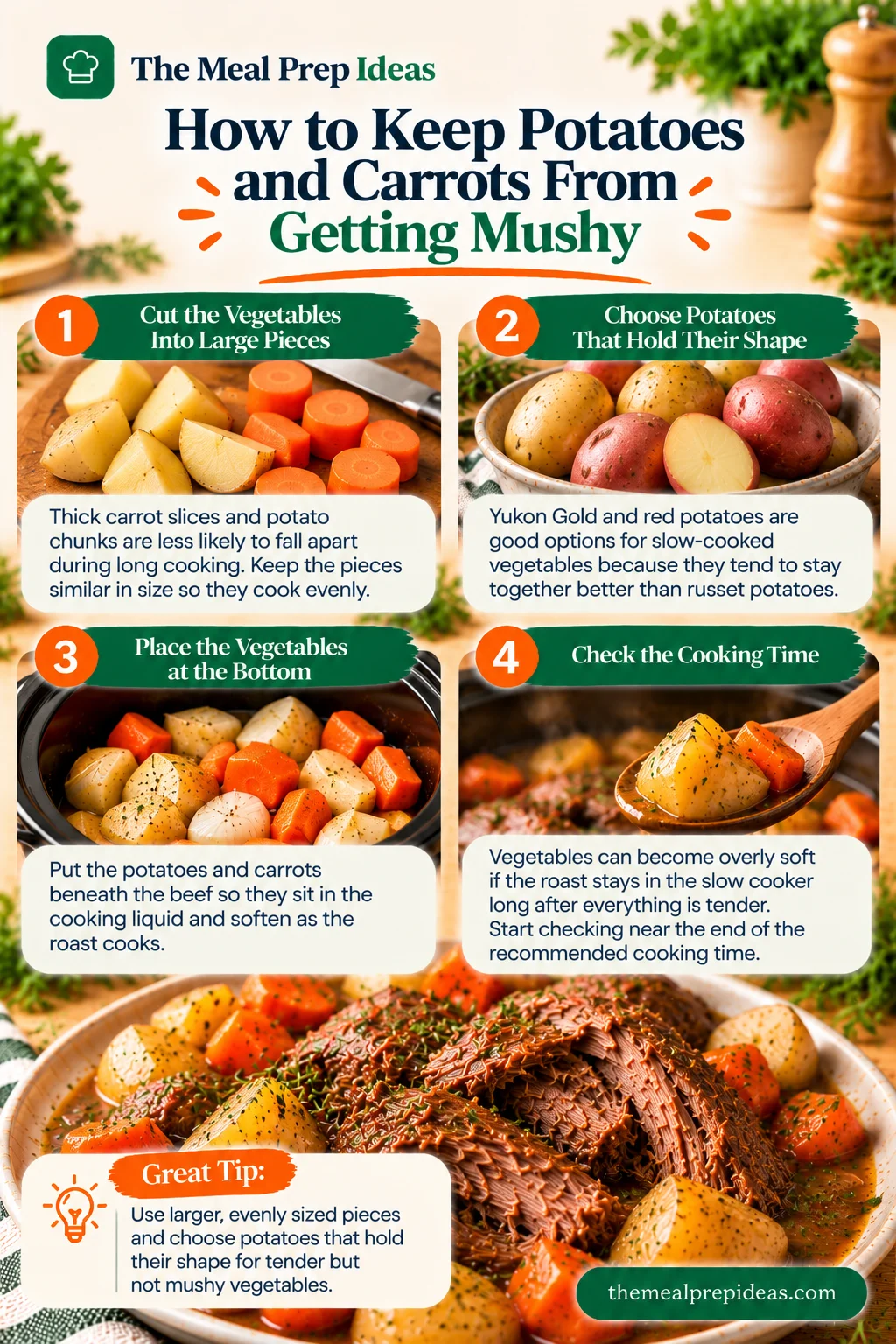
If your vegetables turn mushy before the beef is ready, the pieces may be too small or the cooking time may be longer than they need. Choosing the right potatoes and cutting the vegetables into larger chunks can help them hold their shape.

  • Cut the vegetables into large pieces: Thick carrot slices and potato chunks are less likely to fall apart during long cooking. Try to keep the pieces similar in size so they cook evenly.
  • Choose potatoes that hold their shape: Yukon Gold and red potatoes are good options for slow-cooked vegetables because they tend to stay together better than russet potatoes, which have a softer, fluffier texture.
  • Place the vegetables at the bottom: For this recipe, put the potatoes and carrots beneath the beef so they sit in the cooking liquid and soften as the roast cooks.
  • Check the cooking time: Vegetables can become overly soft if the roast stays in the slow cooker long after everything is tender. Start checking near the end of the recommended cooking time.

If you're wondering how to keep potatoes from getting mushy in pot roast, focus on the size and type of potato first. If you often ask, "Why are my crockpot potatoes mushy?" the answer may be a combination of small vegetable pieces, a softer potato variety and too much cooking time.

You want the vegetables to be tender but not falling apart. They do not need to stay firm like fresh vegetables, but they should hold their shape when you lift them out with a spoon.

Large potato chunks and carrot pieces holding their shape in slow-cooked pot roast.

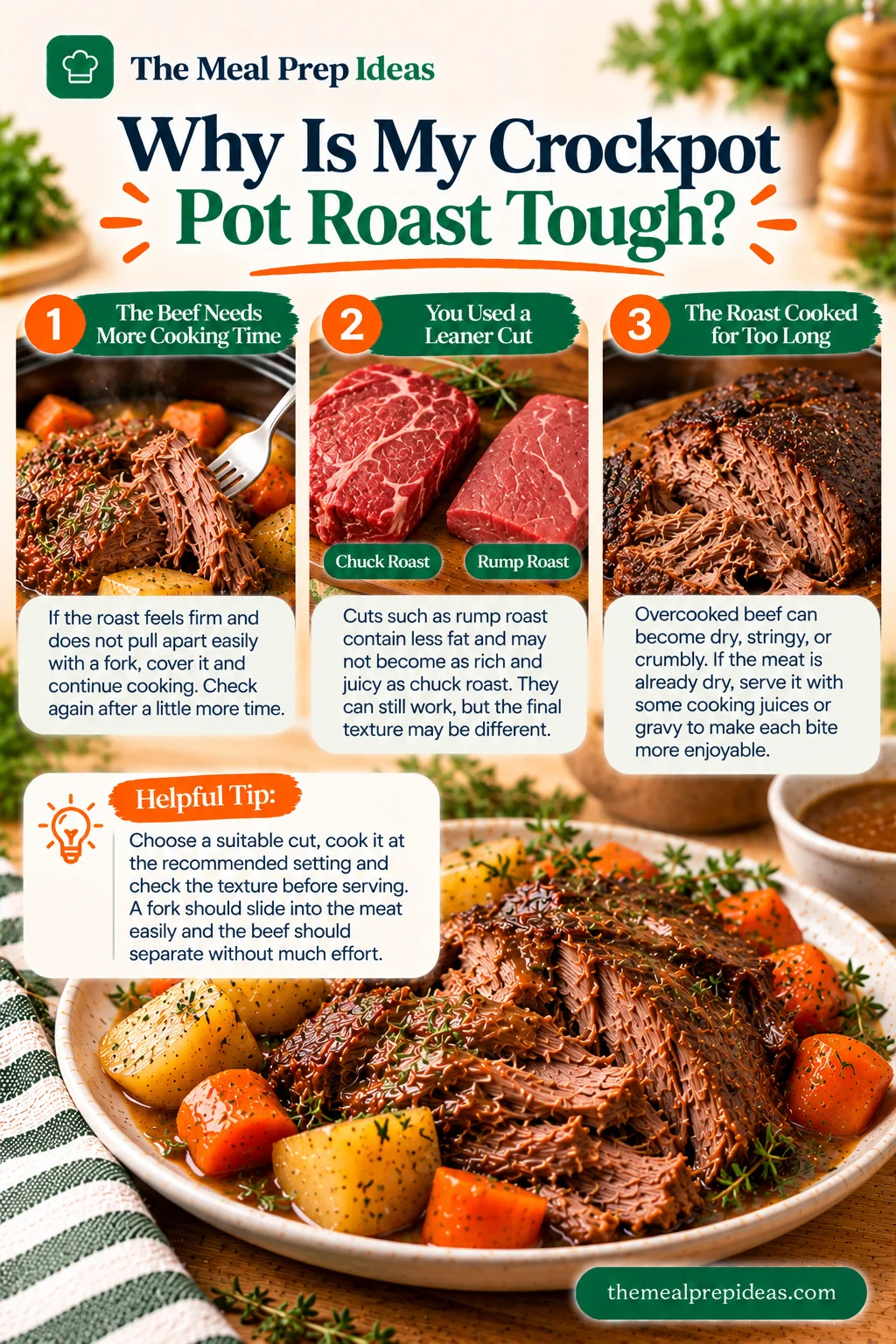
Why Is My Crockpot Pot Roast Tough?

A tough roast does not always mean you have ruined dinner. In many cases, the beef simply needs more time to become tender. Cuts such as chuck roast contain connective tissue that gradually softens during slow cooking.

Here are the most common reasons your roast may not turn out as tender as expected:

  • The beef needs more cooking time: If the roast feels firm and does not pull apart easily with a fork, cover it and continue cooking. Check again after a little more time.
  • You used a leaner cut: Cuts such as rump roast contain less fat and may not become as rich and juicy as chuck roast. They can still work, but the final texture may be different.
  • The roast cooked for too long: Overcooked beef can become dry, stringy, or crumbly. If the meat is already dry, serve it with some cooking juices or gravy to make each bite more enjoyable. This helps with serving texture but cannot fully reverse overcooking.

If you want to know how to fix tough pot roast, first check whether the beef is firm or dry. Firm beef may need more cooking time because its connective tissue has not softened enough. Dry, stringy beef may have cooked too long, so adding extra cooking time is unlikely to help.

The best way to make beef roast tender is to choose a suitable cut, cook it at the recommended setting and check the texture before serving. When the roast is ready, a fork should slide into the meat easily and the beef should separate without much effort. That is the texture you want for a tender, juicy pot roast.

Crockpot Pot Roast with fork-tender beef, carrots, potatoes, and gravy illustrating the ideal texture.

Crockpot Pot Roast Variations

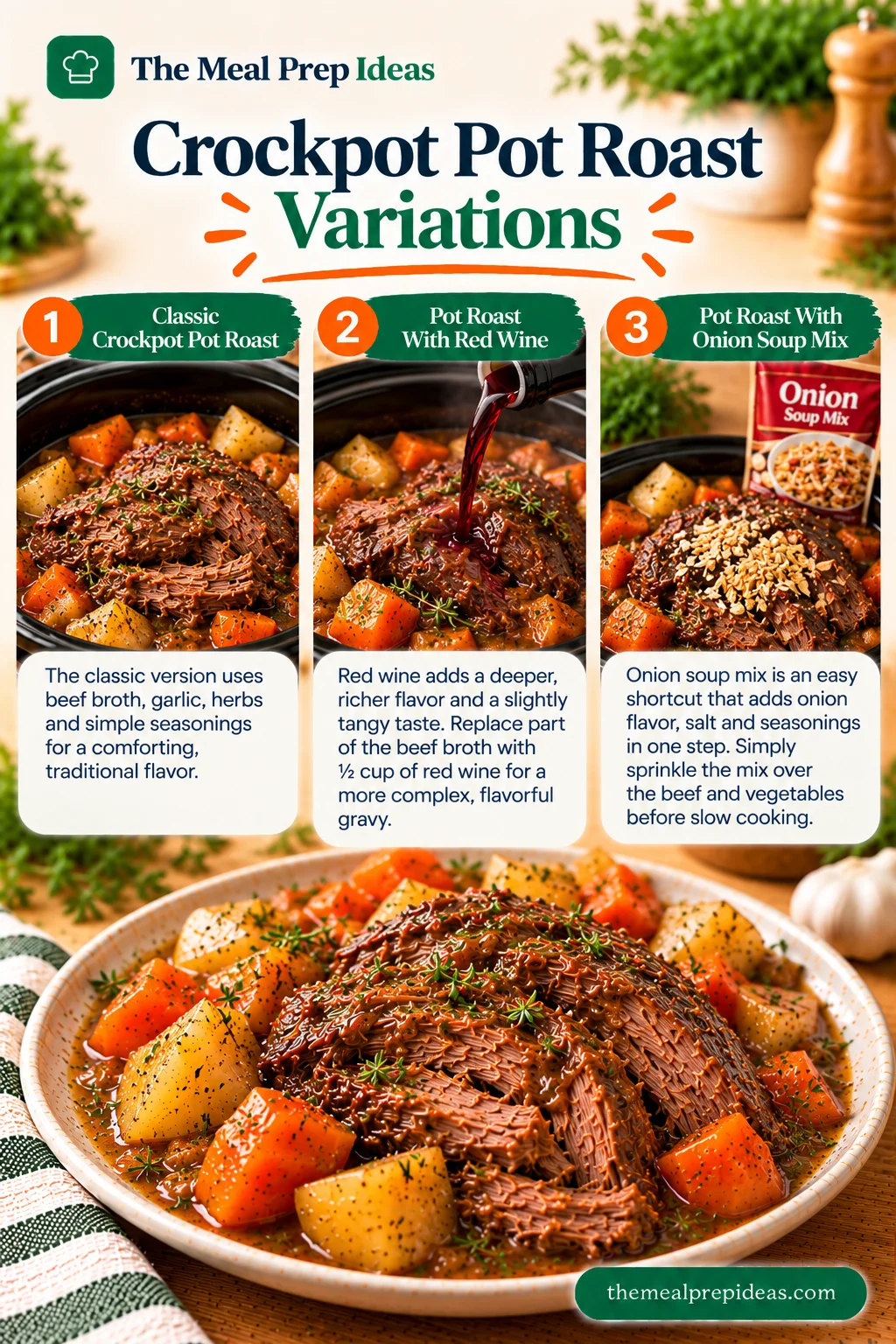
One advantage of Crockpot Pot Roast is that you can change the flavor with red wine, onion soup mix, or a simpler no-sear method. You can add red wine for a deeper taste, use onion soup mix for extra seasoning, or skip browning the beef when you need a simpler meal. These small changes let you make the recipe your own while keeping the beef and vegetables as the main focus.

Pot Roast With Red Wine

If you enjoy a deeper, richer flavor, try making pot roast with red wine. Red wine adds a slightly tangy, savory taste that pairs well with beef, onions, garlic and fresh herbs. It also gives the cooking liquid a more complex flavor, which works especially well in homemade gravy.

To try this variation, replace part of the beef broth with a small amount of red wine. For this recipe, you can start with ½ cup of red wine and reduce the beef broth by the same amount. Add the wine with the other cooking liquids, then follow the usual slow-cooking method.

You do not need an expensive bottle. A dry red wine that you enjoy drinking is usually a good choice for cooking. Avoid sweet wines, as they can make the gravy taste sweeter than expected.

If you prefer not to use wine, simply use more beef broth instead. The result will still have a rich beef flavor, although it will lack some of the depth that wine adds.

Crockpot Pot Roast with red wine, beef broth, onions, and fresh herbs for a rich cooking liquid.

Pot Roast With Onion Soup Mix

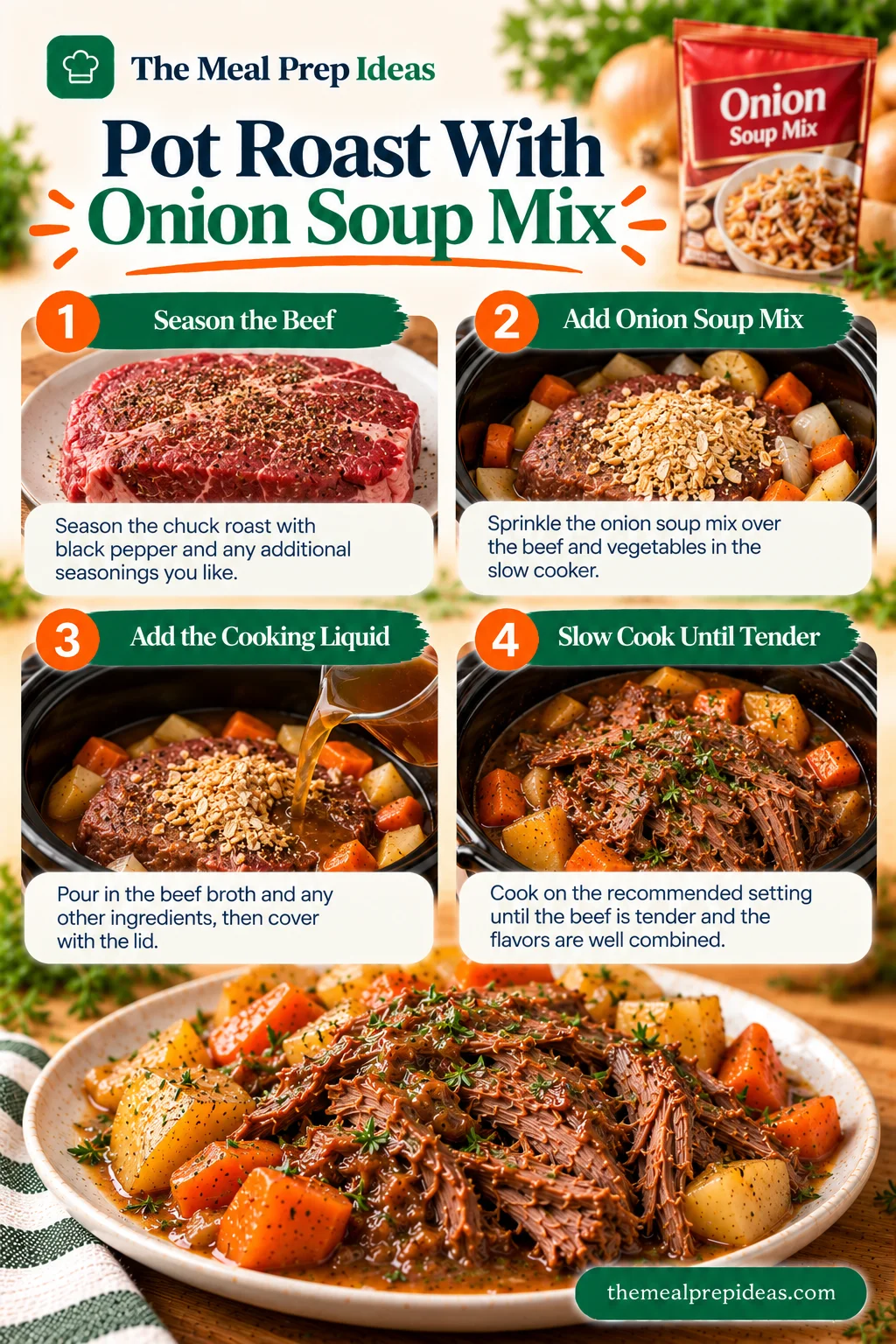
For an easy shortcut, try pot roast with onion soup mix. Packaged soup mix combines onion flavor, salt and seasonings in one convenient ingredient, so you do not need to measure as many spices separately.

To use it, add the soup mix to the beef and cooking liquid before starting the slow cooker. Follow the package instructions and adjust the amount to suit your taste. Since many mixes contain a good amount of sodium, reduce or skip the added salt at first. You can taste the cooking liquid near the end and add more if needed.

This variation is useful when you want a stronger onion flavor with very little extra preparation. If you prefer more control over the ingredients, stick with the garlic, thyme, rosemary and black pepper in the original recipe.

Both options can make flavorful pot roast, but the taste will be a little different. Packaged mix usually creates a more seasoned, onion-forward gravy, while fresh herbs give the dish a simpler, more traditional flavor.

Pot Roast Without Searing

You can absolutely make pot roast without searing the beef first. This is a helpful option when you want an easy slow cooker dinner and would rather avoid using an extra pan.

Simply season the chuck roast, place it over the prepared vegetables, add the broth and other ingredients and start cooking. The slow cooker will gradually cook the beef until it becomes tender, provided you give it enough time.

The main difference is flavor. Searing creates a browned crust that adds depth to the cooking liquid, while skipping that step produces a milder taste. Your roast can still be tender and satisfying without browning, so there is no need to worry if you are short on time.

If you want a no-fuss slow cooker pot roast, this is a perfectly practical method. You will save a few minutes of preparation and have fewer dishes to wash afterward.

Crockpot Pot Roast seasoned with onion soup mix and served with tender beef and vegetables.

What to Serve with Crockpot Pot Roast

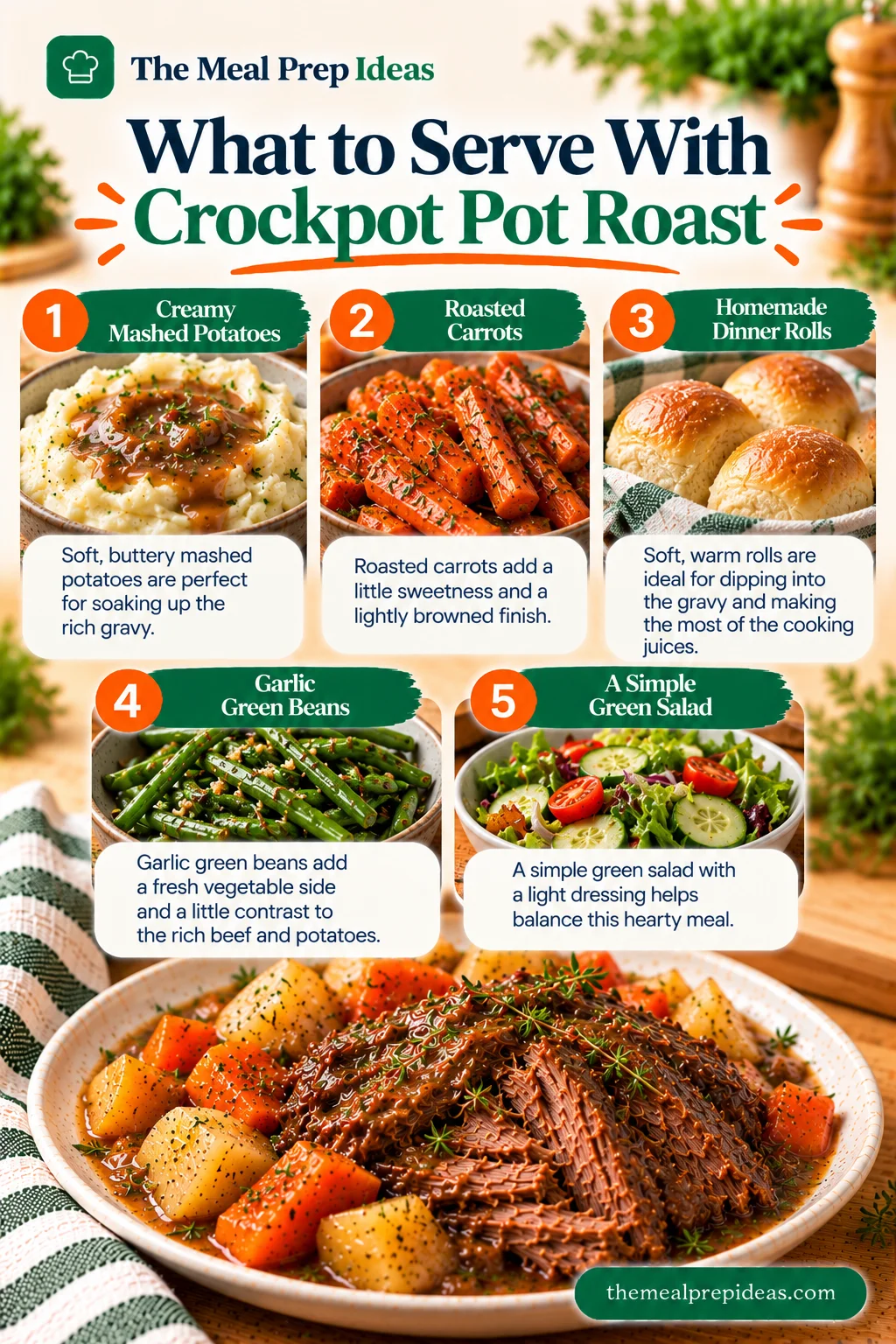
If you're wondering what to serve with Crockpot Pot Roast, classic sides like mashed potatoes, roasted vegetables and warm dinner rolls are always a good choice. They pair well with the tender beef and savory gravy, making the meal feel comforting and complete.

Here are a few easy pot roast side dishes to try:

  • Creamy Mashed Potatoes: Soft, buttery mashed potatoes are perfect for soaking up the rich gravy.
  • Roasted Carrots: If you want more vegetables on the table, roasted carrots add a little sweetness and a lightly browned finish.
  • Homemade Dinner Rolls: Soft, warm rolls are ideal for dipping into the gravy and making the most of the flavorful cooking juices.
  • Garlic Green Beans: These add a fresh vegetable side and a little contrast to the rich beef and potatoes.
  • A simple green salad: Fresh greens with a light dressing help balance the heavier parts of this hearty meal.

Serve Crockpot Pot Roast with mashed potatoes, carrots and warm dinner rolls for a classic Sunday dinner. If you want something lighter, add green beans or a fresh salad instead. You can mix and match these sides to create a hearty comfort food meal that suits your family without making dinner complicated. For another comforting dinner with protein and vegetables, try Sheet Pan Balsamic Chicken and Vegetables, an easy option to add variety to your weekly meal plan.

Pot roast dinner served with mashed potatoes, roasted carrots, green beans, and warm dinner rolls.

Meal Prep, Storage and Reheating

Crockpot Pot Roast is a practical meal-prep option because you can divide the cooked beef, vegetables and gravy into portions for later meals. For the best texture, store the beef with some cooking liquid or gravy to help keep it moist when reheated.

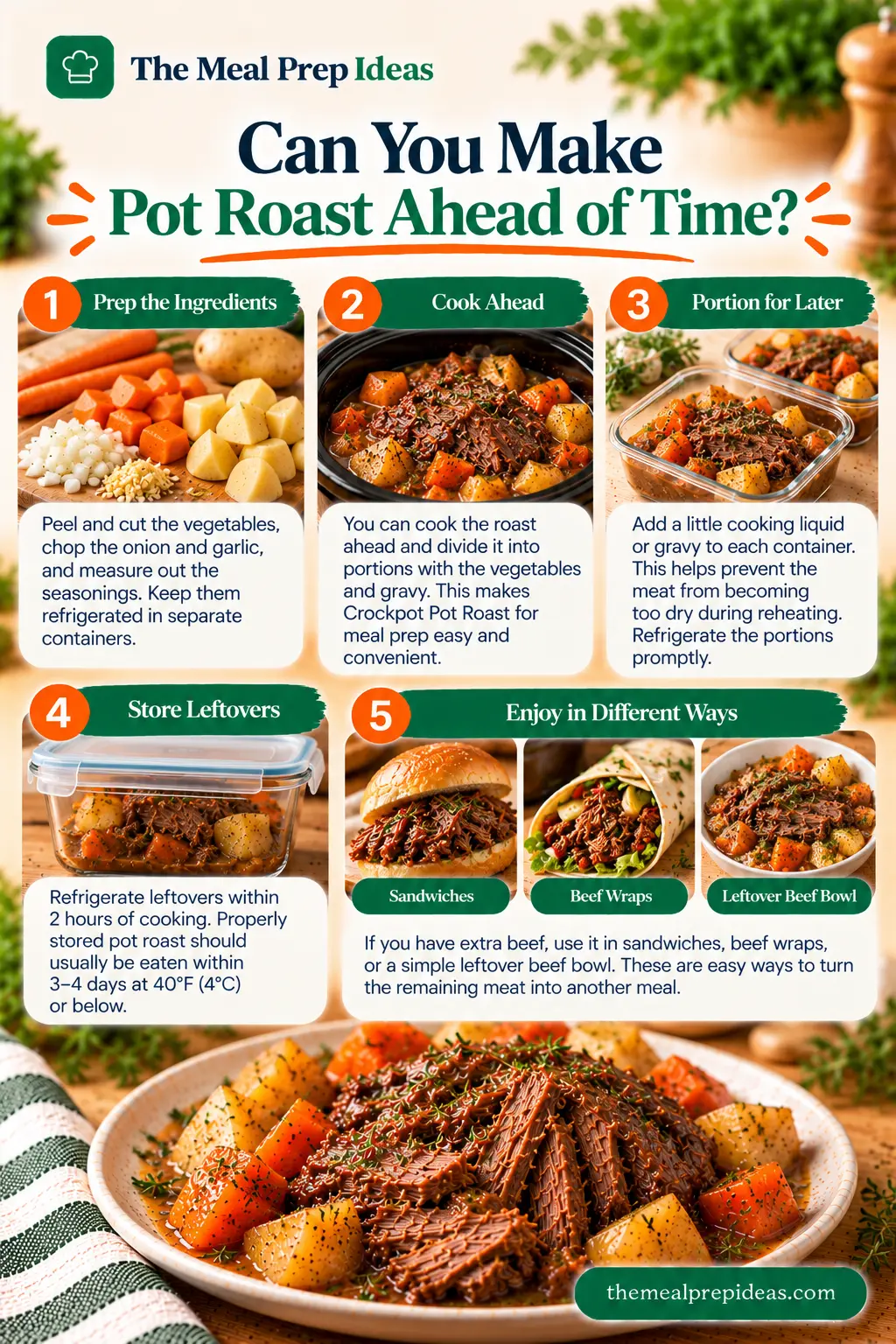
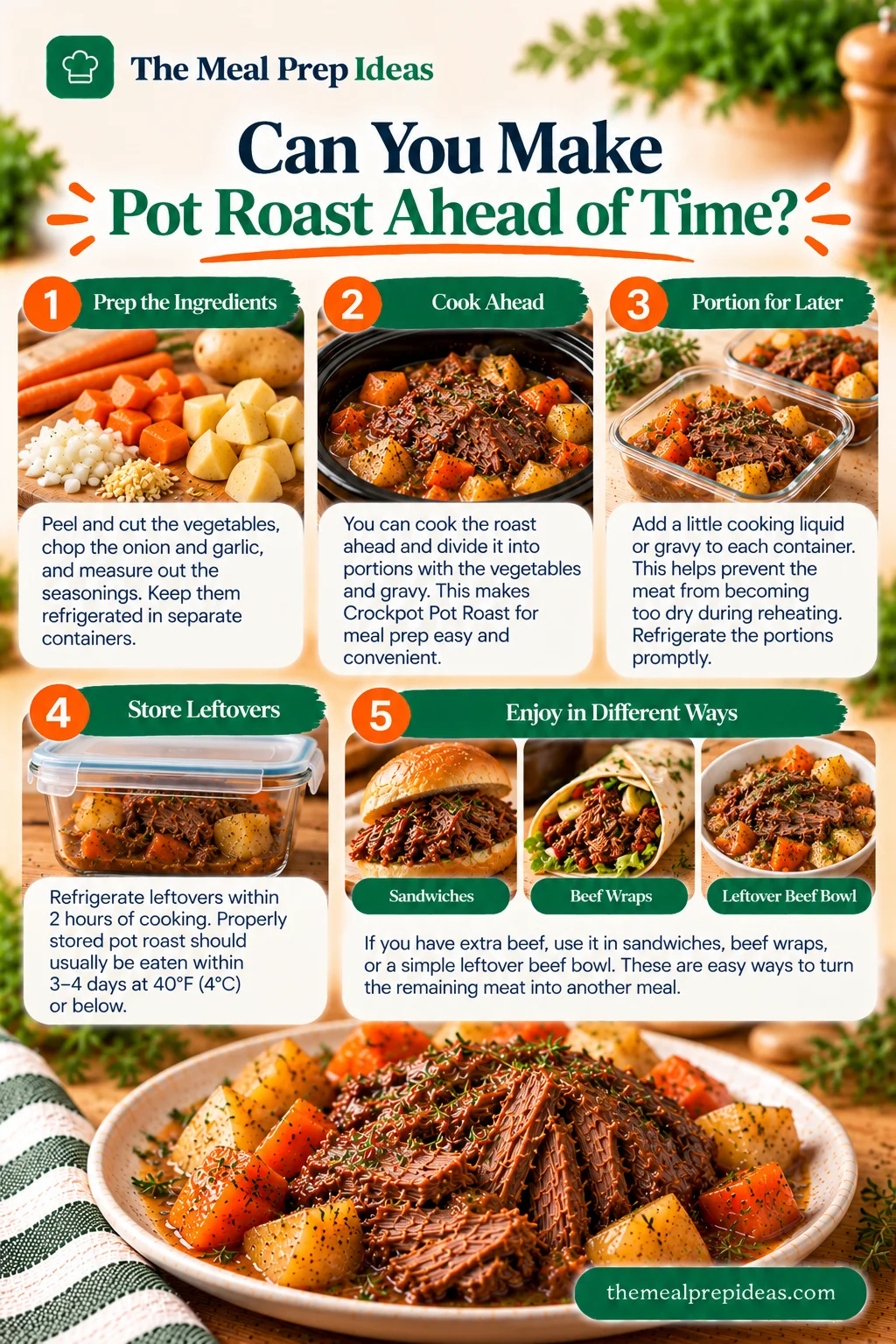
Can You Make Pot Roast Ahead of Time?

Yes, you can prepare several parts of this meal ahead of time. Peel and cut the vegetables, chop the onion and garlic and measure out the seasonings before cooking day. Keep the prepared ingredients refrigerated in separate covered containers until you are ready to use them.

You can also cook the roast ahead and divide it into portions with the vegetables and gravy. This makes Crockpot Pot Roast for meal prep convenient for weekday lunches or a ready-to-heat dinner.

When portioning the cooked beef, add a little cooking liquid or gravy to each container. This helps prevent the meat from becoming too dry during reheating. Refrigerate the portions promptly rather than leaving them at room temperature for an extended period.

How to Store Leftover Pot Roast

Allow the food to stop steaming heavily, then transfer the beef, vegetables and some gravy into shallow, airtight containers. Refrigerate leftovers within 2 hours of cooking, or within 1 hour if the surrounding temperature is above 90°F (32°C).

Properly refrigerated leftover pot roast should generally be eaten within 3–4 days. Store it at 40°F (4°C) or below and label the container with the date so you can keep track of how long it has been stored.

If you have extra beef but do not want another plate of the same meal, use it in sandwiches, beef wraps, or a simple leftover beef bowl. These leftover pot roast recipes are easy ways to turn the remaining meat into another meal. If you want to turn leftover beef into a different meal, Italian Beef Sandwich is another satisfying option for an easy lunch or dinner.

Crockpot Pot Roast meal prep portions with beef, potatoes, carrots, and gravy in airtight containers.

Can You Freeze Crockpot Pot Roast?

Yes, you can freeze cooked pot roast for a later meal. Divide the cooled beef and vegetables into freezer-safe containers or bags and include some gravy or cooking liquid to help protect the meat from drying out. Leave a little room in containers for expansion, seal them well and label each portion with the date.

For the best quality, use frozen leftovers within 2–3 months. Food kept continuously frozen at 0°F (-18°C) can remain safe longer, but its flavor and texture may gradually decline.

Thaw frozen pot roast in the refrigerator rather than on the counter. Keep in mind that potatoes and carrots may become softer after freezing and thawing, but the beef should still be useful for a quick meal. You can also reheat portions directly from frozen, allowing extra time for the center to heat thoroughly.

How to Reheat Pot Roast Without Drying It Out

The best way to reheat pot roast without drying it out is to warm it gently with a little gravy or broth. This adds moisture and helps the beef stay more enjoyable to eat.

  • On the stovetop: Place the beef, vegetables and a splash of gravy or broth in a covered pan. Heat over medium-low heat, stirring gently as needed, until everything is hot.
  • In the microwave: Put a portion in a microwave-safe dish, add a little liquid and cover loosely. Heat in short intervals, turning or stirring the food between intervals so it warms evenly.
  • From frozen: Thaw the roast in the refrigerator first when possible. If reheating directly from frozen, use a covered pan or suitable microwave-safe dish and allow extra time for the center to heat completely.

For food safety, reheat leftovers to 165°F (74°C). Only reheat the portion you plan to eat, rather than repeatedly warming and cooling the entire batch.

Adding a little liquid and using gentle heat are simple ways to keep your juicy leftover pot roast tasting good for another meal.

Frozen Crockpot Pot Roast portions stored with beef, potatoes, carrots, and gravy in freezer-safe containers.

Frequently Asked Questions

Can You Cook Crockpot Pot Roast on High Instead of Low?

Yes, you can cook the roast on high if you need dinner ready sooner. For this recipe, allow about 4–5 hours on high or 8-9 hours on low. Cooking times can vary depending on the roast and your slow cooker, so check that the beef is fork-tender before serving.

Should the Beef Be Completely Covered With Liquid?

No, the beef does not need to be completely covered. A slow cooker traps moisture as the meat and vegetables cook, so the beef broth can sit around the ingredients rather than fully submerging the roast. Follow the recipe's liquid amount and your slow cooker's instructions for the best results.

Can You Put Frozen Beef Roast in a Crockpot?

It is safer to thaw the beef in the refrigerator before putting it in the slow cooker. A frozen roast may take too long to pass through temperatures where bacteria can grow. Thawing it first helps the beef cook more evenly and reduces this food-safety risk.

How Do You Know When Pot Roast Is Done?

The beef should be fork-tender, meaning a fork slides into the meat easily and the beef pulls apart with little effort. For food safety, whole cuts of beef should reach at least 145°F (63°C) and rest for 3 minutes. However, chuck roast usually needs additional slow cooking to reach the soft texture expected from pot roast.

Can You Cook This Pot Roast Recipe in the Oven Instead?

Yes, you can make an oven pot roast in a covered Dutch oven or another oven-safe pot. The beef cooks slowly with the vegetables and cooking liquid, much like a braised roast. However, oven temperatures and cooking times differ from slow cooker settings, so use a tested oven pot roast method rather than directly converting the Crockpot cooking time.

What Can You Make with Leftover Pot Roast?

Leftover beef is easy to turn into another meal. Shred it for pot roast sandwiches, add it to a beef and potato hash, or serve it in rice bowls and wraps with vegetables and sauce. Store the leftovers with a little gravy or cooking liquid to help keep the meat moist when reheating.

No ratings yet

Crockpot Pot Roast

Make this Crockpot Pot Roast with tender beef, hearty vegetables, and rich, savory gravy. An easy slow cooker dinner perfect for busy weeknights!

Crockpot Pot Roast with tender shredded beef, potatoes, carrots, and rich brown gravy in a slow cooker.the meal
prep ideas
20 minPrep
4 hrCook
4 hr 20 minTotal
Makes 8Servings
Print recipe

How to prepare

  1. 1Prepare the beef: Pat the chuck roast dry with paper towels. Season all sides with salt, black pepper, thyme and rosemary.
  2. 2Sear the roast: Heat olive oil in a large skillet over medium-high heat. Brown the beef on all sides, then transfer it to the slow cooker. This step adds flavor but can be skipped if you are short on time.
  3. 3Add the vegetables: Place the potatoes, carrots and onion in the bottom of the slow cooker. Set the beef on top.
  4. 4Add the cooking liquid: Mix the beef broth, garlic, Worcestershire sauce and optional tomato paste. Pour the mixture around the roast.
  5. 5Slow cook: Cover and cook on low for 8–9 hours or on high for 4–5 hours, or until the beef is fork-tender and the vegetables are cooked through. Check the roast toward the earlier end of the time range.
  6. 6Make the gravy: Transfer the beef and vegetables to a serving dish. If you want thicker gravy, strain the cooking liquid into a saucepan. Mix the cornstarch with cold water until smooth, then whisk it into the simmering liquid. Cook for a few minutes until the gravy thickens.
  7. 7Serve: Pull the beef apart with two forks or slice it across the grain. Serve with the potatoes, carrots and warm gravy. Sprinkle with fresh parsley if desired.

Good to know

  • Choose chuck roast: Its marbling and connective tissue make it a great choice for tender, slow-cooked beef.
  • Searing is optional: Browning the meat first adds a deeper flavor, but you can skip this step to save preparation time.
  • Cut vegetables into large pieces: Larger chunks are less likely to become mushy during long cooking.
  • Adjust the seasoning: Low-sodium broth makes it easier to control the salt. Taste the gravy before adding more.
  • Make thicker gravy: Add the cornstarch slurry gradually. You may not need all of it, depending on how much cooking liquid remains.
  • Use another broth if needed: Vegetable broth can replace beef broth, although the gravy will have a milder beef flavor.
  • A few small adjustments can make a big difference when cooking pot roast. The beef should be tender enough to pull apart easily, while the potatoes and carrots should be soft but still hold their shape. Here is how to avoid some common problems and get better results from your slow cooker.
  • If your vegetables turn mushy before the beef is ready, the pieces may be too small or the cooking time may be longer than they need. Choosing the right potatoes and cutting the vegetables into larger chunks can help them hold their shape.
  • If you're wondering how to keep potatoes from getting mushy in pot roast, focus on the size and type of potato first. If you often ask, "Why are my crockpot potatoes mushy?" the answer may be a combination of small vegetable pieces, a softer potato variety and too much cooking time.
  • You want the vegetables to be tender but not falling apart. They do not need to stay firm like fresh vegetables, but they should hold their shape when you lift them out with a spoon.
  • A tough roast does not always mean you have ruined dinner. In many cases, the beef simply needs more time to become tender. Cuts such as chuck roast contain connective tissue that gradually softens during slow cooking.
  • Here are the most common reasons your roast may not turn out as tender as expected:
  • If you want to know how to fix tough pot roast, first check whether the beef is firm or dry. Firm beef may need more cooking time because its connective tissue has not softened enough. Dry, stringy beef may have cooked too long, so adding extra cooking time is unlikely to help.
  • The best way to make beef roast tender is to choose a suitable cut, cook it at the recommended setting and check the texture before serving. When the roast is ready, a fork should slide into the meat easily and the beef should separate without much effort. That is the texture you want for a tender, juicy pot roast.
  • One advantage of Crockpot Pot Roast is that you can change the flavor with red wine, onion soup mix, or a simpler no-sear method. You can add red wine for a deeper taste, use onion soup mix for extra seasoning, or skip browning the beef when you need a simpler meal. These small changes let you make the recipe your own while keeping the beef and vegetables as the main focus.
  • If you enjoy a deeper, richer flavor, try making pot roast with red wine. Red wine adds a slightly tangy, savory taste that pairs well with beef, onions, garlic and fresh herbs. It also gives the cooking liquid a more complex flavor, which works especially well in homemade gravy.
  • To try this variation, replace part of the beef broth with a small amount of red wine. For this recipe, you can start with ½ cup of red wine and reduce the beef broth by the same amount. Add the wine with the other cooking liquids, then follow the usual slow-cooking method.
  • You do not need an expensive bottle. A dry red wine that you enjoy drinking is usually a good choice for cooking. Avoid sweet wines, as they can make the gravy taste sweeter than expected.
  • If you prefer not to use wine, simply use more beef broth instead. The result will still have a rich beef flavor, although it will lack some of the depth that wine adds.
  • For an easy shortcut, try pot roast with onion soup mix. Packaged soup mix combines onion flavor, salt and seasonings in one convenient ingredient, so you do not need to measure as many spices separately.
  • To use it, add the soup mix to the beef and cooking liquid before starting the slow cooker. Follow the package instructions and adjust the amount to suit your taste. Since many mixes contain a good amount of sodium, reduce or skip the added salt at first. You can taste the cooking liquid near the end and add more if needed.
  • This variation is useful when you want a stronger onion flavor with very little extra preparation. If you prefer more control over the ingredients, stick with the garlic, thyme, rosemary and black pepper in the original recipe.
  • Both options can make flavorful pot roast, but the taste will be a little different. Packaged mix usually creates a more seasoned, onion-forward gravy, while fresh herbs give the dish a simpler, more traditional flavor.
  • You can absolutely make pot roast without searing the beef first. This is a helpful option when you want an easy slow cooker dinner and would rather avoid using an extra pan.
  • Simply season the chuck roast, place it over the prepared vegetables, add the broth and other ingredients and start cooking. The slow cooker will gradually cook the beef until it becomes tender, provided you give it enough time.
  • The main difference is flavor. Searing creates a browned crust that adds depth to the cooking liquid, while skipping that step produces a milder taste. Your roast can still be tender and satisfying without browning, so there is no need to worry if you are short on time.
  • If you want a no-fuss slow cooker pot roast, this is a perfectly practical method. You will save a few minutes of preparation and have fewer dishes to wash afterward.
  • If you're wondering what to serve with Crockpot Pot Roast, classic sides like mashed potatoes, roasted vegetables and warm dinner rolls are always a good choice. They pair well with the tender beef and savory gravy, making the meal feel comforting and complete.
  • Here are a few easy pot roast side dishes to try:
  • Serve Crockpot Pot Roast with mashed potatoes, carrots and warm dinner rolls for a classic Sunday dinner. If you want something lighter, add green beans or a fresh salad instead. You can mix and match these sides to create a hearty comfort food meal that suits your family without making dinner complicated. For another comforting dinner with protein and vegetables, try Sheet Pan Balsamic Chicken and Vegetables, an easy option to add variety to your weekly meal plan.
  • Crockpot Pot Roast is a practical meal-prep option because you can divide the cooked beef, vegetables and gravy into portions for later meals. For the best texture, store the beef with some cooking liquid or gravy to help keep it moist when reheated.
  • Yes, you can prepare several parts of this meal ahead of time. Peel and cut the vegetables, chop the onion and garlic and measure out the seasonings before cooking day. Keep the prepared ingredients refrigerated in separate covered containers until you are ready to use them.
  • You can also cook the roast ahead and divide it into portions with the vegetables and gravy. This makes Crockpot Pot Roast for meal prep convenient for weekday lunches or a ready-to-heat dinner.
  • When portioning the cooked beef, add a little cooking liquid or gravy to each container. This helps prevent the meat from becoming too dry during reheating. Refrigerate the portions promptly rather than leaving them at room temperature for an extended period.
  • Allow the food to stop steaming heavily, then transfer the beef, vegetables and some gravy into shallow, airtight containers. Refrigerate leftovers within 2 hours of cooking, or within 1 hour if the surrounding temperature is above 90°F (32°C).
  • Properly refrigerated leftover pot roast should generally be eaten within 3–4 days. Store it at 40°F (4°C) or below and label the container with the date so you can keep track of how long it has been stored.
  • If you have extra beef but do not want another plate of the same meal, use it in sandwiches, beef wraps, or a simple leftover beef bowl. These leftover pot roast recipes are easy ways to turn the remaining meat into another meal. If you want to turn leftover beef into a different meal, Italian Beef Sandwich is another satisfying option for an easy lunch or dinner.
  • Yes, you can freeze cooked pot roast for a later meal. Divide the cooled beef and vegetables into freezer-safe containers or bags and include some gravy or cooking liquid to help protect the meat from drying out. Leave a little room in containers for expansion, seal them well and label each portion with the date.
  • For the best quality, use frozen leftovers within 2–3 months. Food kept continuously frozen at 0°F (-18°C) can remain safe longer, but its flavor and texture may gradually decline.
  • Thaw frozen pot roast in the refrigerator rather than on the counter. Keep in mind that potatoes and carrots may become softer after freezing and thawing, but the beef should still be useful for a quick meal. You can also reheat portions directly from frozen, allowing extra time for the center to heat thoroughly.
  • The best way to reheat pot roast without drying it out is to warm it gently with a little gravy or broth. This adds moisture and helps the beef stay more enjoyable to eat.
  • For food safety, reheat leftovers to 165°F (74°C). Only reheat the portion you plan to eat, rather than repeatedly warming and cooling the entire batch.
  • Adding a little liquid and using gentle heat are simple ways to keep your juicy leftover pot roast tasting good for another meal.
Gluten-freeDairy-freeLower-sodiumLower-carb option

Made this recipe?

Tag @themealprepideas on Instagram — we love seeing what you made.

Tag us

Reviews & Comments

Be the first to rate, review, or ask a question about this recipe.

No comments yet

Be the first cook to share feedback or ask a question about this recipe!

Leave a Review & Rating

Tap to rate

Comments are moderated for community safety. External links are filtered.

Keep Cooking

You Might Also Like

Chicken and Chickpea Curry

Chicken and Chickpea Curry

Make this easy Chicken and Chickpea Curry with tender chicken, hearty chickpeas and a rich, flavorful sauce. Perfect for a quick weeknight dinner.

15 min
Get Recipe

Sheet Pan Chicken Pitas With Tzatziki

Sheet Pan Chicken Pitas With Tzatziki

Easy Sheet Pan Chicken Pitas with Tzatziki! Tender lemon garlic chicken & roasted veggies wrapped in warm pita with creamy tzatziki. Great for meal prep!

15 min
Get Recipe

Crockpot Shredded Chicken

Crockpot Shredded Chicken

Make juicy Crockpot Shredded Chicken with simple seasonings and broth. Perfect for tacos, wraps, salads, and easy meal prep.

5 min
Get Recipe

Get Your Free 7-Day Meal Prep Plan

Join 50,000+ subscribers getting weekly meal prep ideas, shopping lists, and time-saving tips straight to their inbox.

No spam. Unsubscribe anytime.