Meal Prep Ideas
Back to Home Page

Roasted Veggie Grain Bowls

Make these roasted veggie grain bowls with quinoa, colorful vegetables, and lemon dressing. An easy, customizable recipe perfect for meal prep.

Healthy grain bowl with roasted sweet potatoes, kale, white beans, tomatoes, rice, and creamy green herb dressing.

Get This Recipe Summarized by AI

Ask your favorite AI assistant to summarize this recipe, suggest swaps, or scale it up — one click away.

We copy the prompt to your clipboard too — just paste (Ctrl/Cmd+V) if it doesn't appear automatically.

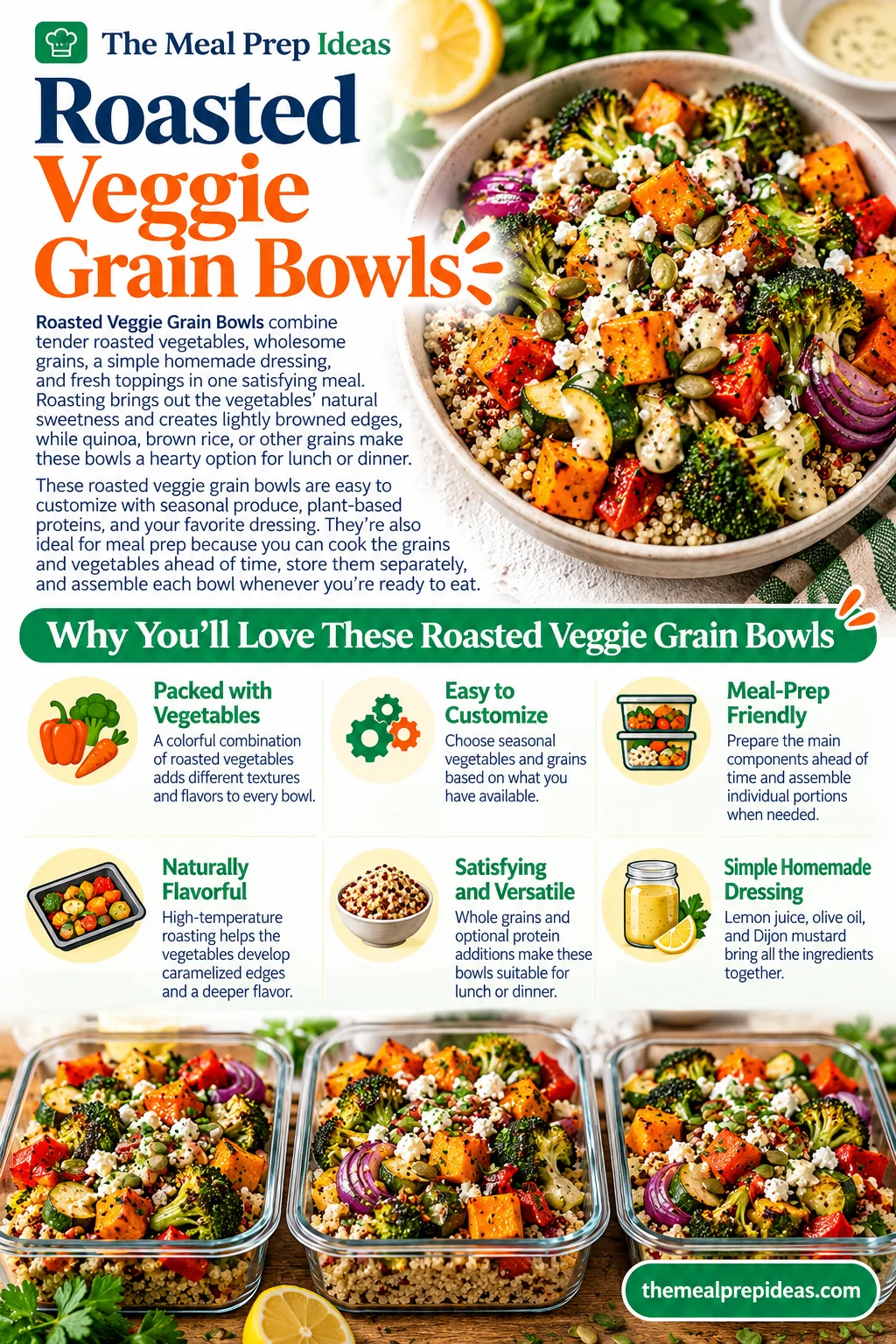
Roasted Veggie Grain Bowls combine tender roasted vegetables, wholesome grains, a simple homemade dressing, and fresh toppings in one satisfying meal. Roasting brings out the vegetables' natural sweetness and creates lightly browned edges, while quinoa, brown rice, or other grains make Roasted Veggie Grain Bowls a hearty option for lunch or dinner.

These roasted veggie grain bowls are easy to customize with seasonal produce, plant-based proteins, and your favorite dressing. They are also ideal for meal prep because you can cook the grains and vegetables ahead of time, store them separately, and assemble each bowl whenever you're ready to eat.

Why You’ll Love These Roasted Veggie Grain Bowls

  • Packed with vegetables: A colorful combination of roasted vegetables adds different textures and flavors to every bowl.
  • Easy to customize: Choose seasonal vegetables and grains based on what you have available.
  • Meal-prep friendly: Prepare the main components ahead of time and assemble individual portions when needed.
  • Naturally flavorful: High-temperature roasting helps the vegetables develop caramelized edges and a deeper flavor.
  • Satisfying and versatile: Whole grains and optional protein additions make these bowls suitable for lunch or dinner.
  • Simple homemade dressing: Lemon juice, olive oil, and Dijon mustard bring all the ingredients together.

For another customizable plant-based meal, try our Easy Vegan Burrito Bowls with your favorite vegetables and toppings.

Roasted Veggie Grain Bowls with sweet potatoes, white beans, kale, tomatoes, rice, and creamy green dressing in a white bowl.

Roasted Veggie Grain Bowls Recipe

Time

  • Prep Time: 15 minutes
  • Cook Time: 30 minutes
  • Total Time: 45 minutes
  • Servings: 4 bowls

Ingredients

For the Grain Bowls

  • 2 cups cooked quinoa, brown rice, or farro
  • 1 medium zucchini, chopped
  • 1 red bell pepper, chopped
  • 1 medium sweet potato, peeled and cut into small cubes
  • 1 cup broccoli florets
  • 1 small red onion, cut into wedges
  • 2 tablespoons olive oil
  • 1 teaspoon garlic powder
  • 1 teaspoon smoked paprika
  • ½ teaspoon dried oregano
  • ½ teaspoon salt
  • ¼ teaspoon black pepper

For the Dressing

  • 3 tablespoons extra-virgin olive oil
  • 2 tablespoons fresh lemon juice
  • 1 teaspoon Dijon mustard
  • 1 teaspoon maple syrup or honey
  • ½ teaspoon garlic powder
  • ¼ teaspoon salt
  • ⅛ teaspoon black pepper

Optional Toppings

  • ¼ cup crumbled feta cheese
  • ¼ cup pumpkin seeds
  • Fresh parsley or cilantro
  • Sliced avocado
  • Lemon wedges

Instructions

  1. 1Preheat the oven: Heat the oven to 425°F (220°C). Line a large baking sheet with parchment paper if desired.
  2. 2Prepare the grains: If the grains aren't already cooked, prepare the quinoa, brown rice, or farro according to the package directions.
  3. 3Chop the vegetables: Cut the sweet potato, zucchini, bell pepper, broccoli, and red onion into relatively even pieces. Cut the sweet potato into smaller cubes because it generally takes longer to cook.
  4. 4Add the oil: Arrange the vegetables on the baking sheet and drizzle them with olive oil.
  5. 5Season the vegetables: Sprinkle the garlic powder, smoked paprika, oregano, salt, and black pepper over the vegetables.
  6. 6Toss and spread: Toss everything until evenly coated, then spread the vegetables into a single layer with some space between the pieces.
  7. 7Roast: Bake for 25–30 minutes, stirring halfway through, until the vegetables are tender and lightly browned. Check that the sweet potato is cooked through before removing the pan from the oven.
  8. 8Make the dressing: While the vegetables roast, whisk together the olive oil, lemon juice, Dijon mustard, maple syrup or honey, garlic powder, salt, and black pepper.
  9. 9Divide the grains: Spoon the cooked grains evenly into four bowls.
  10. 10Add the vegetables: Arrange the roasted vegetables over the grains.
  11. 11Finish the bowls: Drizzle with the homemade dressing and add your preferred toppings.
  12. 12Serve or store: Enjoy Roasted Veggie Grain Bowls warm, or portion the cooked components into containers for convenient future meals.

Notes

  • Cut vegetables evenly: Similar-sized pieces help the vegetables roast at a consistent rate. Cut sweet potatoes into small cubes because they generally take longer to soften than zucchini.
  • Avoid overcrowding: Spread the vegetables across a large baking sheet. Crowded vegetables tend to steam instead of developing browned edges.
  • Adjust cooking times: Vegetables vary in density and moisture. If one type cooks faster than the others, remove it earlier or add it to the pan later.
  • Choose your grain: Quinoa, brown rice, and farro all work well. Choose rice or quinoa for a gluten-free option, and verify that packaged ingredients are suitable for your needs.
  • Customize the dressing: Adjust the lemon juice, sweetness, and seasoning to suit your taste.
  • Keep toppings separate: Store the dressing, avocado, and crunchy toppings separately when preparing meals in advance.
  • Handle cooked grains safely: Refrigerate cooked grains promptly instead of leaving them at room temperature for an extended period.

Nutrition

Approximate nutrition per serving, based on four bowls made with quinoa and the listed dressing, excluding optional toppings:

  • Calories: 475 kcal
  • Protein: 12 g
  • Carbohydrates: 61 g
  • Fat: 21 g
  • Fiber: 10 g
  • Sugar: 10 g
  • Sodium: 430 mg

These values are estimates and may vary depending on the grain, vegetables, dressing portions, and toppings. Adding feta, seeds, or avocado will change the nutritional content.

Dietary

  • Vegetarian: Suitable when prepared with the listed ingredients and vegetarian-friendly Dijon mustard.
  • Vegan: Use maple syrup instead of honey and omit feta or choose a dairy-free alternative.
  • Gluten-Free: Use quinoa or certified gluten-free rice instead of farro. Check the labels of packaged ingredients.
  • Dairy-Free: Omit feta or replace it with a suitable dairy-free alternative.
  • Nut-Free: The base recipe contains no nuts. Pumpkin seeds are an optional seed topping, but check packaging for cross-contact if needed.
  • High-Fiber: Vegetables and whole grains contribute dietary fiber.
  • Plant-Based: These bowls can be fully plant-based when prepared with vegan dressing and toppings.

How to Make Roasted Veggie Grain Bowls

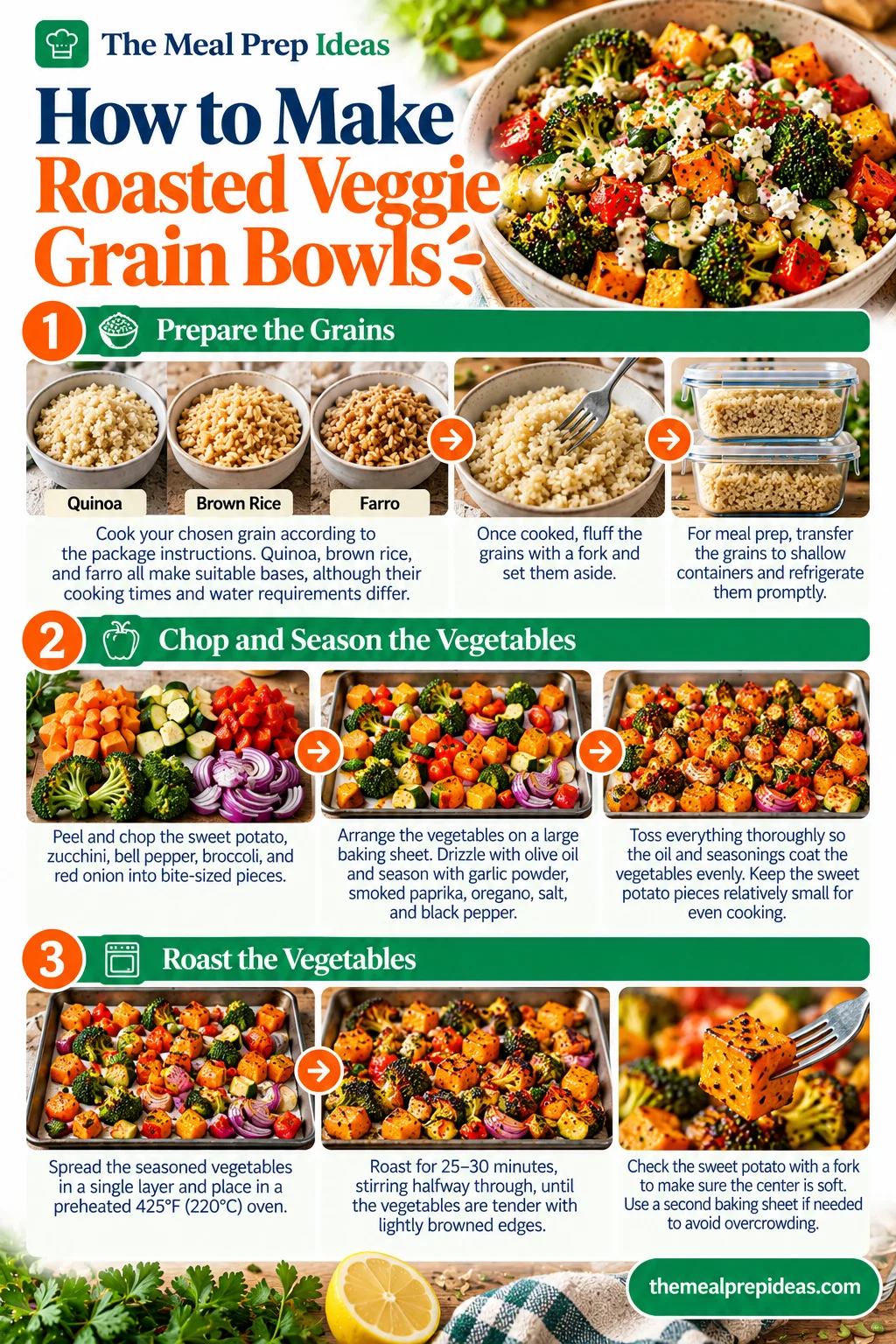
Prepare the Grains

Cook your chosen grain according to the package instructions. Quinoa, brown rice, and farro all make suitable bases, although their cooking times and water requirements differ.

Once cooked, fluff the grains with a fork and set them aside. If you're preparing the bowls for meal prep, transfer the grains to shallow containers and refrigerate them promptly rather than leaving them at room temperature for an extended period.

Chop and Season the Vegetables

Peel the sweet potato and cut it into small cubes. Chop the zucchini and bell pepper, divide the broccoli into bite-sized florets, and cut the red onion into wedges.

Arrange the vegetables on a large baking sheet. Drizzle them with olive oil and season with garlic powder, smoked paprika, oregano, salt, and black pepper.

Toss everything thoroughly so the oil and seasonings coat the vegetables evenly. Keep the sweet potato pieces relatively small to help them become tender within the same roasting window as the other vegetables.

Roast the Vegetables

Spread the seasoned vegetables in a single layer on the baking sheet and place it in a preheated 425°F (220°C) oven.

Roast for approximately 25–30 minutes, stirring halfway through. The vegetables should be tender inside with lightly browned edges. Check the sweet potato with a fork to make sure the center is soft.

For deeper browning, leave enough space between the pieces. Use a second baking sheet if necessary rather than overcrowding the pan.

Roasted vegetables including broccoli, zucchini, bell peppers, sweet potatoes, and red onion arranged on a baking sheet.

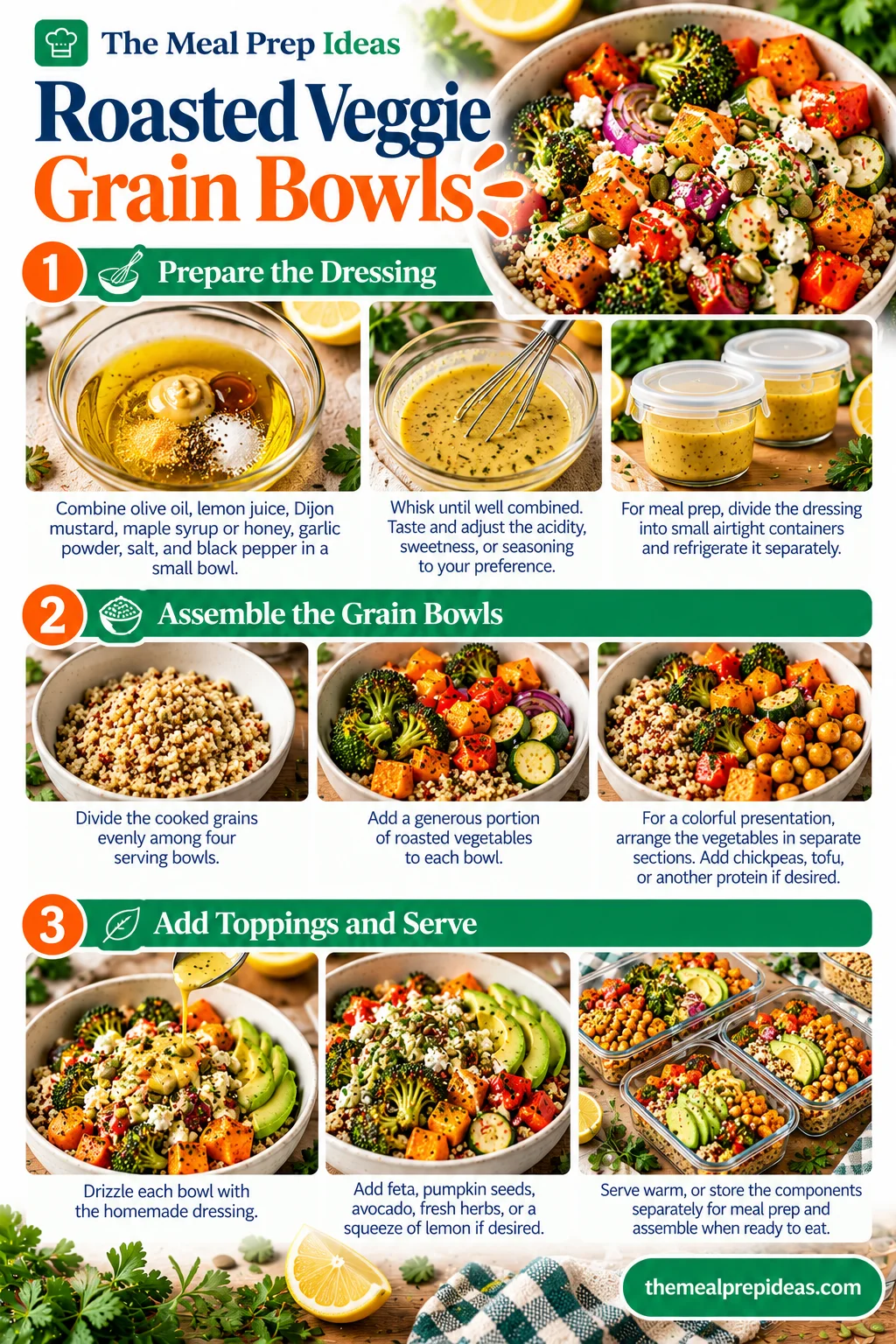
Prepare the Dressing

While the vegetables roast, combine the extra-virgin olive oil, fresh lemon juice, Dijon mustard, maple syrup or honey, garlic powder, salt, and black pepper in a small bowl.

Whisk until the ingredients are well combined. Taste the dressing and adjust the acidity, sweetness, or seasoning to suit your preference.

For meal prep, divide the dressing into small airtight containers and refrigerate it separately. This helps prevent the grains and vegetables from becoming soggy before serving.

Assemble the Grain Bowls

Divide the cooked grains evenly among four serving bowls. Add a generous portion of roasted vegetables to each bowl.

For a colorful presentation, arrange the vegetables in separate sections over the grains. Alternatively, mix everything together for a more casual serving style.

If you're adding chickpeas, tofu, or another protein, prepare it separately and divide it evenly between the bowls.

Add Toppings and Serve

Drizzle each bowl with the homemade dressing. Add feta, pumpkin seeds, avocado, fresh herbs, or a squeeze of lemon if desired.

Serve the bowls warm while the vegetables are freshly roasted. For meal prep, store the cooked components separately from the dressing and fresh toppings, then assemble the portions when needed.

A small bowl of homemade lemon Dijon dressing beside cooked grains and freshly roasted vegetables.

Roasted Veggie Grain Bowl Variations

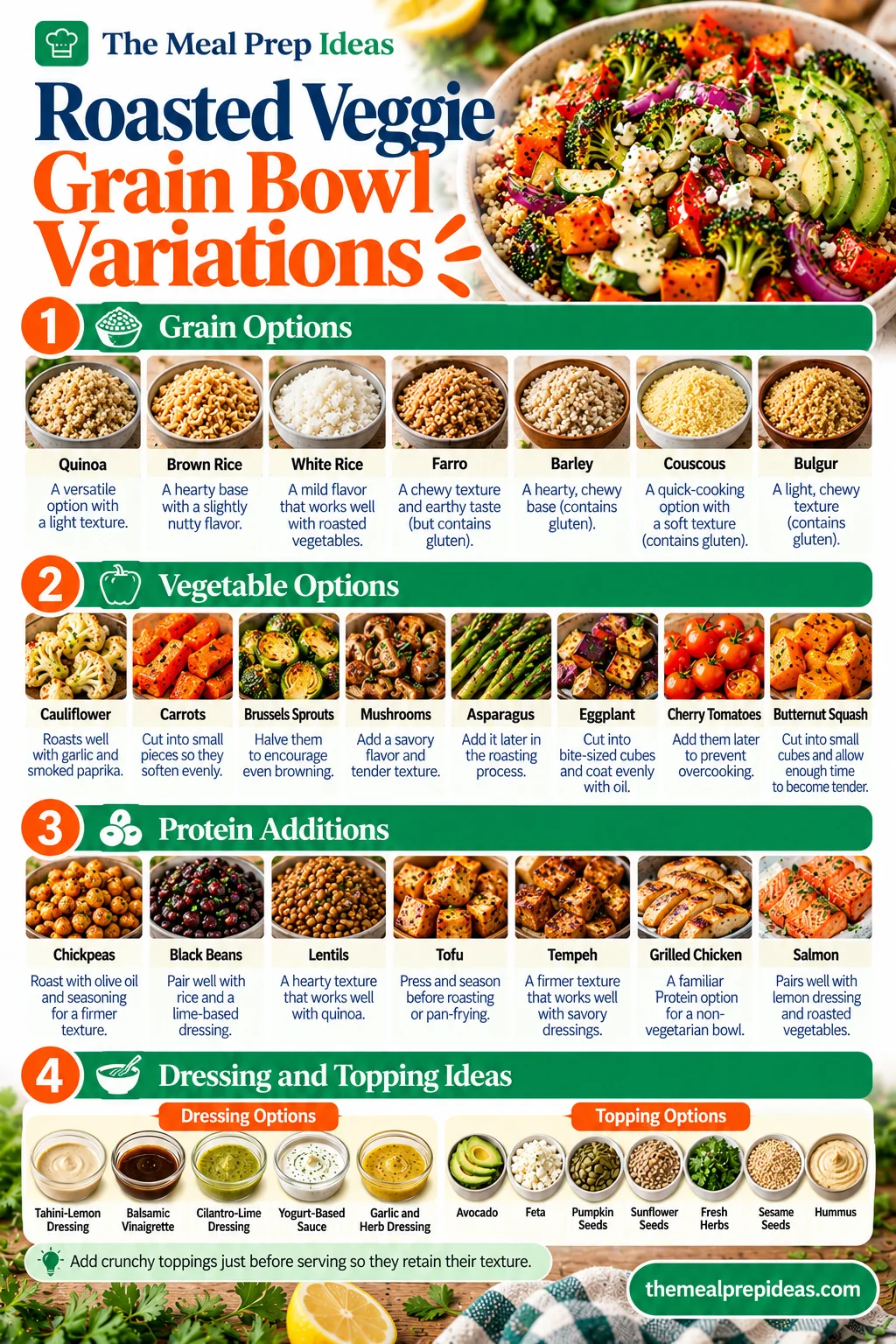
Grain Options

Quinoa, brown rice, white rice, farro, barley, couscous, and bulgur can all serve as the base for grain bowls.

  • Quinoa: A versatile option with a light texture.
  • Brown Rice: Provides a hearty base with a slightly nutty flavor.
  • White Rice: Offers a mild flavor that works well with roasted vegetables and lemon dressing.
  • Farro: Adds a chewy texture and earthy taste but contains gluten.
  • Barley: Provides a hearty, chewy base and contains gluten.
  • Couscous: A quick-cooking option with a soft texture. Traditional couscous is made from wheat.
  • Bulgur: Offers a light, chewy texture and contains gluten.

For gluten-free bowls, choose quinoa or rice and verify that other packaged ingredients are suitable for your dietary needs.

Vegetable Options

Change the vegetables according to the season or what you have available.

  • Cauliflower: Roasts well with garlic and smoked paprika.
  • Carrots: Cut into small pieces so they soften at a similar rate to the other vegetables.
  • Brussels Sprouts: Halve them to encourage even browning.
  • Mushrooms: Add a savory flavor and tender texture.
  • Asparagus: Add it later in the roasting process because thin spears cook quickly.
  • Eggplant: Cut into bite-sized cubes and coat evenly with oil.
  • Cherry Tomatoes: Add them during the later part of roasting to prevent them from becoming overly soft.
  • Butternut Squash: Cut into small cubes and allow enough time for the pieces to become tender.

When combining vegetables with different cooking times, add quicker-cooking varieties later or remove them from the pan as they finish.

Protein Additions

Adding protein to Roasted Veggie Grain Bowls makes them more substantial while introducing new flavors and textures.

  • Chickpeas: Roast them with a little olive oil and seasoning for a firmer texture.
  • Black Beans: Pair well with rice, roasted peppers, and a lime-based dressing.
  • Lentils: Add a hearty texture and work particularly well with quinoa.
  • Tofu: Press and season it before roasting or pan-frying.
  • Tempeh: Offers a firmer texture and works well with savory dressings.
  • Grilled Chicken: Adds a familiar protein option for a non-vegetarian bowl.
  • Salmon: Pairs well with lemon dressing and roasted vegetables.

For a plant-based meal, chickpeas, lentils, tofu, or tempeh are useful additions. If you enjoy plant-based meals with hearty legumes, try our Mediterranean Chickpea Salad for another fresh and satisfying option.

Dressing and Topping Ideas

The dressing and toppings can change the overall flavor without requiring a different roasting method.

Dressing Options

  • Tahini-lemon dressing
  • Balsamic vinaigrette
  • Cilantro-lime dressing
  • Plain yogurt-based sauce
  • Garlic and herb dressing

Topping Options

  • Sliced avocado
  • Crumbled feta
  • Pumpkin seeds
  • Sunflower seeds
  • Fresh herbs
  • Toasted sesame seeds
  • Hummus

Add crunchy toppings just before serving so they retain their texture.

Evenly cut vegetables seasoned with olive oil and spices, ready to roast on a baking sheet.

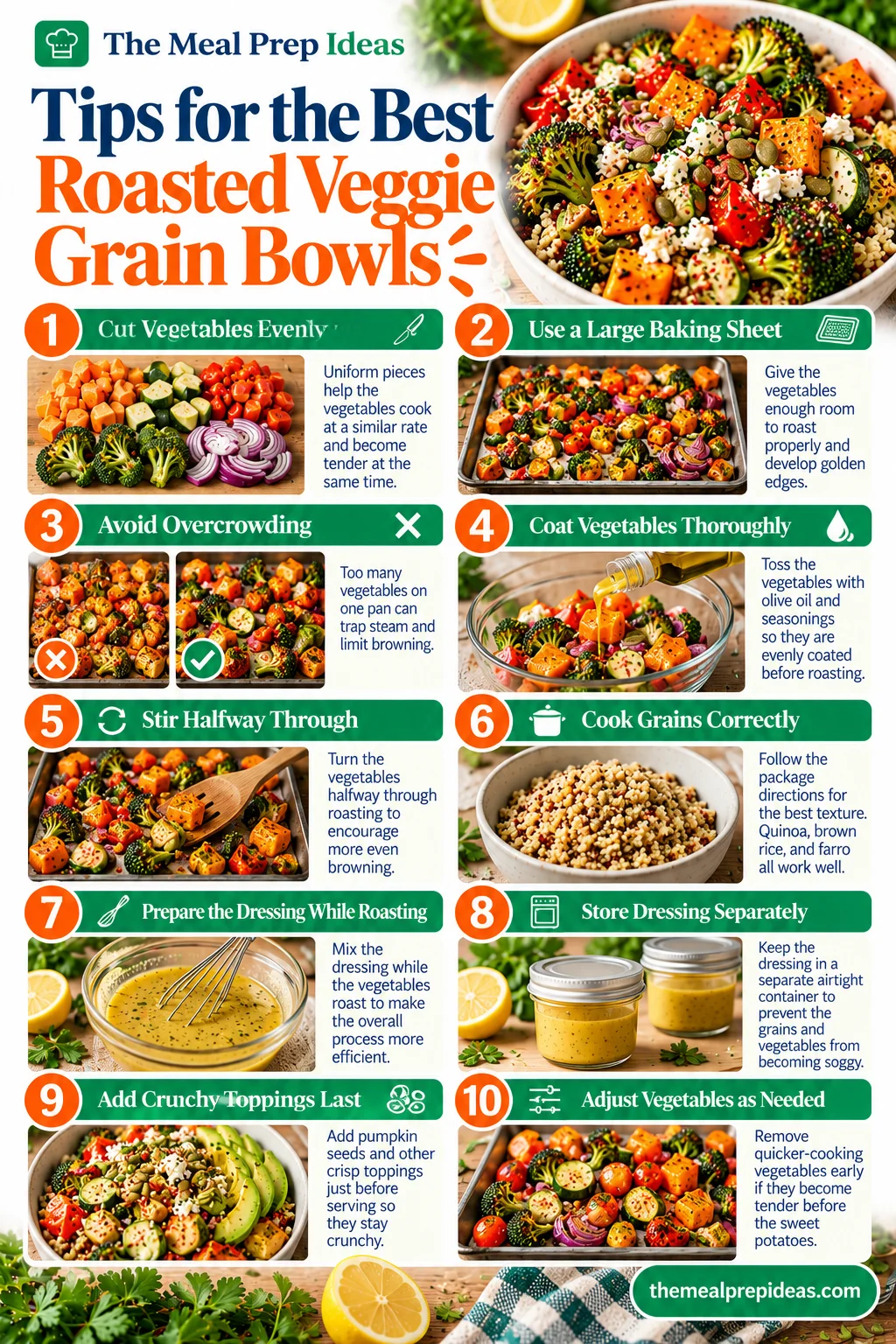
Tips for the Best Roasted Veggie Grain Bowls

  • Cut vegetables evenly: Uniform pieces help the vegetables cook at a similar rate.
  • Use a large baking sheet: Give the vegetables enough room to roast properly.
  • Avoid overcrowding: Too many vegetables on one pan can trap steam and limit browning.
  • Coat vegetables thoroughly: Toss them with the oil and seasonings before roasting.
  • Stir halfway through: Turning the vegetables encourages more even browning.
  • Cook grains correctly: Follow the package directions for the best texture.
  • Prepare the dressing while roasting: This makes the overall process more efficient.
  • Store dressing separately: Keep wet ingredients away from the grains until serving.
  • Add crunchy toppings last: Pumpkin seeds and other crisp toppings stay more enjoyable when added just before eating.
  • Adjust vegetables as needed: Remove quicker-cooking vegetables early if they become tender before the sweet potatoes.
Evenly cut vegetables seasoned with olive oil and spices, ready to roast on a baking sheet.

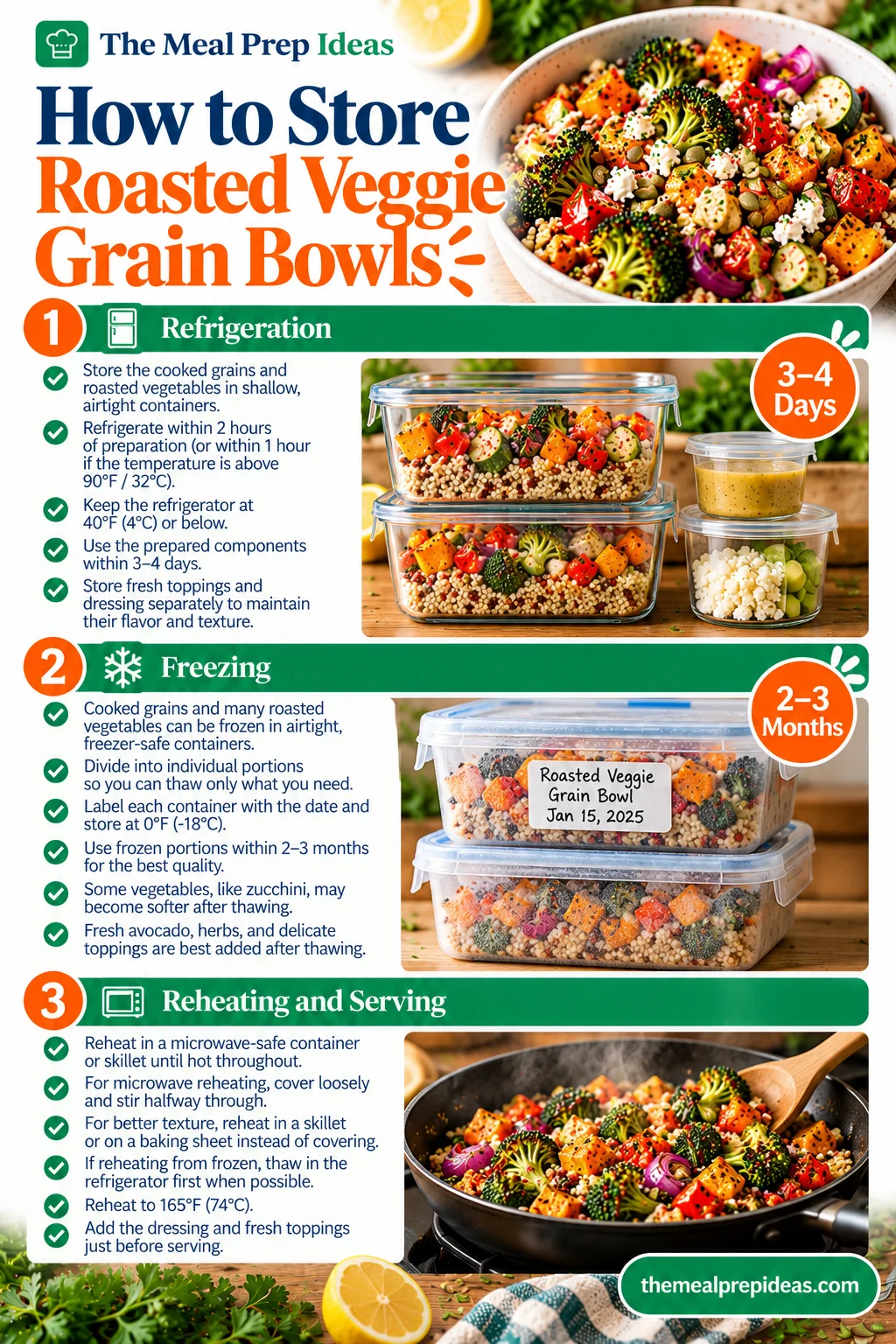
How to Store Roasted Veggie Grain Bowls

Refrigeration

Store the cooked grains and roasted vegetables from Roasted Veggie Grain Bowls in shallow, airtight containers. Refrigerate cooked food within 2 hours of preparation, or within 1 hour if the surrounding temperature exceeds 90°F (32°C).

Keep the refrigerator at 40°F (4°C) or below and use the prepared components within 3–4 days. Store fresh toppings and dressing separately when possible, to maintain their flavor and texture.

Freezing

Cooked grains and many roasted vegetables can be frozen in airtight, freezer-safe containers. Divide them into individual portions so you can thaw only what you need.

Label each container with the date and store it at 0°F (-18°C). For the best quality, use frozen portions within about 2–3 months. Some vegetables, particularly zucchini, may become softer after thawing.

Fresh avocado, leafy herbs, and other delicate toppings are better added after thawing rather than frozen with the bowls.

Reheating and Serving

Reheat the grains and roasted vegetables in a microwave-safe container or skillet until hot throughout. For microwave reheating, cover the container loosely and stir halfway through when practical.

For better texture, reheat the vegetables in a skillet or spread them on a baking sheet rather than covering them for the entire reheating process.

If reheating frozen portions, thaw them in the refrigerator first when possible. Reheat leftovers to 165°F (74°C), then add the dressing and fresh toppings just before serving. For a different meal prep option with seasoned protein, rice, and colorful vegetables, check out our Meal Prep Fajita Bowls.

Cooked grains and roasted vegetables portioned into airtight meal prep containers for refrigeration and freezing.

Frequently Asked Questions

What Grains Work Best for Grain Bowls?

Quinoa, brown rice, white rice, farro, barley, bulgur, and couscous all work well. Quinoa and rice are especially useful for gluten-free bowls, while farro and barley provide a chewier texture. Choose a grain that complements the vegetables and fits your dietary needs.

Can I Use Frozen Vegetables?

Yes. Frozen vegetables can be used, although they may release more moisture and become softer than fresh vegetables. For better browning, use a hot oven, spread the vegetables across the baking sheet without overcrowding, and check them during cooking. Cooking times may vary depending on the vegetable and whether it was thawed first.

How Do I Keep Roasted Vegetables Crispy?

Use a large baking sheet, coat the vegetables lightly with oil, and leave space between the pieces. A properly preheated oven encourages moisture to evaporate and helps the vegetables develop browned edges. For meal prep, store the dressing separately and reheat the vegetables in a skillet or uncovered in the oven to improve their texture.

Can I Add Protein to a Veggie Grain Bowl?

Absolutely. Chickpeas, lentils, tofu, tempeh, chicken, salmon, and beans are all suitable options. Choose a protein that complements the seasoning and dressing, and cook it separately when necessary before assembling the bowls.

How Long Do Roasted Veggie Grain Bowls Last?

Cooked grains and roasted vegetables generally keep for 3–4 days when stored in airtight containers in a refrigerator at 40°F (4°C) or below. Refrigerate them within 2 hours of cooking and keep fresh toppings and dressing separate when possible. Reheat leftovers to 165°F (74°C) before eating.

No ratings yet

Roasted Veggie Grain Bowls

Make these roasted veggie grain bowls with quinoa, colorful vegetables, and lemon dressing. An easy, customizable recipe perfect for meal prep.

Healthy grain bowl with roasted sweet potatoes, kale, white beans, tomatoes, rice, and creamy green herb dressing.the meal
prep ideas
15 minPrep
30 minCook
45 minTotal
Makes 4Servings
Print recipe

How to prepare

  1. 1Preheat the oven: Heat the oven to 425°F (220°C). Line a large baking sheet with parchment paper if desired.
  2. 2Prepare the grains: If the grains aren't already cooked, prepare the quinoa, brown rice, or farro according to the package directions.
  3. 3Chop the vegetables: Cut the sweet potato, zucchini, bell pepper, broccoli, and red onion into relatively even pieces. Cut the sweet potato into smaller cubes because it generally takes longer to cook.
  4. 4Add the oil: Arrange the vegetables on the baking sheet and drizzle them with olive oil.
  5. 5Season the vegetables: Sprinkle the garlic powder, smoked paprika, oregano, salt, and black pepper over the vegetables.
  6. 6Toss and spread: Toss everything until evenly coated, then spread the vegetables into a single layer with some space between the pieces.
  7. 7Roast: Bake for 25–30 minutes, stirring halfway through, until the vegetables are tender and lightly browned. Check that the sweet potato is cooked through before removing the pan from the oven.
  8. 8Make the dressing: While the vegetables roast, whisk together the olive oil, lemon juice, Dijon mustard, maple syrup or honey, garlic powder, salt, and black pepper.
  9. 9Divide the grains: Spoon the cooked grains evenly into four bowls.
  10. 10Add the vegetables: Arrange the roasted vegetables over the grains.
  11. 11Finish the bowls: Drizzle with the homemade dressing and add your preferred toppings.
  12. 12Serve or store: Enjoy Roasted Veggie Grain Bowls warm, or portion the cooked components into containers for convenient future meals.

Good to know

  • Cut vegetables evenly: Similar-sized pieces help the vegetables roast at a consistent rate. Cut sweet potatoes into small cubes because they generally take longer to soften than zucchini.
  • Avoid overcrowding: Spread the vegetables across a large baking sheet. Crowded vegetables tend to steam instead of developing browned edges.
  • Adjust cooking times: Vegetables vary in density and moisture. If one type cooks faster than the others, remove it earlier or add it to the pan later.
  • Choose your grain: Quinoa, brown rice, and farro all work well. Choose rice or quinoa for a gluten-free option, and verify that packaged ingredients are suitable for your needs.
  • Customize the dressing: Adjust the lemon juice, sweetness, and seasoning to suit your taste.
  • Keep toppings separate: Store the dressing, avocado, and crunchy toppings separately when preparing meals in advance.
  • Handle cooked grains safely: Refrigerate cooked grains promptly instead of leaving them at room temperature for an extended period.
  • Quinoa, brown rice, white rice, farro, barley, couscous, and bulgur can all serve as the base for grain bowls.
  • For gluten-free bowls, choose quinoa or rice and verify that other packaged ingredients are suitable for your dietary needs.
  • Change the vegetables according to the season or what you have available.
  • When combining vegetables with different cooking times, add quicker-cooking varieties later or remove them from the pan as they finish.
  • Adding protein to Roasted Veggie Grain Bowls makes them more substantial while introducing new flavors and textures.
  • For a plant-based meal, chickpeas, lentils, tofu, or tempeh are useful additions. If you enjoy plant-based meals with hearty legumes, try our Mediterranean Chickpea Salad for another fresh and satisfying option.
  • The dressing and toppings can change the overall flavor without requiring a different roasting method.
  • Dressing Options
  • Topping Options
  • Add crunchy toppings just before serving so they retain their texture.
  • Store the cooked grains and roasted vegetables from Roasted Veggie Grain Bowls in shallow, airtight containers. Refrigerate cooked food within 2 hours of preparation, or within 1 hour if the surrounding temperature exceeds 90°F (32°C).
  • Keep the refrigerator at 40°F (4°C) or below and use the prepared components within 3–4 days. Store fresh toppings and dressing separately when possible, to maintain their flavor and texture.
  • Cooked grains and many roasted vegetables can be frozen in airtight, freezer-safe containers. Divide them into individual portions so you can thaw only what you need.
  • Label each container with the date and store it at 0°F (-18°C). For the best quality, use frozen portions within about 2–3 months. Some vegetables, particularly zucchini, may become softer after thawing.
  • Fresh avocado, leafy herbs, and other delicate toppings are better added after thawing rather than frozen with the bowls.
  • Reheat the grains and roasted vegetables in a microwave-safe container or skillet until hot throughout. For microwave reheating, cover the container loosely and stir halfway through when practical.
  • For better texture, reheat the vegetables in a skillet or spread them on a baking sheet rather than covering them for the entire reheating process.
  • If reheating frozen portions, thaw them in the refrigerator first when possible. Reheat leftovers to 165°F (74°C), then add the dressing and fresh toppings just before serving. For a different meal prep option with seasoned protein, rice, and colorful vegetables, check out our Meal Prep Fajita Bowls.
VegetarianVeganGluten-FreeDairy-FreeNut-FreeHigh-FiberPlant-Based

Made this recipe?

Tag @themealprepideas on Instagram — we love seeing what you made.

Tag us

Reviews & Comments

Be the first to rate, review, or ask a question about this recipe.

No comments yet

Be the first cook to share feedback or ask a question about this recipe!

Leave a Review & Rating

Tap to rate

Comments are moderated for community safety. External links are filtered.

Keep Cooking

You Might Also Like

Easy Vegan Burrito Bowls

Easy Vegan Burrito Bowls

Make Easy Vegan Burrito Bowls with rice, black beans, fresh vegetables, and creamy lime sauce. A quick, customizable meal perfect for meal prep.

15 min
Get Recipe

Thai Peanut Chicken Bowls

Thai Peanut Chicken Bowls

Make Thai Peanut Chicken Bowls with tender chicken, fresh vegetables, rice, and creamy peanut sauce. An easy, flavorful meal prep recipe!

15 min
Get Recipe

Teriyaki Salmon Bowls

Teriyaki Salmon Bowls

Make easy Teriyaki Salmon Bowls with tender salmon, fluffy rice, fresh vegetables, and homemade teriyaki sauce. Perfect for meal prep!

15 min
Get Recipe

Get Your Free 7-Day Meal Prep Plan

Join 50,000+ subscribers getting weekly meal prep ideas, shopping lists, and time-saving tips straight to their inbox.

No spam. Unsubscribe anytime.