Peanut Butter Overnight Oats With Yogurt

Creamy peanut butter overnight oats with yogurt, made with simple ingredients for an easy, healthy, make-ahead breakfast.
5 min
Make-Ahead Breakfast Sandwiches are easy, freezer-friendly, and perfect for meal prep. Enjoy a quick, filling breakfast on busy mornings.
 Sarah Bennett· Meal Prep Expert & Recipe DeveloperSeptember 8, 2026

Ask your favorite AI assistant to summarize this recipe, suggest swaps, or scale it up — one click away.
We copy the prompt to your clipboard too — just paste (Ctrl/Cmd+V) if it doesn't appear automatically.
Make-ahead breakfast sandwiches are an easy way to have a filling breakfast ready when your morning gets busy. They’re usually made with eggs, cheese and bread, with extras like bacon, sausage, ham, or vegetables if you want more flavor.
Instead of making breakfast from scratch every morning, you can prepare several make-ahead breakfast sandwiches at once and have them ready for the week. This makes breakfast meal prep simple and gives you a quick grab-and-go breakfast when you’re short on time. They’re also a handy choice for a busy morning breakfast, whether you’re heading to work, school, or just trying to get out the door. You can keep them in the refrigerator or prepare them as a freezer-friendly breakfast for later.
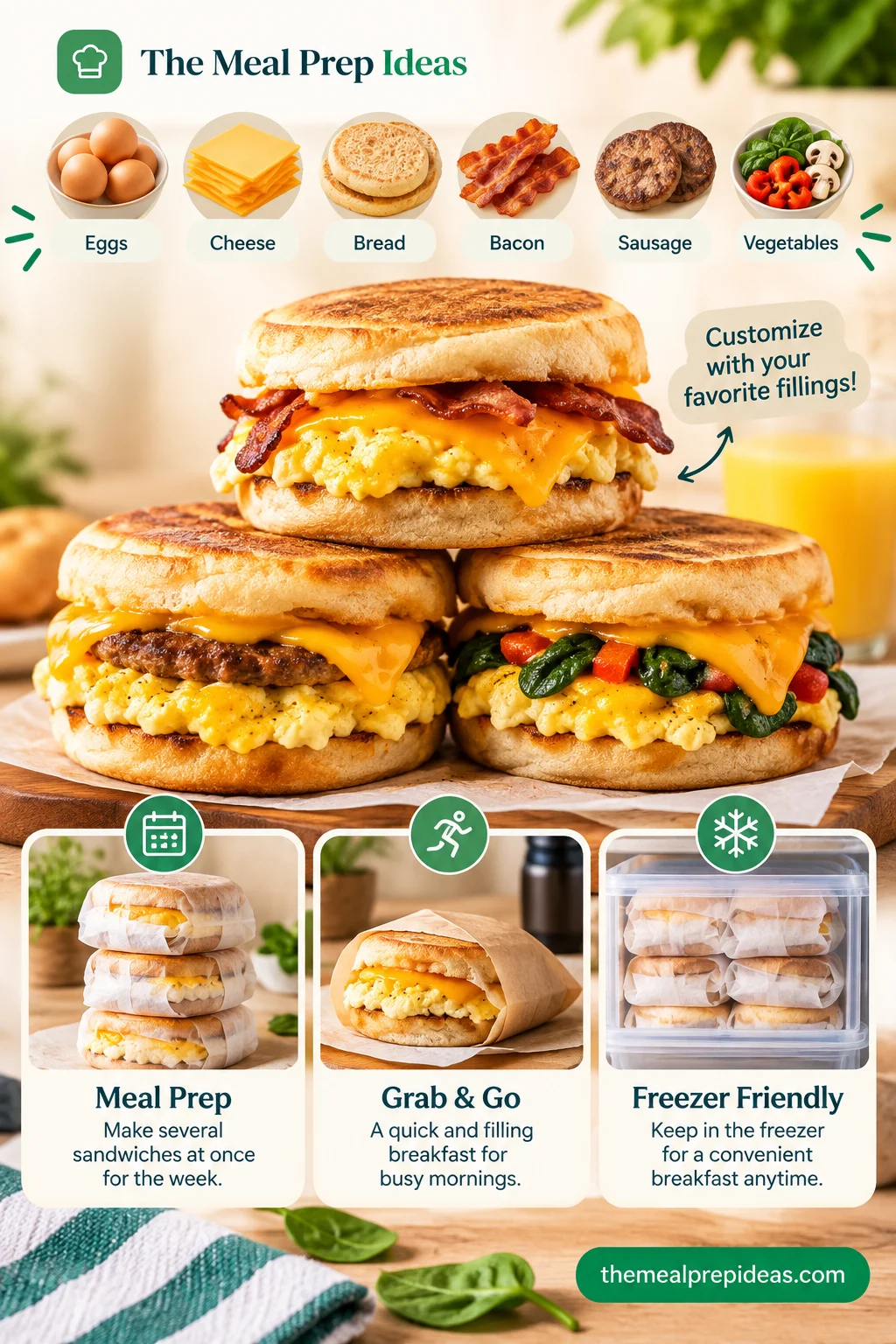
These make-ahead breakfast sandwiches make mornings much easier because you can prepare a whole batch at once. Each sandwich becomes an easy individual portion, so you can grab one whenever you need a quick meal.
They’re a great meal prep breakfast for busy weekdays and can save you from cooking breakfast from scratch every morning. You can also customize each sandwich with different cheese, meats, or vegetables, so the whole batch doesn’t have to taste the same.
Whether you need a breakfast for busy mornings, a breakfast on the go, or a simple ready-to-eat breakfast, these sandwiches fit easily into your routine. They’re also useful as a make-ahead meal because they can be kept in the refrigerator or prepared as a freezer breakfast for later. It’s a simple batch breakfast that gives you a convenient breakfast with less morning cooking.
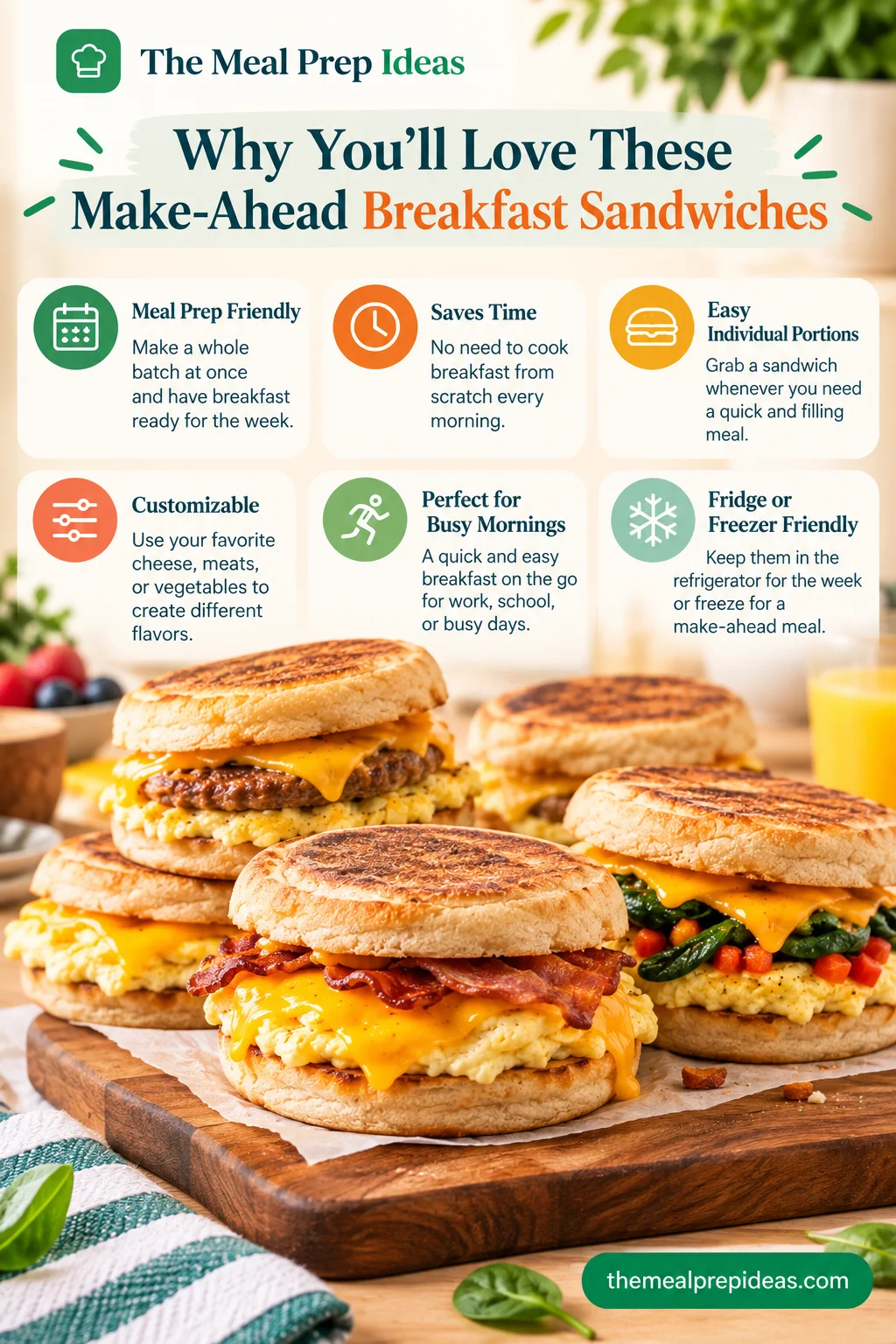
A good make-ahead breakfast sandwich starts with a few simple ingredients that work well together. The eggs, bread, cheese and fillings can all be adjusted to match your taste and meal prep needs.
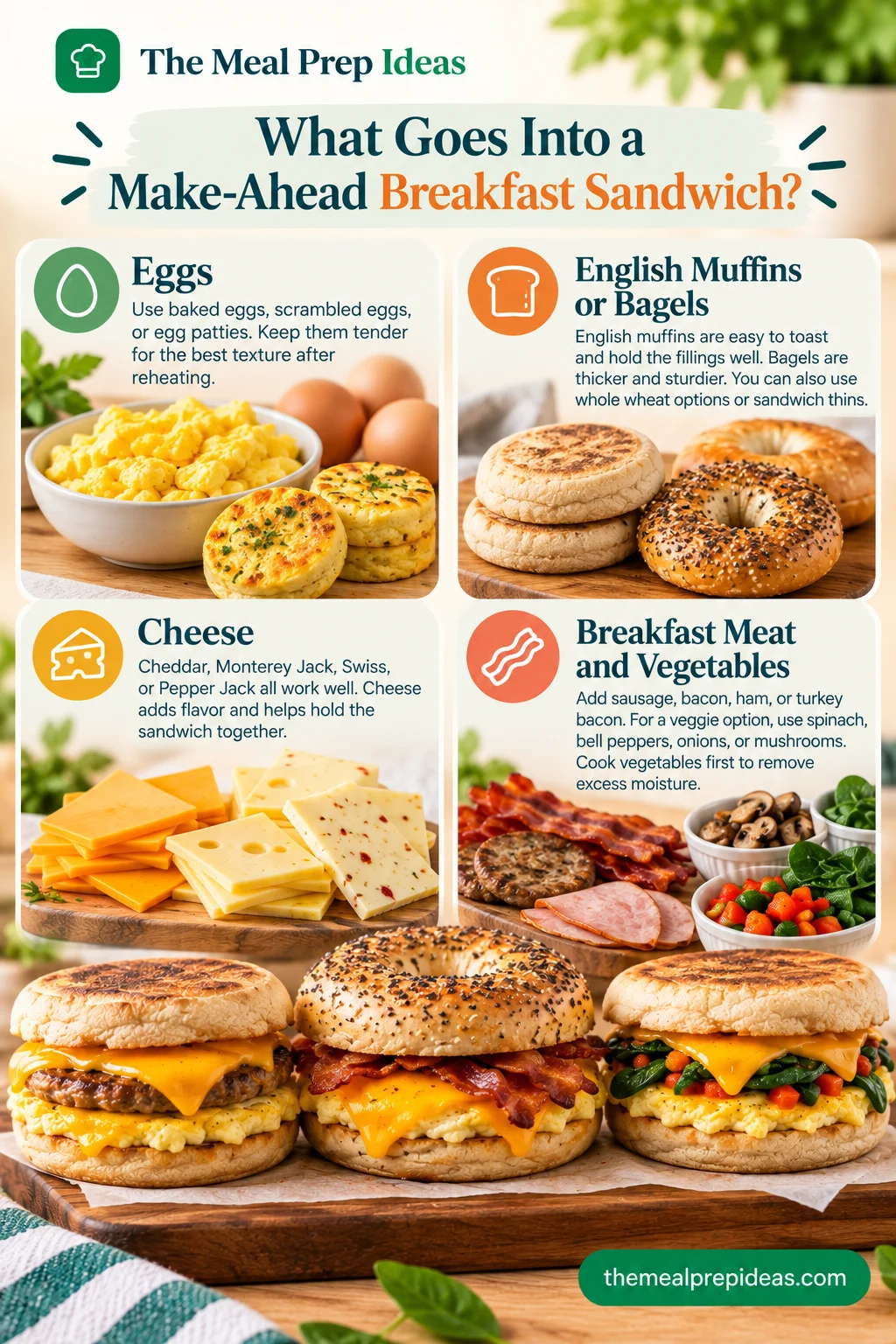
Eggs are the main base and a simple source of protein. You can use baked eggs for evenly sized portions, or scrambled eggs for a softer, more familiar texture. For sandwiches that will be stored and reheated, tender eggs are best. Try not to overcook the egg mixture, since eggs can become dry after reheating. Baked eggs can also be cut into egg patties or egg rounds, making them easy to layer into an egg breakfast sandwich. If you prefer a bread-free breakfast option, High-Protein Egg Bites are another convenient choice for preparing individual portions ahead of time.
English muffins are a classic choice because they’re easy to toast and hold the fillings well. A toasted English muffin works especially well for an English muffin breakfast sandwich. Bagels are thicker and sturdier, making a filling breakfast bagel sandwich. You can also use whole wheat English muffins or sandwich thins for a lighter option.
Cheese adds flavor and helps hold the sandwich together. Cheddar cheese, Monterey Jack, Swiss cheese and Pepper Jack are all good choices. A slice of cheese melts nicely between the warm eggs and bread, creating an easy egg and cheese breakfast sandwich.
For extra flavor, add breakfast sausage, sausage patties, bacon, turkey bacon, ham, or Canadian bacon. You can also make a veggie breakfast sandwich with spinach, bell peppers, onions, or mushrooms. Cook vegetables first and remove extra moisture so they don’t make the bread soggy after reheating. Simple sautéed vegetables work especially well for this.
Estimated per sandwich:
Making make-ahead breakfast sandwiches is easier than it may seem. The key is to cook the eggs gently, keep the fillings fairly dry and let everything cool before wrapping.
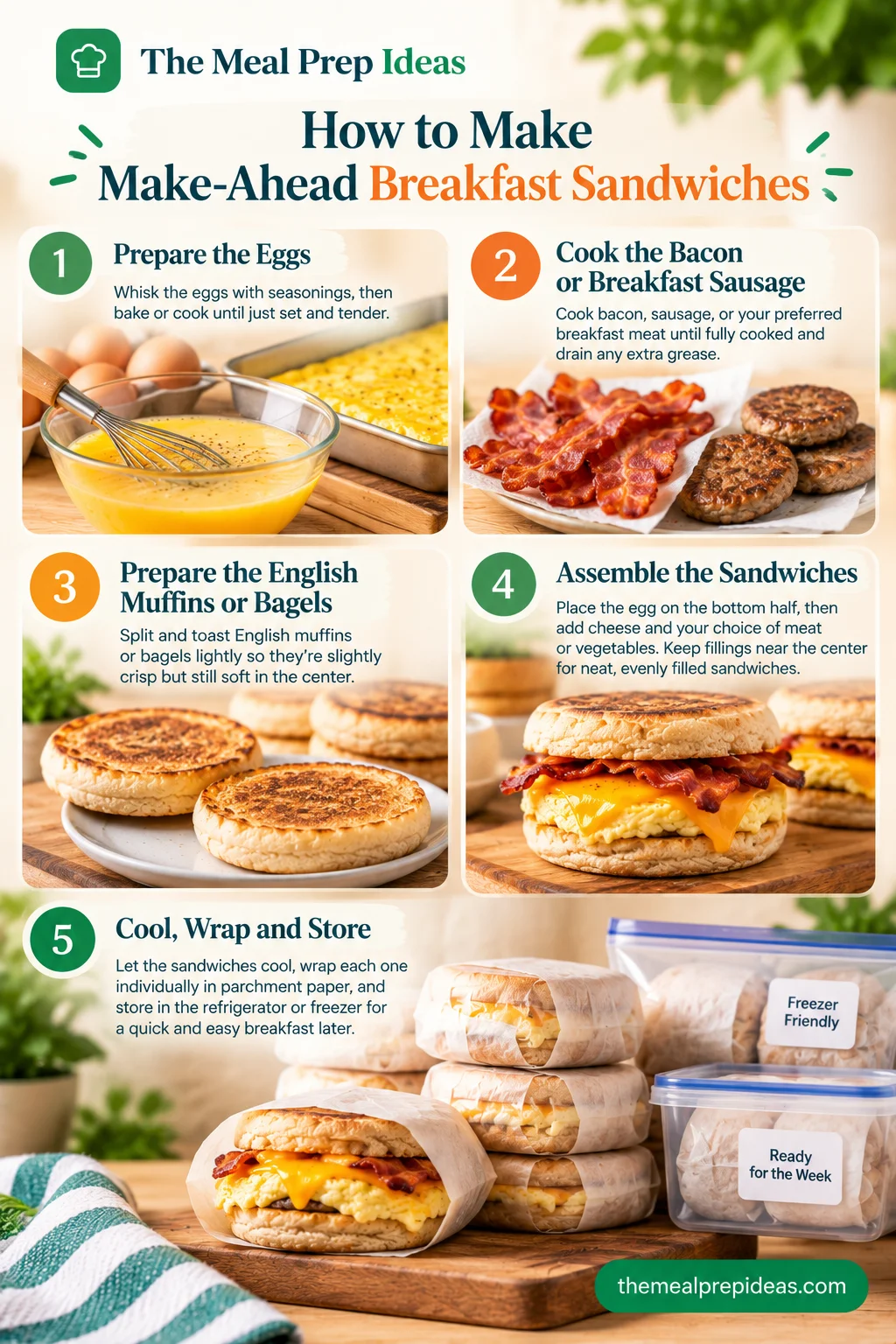
Start by whisking the eggs with your seasonings until the egg mixture is well combined. Cook or bake eggs according to the recipe until they are just set. If you’re making sheet pan eggs or an egg bake, avoid leaving them in the oven too long. The eggs should still look tender and soft because they’ll cook a little more when the sandwiches are reheated. This helps keep the baked egg mixture from becoming dry.
Cook your breakfast sausage, sausage patties, bacon, or turkey bacon until fully cooked. Ham or Canadian bacon can be used without much extra cooking. Drain any extra grease before adding the meat to the sandwiches. If needed, cut or divide the cooked breakfast meat into portions that fit neatly inside each sandwich.
Split the bread and toast English muffins or toasted bagels lightly. You want the surface slightly crisp, but don’t over-toast it. The bread will be heated again later, so keeping it a little soft in the center helps prevent a dry English muffin breakfast sandwich or breakfast bagel sandwich.
To assemble breakfast sandwiches, place the egg on the bottom half of the bread, then layer eggs and cheese with the meat or vegetables. Keep wet fillings to a minimum and place everything near the center. This makes neat individual portions and helps each sandwich hold together. It also gives you evenly filled breakfast sandwiches for meal prep.
Let the cooked eggs and other warm fillings cool before wrapping. Assemble each sandwich, then wrap sandwiches individually in parchment paper or another suitable wrapping. Place the individually wrapped sandwiches in a freezer-safe bag or freezer-safe container if freezing. For short-term refrigerator storage, keep them covered and chilled. Detailed freezing and reheating instructions come later.
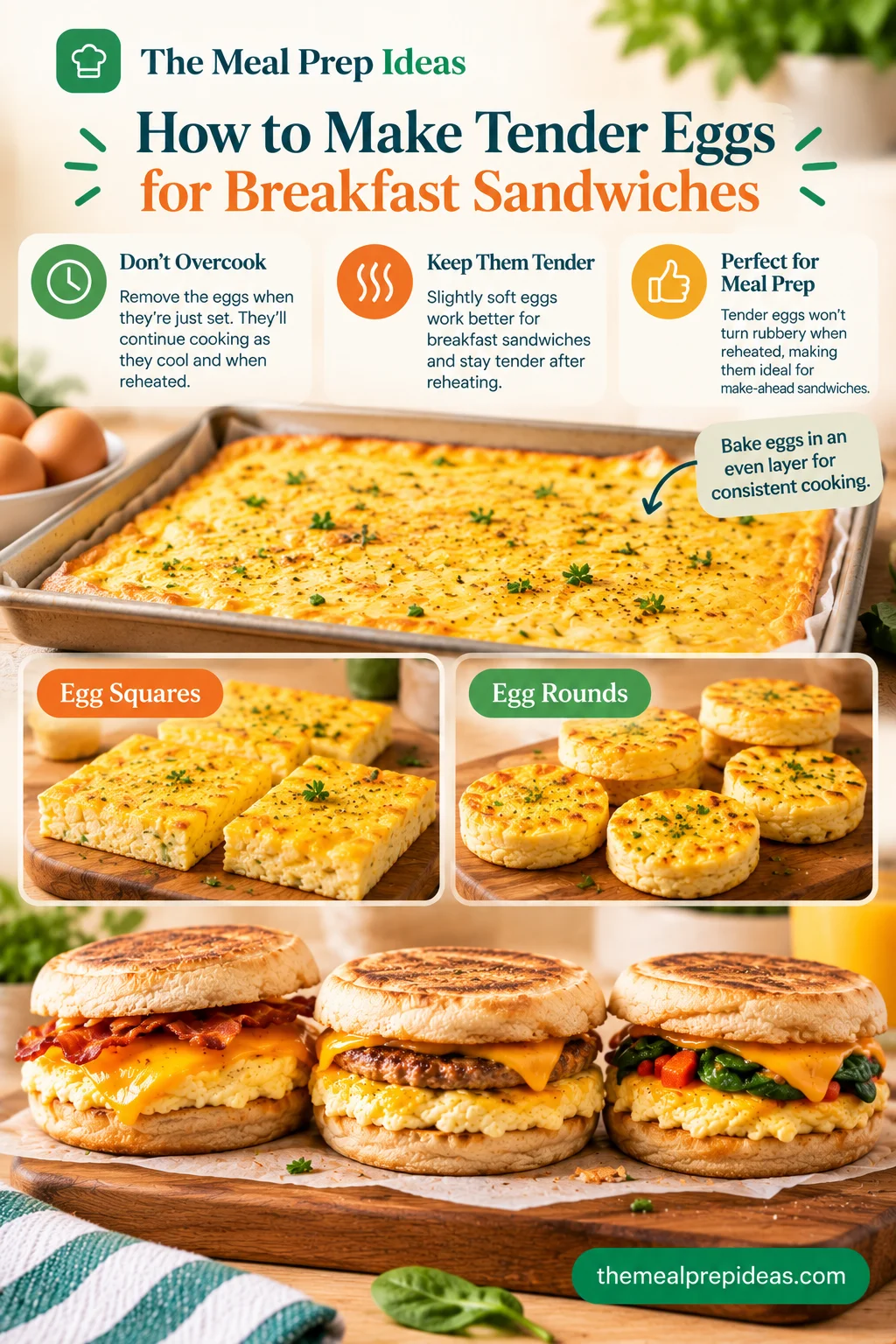
The trick to making tender eggs is simple: don’t cook them too long. Remove the eggs from the oven when they’re just set, rather than waiting for them to look very firm. They’ll continue cooking slightly as they cool and again when they’re reheated.
This is especially important because reheated eggs can easily turn into rubbery eggs if they were already overcooked the first time. For eggs for breakfast sandwiches, a soft texture works much better after reheating.
If you’re making sheet pan eggs, spread the mixture in an even layer so it cooks at the same rate. You can then cut it into baked egg squares or egg rounds for evenly sized sandwiches. Avoid making the egg layer too thick, as the center may take longer to cook while the edges become dry. A slightly soft soft egg breakfast sandwich filling will usually have a better texture after reheating.
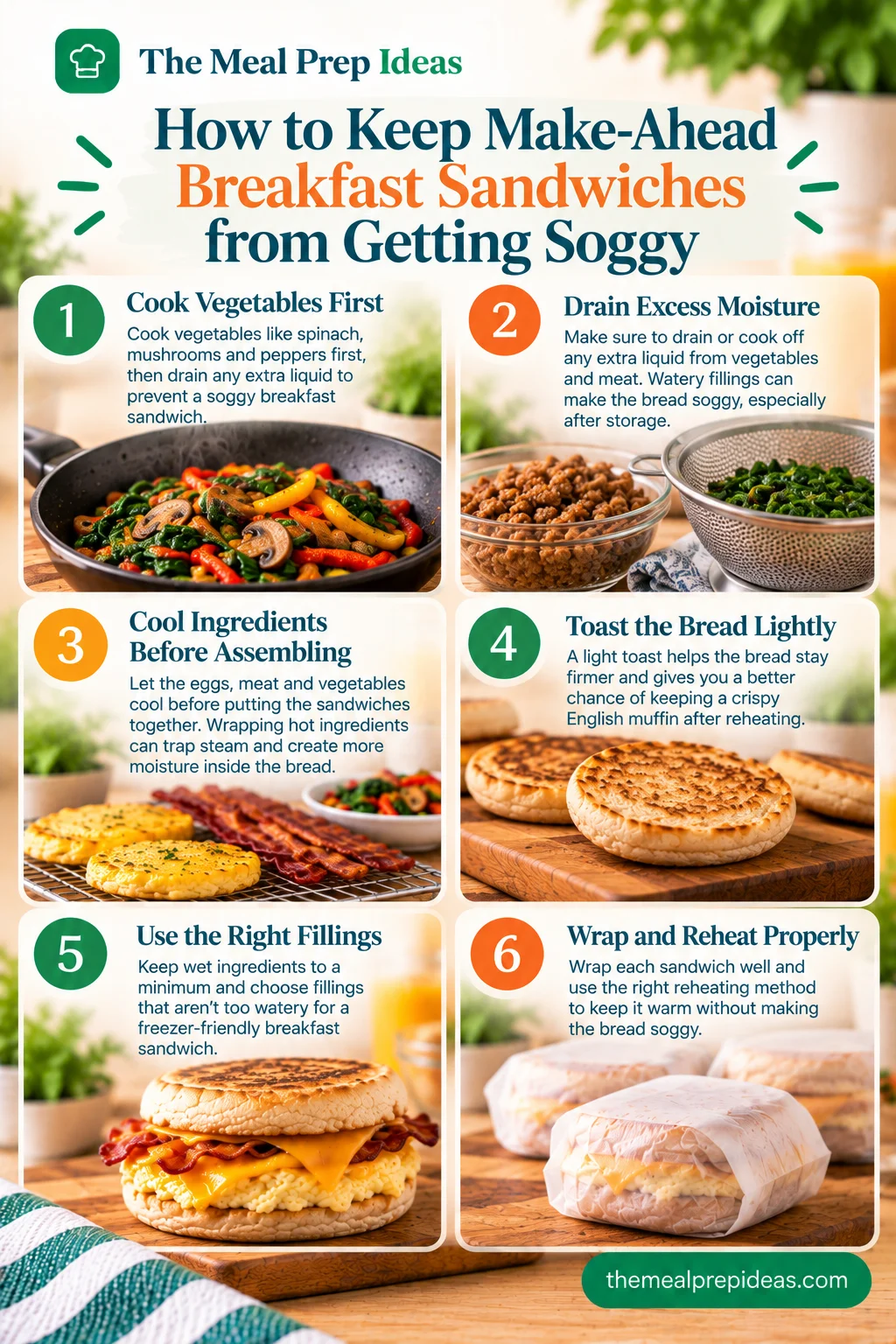
The best way to prevent soggy breakfast sandwiches is to control excess moisture before freezing or reheating. Cook vegetables such as spinach, mushrooms and peppers first, then drain or cook off any extra liquid. Very watery fillings can make a soggy breakfast sandwich, especially after storage.
Let the eggs, meat and vegetables cool before putting the sandwiches together. Wrapping hot ingredients right away can trap steam and create more moisture inside the bread. It also helps to lightly toast the bread first, which gives you a better chance of keeping a crispy English muffin after reheating.
For a freezer-friendly breakfast sandwich, keep wet ingredients to a minimum and wrap each sandwich properly. Using the right reheating breakfast sandwich method also matters. These simple steps can help keep breakfast sandwiches from getting soggy without making them dry.
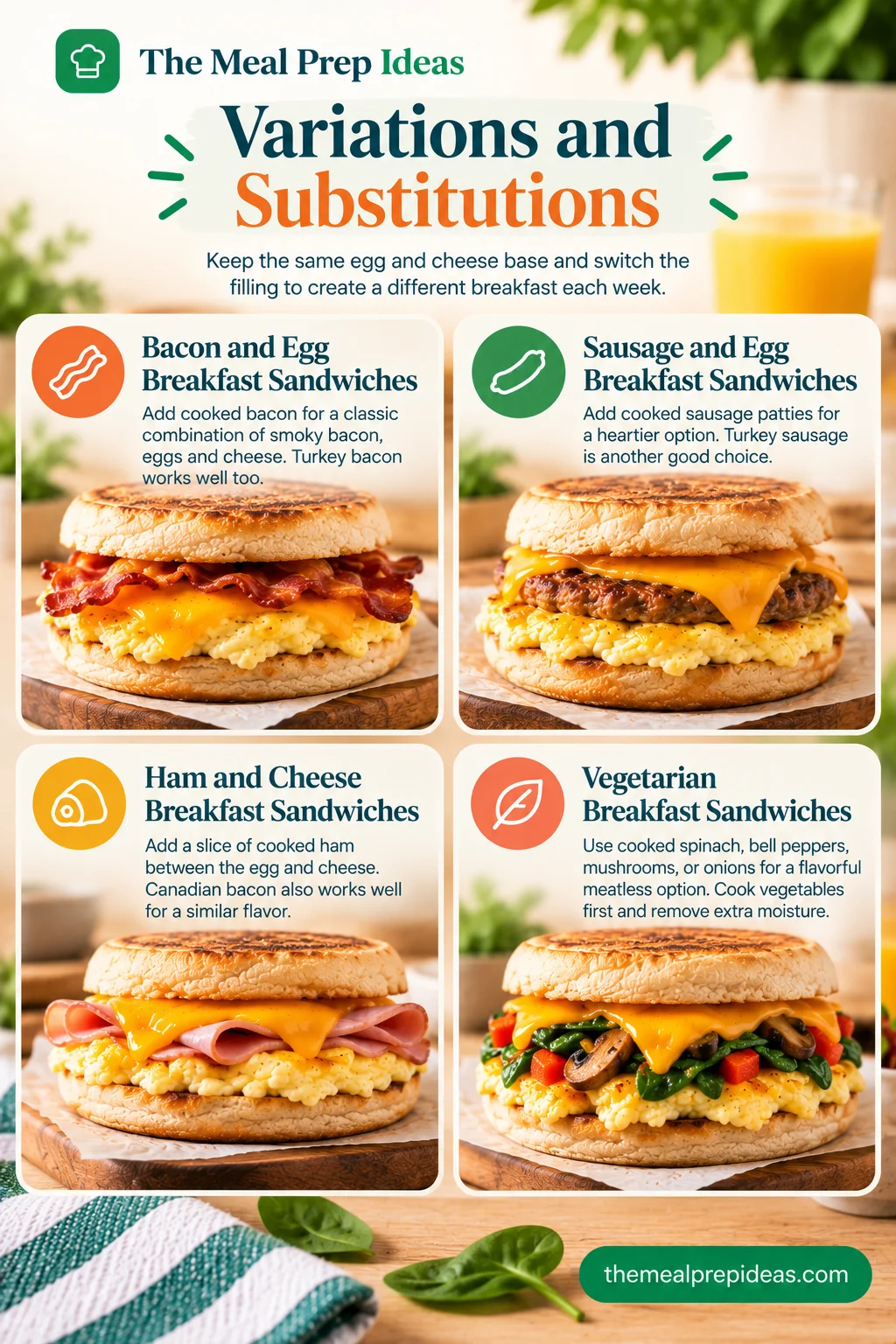
One of the best things about make-ahead breakfast sandwiches is how easy they are to change. You can keep the same egg and cheese base while switching the filling to create a different breakfast each week.
Add cooked bacon to each sandwich for a classic combination of smoky bacon, eggs and cheese. Turkey bacon works well too if you prefer a lighter option. The result is an easy bacon egg breakfast sandwich that’s filling and simple to prepare in a batch.
For a heartier option, add cooked sausage patties to the sandwiches. Turkey sausage is another good choice. Try to keep the patties close to the size of the egg portions so everything stays inside the bread. This makes a satisfying sausage egg breakfast sandwich or sausage egg cheese breakfast sandwich. For another savory breakfast made with eggs and sausage, try Sausage Hashbrown Egg Muffins, which are easy to portion for busy mornings.
Add a slice of cooked ham between the egg and cheese for a simple ham and cheese breakfast sandwich. You can also use Canadian bacon for a similar flavor with a slightly different texture.
Skip the meat and add cooked spinach, bell peppers, mushrooms, or onions instead. These make flavorful vegetarian breakfast sandwiches and can also work well as vegetarian freezer breakfast sandwiches. Cook the vegetables first and remove extra moisture before adding them. For a simple meatless breakfast sandwich, spinach pairs especially well with eggs and cheese.
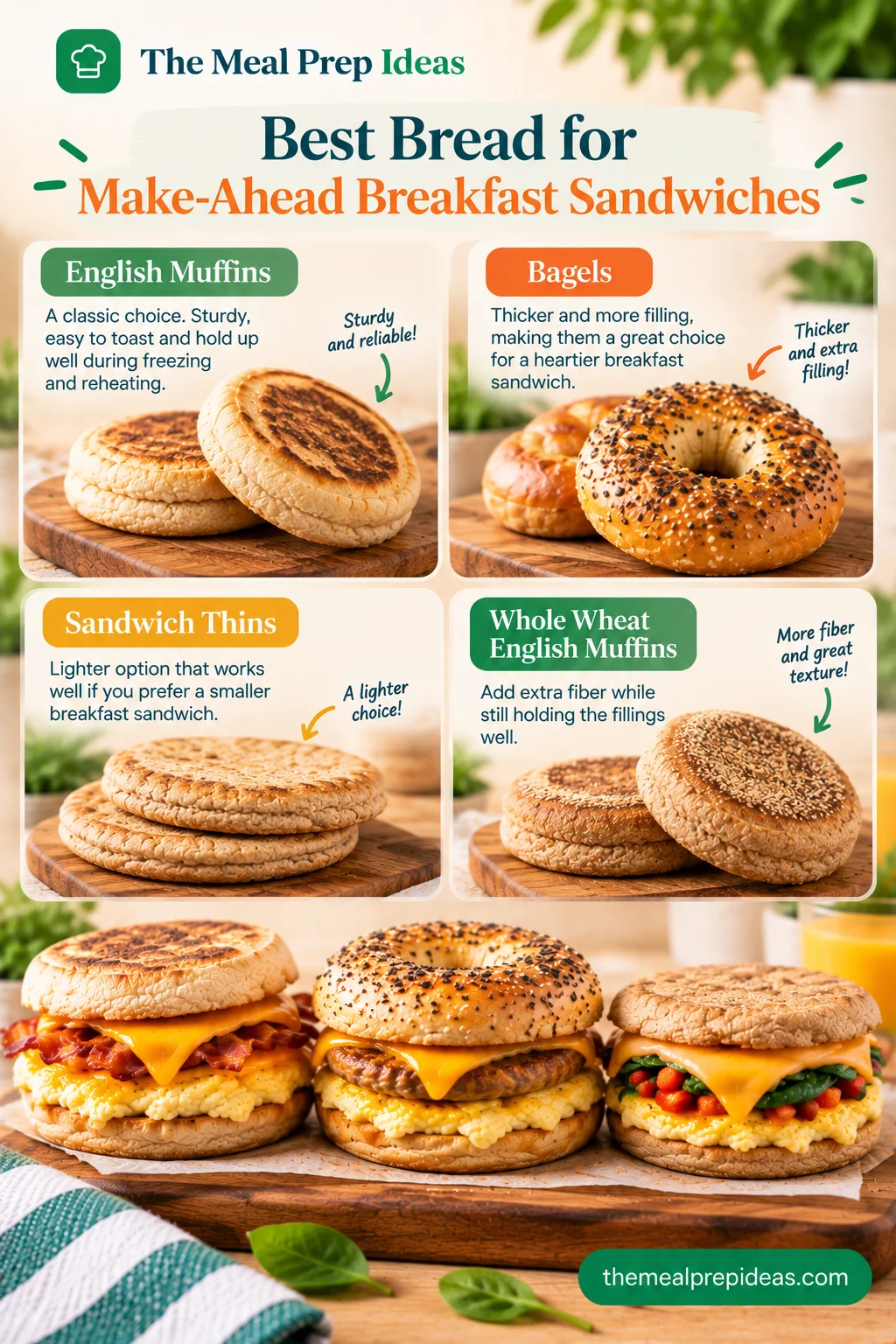
The best bread for freezer breakfast sandwiches should taste good but also hold up well during freezing and reheating. English muffins are a classic choice because they’re sturdy, easy to toast and don’t become too heavy after reheating. A lightly toasted English muffin also gives the sandwich a nice texture.
Bagels are thicker and more filling, making them a good choice when you want a heartier sandwich. Sandwich thins are lighter and work well if you prefer a smaller breakfast sandwich. For more whole-grain options, whole wheat English muffins add extra fiber while still holding the fillings well.
In general, choose a breakfast sandwich bread that is sturdy enough to hold the eggs and cheese without becoming too soft during storage or reheating.
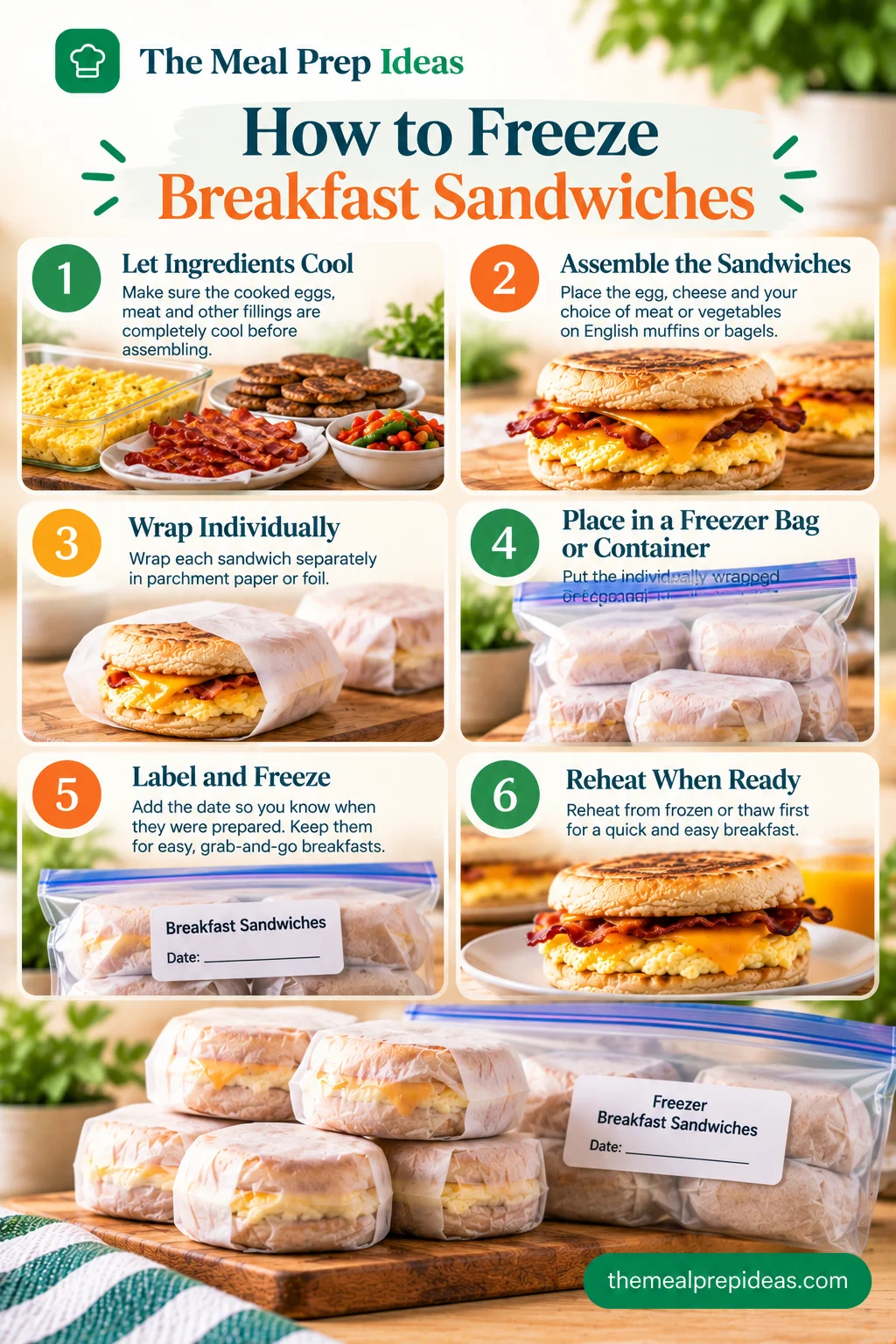
Yes, breakfast sandwiches can be frozen once the cooked ingredients have cooled completely. Freezing them as individual portions makes freezer breakfast sandwiches easy to grab whenever you need a quick meal.
To freeze breakfast sandwiches, first let the cooked eggs, meat and other fillings cool completely. Assemble the sandwiches, then wrap each one separately in parchment paper or foil. Place the individually wrapped sandwiches in a freezer-safe bag or freezer-safe container. Remove as much extra air as possible before sealing the bag.
Label the bag or container with the date so you know when the sandwiches were prepared. Keeping them as individual portions also makes it easy to take out only what you need. Proper wrapping helps protect freezer-friendly breakfast sandwiches from excess moisture and freezer burn. When you’re ready to eat one, it can be reheated from frozen or thawed first.
This simple method gives you homemade make-ahead breakfast sandwiches ready for busy mornings.
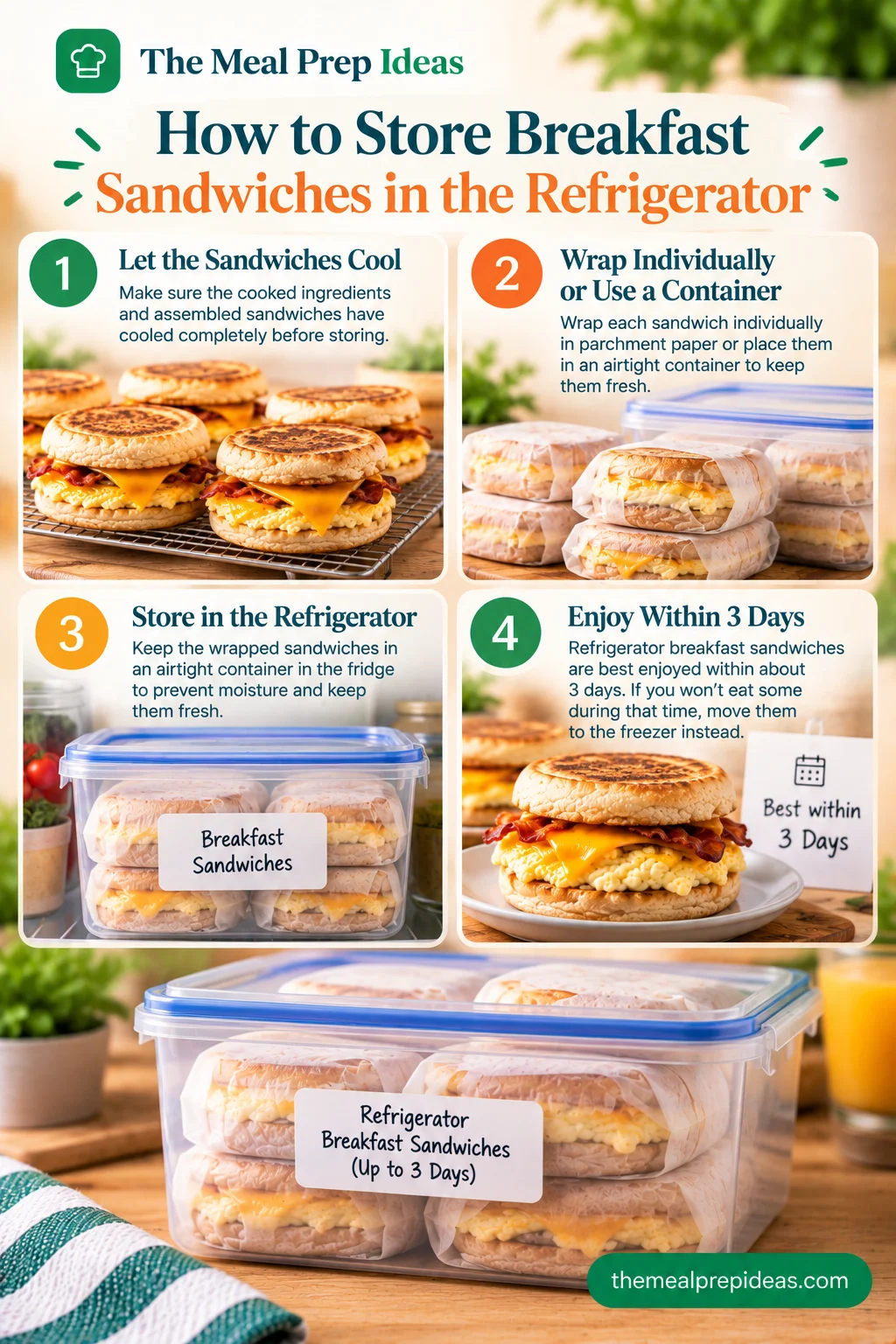
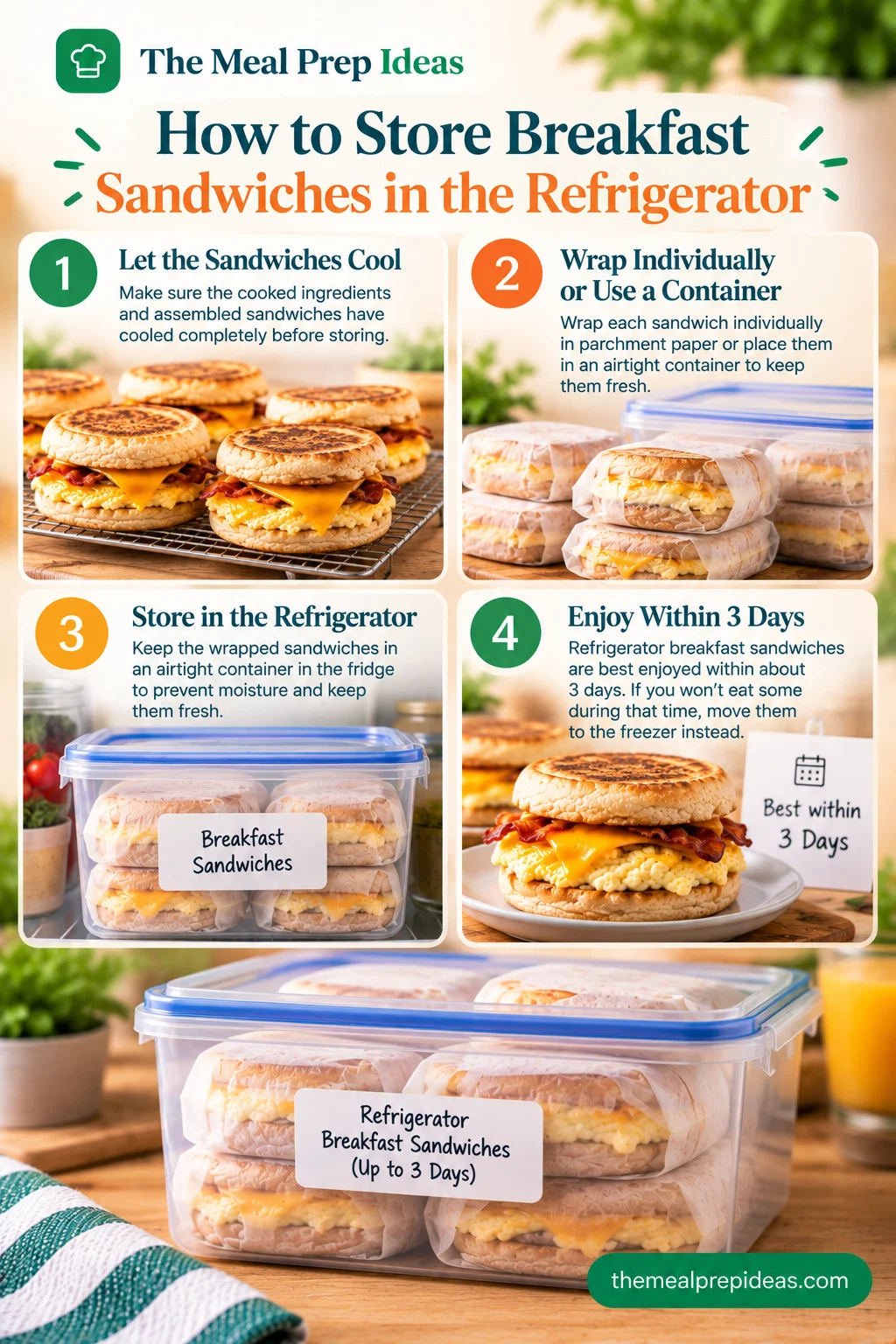
To learn how to store breakfast sandwiches, let the cooked ingredients and assembled sandwiches cool before putting them away. Wrap each sandwich individually or place them in an airtight container to keep them fresh and prevent the bread from picking up moisture from other foods.
These refrigerator breakfast sandwiches are best enjoyed within about 3 days. If you know you won’t eat some of the make-ahead breakfast sandwiches during that time, move those portions to the freezer instead. Keeping breakfast sandwiches in the refrigerator properly covered also makes them easy to grab for a quick breakfast during the week.
The best way to reheat breakfast sandwich depends on whether it’s frozen or thawed. The goal is to warm the center without drying out the eggs or making the bread too soft.
For a microwave breakfast sandwich, unwrap one sandwich and place it on a microwave-safe plate. A thawed sandwich will heat faster, while a microwave frozen breakfast sandwich needs more time. Heat in short intervals, checking the center between each one. Let it rest for a minute before eating so the heat can spread evenly. This helps prevent the eggs from becoming dry or overcooked.
A toaster oven breakfast sandwich takes a little longer but can give the bread a better texture. Heat until the center is fully warm and the outside is lightly crisp. This method works well when you want to reheat without getting soggy.
For several sandwiches at once, oven reheating is a convenient option. Arrange the sandwiches on a baking sheet and heat them until warmed through. This works especially well for batch meal prep. Keep an eye on them so the bread doesn’t become too dry.
You can reheat from frozen when you need a sandwich quickly, but thawing it overnight usually reduces the heating time. To thaw overnight, place the sandwich in the refrigerator the night before. Whether you start frozen or thawed, adjust the heating time and avoid overheating the eggs. This gives you better results with frozen breakfast sandwich reheating.
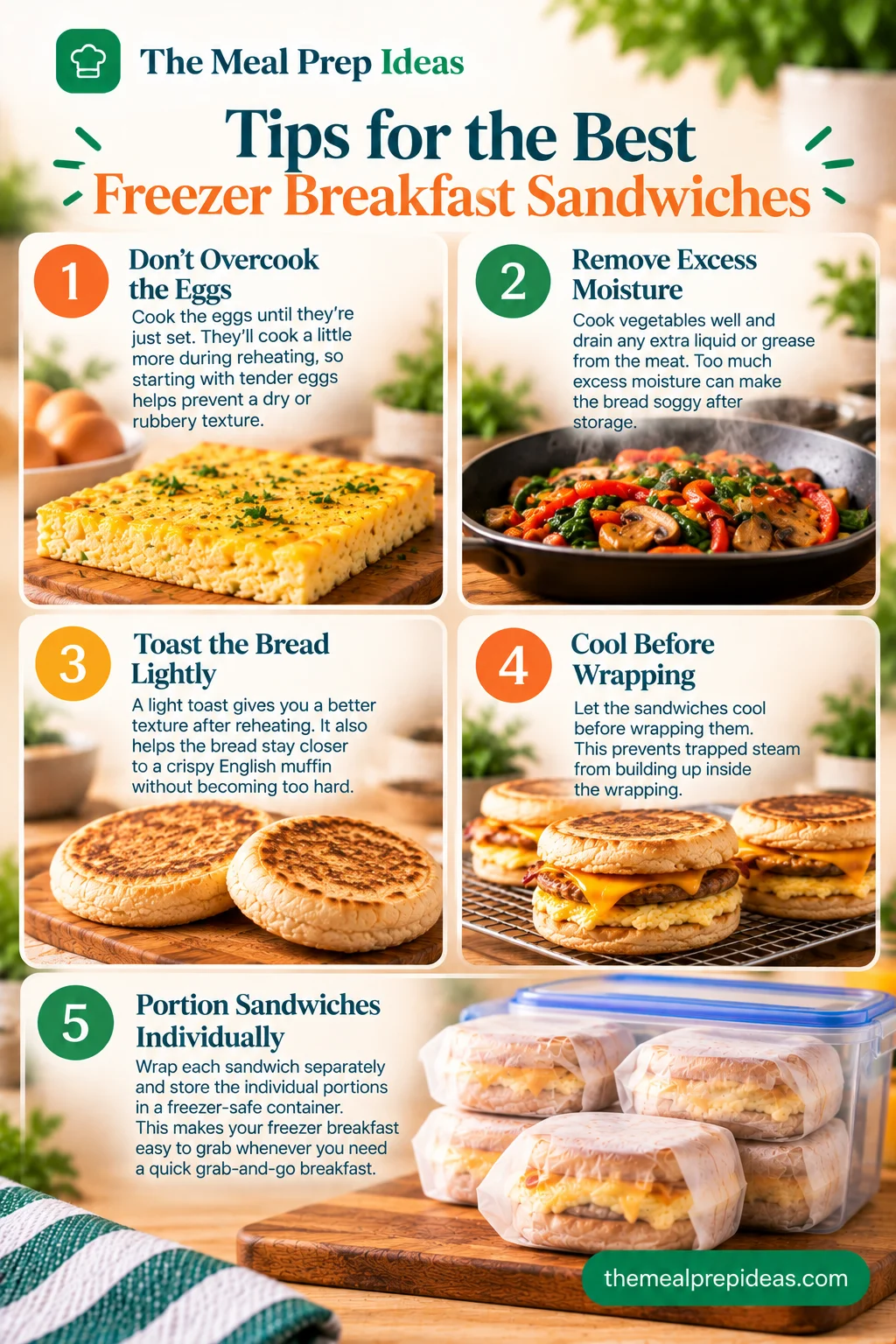
A few small steps can make a big difference when preparing freezer-friendly sandwiches. These tips help keep the eggs tender, the bread firm and each sandwich easy to grab later.
Cook the eggs until they’re just set. They’ll cook a little more during reheating, so starting with tender eggs helps prevent a dry or rubbery texture.
Cook vegetables well and drain any extra liquid or grease from the meat. Too much excess moisture can make the bread soggy after storage.
A light toast gives you a better texture after reheating. It also helps the bread stay closer to a crispy English muffin without becoming too hard.
Let the sandwiches cool before wrapping them. This prevents trapped steam from building up inside the wrapping.
Wrap each sandwich separately and store the individual portions in a freezer-safe container. This makes your freezer breakfast easy to grab whenever you need a quick grab-and-go breakfast.
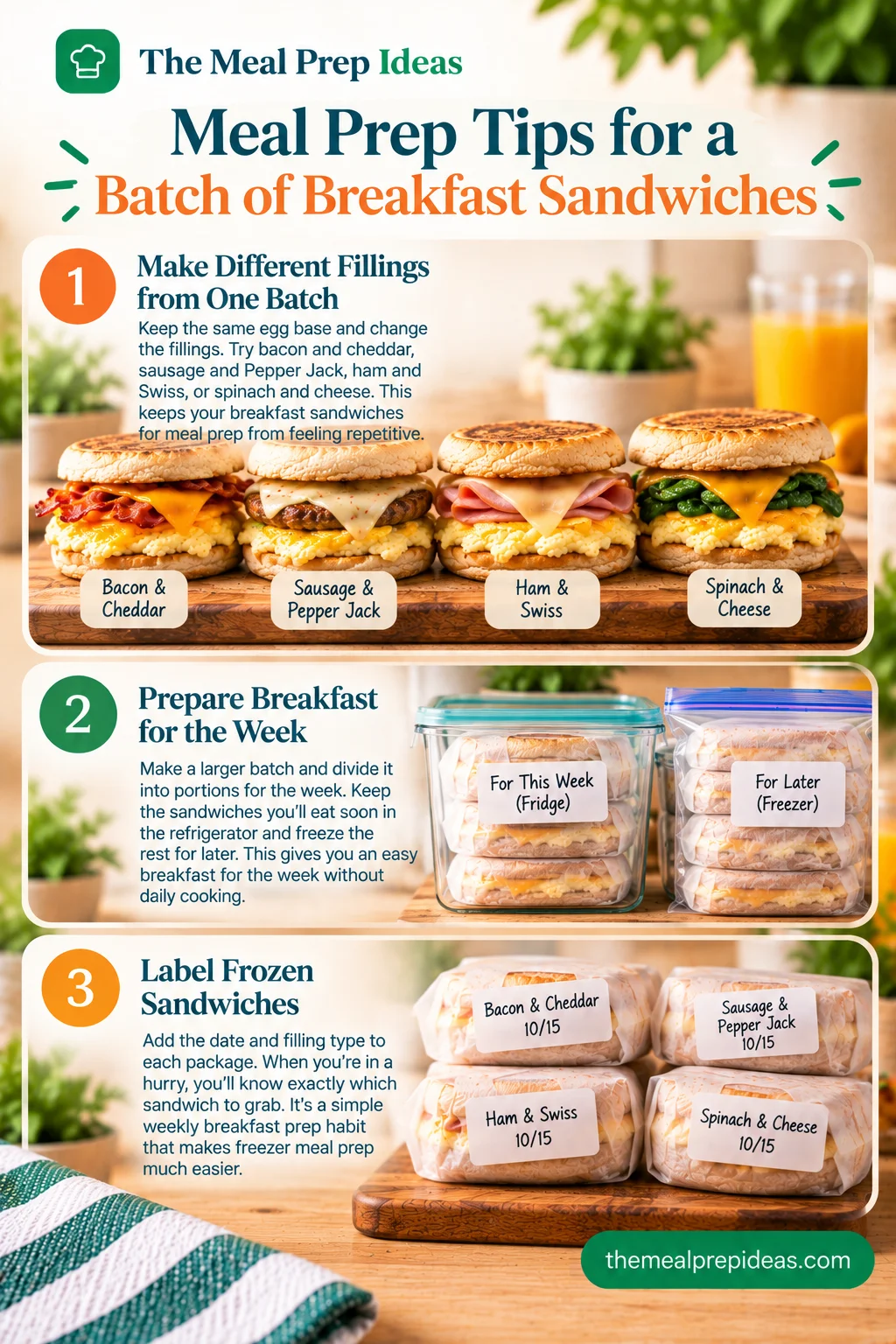
Making several make-ahead breakfast sandwiches at once is a simple way to make breakfast meal prep easier. Instead of preparing one sandwich every morning, you can build a batch breakfast with a few different fillings.
Keep the same egg base and change the fillings. Try bacon and cheddar, sausage and Pepper Jack, ham and Swiss, or spinach and cheese. This keeps your breakfast sandwiches for meal prep from feeling repetitive.
Make a larger batch and divide it into portions for the week. Keep the sandwiches you’ll eat soon in the refrigerator and freeze the rest for later. This gives you an easy breakfast for the week without daily cooking. If you want another grab-and-go breakfast for busy mornings, Easy Breakfast Burritos are a convenient option to prepare ahead and enjoy throughout the week.
Add the date and filling type to each package. When you’re in a hurry, you’ll know exactly which sandwich to grab. It’s a simple weekly breakfast prep habit that makes freezer meal prep much easier.
Yes, you can make make-ahead breakfast sandwiches ahead of time. They’re a convenient meal prep breakfast because you can prepare several at once and keep them in the refrigerator for short-term use or freeze them for later.
Yes, you can freeze breakfast sandwiches after the cooked ingredients have cooled completely. Properly wrapped frozen breakfast sandwiches are a convenient freezer-friendly breakfast for busy mornings.
For the best quality, freezer breakfast sandwiches are best used within about 2 months. Keep them well wrapped in a freezer-safe bag or container to help protect the bread and fillings.
You can reheat frozen breakfast sandwiches in the microwave, oven, or toaster oven. The microwave is quickest, while the toaster oven gives the bread a better texture. Heat until the center is fully warm.
To prevent soggy breakfast sandwiches, remove excess moisture from cooked vegetables and meat, cool the fillings before wrapping and lightly toast the bread. These steps help during storage and reheating breakfast sandwich preparation.
English muffins are one of the best choices because they’re sturdy and reheat well. Bagels work for a thicker, more filling sandwich, while sandwich thins are a lighter option. Choose bread that can hold the fillings without becoming too soft.
Make-Ahead Breakfast Sandwiches are easy, freezer-friendly, and perfect for meal prep. Enjoy a quick, filling breakfast on busy mornings.
the mealGood to know
Made this recipe?
Tag @themealprepideas on Instagram — we love seeing what you made.
Be the first to rate, review, or ask a question about this recipe.
No comments yet
Be the first cook to share feedback or ask a question about this recipe!
Keep Cooking
Creamy peanut butter overnight oats with yogurt, made with simple ingredients for an easy, healthy, make-ahead breakfast.

Make perfect hard-boiled eggs with firm whites, tender yolks, easy peeling, and simple tips for breakfast, snacks, and meal prep.

Make fluffy High Protein Pancakes with cottage cheese, oats, eggs, and protein powder for an easy, protein-packed breakfast perfect for meal prep!
Join 50,000+ subscribers getting weekly meal prep ideas, shopping lists, and time-saving tips straight to their inbox.