Chicken and Chickpea Curry

Make this easy Chicken and Chickpea Curry with tender chicken, hearty chickpeas and a rich, flavorful sauce. Perfect for a quick weeknight dinner.
15 min
Greek Salmon Salad Bowl with tender salmon, fresh vegetables, feta, olives, and lemon dressing for a healthy Mediterranean meal.
 Sarah Bennett· Meal Prep Expert & Recipe DeveloperSeptember 8, 2026

Ask your favorite AI assistant to summarize this recipe, suggest swaps, or scale it up — one click away.
We copy the prompt to your clipboard too — just paste (Ctrl/Cmd+V) if it doesn't appear automatically.
A Greek Salmon Salad Bowl is a fresh, tasty meal made with tender salmon, crunchy vegetables, creamy feta cheese, olives and a simple lemon dressing. Every bite brings together fresh Mediterranean flavors, with a little tang from the dressing and a rich, savory taste from the salmon.
This easy Greek salmon salad is perfect for a quick lunch or a healthy weeknight dinner. You can enjoy it on its own or add rice or quinoa if you want a more filling meal. It is also great for meal prep because you can cook the salmon, chop the vegetables and prepare the dressing ahead of time. Keep everything separate until you are ready to eat and you will have a fresh, healthy salmon bowl ready with very little effort.
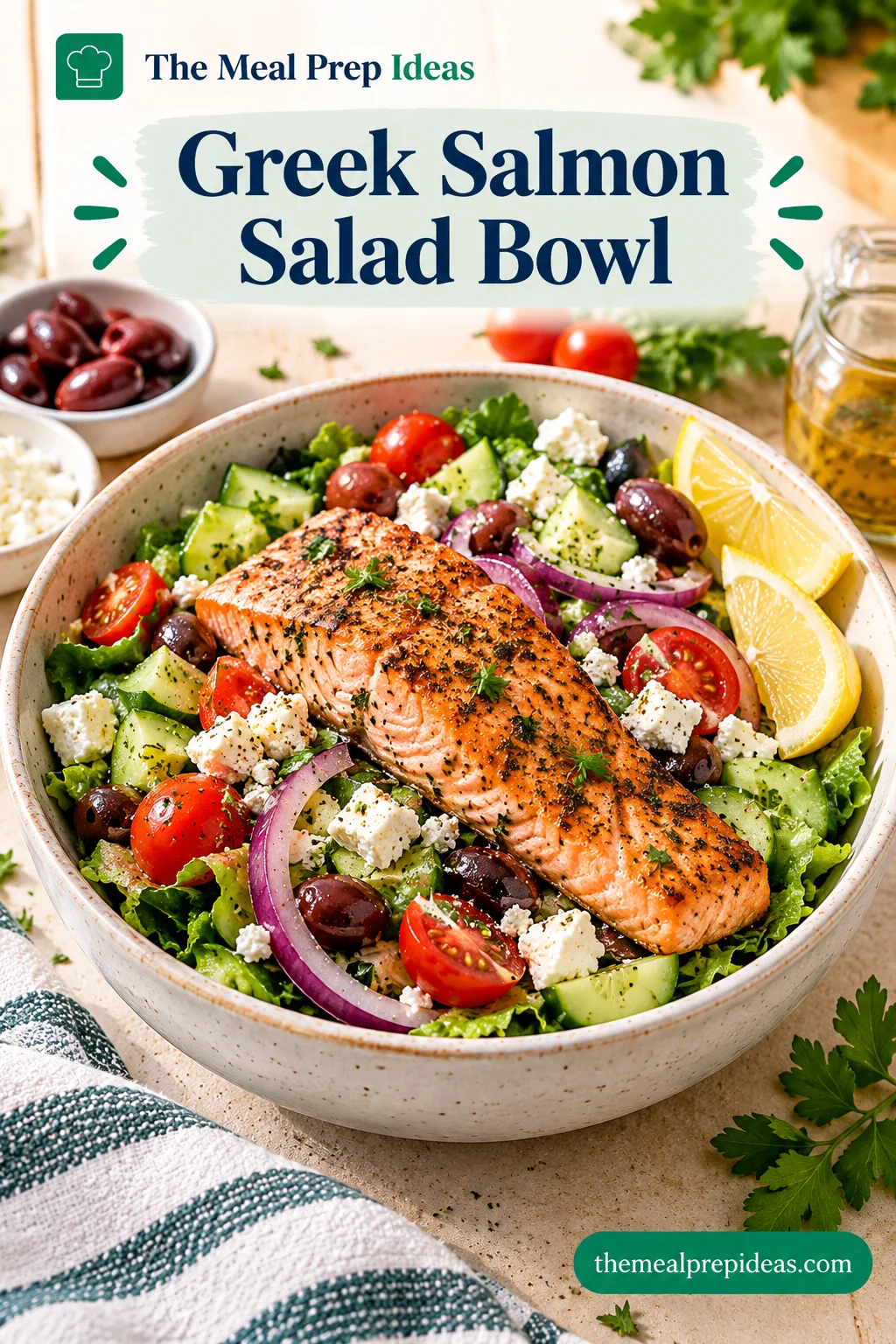
This Greek Salmon Salad Bowl is full of fresh flavors and different textures. The tender salmon goes well with crunchy cucumbers, juicy tomatoes, creamy feta and a simple lemon dressing. Kalamata olives add a salty bite, while the dressing brings everything together with a fresh, tangy taste.
Even on busy days, this Greek Salmon Salad Bowl is easy to prepare with simple ingredients. You can prepare it for a quick lunch or a simple weeknight dinner without spending hours in the kitchen. The salmon makes this a high-protein meal that helps keep you full, while the fresh vegetables add color and crunch.
The best part is how easy it is to change this healthy salmon bowl to suit your taste. Add rice or quinoa if you want a more filling meal, use extra greens for a lighter option, or adjust the feta and olives to your liking. With its fresh Mediterranean flavors, this Greek-inspired salmon bowl is a simple meal you can enjoy in many ways.
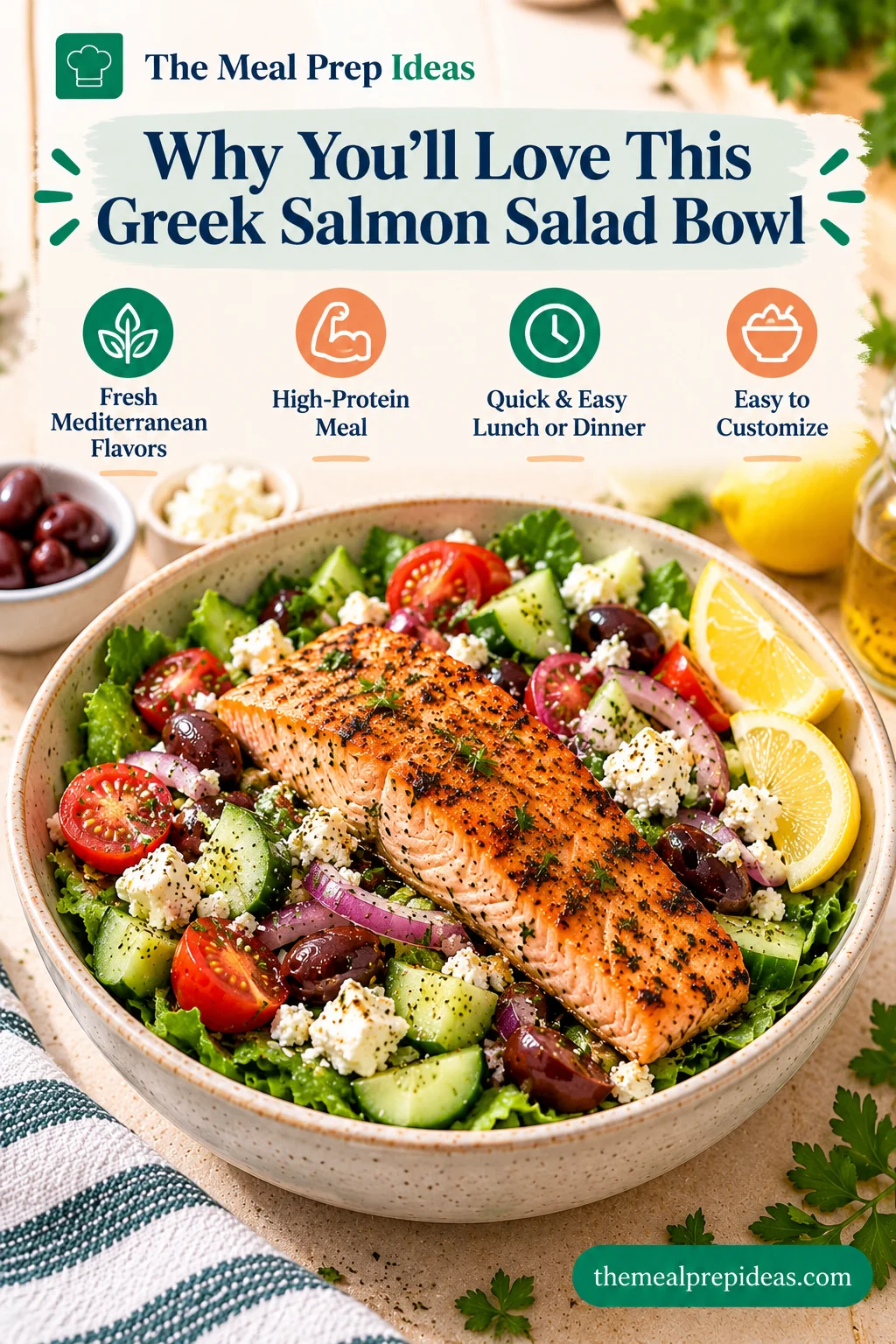
Making a delicious Greek Salmon Salad Bowl starts with fresh ingredients and a simple dressing. Each ingredient adds something special, from the savory salmon to the crisp vegetables and creamy feta cheese. Here is what to choose and how to prepare everything for the best flavor and texture.
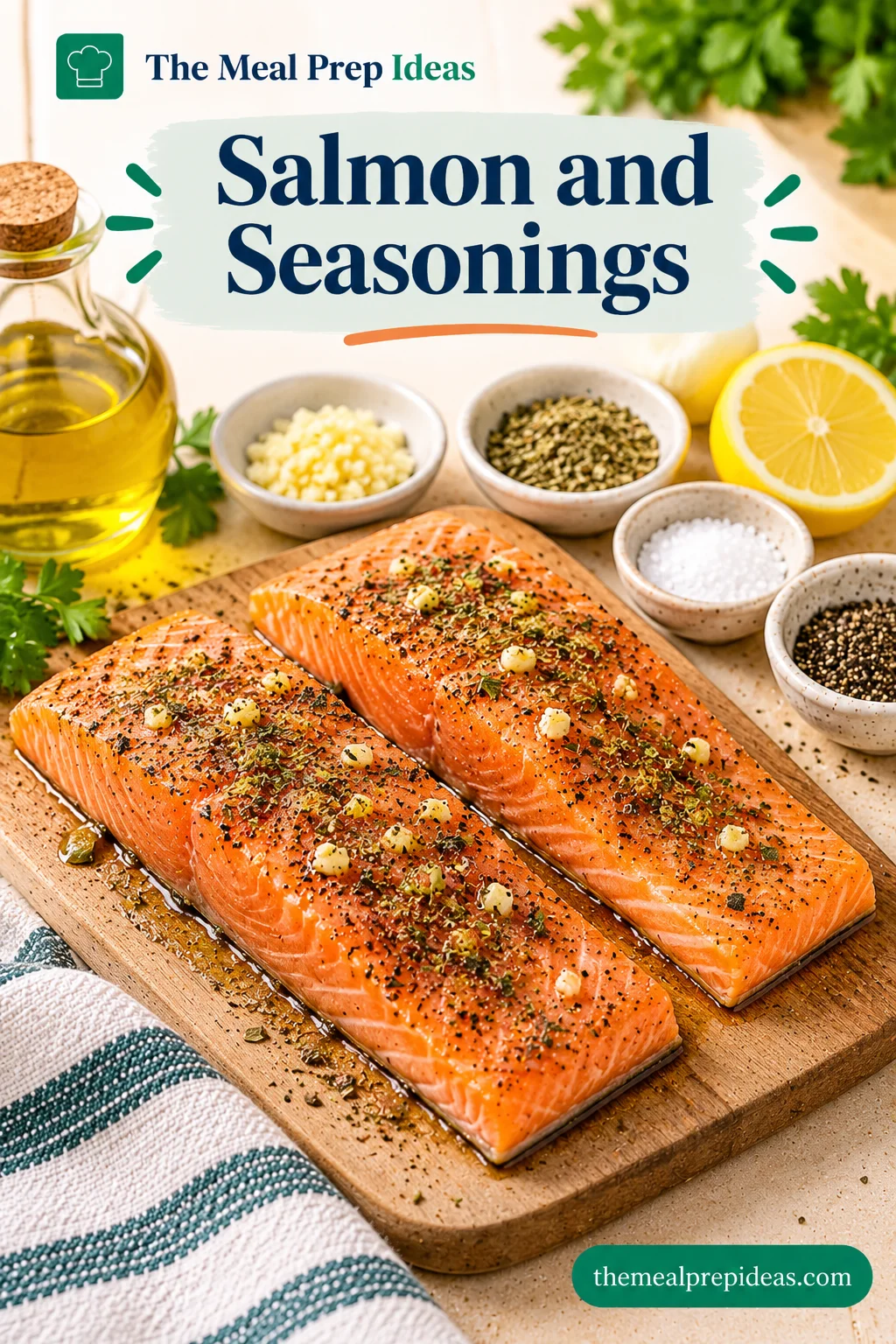
Salmon fillets are the main protein in this bowl. Fresh salmon works well, but frozen salmon can also be a practical option when thawed safely in the refrigerator and patted dry before cooking. Removing excess moisture helps the seasoning stick and gives the salmon a better exterior.
Use olive oil, fresh lemon juice, minced garlic, dried oregano, salt and black pepper to season the salmon. Olive oil helps coat the fish, lemon adds a bright flavor, garlic brings savory depth and oregano gives it a classic Mediterranean taste. Salt and black pepper bring all these flavors together.
For this Greek Salmon Salad Bowl, coat the salmon fillets evenly with olive oil, lemon, garlic and seasonings before cooking. Let the flavors sit for a few minutes while you prepare the other ingredients. Avoid leaving the salmon in lemon juice for too long, as the acidity can affect its texture. Cook until the center reaches 145°F (63°C) for food safety, checking the thickest part with a food thermometer.
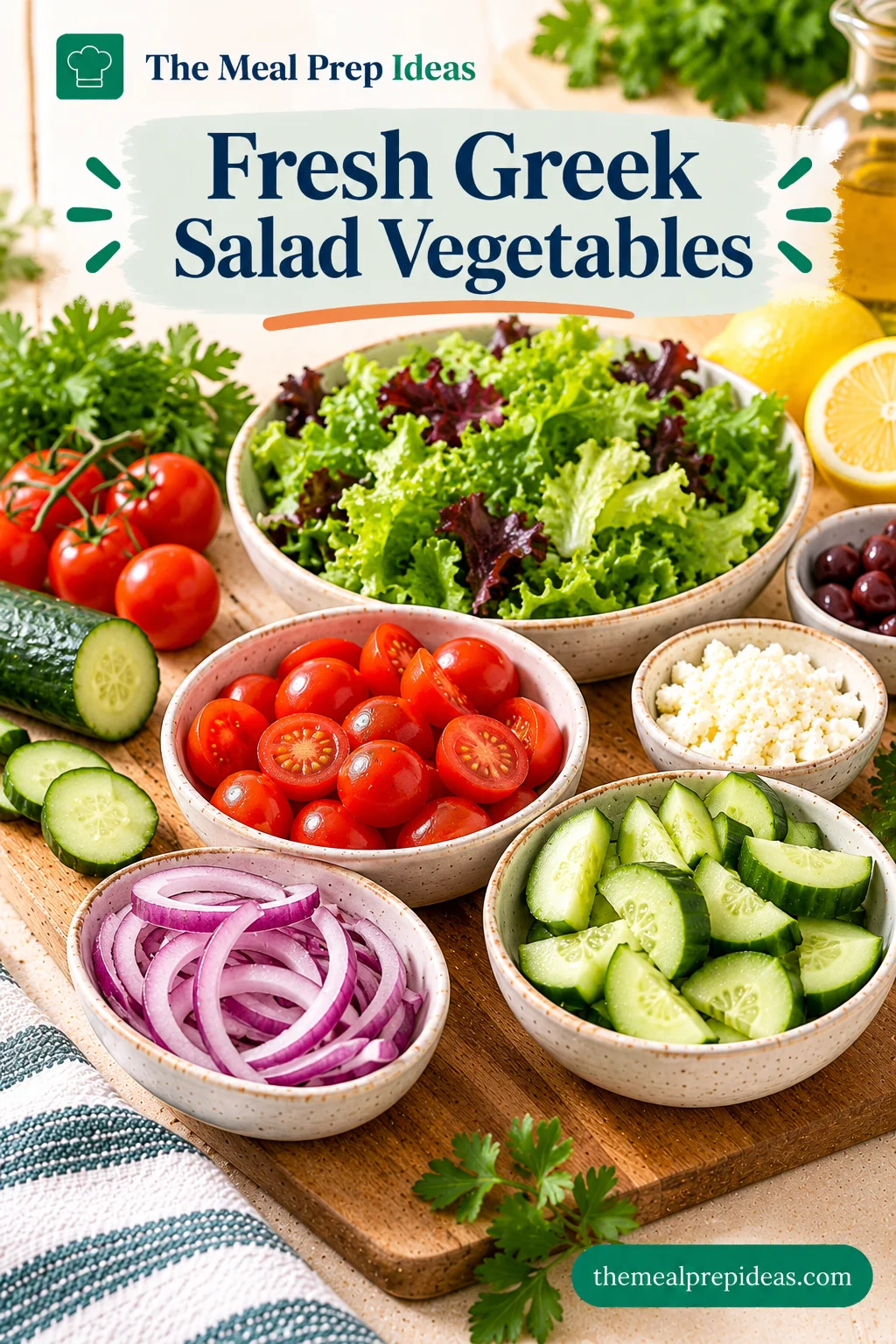
For the best Greek Salmon Salad Bowl, choose fresh, crisp vegetables that add color, crunch and flavor. Cucumber, cherry tomatoes, red onion and salad greens make a colorful base that balances the richness of the fish.
Choose firm cucumbers and ripe cherry tomatoes for the best texture and taste. Slice the red onion thinly so its sharp flavor does not overpower the other ingredients. You can use romaine lettuce, mixed greens, or another crisp salad green you enjoy.
Before assembling the salmon Greek salad, wash the vegetables under running water and dry them well. Excess water can dilute the dressing and make the greens soggy. Cut the vegetables into similar-sized pieces so they are easy to mix and eat. For a fresh crunchy salad, add the dressing just before serving rather than letting the vegetables sit in it for too long.
Feta cheese and Kalamata olives give this bowl its familiar Greek-inspired flavor. Feta adds a salty, creamy bite, while Kalamata olives bring a rich, briny taste that pairs especially well with lemon-seasoned salmon.
For the best flavor, use good-quality feta and crumble it over the salad just before serving. Kalamata olives can be whole or sliced, depending on your preference. Remember that both ingredients are naturally salty, so taste the salad before adding extra salt.
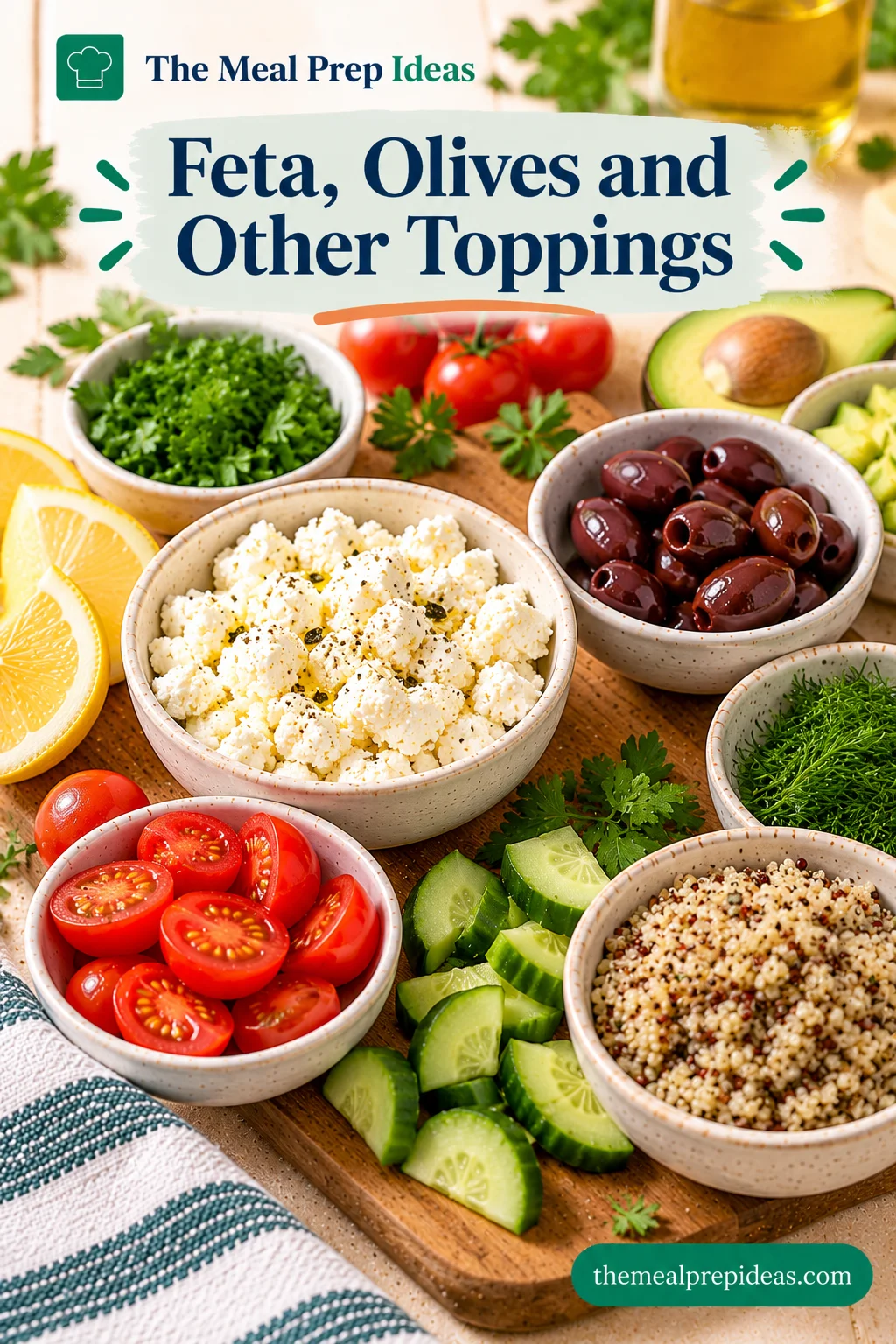
Some toppings are essential to the flavor, while others are optional:
These additions make it easy to customize your Greek Salmon Salad Bowl while keeping its fresh Mediterranean flavor. Start with the core ingredients, then add only the toppings you enjoy.
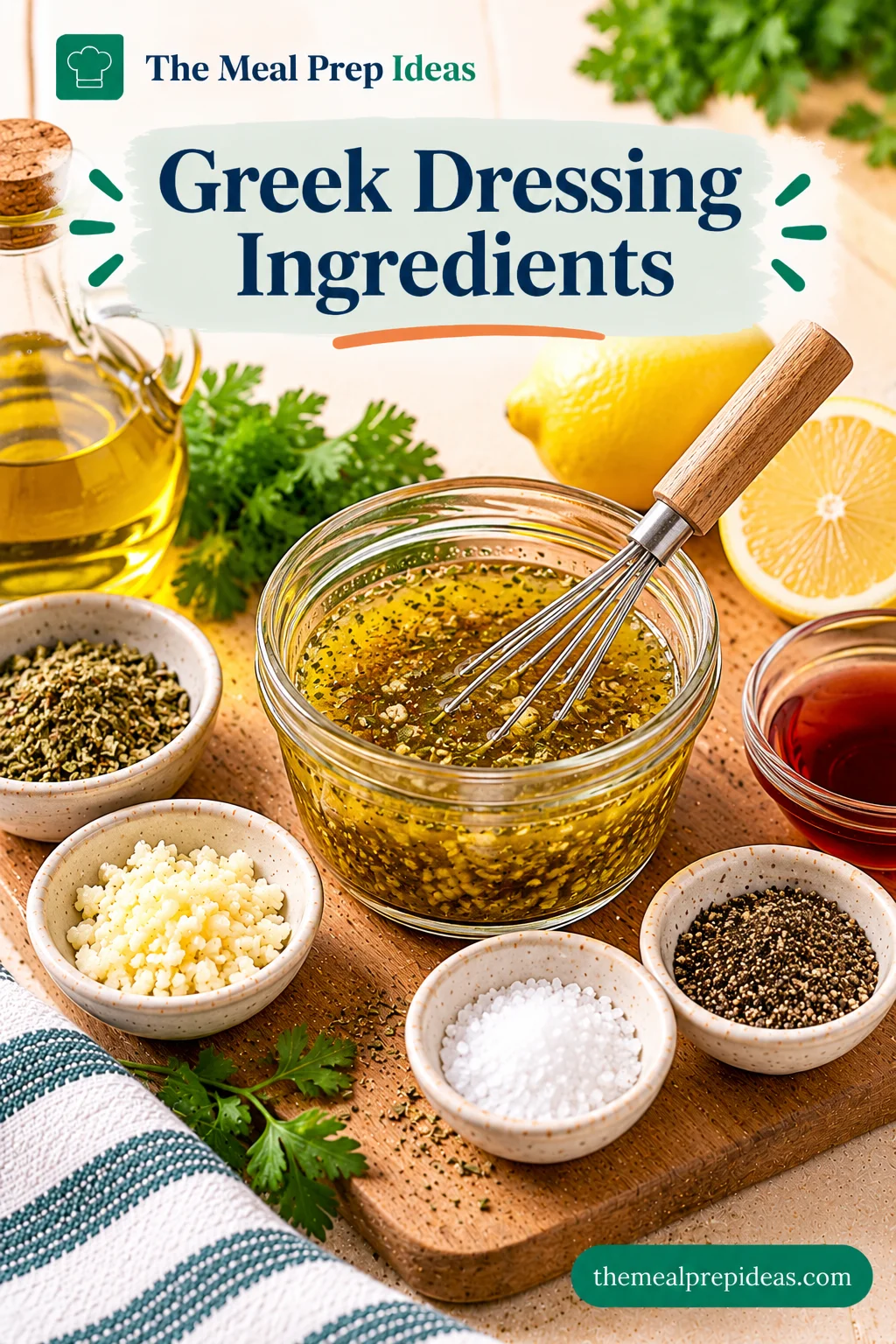
A simple homemade dressing brings all the ingredients together. For a bright, tangy vinaigrette, combine olive oil, fresh lemon juice, minced garlic, dried oregano and a little red wine vinegar. The olive oil adds richness, while lemon juice and vinegar provide acidity. Garlic and oregano give the dressing its savory Mediterranean flavor.
Add the ingredients to a small bowl or jar and whisk or shake until combined. Taste the dressing before pouring it over the salad. If it tastes too sharp, add a little more olive oil. If it needs more brightness, add a small squeeze of lemon. Adjust the salt and black pepper gradually, especially because the feta and olives already contribute plenty of salt.
You can prepare the dressing ahead of time and refrigerate it in a sealed container. The oil may firm up when chilled, so let it sit at room temperature briefly and shake or whisk it again before serving. For the freshest texture, toss the salad with the dressing just before eating.
For the Salmon
For the Salad
For the Greek Dressing
Optional Toppings
Estimated nutrition per serving:
The cooking method you choose for your Greek Salmon Salad Bowl affects the salmon's flavor, texture and final result. Both oven-baking and pan-searing can produce tender, flaky fish, but each gives a slightly different result. Choose the method that fits your recipe and cooking preferences and avoid cooking the salmon longer than necessary.
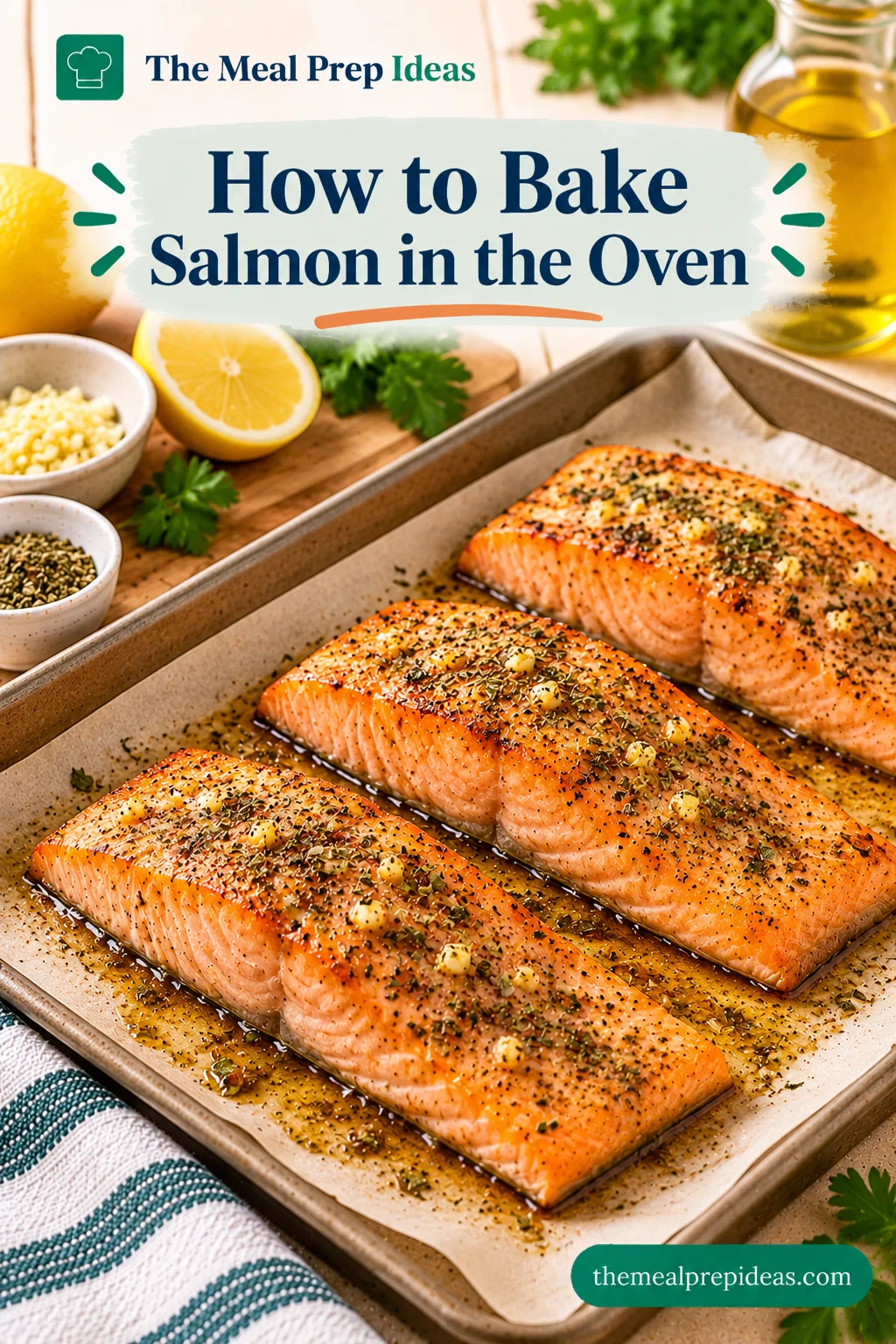
Baking salmon is a convenient method because it requires little hands-on attention and makes it easy to cook several fillets at once. It is a good choice for a baked Greek salmon bowl when you want tender fish without standing over the stove.
The exact salmon baking time depends on the size and thickness of each fillet. Start checking early to help prevent overcooking. Once the salmon is ready, let it rest for a few minutes before adding it to your bowl. This helps keep the fish moist and makes it easier to flake into bite-sized pieces.
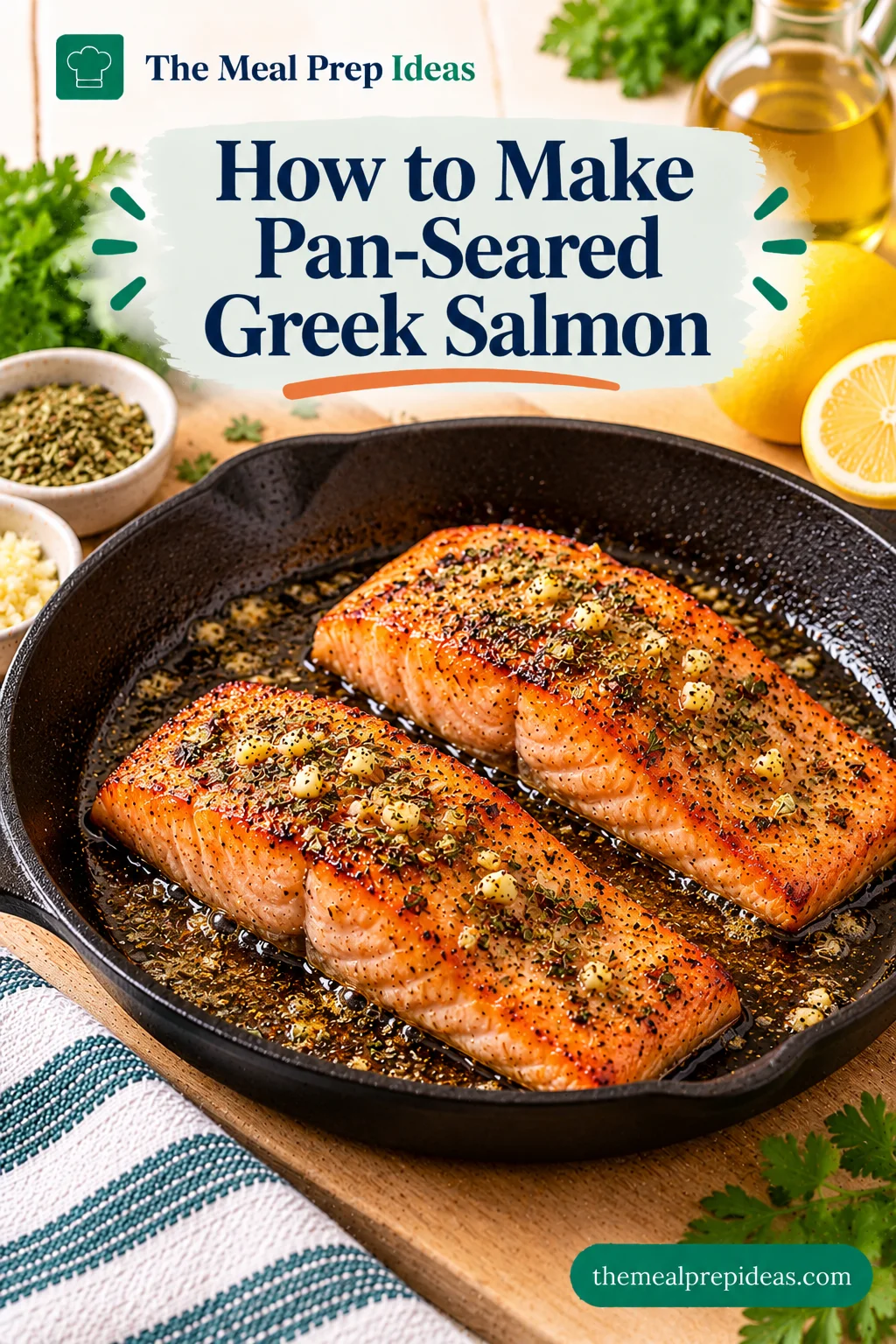
Pan-seared Greek salmon is a great option when you want a golden exterior and a moist, flaky center. It is especially useful when cooking one or two fillets and when you want a little browning on the surface.
For the best results, avoid moving the salmon around too much while it cooks. Allowing it to sear undisturbed helps develop a golden exterior. If the fish sticks, give it a little more time before trying to turn it.
The goal is tender salmon that flakes easily without becoming dry. Cooking times vary with the pan, heat and thickness of the fillets, so use temperature rather than time alone to check doneness. Let the salmon rest briefly, then place it over the salad with the feta, olives, vegetables and dressing.
Which method should you choose? Baking is convenient for cooking multiple fillets with minimal effort, while pan-searing gives the fish a more browned exterior. Both methods work well for a Greek-inspired salmon bowl; choose one as your main recipe method and use the other as an alternative.
Making a Greek Salmon Salad Bowl is simple when you prepare each part separately and bring everything together at the end. Cook the seasoned salmon, chop the fresh vegetables, mix the lemon dressing and arrange everything in a bowl. This easy method gives you a colorful Mediterranean salmon salad with tender fish, crisp vegetables, creamy feta and a fresh, tangy finish.
Start by patting the salmon dry with paper towels. Coat it with olive oil, lemon juice, garlic, oregano, salt and black pepper, making sure the seasonings cover the fish evenly.
Cook the salmon using your chosen method. Baking is convenient when preparing several portions, while pan-searing gives the fish a golden exterior. Check the thickest part with a food thermometer and cook until it reaches 145°F (63°C). Let the salmon rest briefly before gently breaking it into large, flaky pieces. This helps keep the fish tender and makes it easier to arrange in your salad.
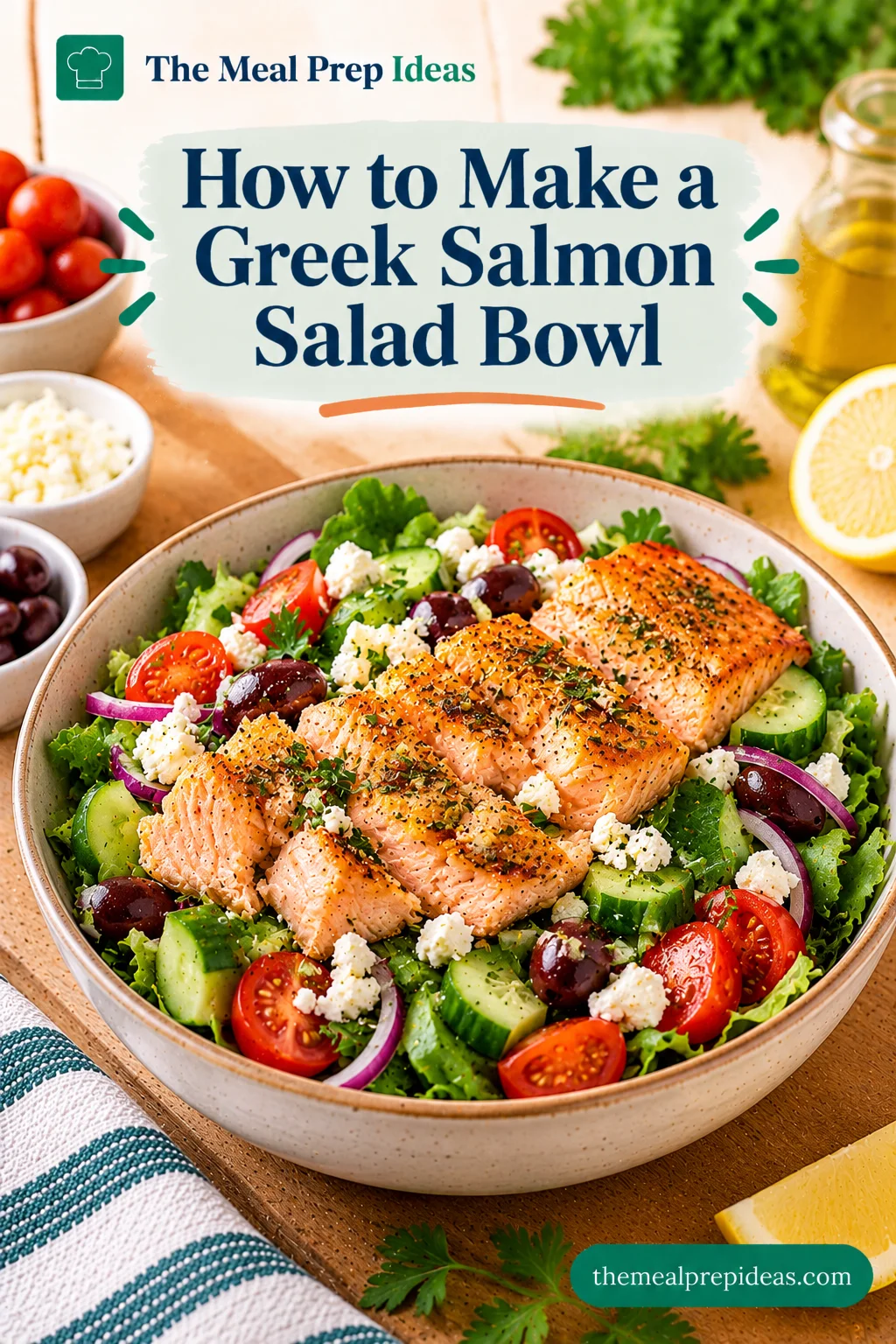
While the salmon cooks, wash and dry the cucumber, cherry tomatoes, red onion and salad greens. Cut the vegetables into bite-sized pieces so they are easy to eat with the salmon. Drying the greens well is important because excess water can dilute the dressing and affect the salad's texture.
Next, whisk together the olive oil, lemon juice, garlic, oregano and vinegar to make a simple Greek-style dressing. Taste it before serving and adjust the seasoning as needed. Add a little more lemon juice for extra brightness or more olive oil if the dressing tastes too sharp. A well-balanced dressing should taste fresh and tangy without overpowering the other ingredients.
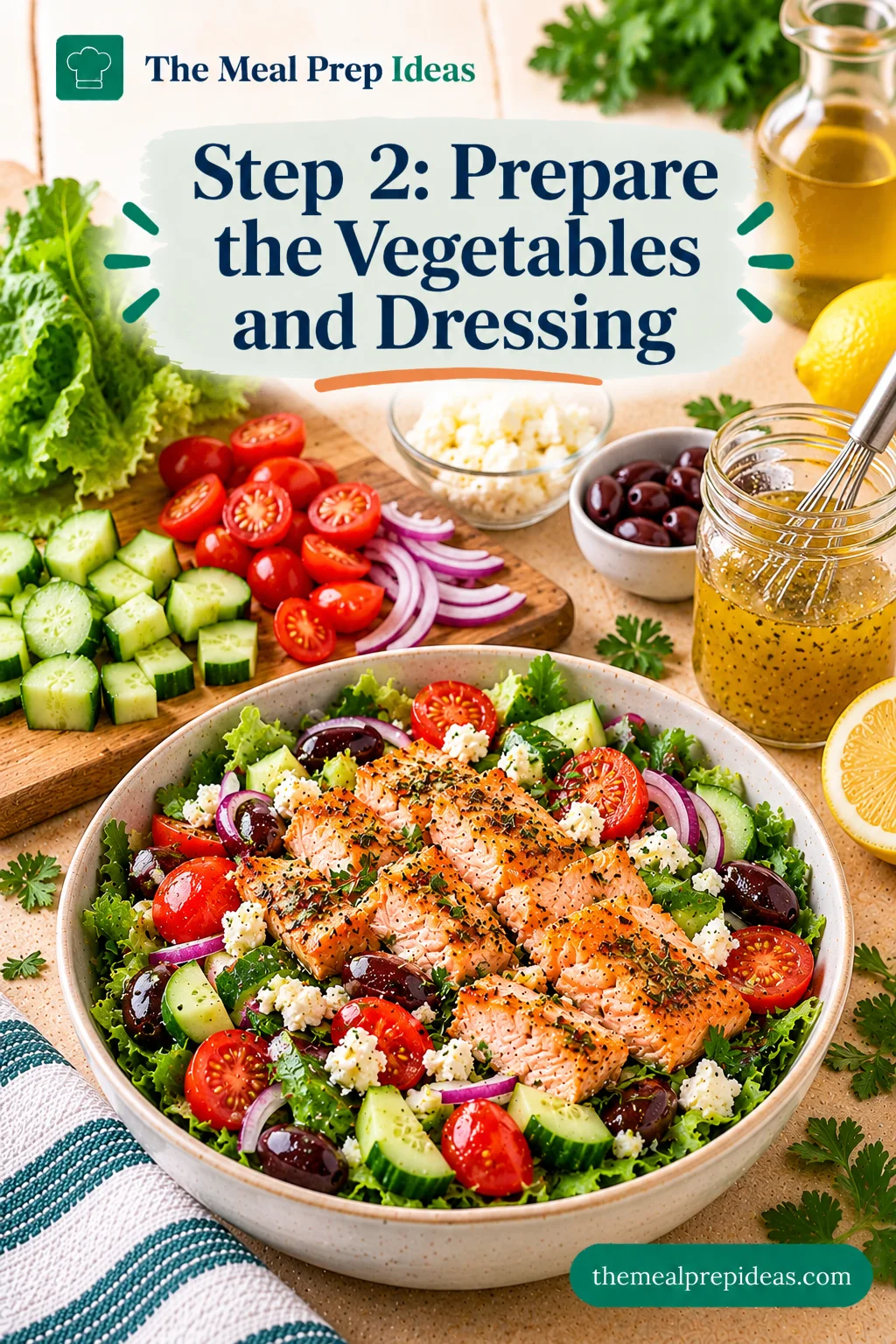
Divide the salad greens between your serving bowls to create the base. Arrange the chopped cucumber, cherry tomatoes and red onion over the greens, then add the cooked salmon.
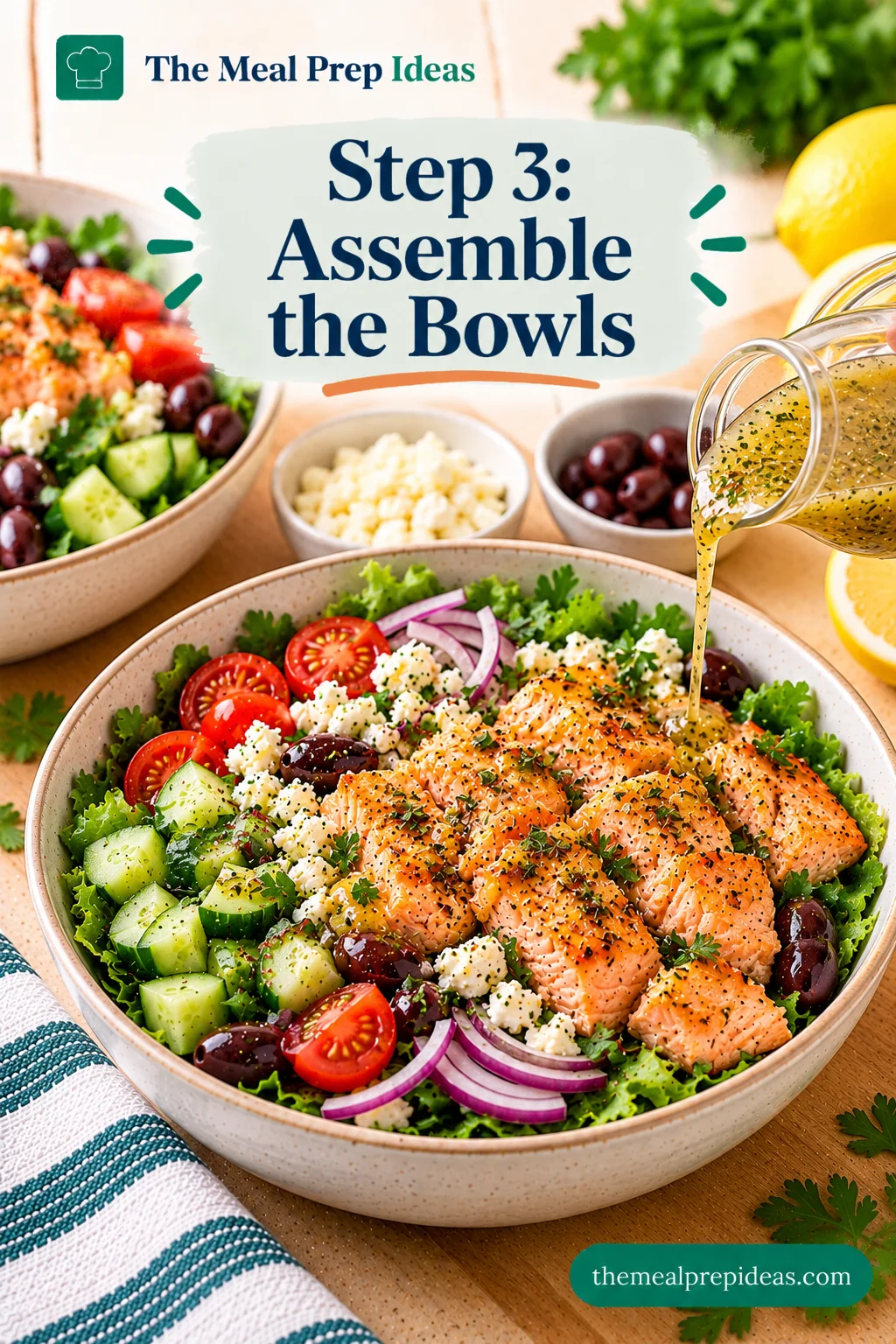
Sprinkle crumbled feta cheese and Kalamata olives over the top for a salty, creamy finish. Drizzle with the homemade dressing just before serving, making sure each bowl gets enough flavor without becoming soggy. Finish with optional fresh parsley, dill, or avocado if you like.
For the best results, keep the ingredients in separate sections or gently toss them together, depending on how you prefer to serve your fresh Greek salmon salad. Add the dressing at the last moment to keep the vegetables crisp and the salmon flaky. Serve immediately while the salmon is still slightly warm or let it cool for a refreshing salad.
One of the best things about this Greek Salmon Salad Bowl is how easy it is to customize with ingredients you already have. You can add rice or quinoa for a more filling meal, use extra greens for a lighter option, or leave out the feta to make it dairy-free. These simple changes let you enjoy the same fresh Mediterranean flavors while adjusting the bowl to your taste and dietary needs.
If you enjoy salmon in different meal-prep combinations, Teriyaki Salmon Bowls are another option to try when you want a different flavor profile for lunch or dinner.
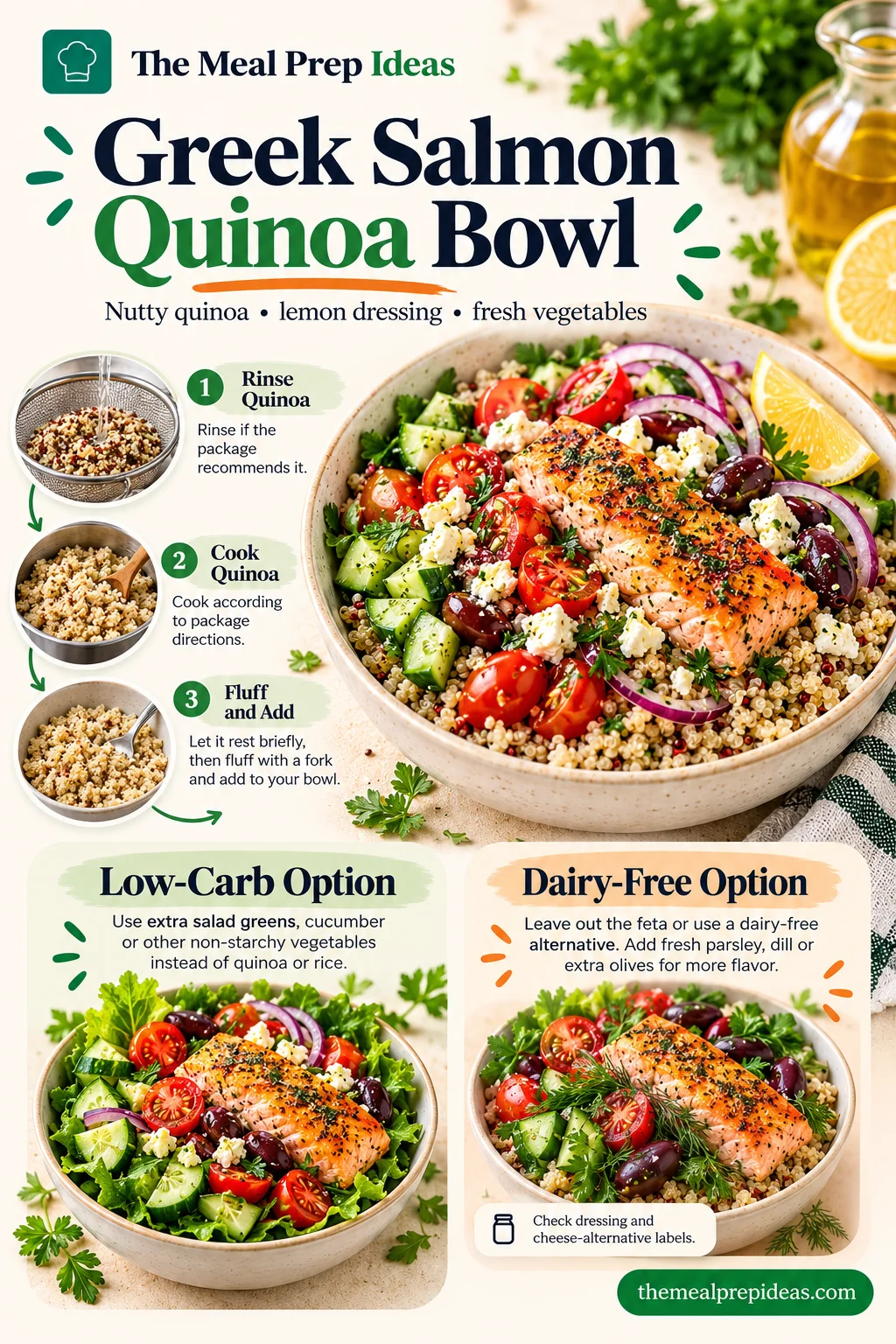
Cooked quinoa is another good base if you want something different from rice. It has a mild, nutty flavor and a light texture that pairs well with lemon dressing, fresh vegetables and savory salmon.
Rinse the quinoa before cooking if the package recommends it, then cook according to the package directions. Let it cool slightly and fluff it with a fork before adding it to your bowl. Arrange the salmon, crisp vegetables, feta and olives over the quinoa, then drizzle with the dressing. This Greek salmon quinoa bowl is a satisfying option when you want a grain-based meal with a little extra texture.
You can easily adjust this bowl to suit your dietary preferences without losing its fresh flavor. For a low-carb bowl, swap the rice or quinoa for extra salad greens, cucumber, or other non-starchy vegetables. This keeps the meal light while allowing the salmon to remain the main feature.
For a dairy-free option, leave out the feta or use a dairy-free alternative that you enjoy. You can add fresh parsley, dill, or a few extra olives for more flavor. Check the labels on packaged dressings, dairy-free cheese alternatives and seasonings to make sure they fit your dietary needs.
If you prefer a more filling meal, you can still add cooked grains to a larger serving of vegetables. The best choice depends on your preferences and nutritional goals, so adjust the base and toppings to create a bowl you enjoy.
For a more filling lunch or dinner, turn your Greek Salmon Salad Bowl into a rice bowl by serving the salmon and vegetables over cooked rice. White rice works well because of its mild flavor, while brown rice adds a slightly nutty taste and more texture.
Cook the rice according to the package instructions and let it rest briefly before fluffing it with a fork. Add it to the bowl first, then arrange the salmon, cucumber, tomatoes, red onion, feta and olives on top. Finish with the lemon dressing for a fresh, balanced Greek salmon rice bowl. Start with a moderate amount of rice so it complements the vegetables and salmon rather than overpowering them.
You do not need to use exactly the same vegetables every time. Romaine lettuce, baby spinach, or mixed salad greens can all work as a base. You can also use grape tomatoes instead of cherry tomatoes or replace red onion with thinly sliced green onion for a milder flavor.
For extra creaminess, add sliced avocado. Fresh parsley and dill bring a refreshing herbal flavor, while extra Kalamata olives add a salty, briny bite. If you want more crunch, add a few extra cucumber slices or some thinly sliced bell pepper.
Keep the flavors balanced by combining crisp vegetables, a few rich toppings and a bright lemon dressing. With these simple swaps, you can turn the same ingredients into a healthy salmon bowl or a colorful Mediterranean salmon bowl that suits your taste. Choose optional toppings that complement the salmon rather than adding so many that the fresh flavors get lost.
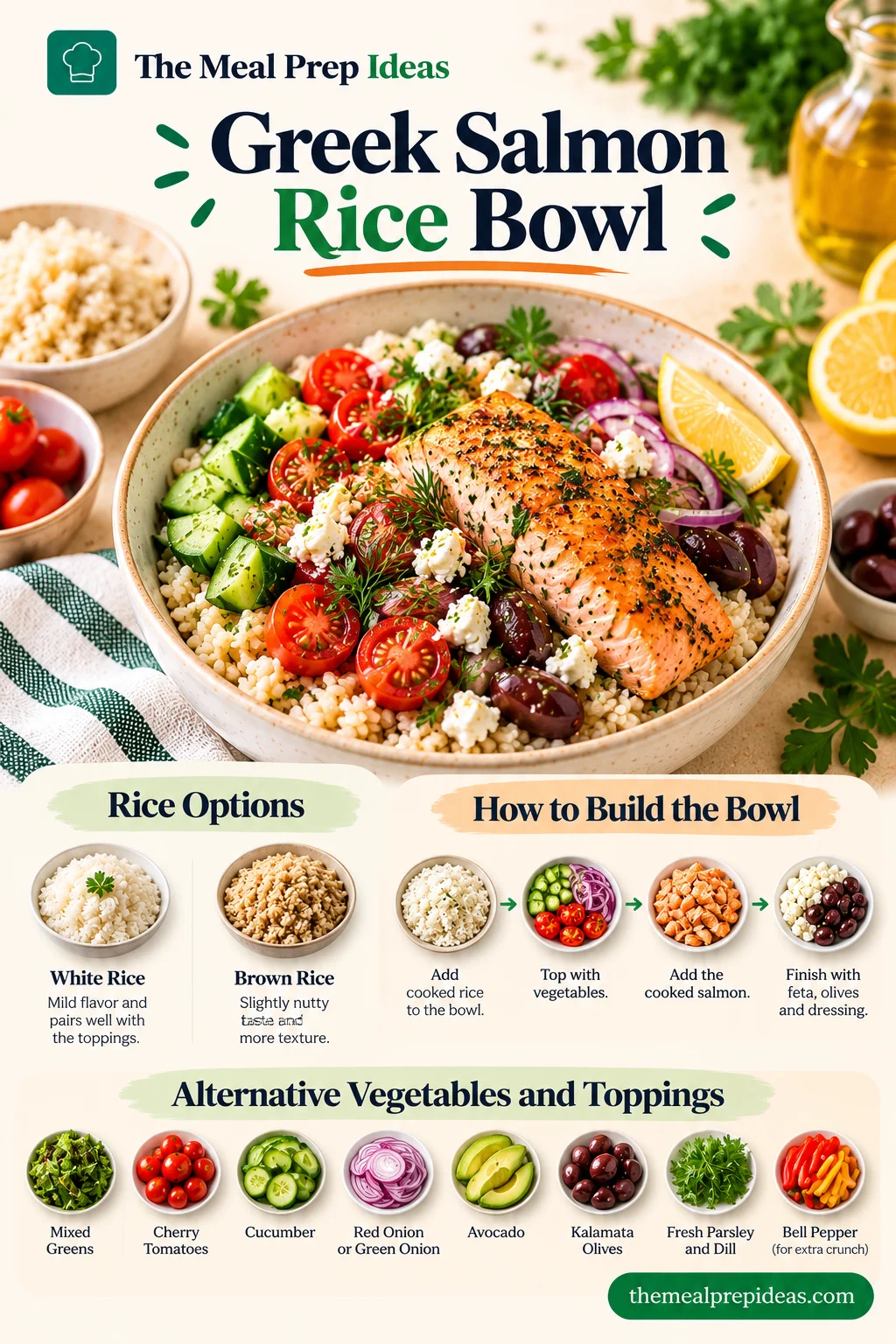
A Greek Salmon Salad Bowl is filling enough to enjoy on its own for lunch or dinner, thanks to the salmon, fresh vegetables and flavorful toppings. If you want a heartier meal, serve it with cooked rice, quinoa, or warm pita bread. These sides work well with the lemon dressing, feta and olives without taking away from the fresh Mediterranean flavors. For another fresh lunch option, try Jennifer Aniston Salad, a grain-based salad that adds variety to your weekly meal prep with fresh vegetables and herbs.
This Greek Salmon Salad Bowl is a useful option for meal prep because you can prepare most of the ingredients ahead of time and assemble everything when you are ready to eat. Keeping the salmon, vegetables and dressing separate helps maintain the best flavor and texture, making it easier to enjoy a fresh meal on a busy day.
For a simple meal prep lunch, cook the salmon in advance, wash and dry the vegetables and chop them into bite-sized pieces. Store the vegetables in an airtight container lined with a paper towel if needed to absorb excess moisture. Keep the dressing in a separate sealed container and shake or whisk it before using.
Refrigerate cooked salmon promptly in a shallow, airtight container. Cooked salmon should generally be used within 3–4 days when stored at 40°F (4°C) or below. Keep the vegetables and salmon chilled and assemble before serving by adding the greens, vegetables, salmon, feta, olives and dressing to your bowl.
You can enjoy the salmon cold in the salad or gently reheat it separately if you prefer a warm meal. Reheat leftovers to 165°F (74°C), taking care not to overheat the fish, as it can become dry. If you are preparing a make-ahead salad, keep the dressing separate until serving and follow safe refrigeration practices. These simple steps make this recipe a convenient quick lunch or easy weeknight dinner.
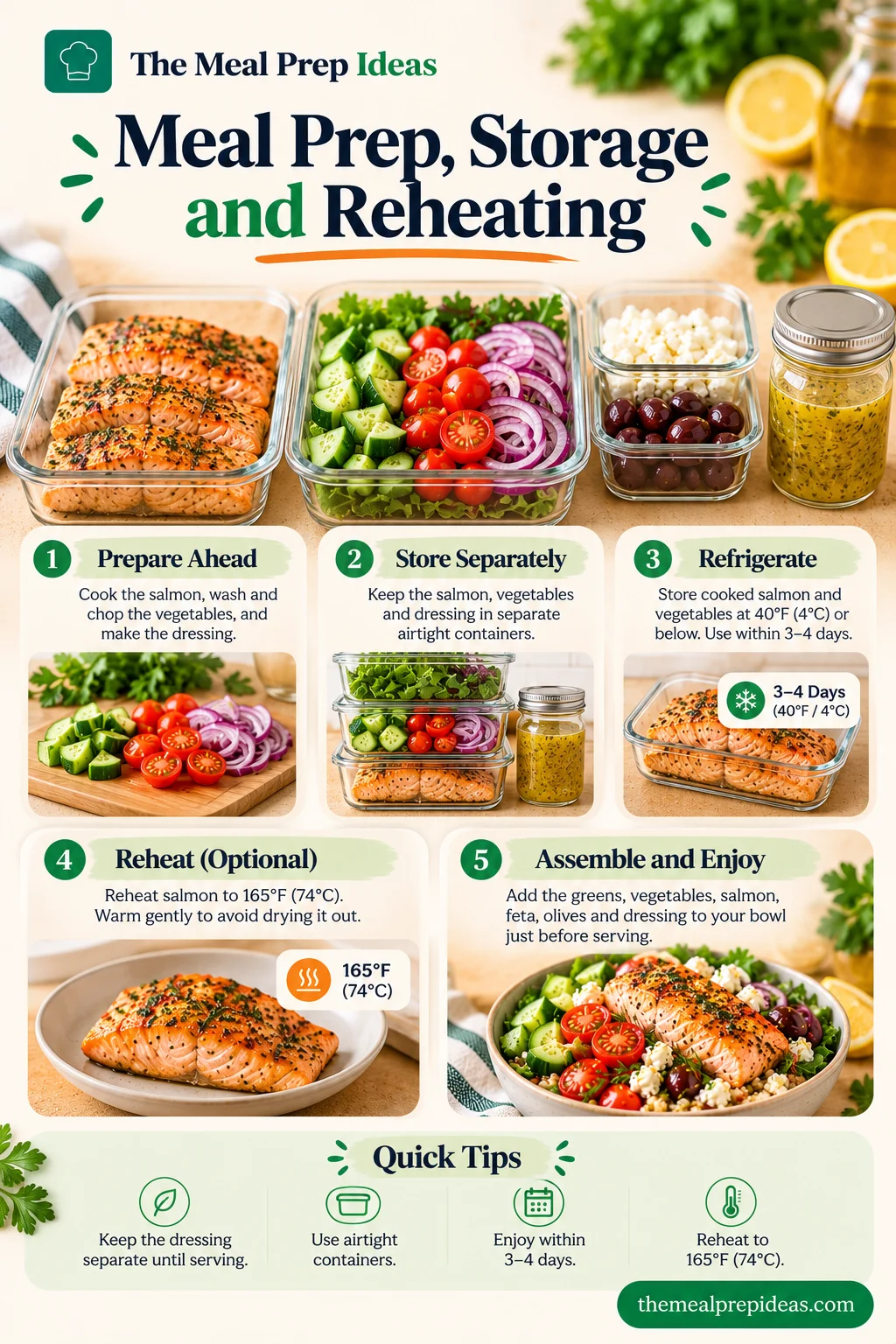
Yes, you can prepare a Greek Salmon Salad Bowl ahead of time by cooking the salmon, chopping the vegetables and mixing the dressing separately. Store everything in the refrigerator and assemble before serving to keep the greens crisp. This makes it a convenient make-ahead salad for lunch or dinner.
It can be a balanced meal, depending on the ingredients and portion sizes. Salmon provides protein and omega-3 fatty acids, while fresh vegetables add fiber and important nutrients. Olive oil contributes unsaturated fats and feta adds flavor along with sodium and saturated fat. Check the final ingredient quantities and nutrition information to understand the meal's overall nutritional value.
Yes, frozen salmon can work well. Thaw it safely in the refrigerator, then pat it dry before seasoning and cooking. The cooking time depends on the thickness of the fillet, so check the thickest part with a food thermometer and cook until it reaches 145°F (63°C).
Both baking and pan-searing work well. Baking is convenient when cooking several fillets, while pan-searing creates a golden exterior. Choose the method that best suits your kitchen and check the salmon's internal temperature rather than relying on cooking time alone.
Yes. Simply leave out the feta or replace it with a suitable dairy-free alternative. You can add fresh herbs, avocado, or extra olives for more flavor. If you need the recipe to be dairy-free, check the labels on packaged alternatives and the dressing ingredients.
Cooked salmon is generally safe to refrigerate for 3–4 days at 40°F (4°C) or below. For the best salad texture, store the salmon, vegetables and dressing separately and combine them just before eating. Discard leftovers that have been left at room temperature for more than two hours, or one hour in temperatures above 90°F (32°C).
Greek Salmon Salad Bowl with tender salmon, fresh vegetables, feta, olives, and lemon dressing for a healthy Mediterranean meal.
the mealGood to know
Made this recipe?
Tag @themealprepideas on Instagram — we love seeing what you made.
Be the first to rate, review, or ask a question about this recipe.
No comments yet
Be the first cook to share feedback or ask a question about this recipe!
Keep Cooking
Make this easy Chicken and Chickpea Curry with tender chicken, hearty chickpeas and a rich, flavorful sauce. Perfect for a quick weeknight dinner.

Make this Crockpot Pot Roast with tender beef, hearty vegetables, and rich, savory gravy. An easy slow cooker dinner perfect for busy weeknights!

Easy Sheet Pan Chicken Pitas with Tzatziki! Tender lemon garlic chicken & roasted veggies wrapped in warm pita with creamy tzatziki. Great for meal prep!
Join 50,000+ subscribers getting weekly meal prep ideas, shopping lists, and time-saving tips straight to their inbox.