Chicken and Chickpea Curry

Make this easy Chicken and Chickpea Curry with tender chicken, hearty chickpeas and a rich, flavorful sauce. Perfect for a quick weeknight dinner.
15 min
Make these Flank Steak Fajitas with tender, juicy steak, colorful bell peppers, and onions for an easy, flavorful weeknight dinner.
 Sarah Bennett· Meal Prep Expert & Recipe DeveloperSeptember 8, 2026

Ask your favorite AI assistant to summarize this recipe, suggest swaps, or scale it up — one click away.
We copy the prompt to your clipboard too — just paste (Ctrl/Cmd+V) if it doesn't appear automatically.
Flank Steak Fajitas are an easy, flavorful dinner made with tender beef, colorful bell peppers, onions and simple fajita seasoning. The steak is coated in a zesty marinade, then cooked until nicely browned and full of flavor. Serve everything in warm tortillas with your favorite toppings for a meal the whole family can enjoy.
This flank steak fajitas recipe is perfect for a busy weeknight when you want something homemade without too much fuss. The key to juicy beef fajitas is to cook the steak just right, let it rest before slicing and always cut against the grain. With these simple tips, you can make delicious steak fajitas with peppers and onions right in your own kitchen.
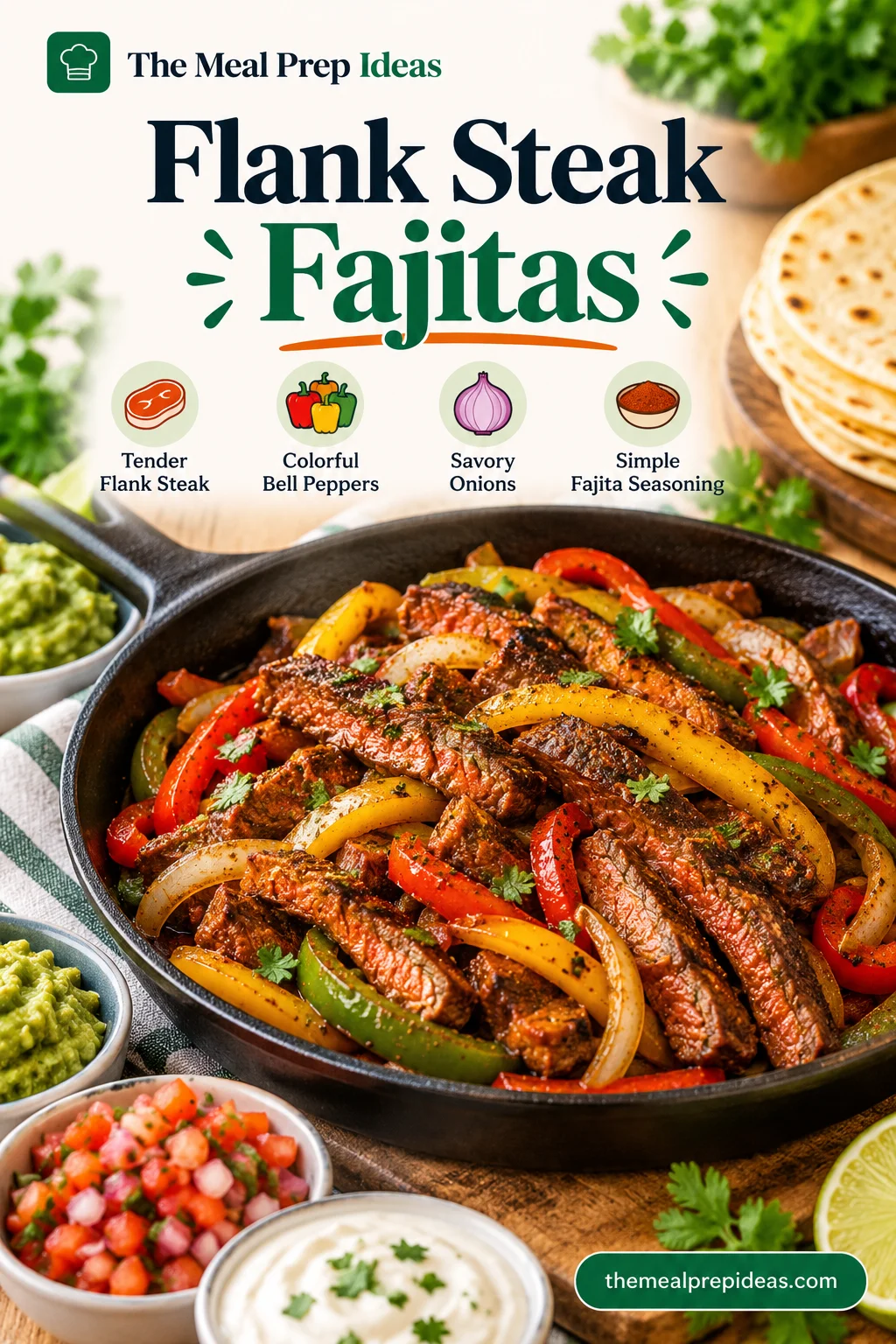
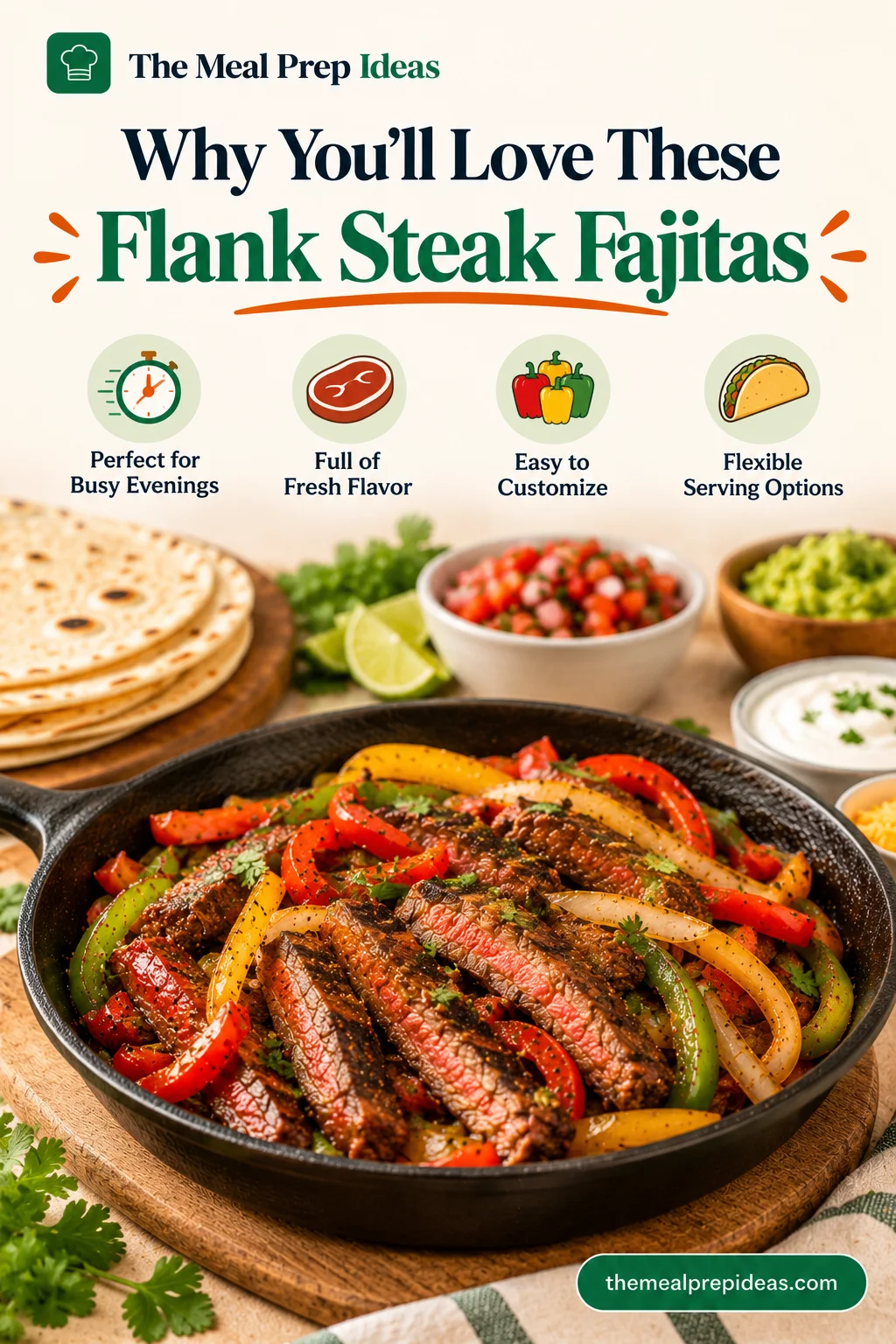
These Flank Steak Fajitas are a great choice when you want a flavorful meal without making dinner complicated. The combination of savory beef, sweet bell peppers and tender onions creates a satisfying dish that works just as well for busy weeknights as it does for a relaxed family dinner.
The best part is that everyone can build their own plate. Put out the steak, peppers, onions and toppings separately and let each person choose what they like. It makes these tender steak fajitas a simple, crowd-pleasing option for family dinners or casual gatherings. If you enjoy easy, family-friendly Mexican-inspired dinners, Ground Beef Taco Casserole is another flavorful option to add to your weekly meal plan.
For the Steak and Marinade
For the Fajita Vegetables
For Serving
Estimated nutrition per serving, including approximately 2 small flour tortillas but excluding optional toppings:
Nutrition values are estimates and may vary based on the steak, tortilla brand, seasonings, and toppings used.
Making flank steak fajitas at home is easier than you might think. The secret is to let the steak absorb the marinade, cook the vegetables without overcrowding the pan and sear the beef over high heat for a nicely browned exterior. Whether you prefer skillet flank steak fajitas or grilled steak, these steps will help you get flavorful beef and colorful vegetables in every bite.
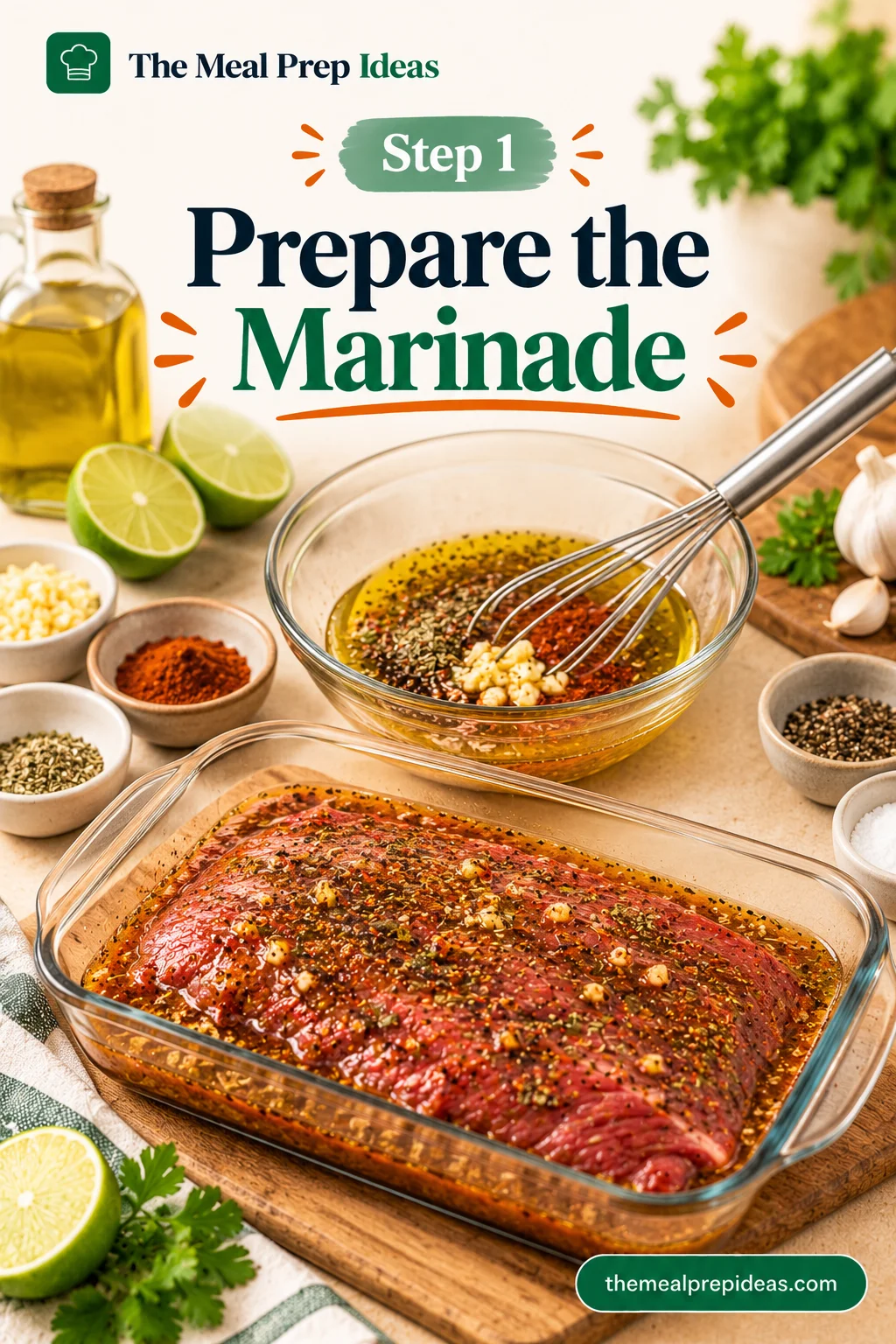
In a bowl, whisk together the olive oil, fresh lime juice, minced garlic and fajita seasonings until evenly combined. The oil helps coat the steak, while the lime and garlic bring brightness and savory flavor to the beef.
Place the flank steak in a shallow dish or a food-safe resealable bag. Pour the flank steak fajita marinade over the meat, turning it so both sides are coated. If you are using a bag, press out excess air before sealing it.
Beginner tip: Mix the marinade before adding the steak so the spices are distributed evenly. If you're following a reverse-marinade method, the seasoned liquid is added after cooking instead; that is a separate approach from marinating raw steak beforehand.
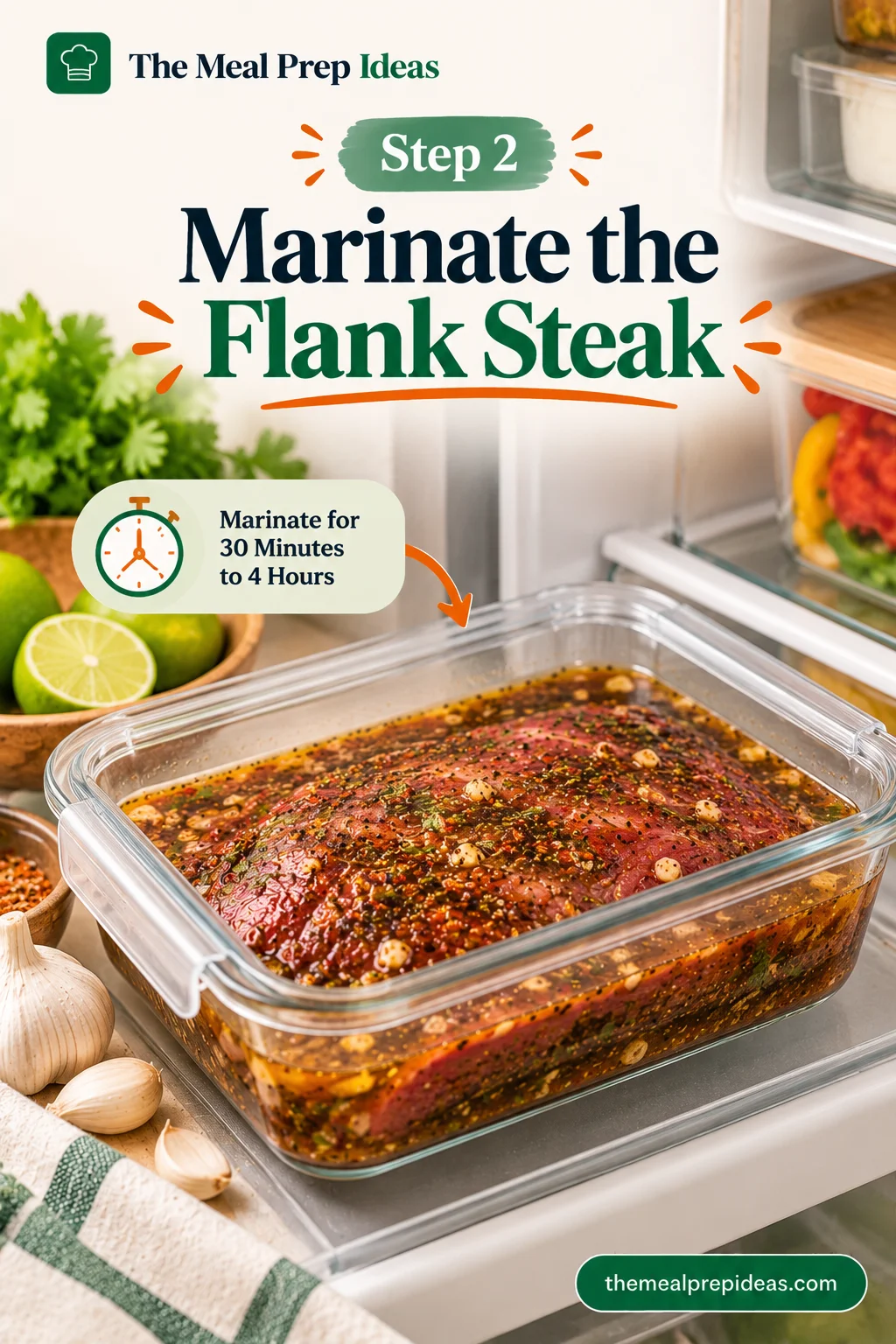
Cover the dish or seal the bag, then place the steak in the refrigerator. For this lime-garlic marinade, 30 minutes to 4 hours is a practical range for adding flavor without leaving the meat in an acidic mixture for too long.
If you're planning dinner ahead, marinate the steak in the morning or a few hours before cooking. Keep it refrigerated throughout the process rather than leaving raw beef on the counter.
Before cooking, remove the steak from the marinade and let the excess liquid drip off. Pat the surface lightly with paper towels if it is very wet. Too much liquid can prevent proper browning and make it harder to achieve a good sear.
Visual cue: The steak should be coated with seasoning, but it should not be dripping with marinade when it reaches the pan or grill.
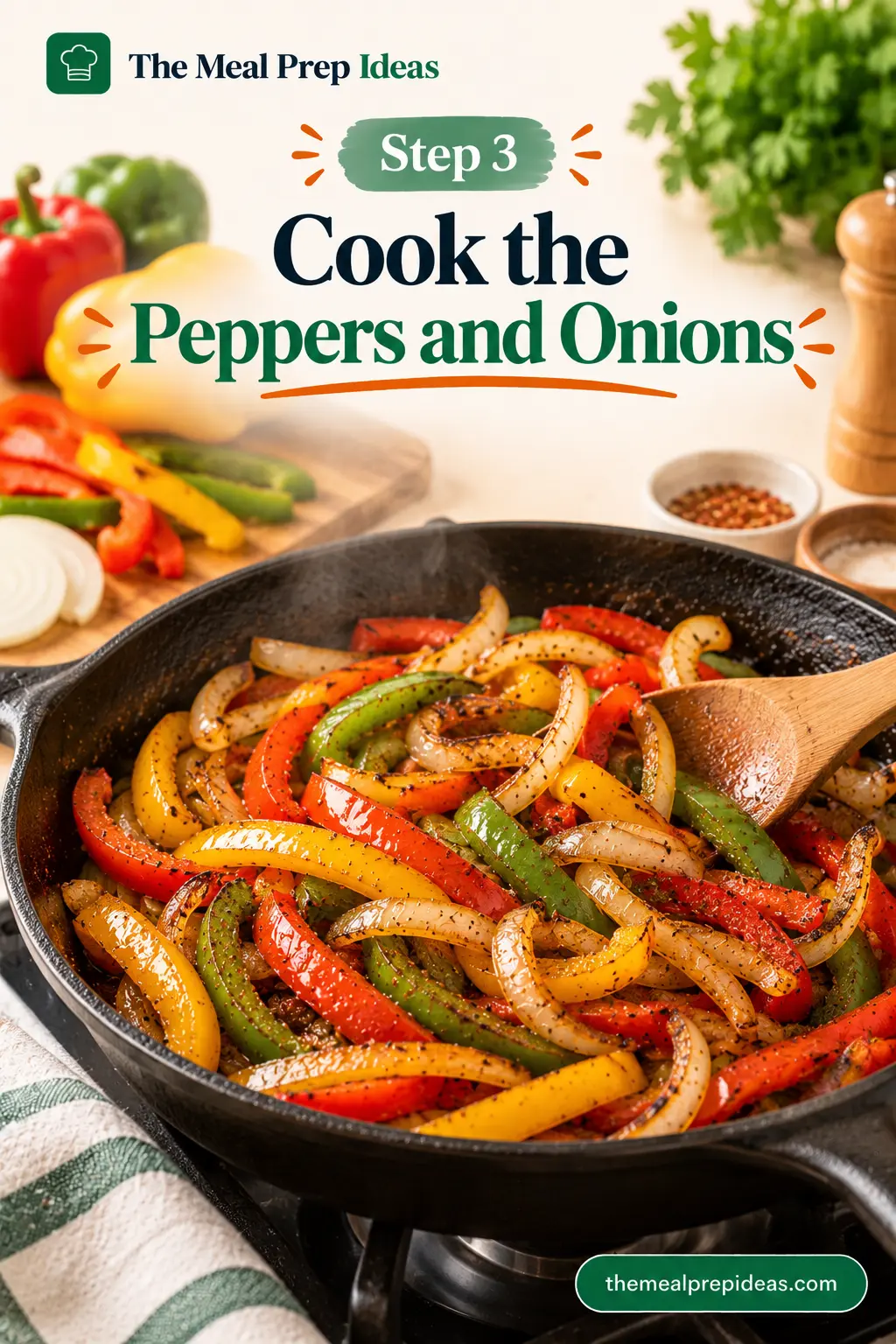
Slice the bell peppers and onions into strips, keeping the pieces fairly similar in thickness. Heat a large skillet, preferably a cast-iron skillet, over medium-high to high heat, then add a little oil.
Add the vegetables in a single layer as much as possible. Let them cook until they begin to soften and develop browned edges, stirring occasionally. If your pan is small, cook them in batches rather than piling everything in at once.
You want the onions to become slightly sweet and the peppers to remain crisp-tender, with a little bite instead of turning soft and watery. Transfer the cooked vegetables to a plate while you prepare the steak.
Beginner tip: A crowded pan traps steam, so the vegetables may soften without browning. Give them enough room to develop those flavorful, lightly charred spots.
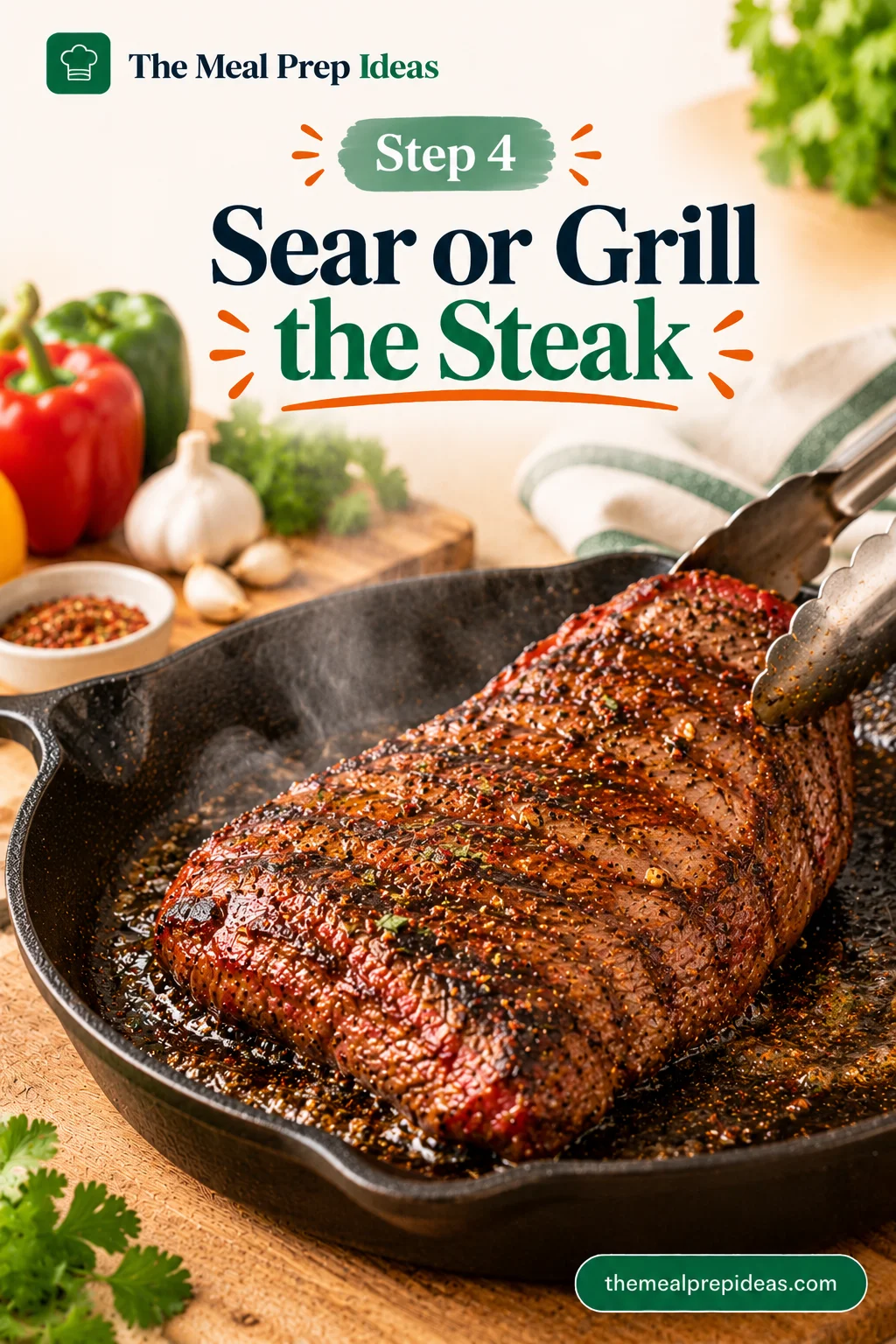
For pan-seared steak fajitas, heat the skillet until it is properly hot before adding the steak. Place the beef in the pan and leave it undisturbed for a few minutes so the surface can brown. Turn it once and continue cooking until it reaches your preferred doneness.
For grilled flank steak fajitas, preheat the grill and lightly oil the grates. Place the steak over direct heat and turn it as needed to develop a browned, slightly charred exterior.
The cooking time depends on the steak's thickness, the heat level and your preferred doneness, so use visual cues alongside a meat thermometer rather than relying on time alone. For food safety, the USDA recommends cooking whole cuts of beef to 145°F (63°C) and allowing them to rest for at least 3 minutes.
Visual cue: Look for a deeply browned exterior. If the steak releases easily from the pan or grill, it is generally easier to turn without tearing the surface.
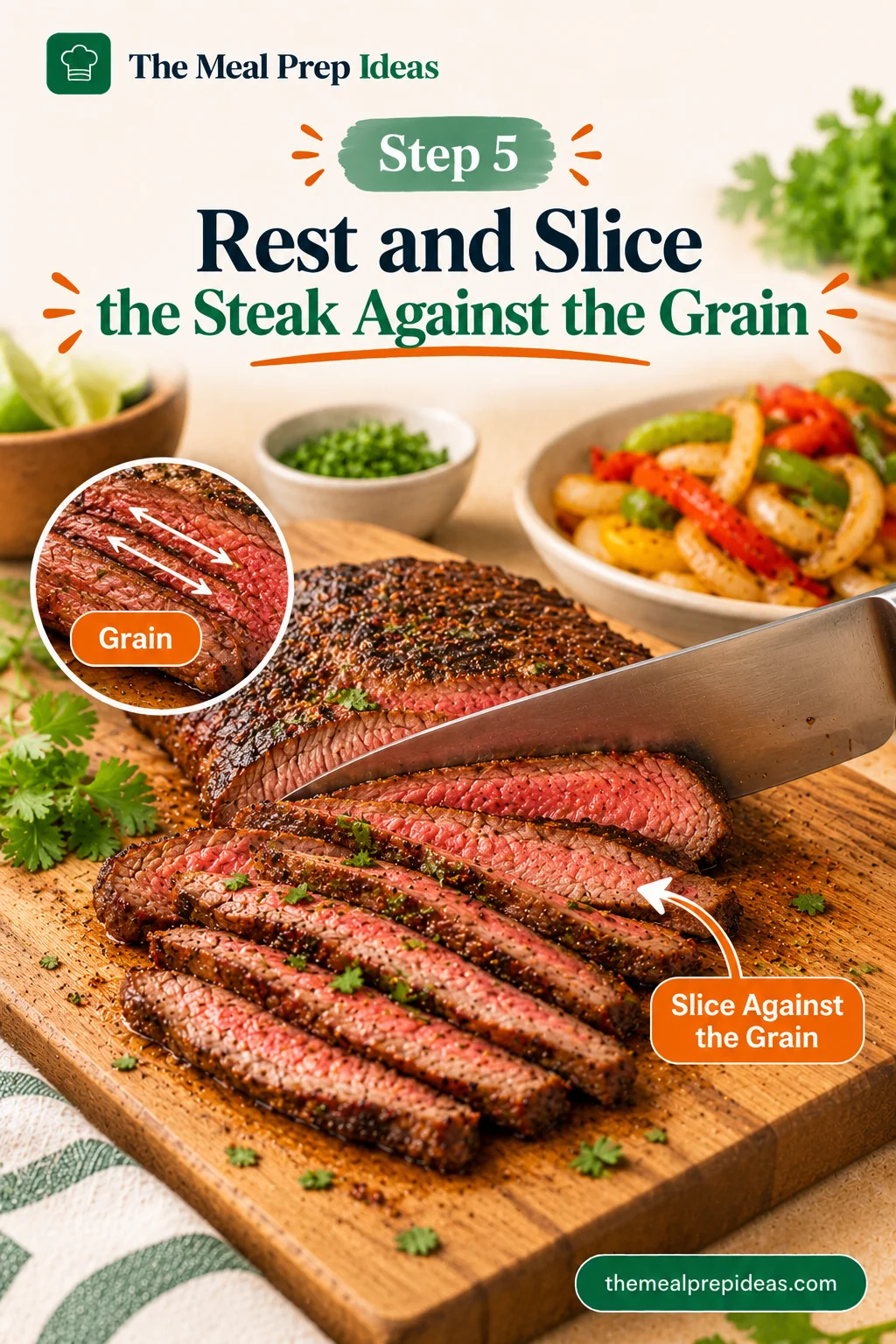
Transfer the cooked steak to a cutting board and let it rest for at least 3 minutes before slicing. Resting gives the meat a short pause before cutting and helps you handle it without losing as much juice onto the board.
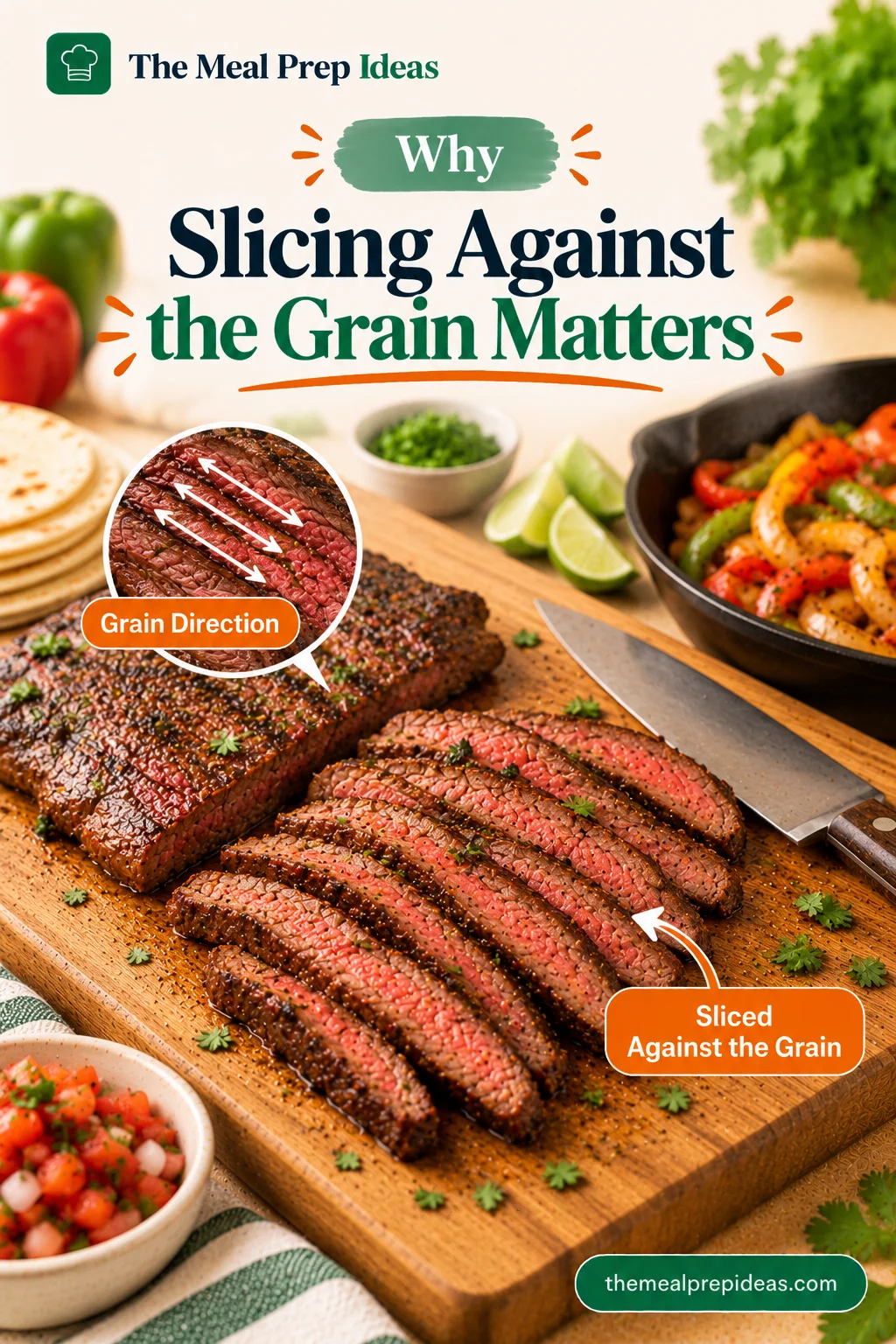
Next, look closely at the steak. You should see long muscle fibers running in one direction; this is the grain. Position your knife across those lines and cut the meat into thin strips rather than slicing parallel to the fibers.
This step matters because flank steak has long muscle fibers. Slicing against the grain shortens those fibers, making each piece easier to chew and giving your fajitas a more tender texture.
For the best results, use a sharp knife and aim for thin, even strips. If you're new to cooking this cut, a guide to [how to cook flank steak] can help you learn more about preparing and slicing it.
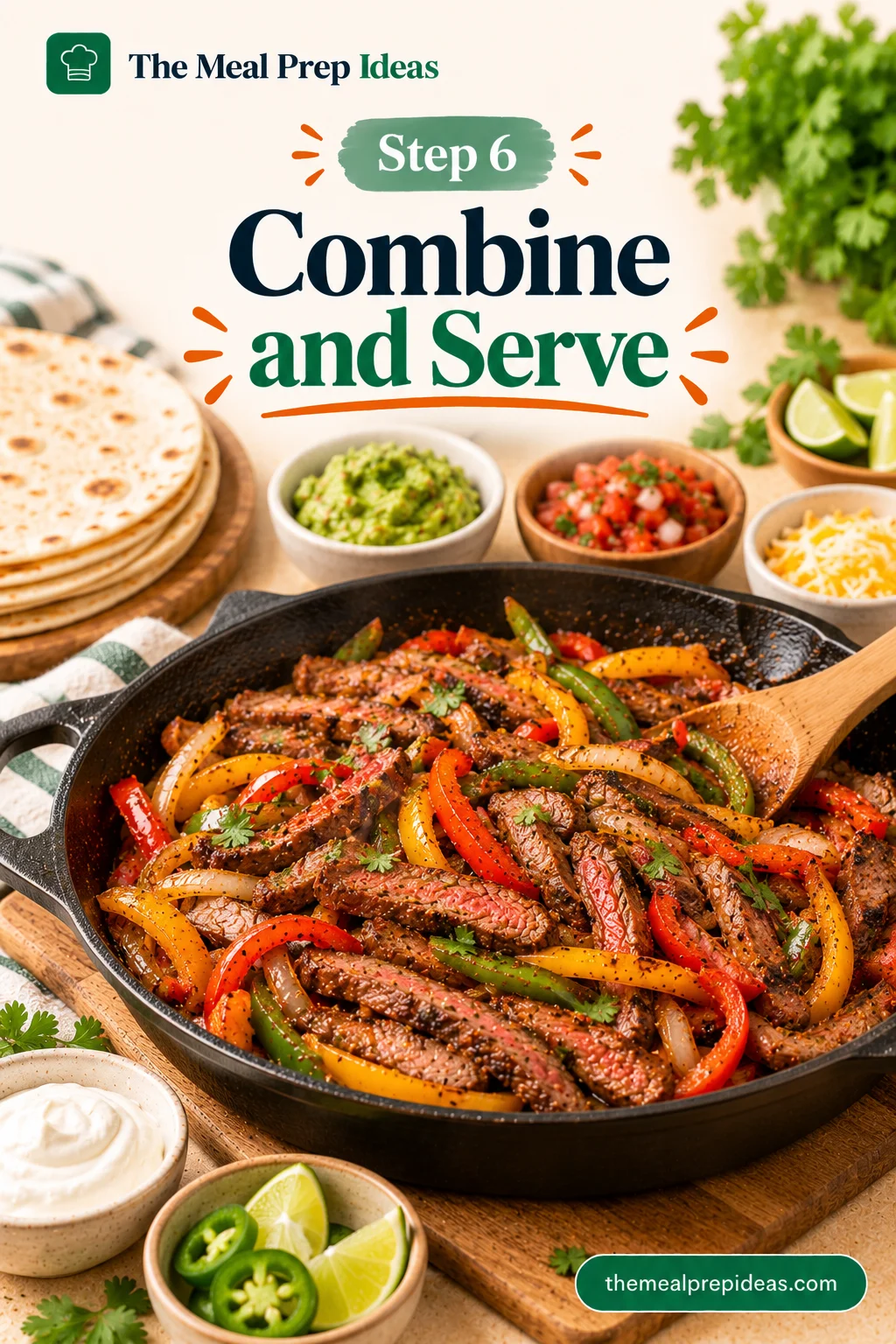
Return the sliced steak and cooked vegetables to the skillet for a brief toss, just long enough to bring everything together. Avoid cooking the beef for too long at this stage, as it can continue to lose moisture.
Serve the steak and vegetables with warm flour or corn tortillas, lime wedges and fresh cilantro. Put toppings such as salsa, guacamole, shredded cheese, sour cream, or sliced jalapeños on the table so everyone can customize their meal.
For a different serving option, spoon the beef and vegetables over rice, into a salad bowl, or over cauliflower rice for a lower-carb meal.
The result is a colorful plate of flank steak fajitas with browned beef, flavorful peppers and onions and fresh toppings. Serve while everything is warm for the best texture and flavor.
The secret to juicy beef fajitas is not just the marinade. The way you sear the meat, manage the vegetables and slice the steak also affects the final texture. A few small adjustments can help prevent dry beef and soggy vegetables.
A properly heated pan helps create a browned, flavorful crust while keeping the inside from drying out unnecessarily. Before adding the steak, make sure the skillet is hot and the meat's surface is not dripping with marinade.
Avoid adding too much meat to the pan at once. If the steak does not fit comfortably, cook it separately rather than forcing it into a crowded skillet. Crowding lowers the pan temperature and can cause the beef to steam instead of sear.
Because steak thickness varies, use a meat thermometer to check doneness. If you are learning how to cook flank steak without making it tough, temperature control is more reliable than following a fixed cooking time alone.
If you're wondering how to make flank steak tender, pay attention to the direction of the muscle fibers. Look for the long lines running through the cooked steak, then cut across them instead of following them.
This creates shorter muscle fibers, making the beef easier to chew. Slice the steak into thin, even strips with a sharp knife for the best results.
If the meat is still chewy, check both the cooking temperature and the slicing direction. Overcooking can make flank steak dry, while slicing parallel to the grain leaves longer fibers that are harder to chew. Correct slicing can improve the texture, although it cannot fully reverse overcooking.
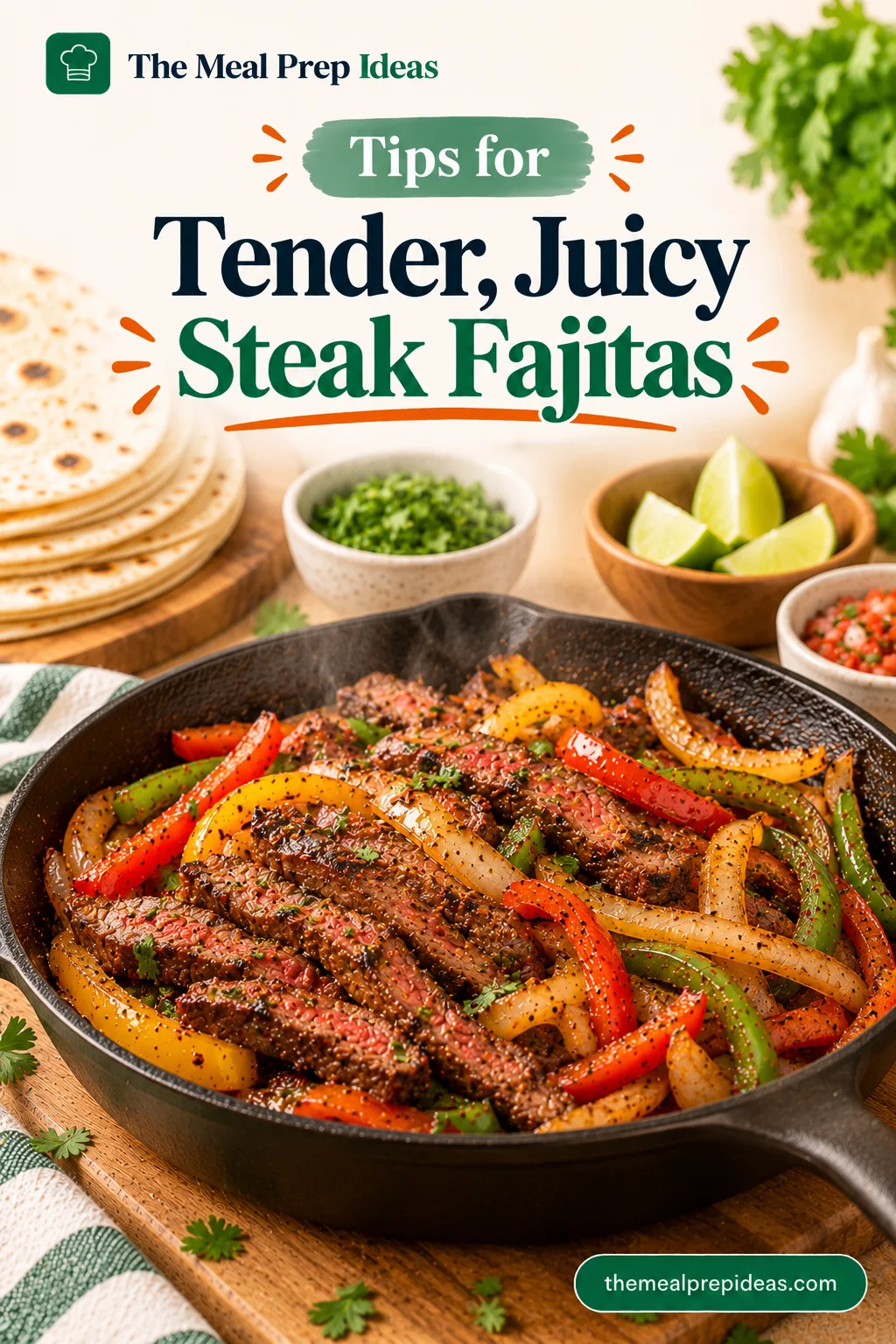
Good fajita vegetables should be softened and lightly browned but still hold their shape. Cut the peppers and onions into similarly sized strips so they cook at a similar rate.
Cook them in a hot skillet with enough space to release moisture. If the pan is crowded, work in batches. Stir occasionally rather than constantly so the vegetables have time to develop browned edges.
For the best sautéed peppers and onions, remove them from the pan when they are crisp-tender and combine them with the steak just before serving. This keeps the vegetables from becoming mushy while the beef finishes resting.
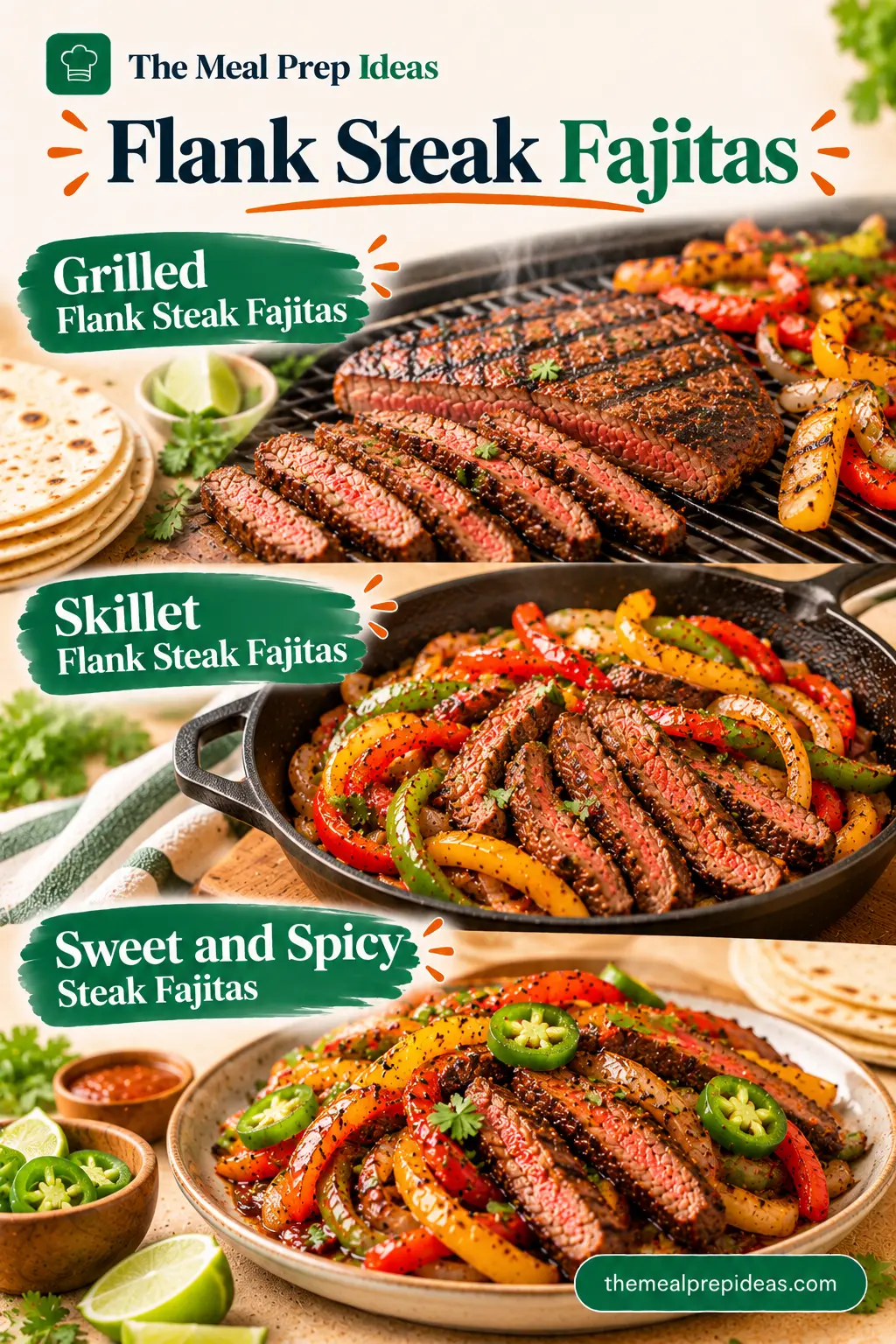
One of the best things about flank steak fajitas is how easy they are to adapt to your cooking setup and personal taste. You can cook the steak on an outdoor grill for a smoky flavor, use a skillet for a convenient stovetop dinner, or adjust the seasonings to make the meal sweeter or spicier. There are also simple ways to accommodate gluten-free and low-carb diets without losing the bold fajita flavor.
Grilled flank steak fajitas are a great choice when you want smoky flavor and a lightly charred exterior. Preheat an outdoor grill to medium-high or high heat, clean the grates and lightly oil them to help prevent sticking.
Place the marinated steak directly on the hot grill and cook, turning as needed, until browned and cooked to your preferred doneness. Use a meat thermometer to check the internal temperature and let the steak rest before slicing it against the grain.
For the vegetables, use a grill basket or place the sliced peppers and onions in a grill-safe pan. Toss them with a little oil and cook until softened with some browned edges. Cooking the vegetables separately makes it easier to control their texture without overcooking the steak.
Best for: Anyone who enjoys a smoky, barbecue-style meal with charred steak and grilled peppers.
You don't need an outdoor grill to make flavorful fajitas. Skillet flank steak fajitas are ideal for a weeknight meal because you can prepare them on the stovetop using a heavy skillet, preferably cast iron.
Heat the skillet thoroughly before adding the steak. Let the meat develop a browned crust, then turn it and finish cooking according to its thickness. If the steak is too large for your pan, cut it into manageable sections or cook it in batches, leaving enough space for each piece to sear properly.
A cast-iron skillet retains heat well, helping create the browned exterior associated with a good cast-iron steak recipe. If you only have a regular heavy frying pan, that works too; just make sure it is suitable for high-heat cooking.
Best for: Anyone who wants pan-seared steak fajitas without a grill, especially when cooking indoors or preparing dinner on a busy evening.
For a different flavor profile, turn the basic marinade into sweet and spicy flank steak fajitas. A small amount of honey or orange juice adds sweetness that balances the savory beef and sharp lime flavor.
To increase the heat, add sliced jalapeño, red pepper flakes, or a little chipotle pepper. Chipotle brings a smoky, spicy flavor that works particularly well with beef.
If you make a honey-lime marinade, start with a modest amount of sweetener and taste the marinade before adding the raw steak. Too much honey can cause the surface to brown or burn quickly over high heat, so watch the steak closely while cooking.
Best for: Anyone who enjoys spicy beef fajitas with a balance of citrus, gentle sweetness and smoky heat.
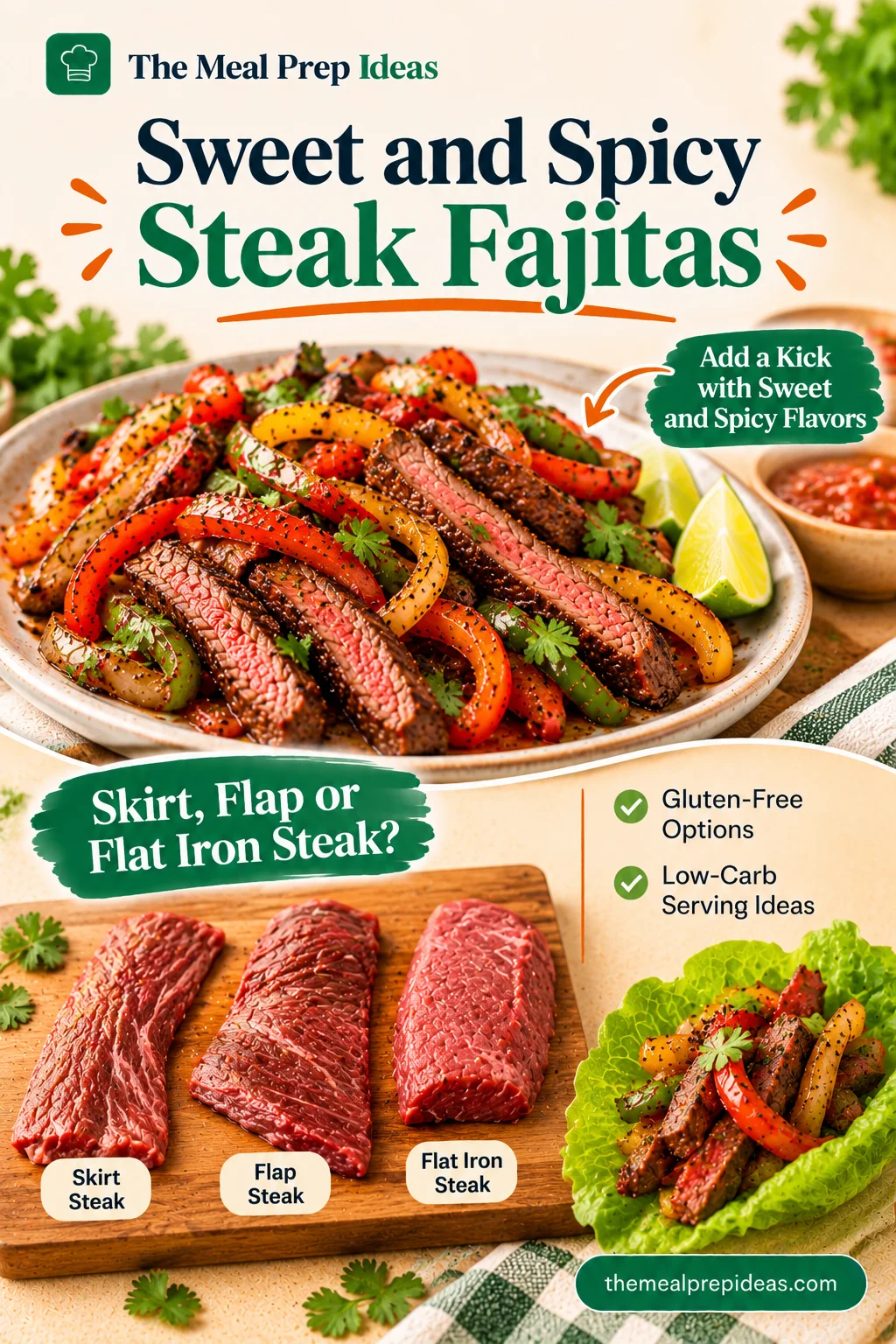
Yes. Although flank steak is an excellent choice, several other cuts can work well in fajitas. The main differences are texture, thickness and how quickly the meat cooks.
When comparing skirt steak vs. flank steak, neither is automatically best for every cook. Skirt steak is often thinner and develops a strong seared flavor, while flank steak has a lean, beefy texture that works well when sliced correctly. Your choice can depend on price, availability and personal preference.
Whichever flank steak substitute you choose, avoid overcooking it, allow it to rest and slice it against the grain where possible. These small details help make the finished beef easier to chew.
You can also adapt the serving style to suit your needs. For gluten-free steak fajitas, use certified gluten-free tortillas and check labels on sauces and seasonings. For low-carb fajitas, serve the steak and vegetables in lettuce wraps or a bowl with extra vegetables instead of tortillas.
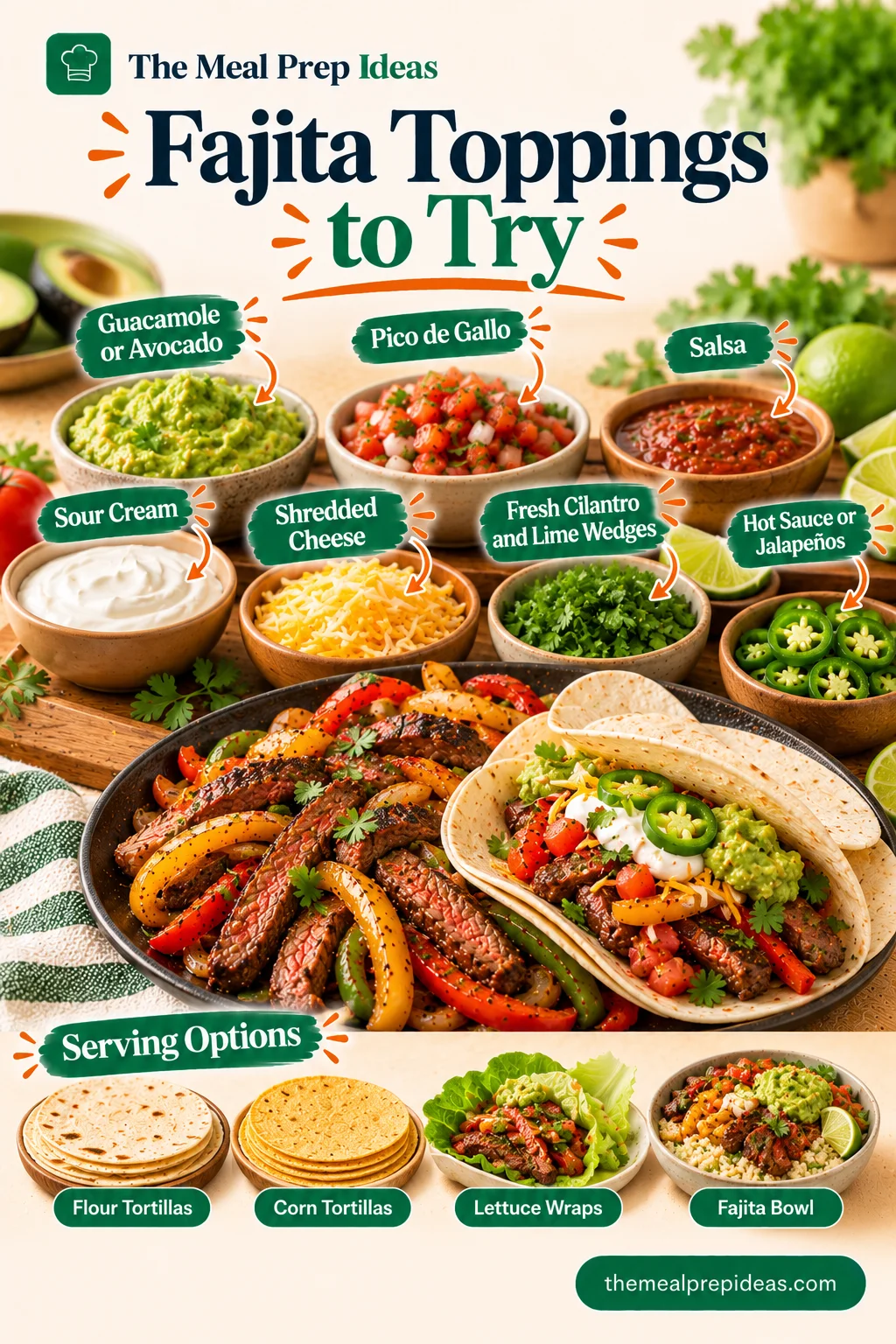
The right toppings can make your flank steak fajitas taste even better by adding freshness, creaminess, acidity, or a little heat. For a balanced steak fajita dinner, pair the savory beef and peppers with a few fresh toppings and a side dish that suits your appetite.
You can keep things simple with lime juice and cilantro or set out several options so everyone can build their own fajitas.
The best toppings for steak fajitas depend on the flavors and textures you enjoy. Fresh, creamy and spicy options work especially well together.
For the best balance, try combining guacamole, pico de gallo and fresh lime juice with one creamy topping. You do not need every topping at once; two or three well-chosen options can be plenty.
Serve the filling in warm flour tortillas for a soft, flexible wrap or corn tortillas for a distinct corn flavor. If you prefer to skip tortillas, use crisp lettuce leaves or serve the steak and vegetables in a bowl over greens or cauliflower rice.
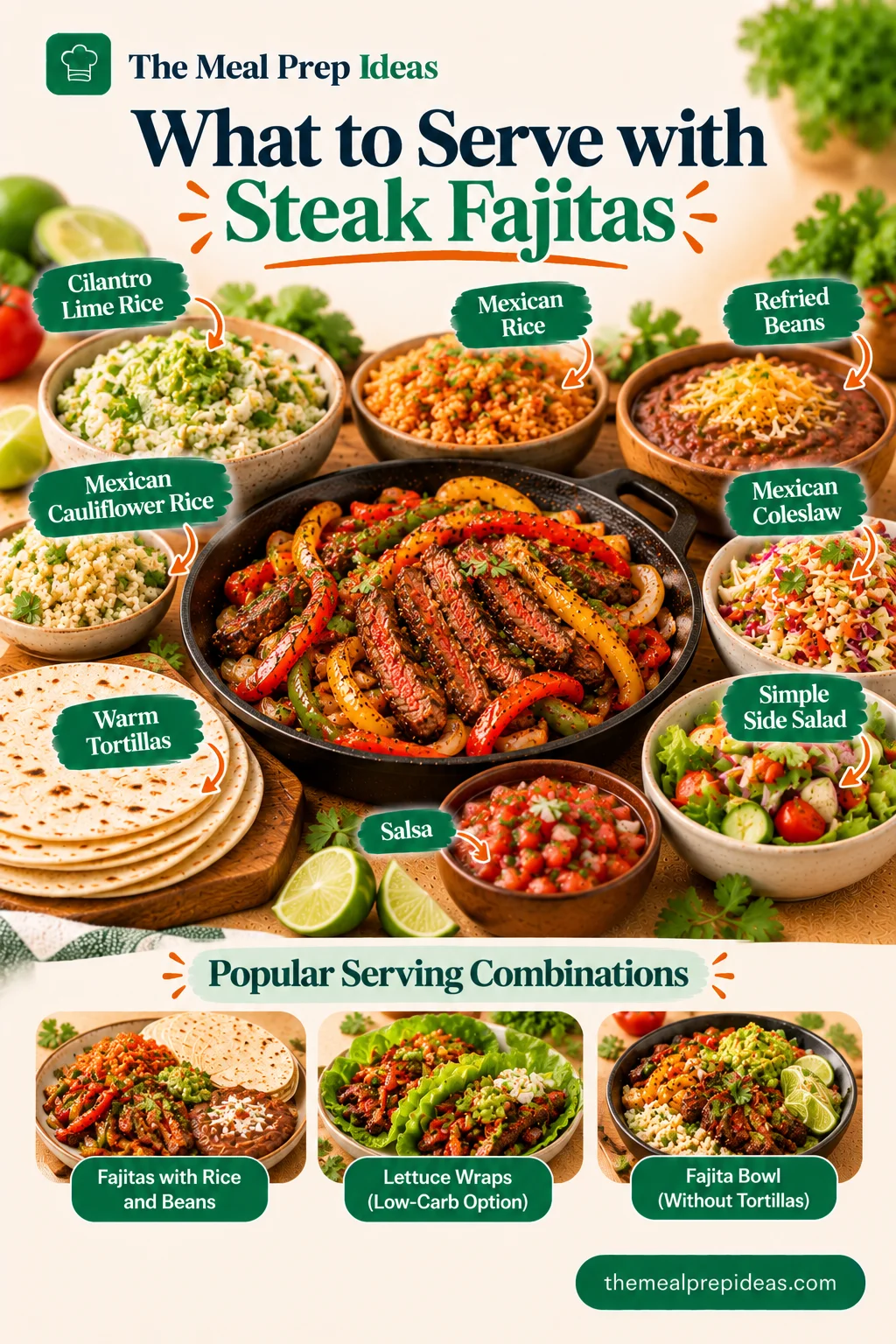
If you're wondering what to serve with flank steak fajitas, choose sides that complement the seasoned beef without making the meal feel too heavy. Rice and beans make the dinner more filling, while fresh vegetables are a good choice for a lighter plate.
For an easy combination, serve the fajitas with warm tortillas, cilantro lime rice, refried beans and a bowl of salsa. For a lower-carb meal, skip the tortillas and rice, then serve the beef with lettuce wraps, extra fajita vegetables, or cauliflower rice.
The best steak fajita sides are the ones that suit your meal. Mix and match one filling side with a fresh topping or salad to create a satisfying dinner without making extra work. If you're planning meals for the week, Sheet Pan Chicken and Sweet Potato is another practical dinner option that pairs protein with vegetables for easy meal prep.
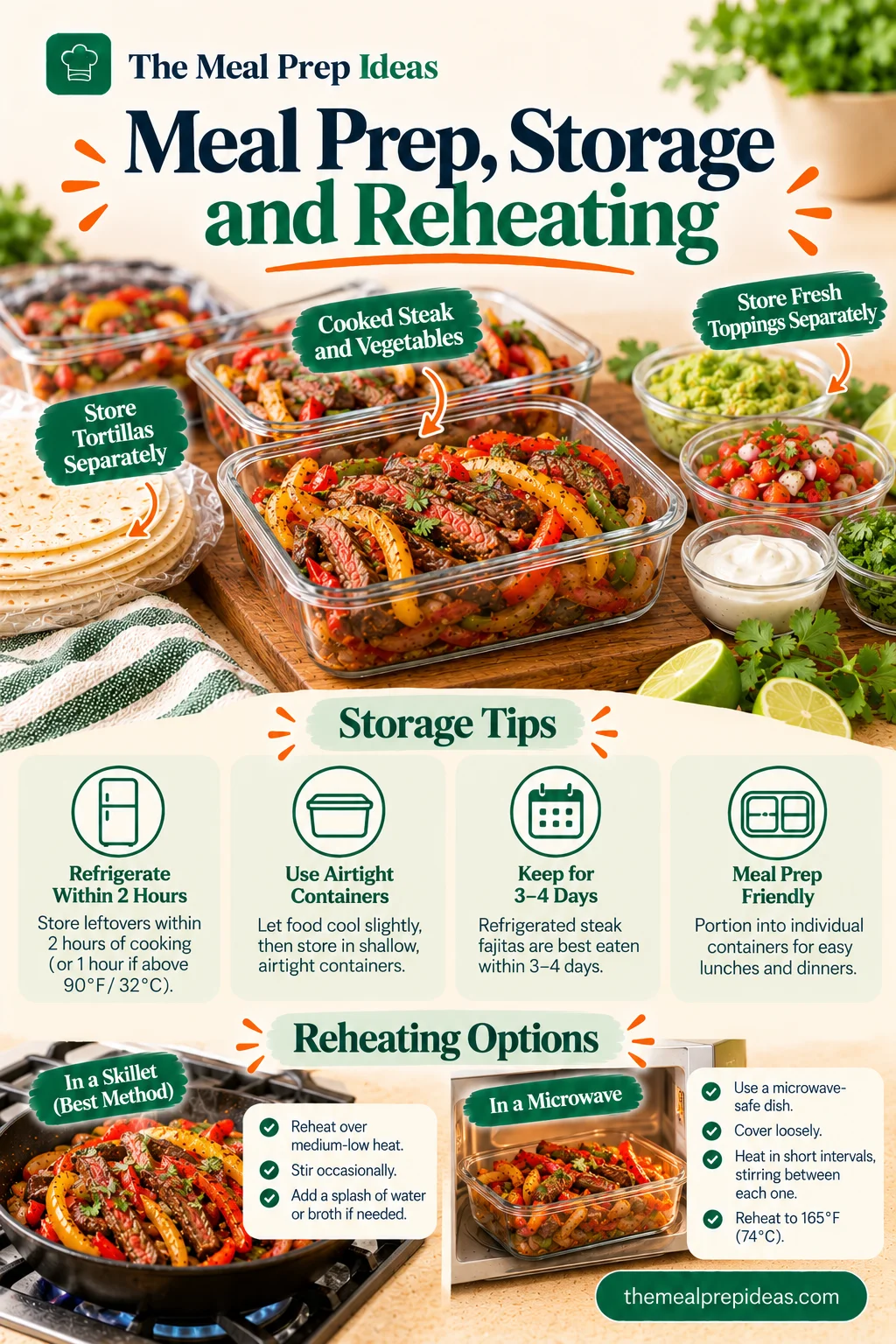
These flank steak fajitas are easy to prepare ahead, making them a useful option for weekday lunches and quick dinners. For the best results, store the cooked steak and vegetables separately from the tortillas and fresh toppings. This helps keep everything fresh and makes reheating easier. For another convenient make-ahead meal, Meal Prep Fajita Bowls are a great way to enjoy similar fajita flavors in easy, portioned lunches or dinners.
Let the cooked steak and vegetables stop steaming heavily, then transfer them to shallow, airtight containers and refrigerate promptly. Refrigerate cooked leftovers within 2 hours of cooking, or within 1 hour if the temperature is above 90°F (32°C).
Store the steak and vegetables together or in separate containers, depending on how you plan to use them. Keep tortillas wrapped separately and refrigerate fresh toppings such as guacamole, salsa and chopped cilantro in their own containers.
Properly refrigerated leftover steak fajitas should generally be eaten within 3–4 days. Label your containers with the preparation date so you can keep track of your meal prep.
For convenient meal prep steak fajitas, divide the beef and vegetables into individual portions. You can then reheat only what you need for lunch or dinner instead of warming the entire batch.
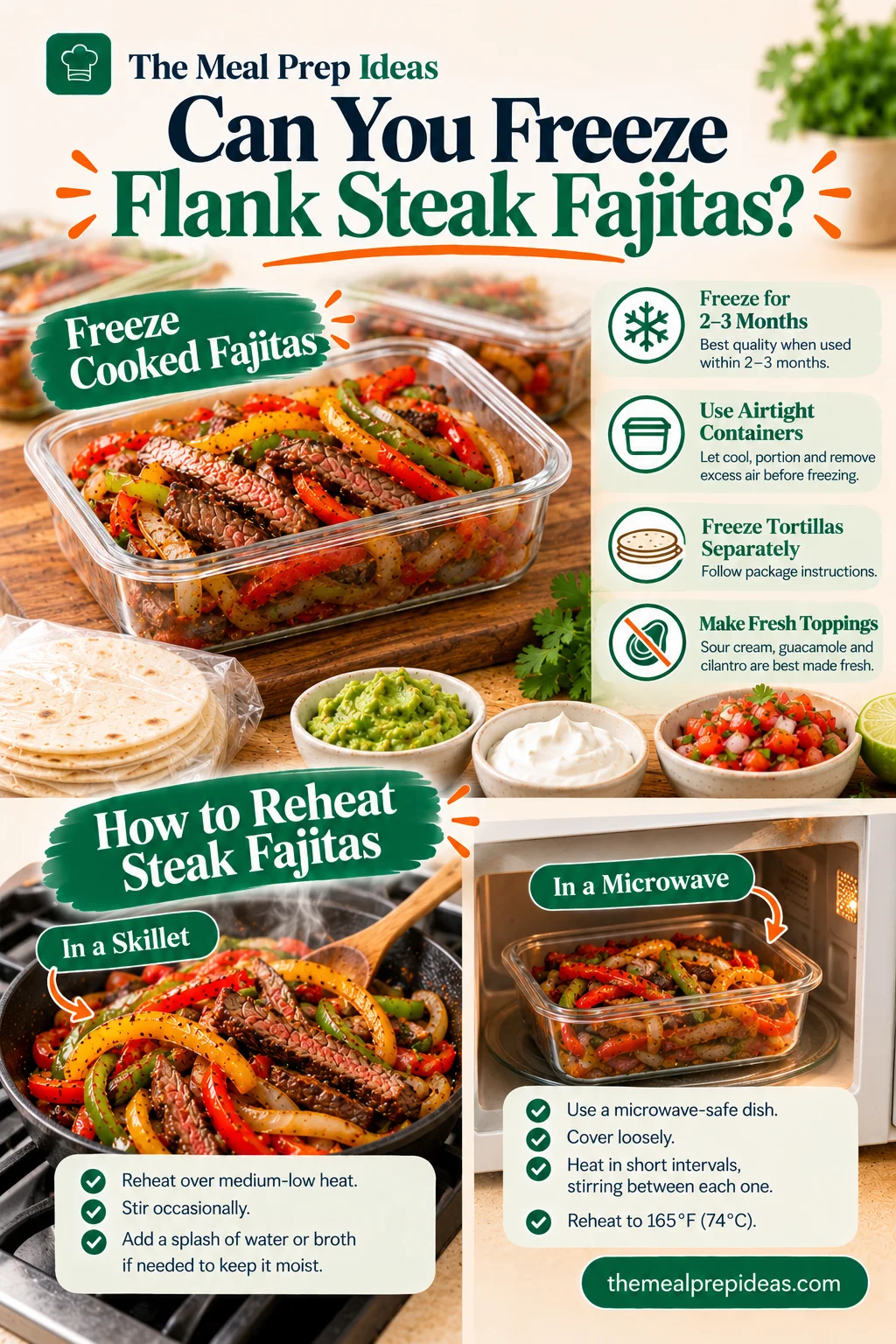
Yes, you can freeze cooked steak and fajita vegetables. Allow the food to cool appropriately, then portion it into freezer-safe airtight containers or bags. Remove as much excess air as possible, label each portion with the date and freeze promptly.
For the best quality, use frozen cooked leftovers within 2–3 months. They may remain safe for longer when continuously frozen at 0°F (-18°C), but their flavor and texture can gradually decline.
Freeze tortillas separately if desired, following the package instructions. Fresh toppings such as sour cream, guacamole and chopped cilantro are better prepared fresh because freezing can change their texture.
To thaw frozen steak fajitas, place them in the refrigerator overnight. You can also reheat them directly from frozen in a skillet, using lower heat and allowing extra time for the center to warm through. Keep in mind that peppers and onions may become softer after freezing and thawing.
The best way to reheat steak fajitas is gently in a skillet. Add the leftover beef and vegetables to a pan over medium-low heat, stirring occasionally until evenly warmed. If the mixture looks dry, add a small splash of water or broth to create a little steam and help prevent the meat from drying out.
You can also use a microwave. Place a portion in a microwave-safe dish, cover loosely and heat in short intervals, stirring between each one to distribute the heat. Avoid heating the steak for much longer than necessary.
For food safety, reheat leftovers to 165°F (74°C). Reheat only the portion you plan to eat, since repeated heating and cooling can affect both safety and texture.
These simple steps help preserve the flavor of your juicy leftover steak and make the next meal just as convenient as the first.
For this flank steak fajitas recipe, marinate the steak for 30 minutes to 4 hours in the refrigerator. This gives the lime, garlic and seasonings time to flavor the meat. Avoid leaving it in an acidic marinade for too long, as the surface texture can change.
Cooking time depends on the steak's thickness, the heat and whether you're using a skillet or grill. As a general starting point, a whole flank steak may take around 4–6 minutes per side over high heat, but use a meat thermometer to check doneness. For food safety, cook whole cuts of beef to 145°F (63°C) and rest for at least 3 minutes.
Choose a suitable cut, avoid overcooking the steak, let it rest after cooking and slice it thinly against the grain. Cutting across the muscle fibers makes the beef easier to chew.
Yes. A hot cast-iron skillet or another heavy frying pan works well. Sear the steak without overcrowding the pan and cook the peppers and onions separately so they brown instead of steaming.
For this recipe, cook the steak whole and slice it after cooking and resting. This helps you develop a good sear on the outside and makes it easier to identify the grain before cutting. Some recipes use thin raw strips instead, but those require a shorter cooking time.
Skirt steak is a popular substitute because it has a rich beef flavor and works well over high heat. Flap steak is another good option, while flat iron steak can also work. Since these cuts vary in thickness and texture, adjust the cooking time and slice against the grain where possible.
Make these Flank Steak Fajitas with tender, juicy steak, colorful bell peppers, and onions for an easy, flavorful weeknight dinner.
the mealGood to know
Made this recipe?
Tag @themealprepideas on Instagram — we love seeing what you made.
Be the first to rate, review, or ask a question about this recipe.
No comments yet
Be the first cook to share feedback or ask a question about this recipe!
Keep Cooking
Make this easy Chicken and Chickpea Curry with tender chicken, hearty chickpeas and a rich, flavorful sauce. Perfect for a quick weeknight dinner.

Make this Crockpot Pot Roast with tender beef, hearty vegetables, and rich, savory gravy. An easy slow cooker dinner perfect for busy weeknights!

Easy Sheet Pan Chicken Pitas with Tzatziki! Tender lemon garlic chicken & roasted veggies wrapped in warm pita with creamy tzatziki. Great for meal prep!
Join 50,000+ subscribers getting weekly meal prep ideas, shopping lists, and time-saving tips straight to their inbox.