Peanut Chicken Wraps

Make easy Peanut Chicken Wraps with tender chicken, creamy peanut sauce, and crunchy vegetables. Ready in 15 minutes for a tasty lunch!
10 min
Make this easy Healthy Fried Rice with rice, eggs, fresh vegetables, and savory sauce for a quick, flavorful meal perfect for busy weeknights.
 Sarah Bennett· Meal Prep Expert & Recipe DeveloperSeptember 8, 2026

Ask your favorite AI assistant to summarize this recipe, suggest swaps, or scale it up — one click away.
We copy the prompt to your clipboard too — just paste (Ctrl/Cmd+V) if it doesn't appear automatically.
Healthy Fried Rice is a quick, tasty meal made with rice, fresh vegetables, eggs and a simple savory sauce. It has all the flavor you love in fried rice, but you can make it at home with ingredients you know and control. This easy healthy fried rice recipe is perfect for busy days when you want something filling without spending too much time in the kitchen.
The best part is how easy it is to change. Use your favorite vegetables, add extra eggs, or toss in some cooked chicken or tofu for more protein. It is a great way to use leftover rice and turn it into a vegetable-packed meal. Once you try this homemade version, you may find yourself choosing it over takeout for a quick weeknight dinner.
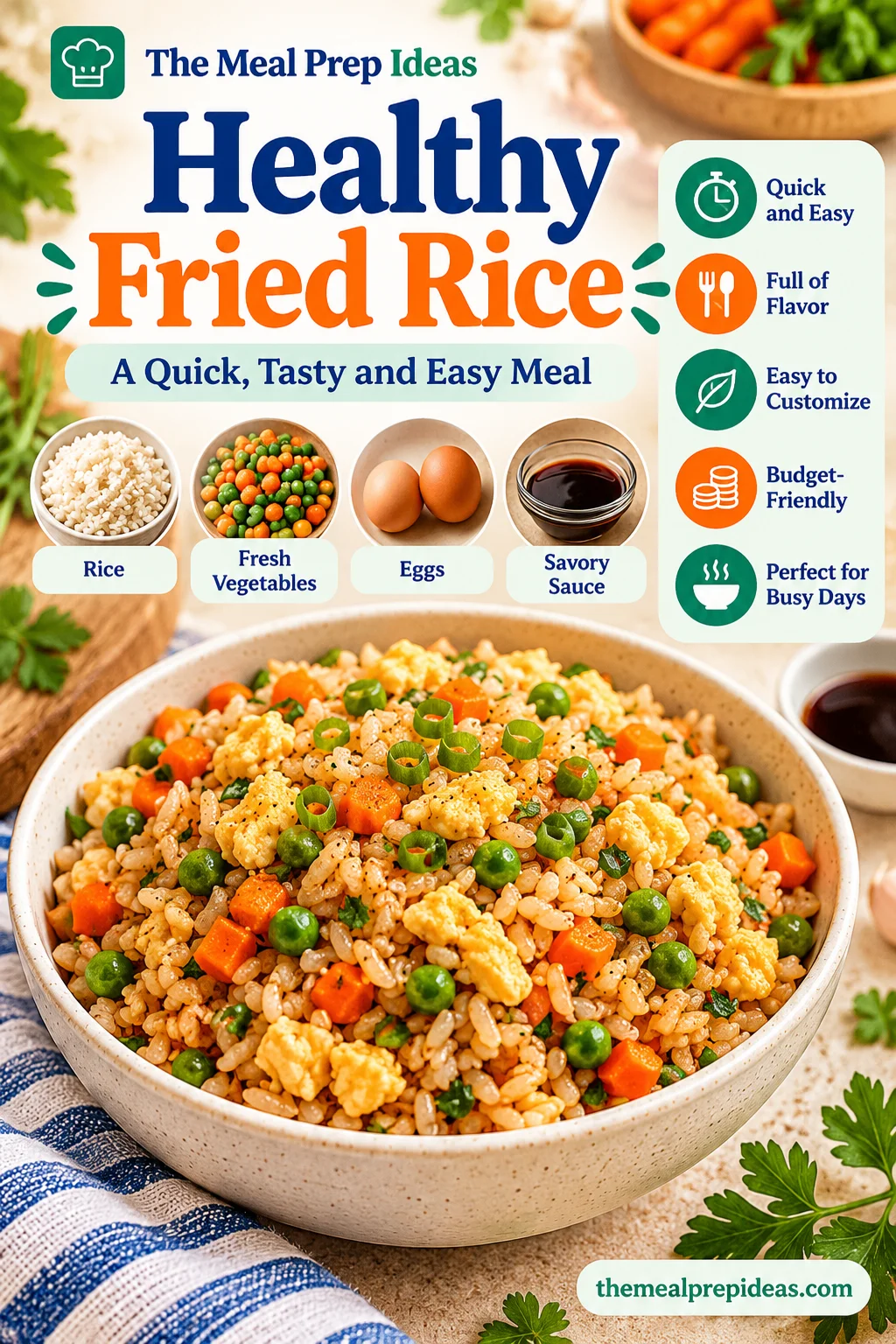
This easy healthy fried rice is one of those meals you can make when you want something tasty without a lot of work. It uses simple ingredients, comes together in one pan and is easy to change based on what you have in your kitchen.
It's a simple, satisfying recipe that fits easily into your regular meal routine. If you enjoy quick, flavorful meals for busy weekdays, Pesto Pasta with Chicken is another easy option to add variety to your lunch or dinner meal prep.
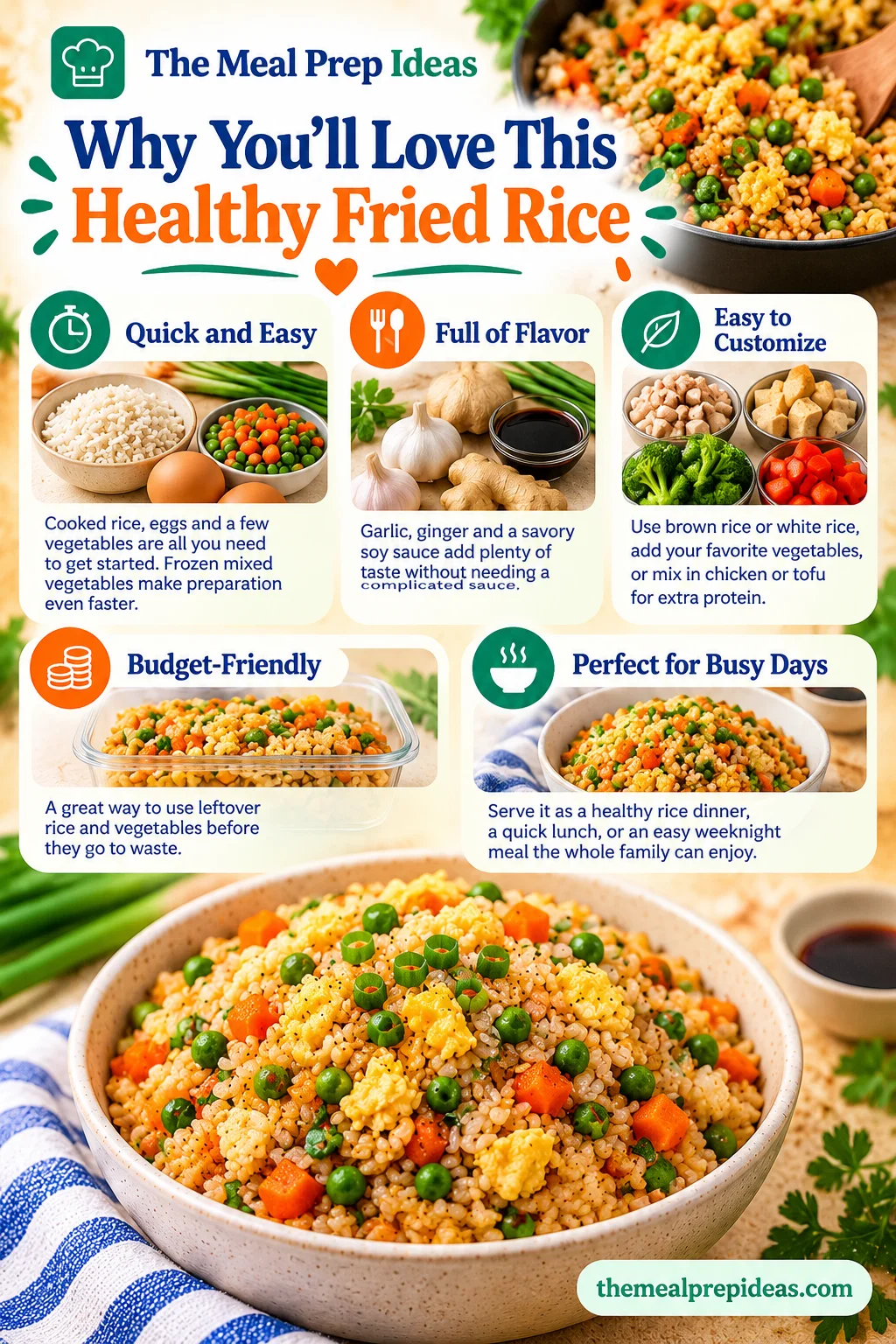
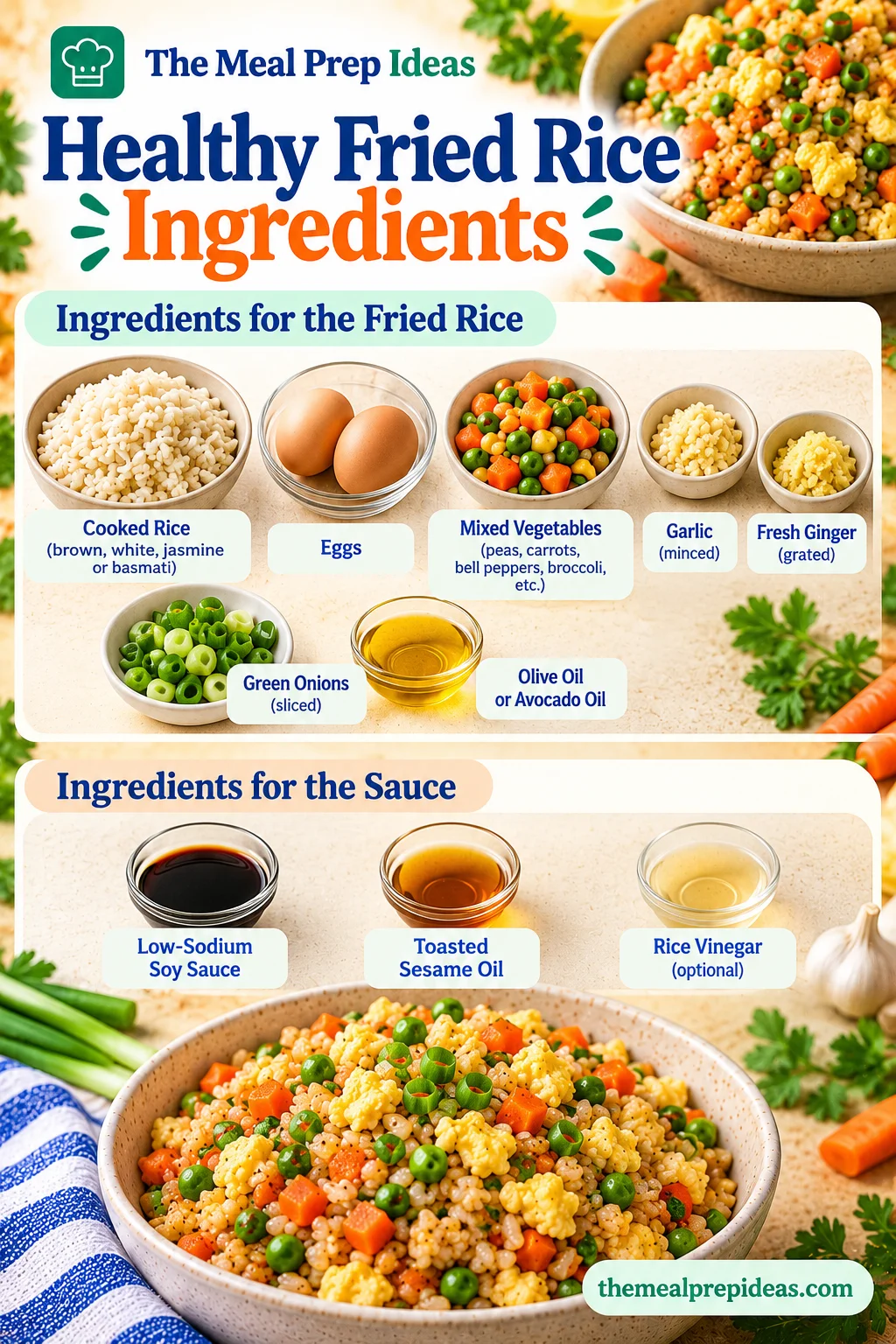
You don't need anything fancy to make flavorful healthy vegetable fried rice at home. Most of the ingredients are easy to find at the grocery store and you can swap a few of them based on your taste or what you already have.
For a simple healthy egg fried rice, keep the eggs and vegetables balanced with the rice. You can also use leftover rice to save time on busy evenings.
Mix the sauce ingredients in a small bowl before cooking. This makes it easier to add them evenly to the rice instead of pouring each ingredient into the pan separately. Taste the finished dish before adding extra salt, as soy sauce already provides plenty of seasoning.
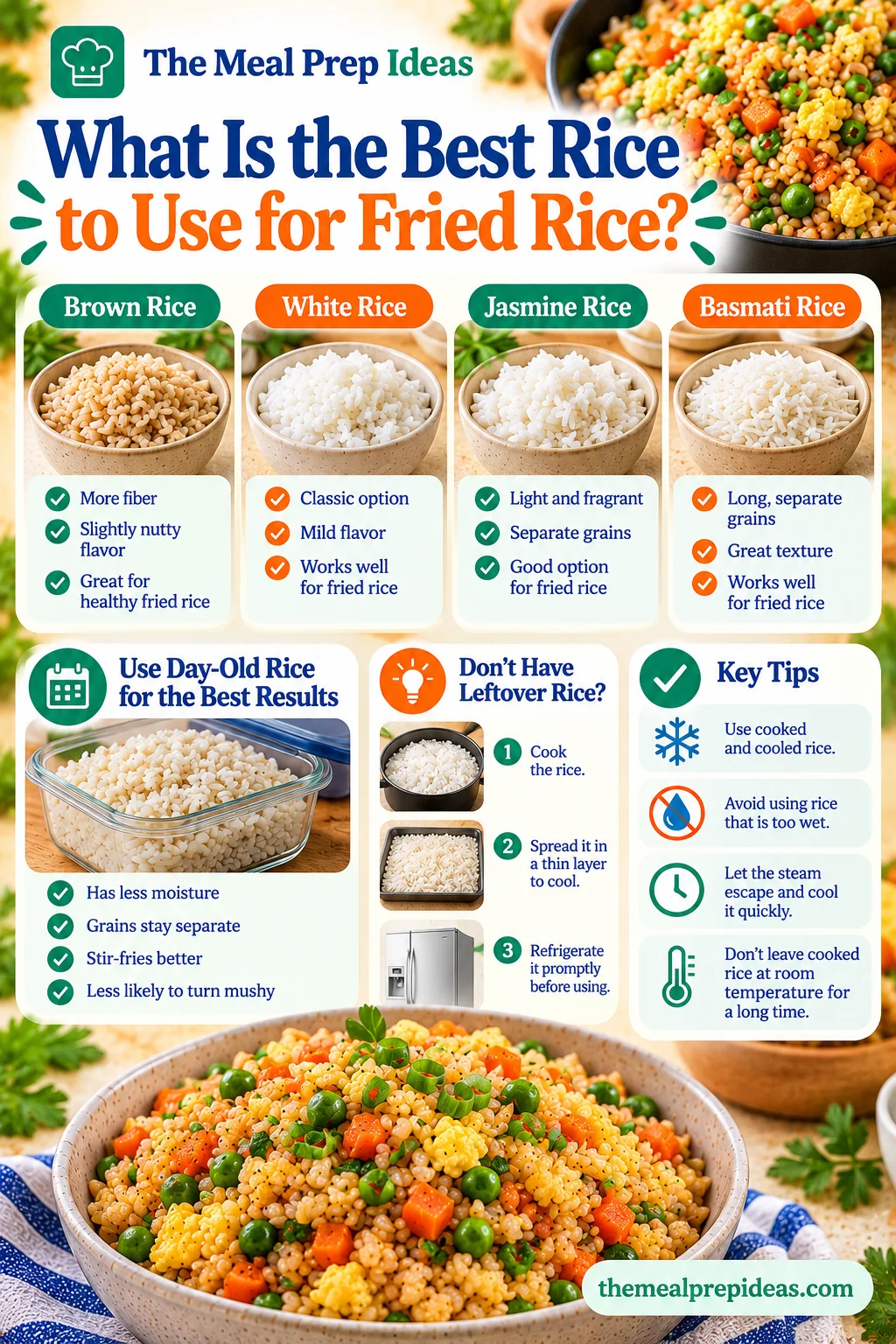
The best rice for fried rice is rice that is cooked but not too wet. When the grains are cool and separate easily, they stir-fry better and are less likely to turn mushy. Day-old rice is a great choice because it has had time to lose some moisture in the refrigerator.
Both brown rice and white rice work well. Brown rice fried rice has a slightly nutty flavor and more fiber because brown rice is a whole grain. If you prefer a softer texture, white rice is also a good option. Jasmine rice and basmati rice can both work, too, as long as they are cooked properly.
Don't have leftover rice? You can still make this recipe. Cook the rice, spread it in a thin layer on a clean tray and let the steam escape. Cool it quickly and refrigerate it promptly before using. Avoid leaving cooked rice at room temperature for a long time. The key is to use cooked and cooled rice with as little excess moisture as possible, not to choose one specific variety.
Estimated per serving (one-quarter of the recipe):
Nutrition values are estimates and will vary depending on the rice, vegetables and brands of soy sauce used.
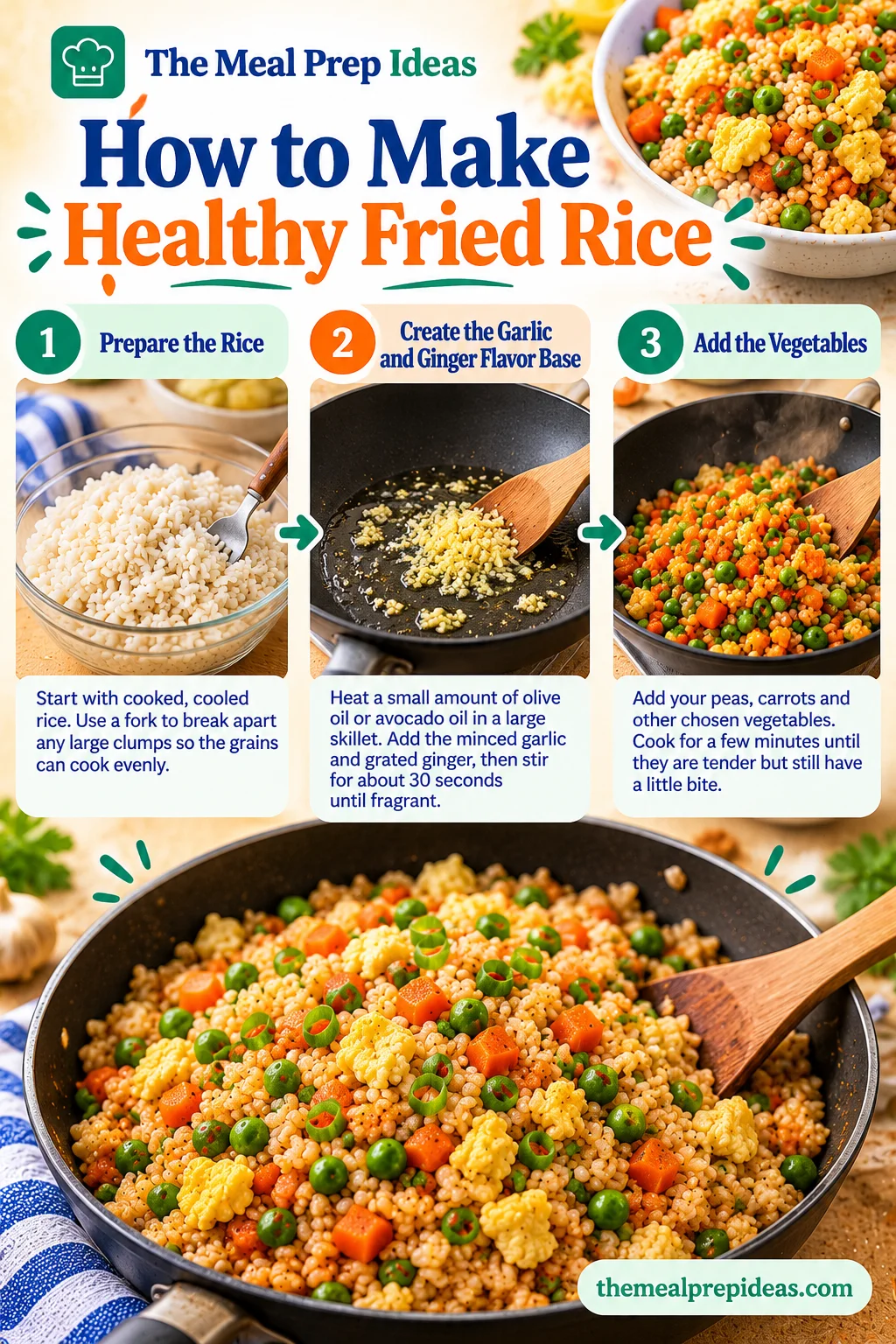
Making Healthy Fried Rice at home is simple and you only need one large skillet or wok. Follow these easy steps to get flavorful rice, tender vegetables and perfectly cooked eggs without making the dish greasy.
Start with cooked, cooled rice. Use a fork to break apart any large clumps so the grains can cook evenly. If you're using leftover rice, make sure it has been stored safely in the refrigerator. Rice that is too wet can make the finished dish soft and sticky.
Heat a small amount of olive oil or avocado oil in a large skillet over medium-high heat. Add the minced garlic and grated ginger, then stir for about 30 seconds until fragrant. Keep them moving so they don't burn, as burnt garlic can give the rice a bitter taste.
Add your peas, carrots and other chosen vegetables. Cook for a few minutes until they are tender but still have a little bite. If you're using frozen mixed vegetables, add them straight from the freezer and cook off any extra moisture before adding the rice.
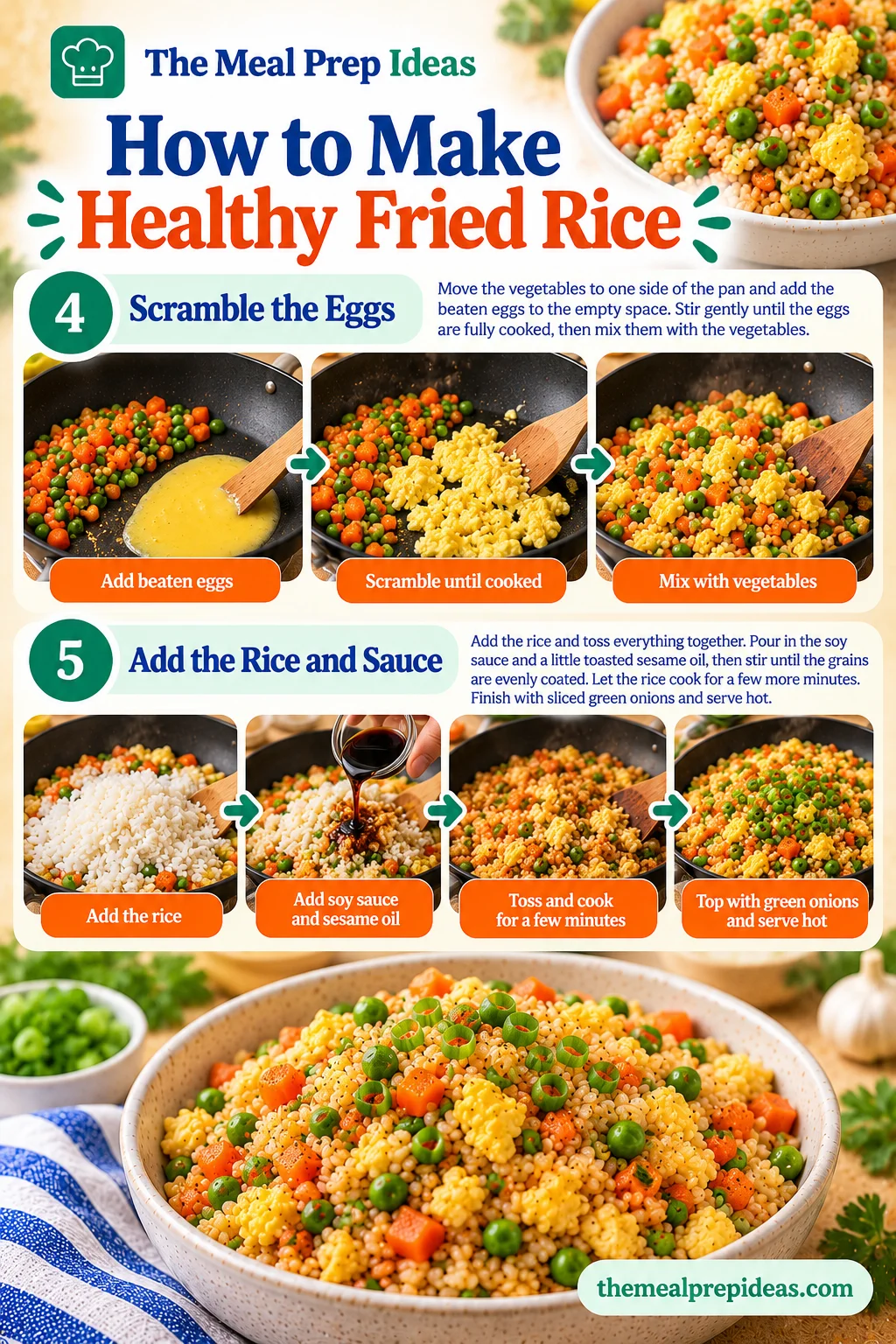
Move the vegetables to one side of the pan and add the beaten eggs to the empty space. Stir gently until the eggs are fully cooked, then mix them with the vegetables. This keeps the eggs soft and spreads them throughout the dish.
Add the rice and toss everything together. Pour in the soy sauce and a little toasted sesame oil, then stir until the grains are evenly coated. Let the rice cook for another few minutes, stirring occasionally. Finish with sliced green onions and taste before adding extra seasoning. Serve hot for a quick, flavorful dinner.
A few small changes can make a big difference in the taste and texture of fried rice. You want fluffy rice, tender vegetables and plenty of flavor without using too much oil or sauce. These simple tips will help you get better results every time.
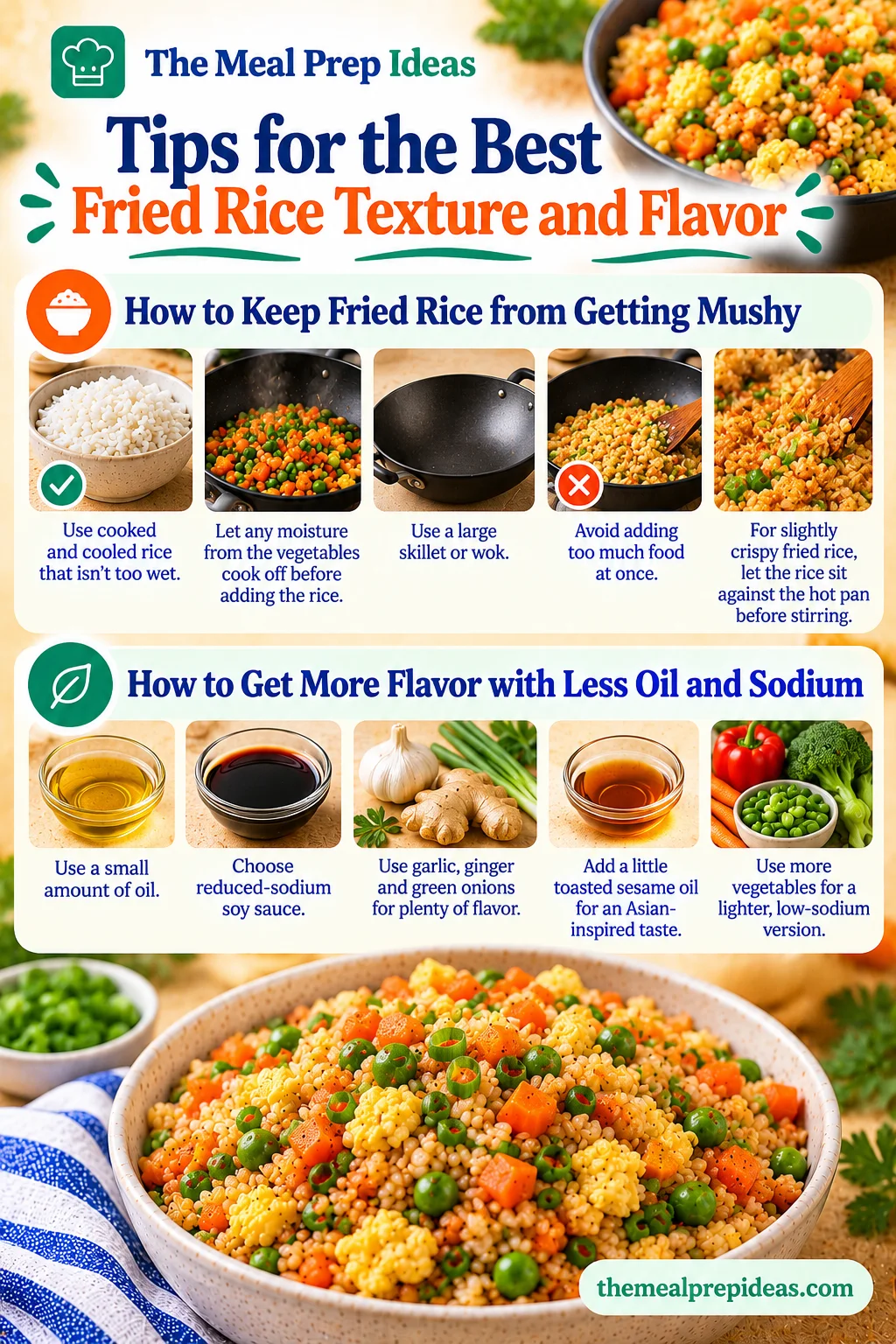
The easiest way to prevent mushy rice is to start with cooked and cooled rice that isn't too wet. If your vegetables release a lot of water, let the moisture cook off before adding the rice. Use a large skillet or wok and avoid adding too much food at once. When the pan is overcrowded, the ingredients steam instead of stir-fry. For slightly crispy fried rice, let the rice sit against the hot pan for a short time before stirring again.
You don't need lots of oil to make flavorful homemade fried rice. Measure your cooking oil and start with a small amount of reduced-sodium soy sauce. Garlic, ginger, green onions and a little toasted sesame oil bring plenty of Asian-inspired flavor. Mix the sauce in gradually, then taste before adding more. This helps you balance the seasoning and make low-sodium fried rice without losing its savory taste. For a lighter version, use less oil and add more vegetables instead.
One of the best things about this recipe is how easy it is to change. You can use the rice you have, add extra vegetables, or include your favorite protein. These simple swaps help you make a meal that suits your taste and what you have in the kitchen.
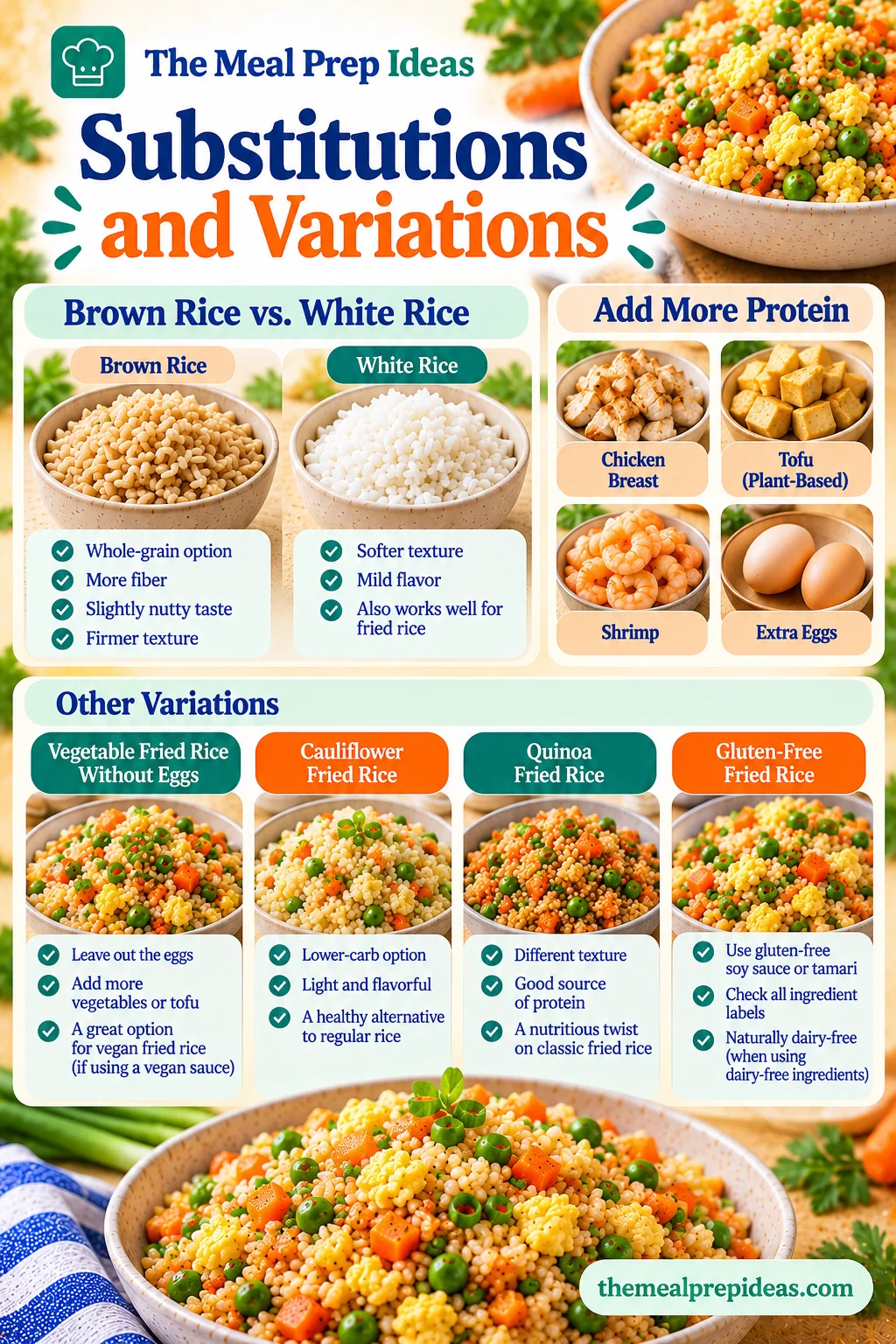
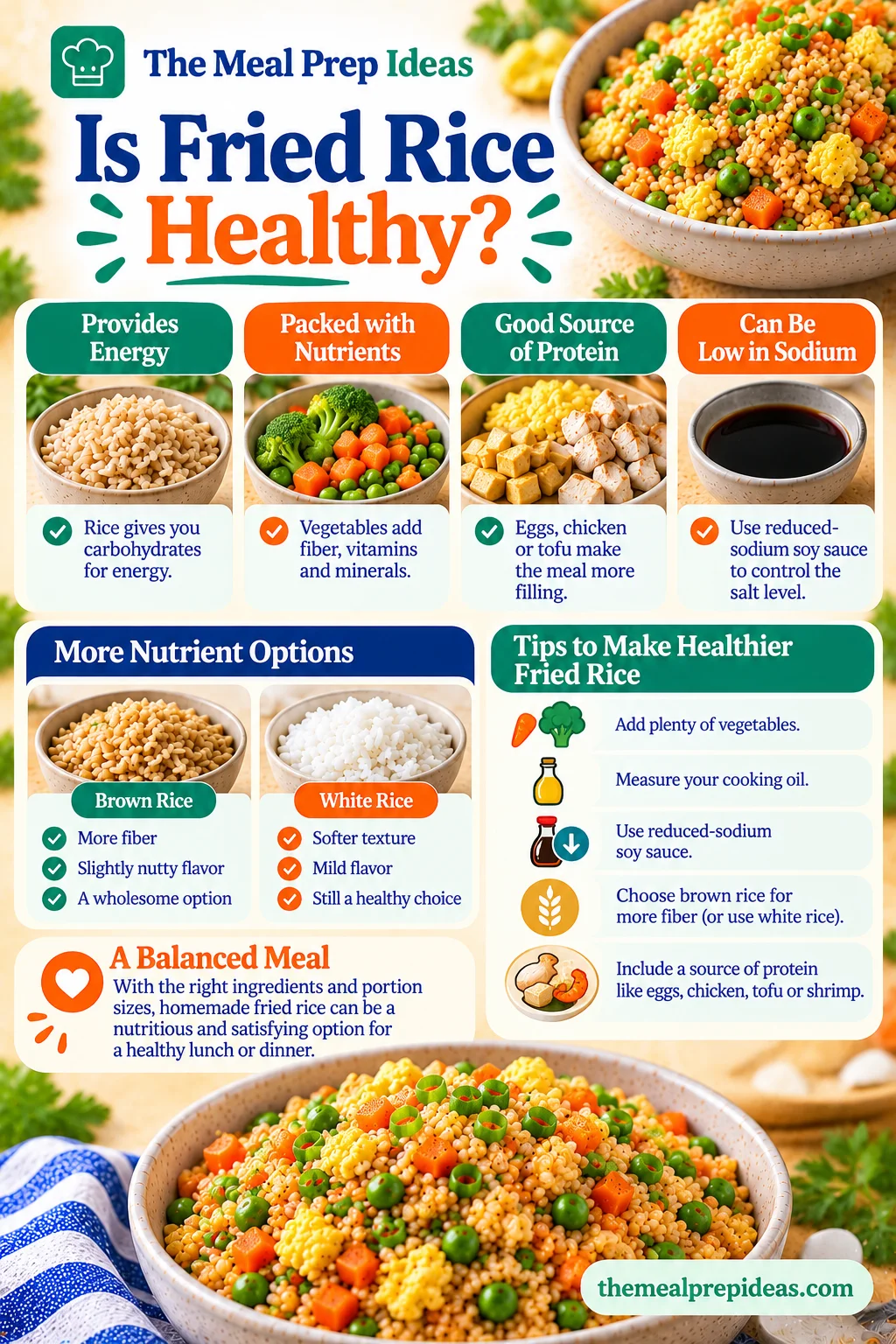
Brown rice is a whole-grain option with more fiber than white rice. It has a slightly nutty taste and a firmer texture. White rice also works well if you prefer softer grains. Both are good choices for homemade fried rice, so use whichever you enjoy.
For a high-protein fried rice, add cooked chicken breast, tofu, or shrimp. Chicken is a good option if you want a filling meal, while tofu adds plant-based protein and works well in vegetarian dishes. Shrimp is another tasty choice that cooks quickly. Make sure any meat or seafood is fully cooked before mixing it into the rice. Eggs already add protein, so you can keep the basic recipe simple or add another protein when you want a more filling meal. If you want another protein-rich meal to prepare ahead for busy weekdays, Sheet Pan Chicken and Sweet Potato combines chicken and vegetables in a convenient oven-baked dinner.
To make healthy fried rice without eggs, simply leave them out and add more vegetables or tofu instead. This also gives you an easy way to make vegan fried rice, as long as your sauce contains no animal-derived ingredients. For a different option, try cauliflower fried rice if you want a lower-carb dish, or use quinoa for a slightly different texture. If you need gluten-free fried rice, choose a gluten-free soy sauce or tamari and check the labels of your other ingredients. The recipe is naturally dairy-free when you use ingredients without dairy products.
Homemade fried rice can be a nutritious meal, depending on the ingredients and how you prepare it. Rice provides energy, while vegetables such as peas, carrots and broccoli add fiber and important nutrients. Eggs, tofu, or chicken can provide protein to make the meal more satisfying.
You can make your healthy fried rice more balanced by adding plenty of vegetables, measuring the cooking oil and using reduced-sodium soy sauce. Choosing brown rice also adds more fiber than white rice, although both options can fit into a balanced diet.
The calories depend on your portion size and how much oil, sauce and protein you use. So, rather than assuming every fried rice recipe is low in calories, focus on the ingredients and quantities. With a good balance of rice, vegetables and protein, this dish can be a practical choice for a healthy lunch or dinner.
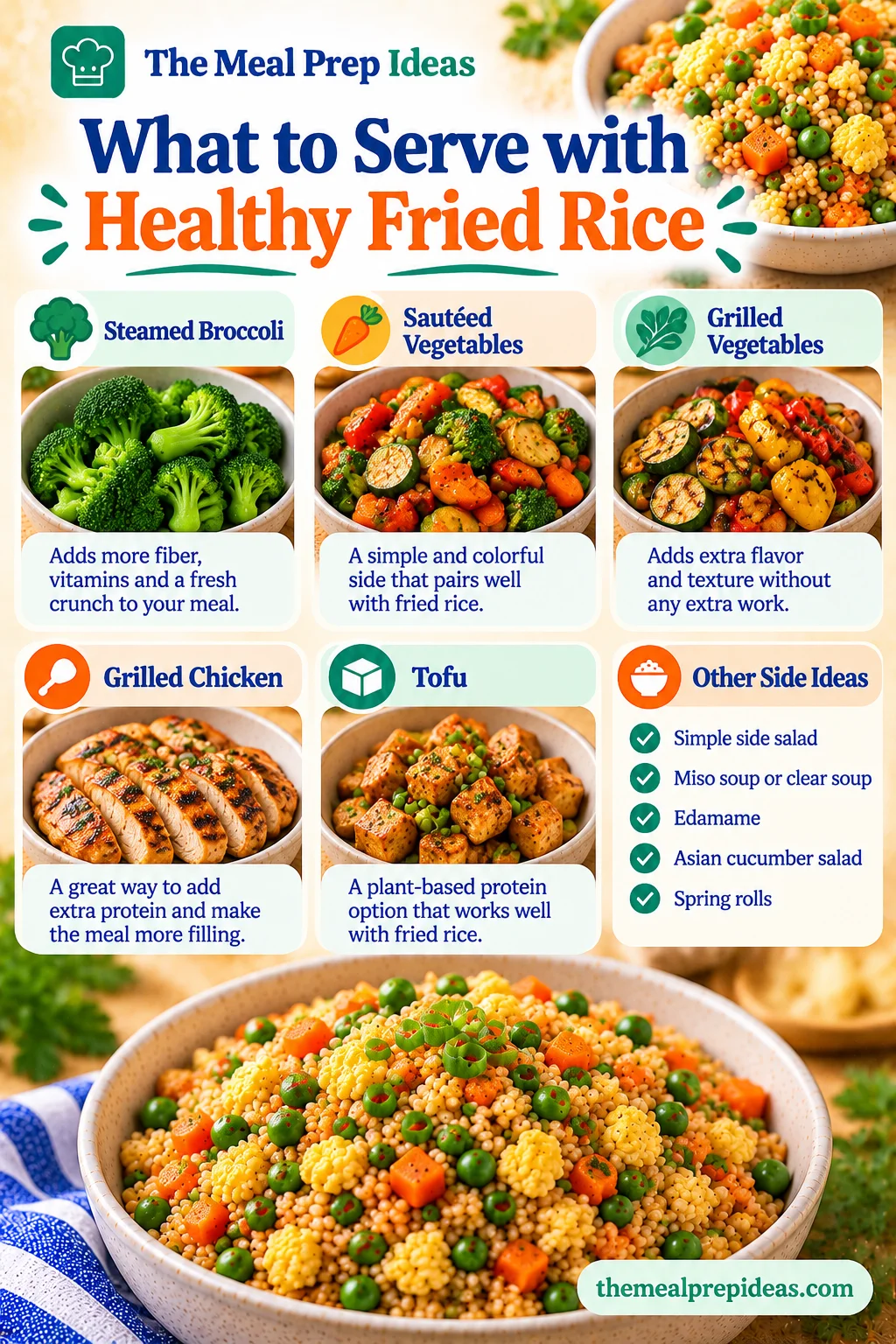
This fried rice can be a meal on its own when you include enough vegetables and protein. If you want to round it out, serve it with steamed broccoli, sautéed vegetables, or a side of grilled vegetables. These add more color and texture without making the meal complicated.
For extra protein, pair it with grilled chicken or tofu. You can also serve a smaller portion alongside your favorite vegetable dish for a simple family dinner. With a few easy sides, it becomes a flexible option for a quick weeknight dinner or a balanced lunch. For another easy weeknight meal with vegetables and protein, try Chicken Stir Fry, which pairs tender chicken with a flavorful combination of vegetables.
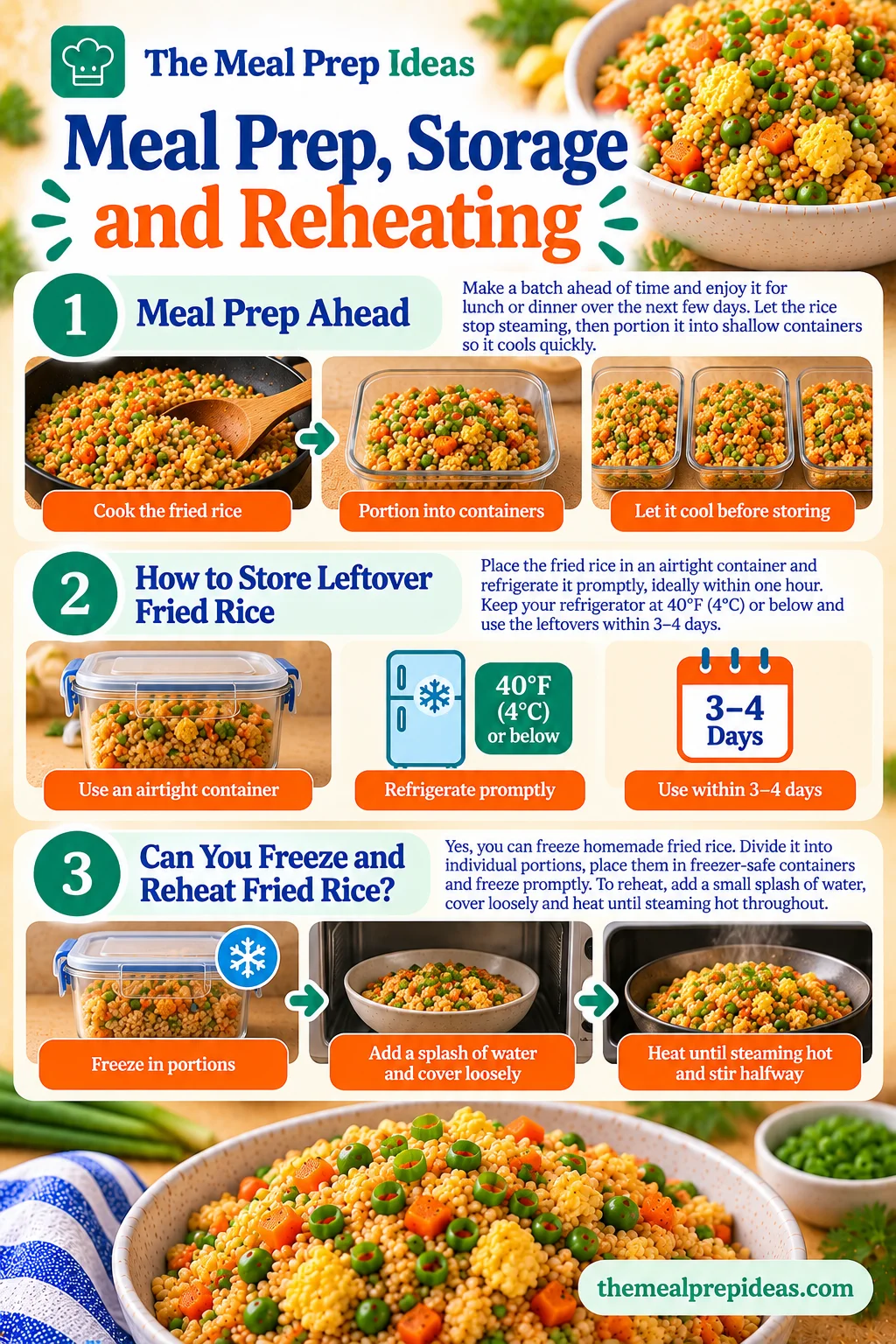
This recipe is great for meal prep because you can make a batch ahead of time and enjoy it for lunch or dinner over the next few days. Let the rice stop steaming, then portion it into shallow containers so it cools quickly. Don't leave cooked rice sitting at room temperature for a long time.
To store homemade fried rice, place it in an airtight container and refrigerate it promptly, ideally within one hour. Keep your refrigerator at 40°F (4°C) or below and use the leftovers within 3–4 days. This makes fried rice a handy option for a quick meal prep lunch.
Yes, you can freeze homemade healthy fried rice. Divide it into individual portions, place them in freezer-safe containers and freeze promptly. Thaw it in the refrigerator or reheat it directly from frozen if suitable. To reheat fried rice without drying it out, add a small splash of water, cover loosely and heat until steaming hot throughout. Stir halfway through so the rice heats evenly. These simple steps help keep your healthy leftover rice recipe tasty and ready for another meal.
Both brown rice and white rice work well for fried rice. Brown rice is a whole-grain option with more fiber, while white rice has a softer texture. Jasmine and basmati rice are also good choices. For the best results, use cooked and cooled rice with separate grains, as this helps prevent the dish from becoming mushy.
Yes, you can use freshly cooked rice. Spread it in a thin layer so excess steam can escape, then cool it quickly and refrigerate it promptly before frying. Avoid leaving cooked rice at room temperature for too long. Properly cooled rice is less likely to clump together in the pan.
Yes! Frozen vegetables are a convenient choice for healthy vegetable fried rice. Peas and carrots work especially well because they save preparation time. Add them to the hot pan and cook until heated through, allowing extra moisture to evaporate before adding the rice. This helps keep the finished dish from becoming watery.
Use reduced-sodium soy sauce and measure the amount you add. You can also use less sauce and build flavor with garlic, ginger and green onions. Taste the rice before adding extra salt, since soy sauce already contains sodium. These small changes help you make flavorful fried rice with less sodium.
Absolutely! Add cooked chicken breast for a lean protein option or tofu for a plant-based alternative. Both work well in a high-protein fried rice recipe. Cut the protein into bite-sized pieces and make sure it is fully cooked before mixing it with the rice and vegetables.
Homemade fried rice can generally be kept in the refrigerator for 3–4 days when stored safely. Transfer it to a shallow, airtight container and refrigerate it promptly, ideally within one hour of cooking. Keep your refrigerator at 40°F (4°C) or below and reheat leftovers until steaming hot throughout.
Make this easy Healthy Fried Rice with rice, eggs, fresh vegetables, and savory sauce for a quick, flavorful meal perfect for busy weeknights.
the mealGood to know
Made this recipe?
Tag @themealprepideas on Instagram — we love seeing what you made.
Be the first to rate, review, or ask a question about this recipe.
No comments yet
Be the first cook to share feedback or ask a question about this recipe!
Keep Cooking
Make easy Peanut Chicken Wraps with tender chicken, creamy peanut sauce, and crunchy vegetables. Ready in 15 minutes for a tasty lunch!

Make Mediterranean Chopped Salad With Chicken with juicy chicken, fresh vegetables, feta, Kalamata olives, and tangy homemade dressing. Ready in 30 minutes!

Make this High-Protein Tuna & Chickpea Salad with tender tuna, creamy chickpeas, fresh vegetables, and lemon dressing for an easy, no-cook lunch.
Join 50,000+ subscribers getting weekly meal prep ideas, shopping lists, and time-saving tips straight to their inbox.