Meal Prep Ideas
Back to Home Page

Blue Zones Soup

Make this easy Blue Zones Soup with beans, fresh vegetables, leafy greens, and herbs. A hearty, plant-based soup perfect for meal prep.

Colorful vegetables simmering in broth in a large pot on the stovetop.

Get This Recipe Summarized by AI

Ask your favorite AI assistant to summarize this recipe, suggest swaps, or scale it up — one click away.

We copy the prompt to your clipboard too — just paste (Ctrl/Cmd+V) if it doesn't appear automatically.

Blue Zones Soup is a hearty, plant-based soup made with beans, fresh vegetables, leafy greens, herbs and flavorful vegetable broth. Inspired by traditional plant-forward eating patterns associated with the world's Blue Zones, this comforting recipe brings a variety of wholesome ingredients together in one pot.

This easy Blue Zones Soup recipe uses affordable pantry staples and fresh produce to create a satisfying, plant-based meal for lunch, dinner, or weekly meal prep.  Cannellini beans and chickpeas provide plant-based protein and fiber, while carrots, celery, zucchini, cabbage and leafy greens add flavor and texture. A little lemon juice brightens the broth and brings all the ingredients together.

The recipe takes about 55 minutes from start to finish and can be customized with different beans, vegetables, or grains. Serve it with whole-grain bread for a comforting meal that is easy to prepare ahead of time.

Why You’ll Love This Blue Zones Soup

  • Plant-based ingredients: Beans, vegetables, herbs and vegetable broth make this a satisfying meat-free meal.
  • Rich in fiber: Cannellini beans, chickpeas and vegetables contribute dietary fiber.
  • Budget-friendly: Canned beans and everyday vegetables make the recipe practical for regular cooking.
  • Simple preparation: Most of the cooking happens in one pot, making cleanup easier.
  • Easy to customize: Use seasonal vegetables, alternative beans, or your favorite grains.
  • Great for meal prep: This Blue Zones Soup is easy to prepare in advance and divide into individual portions for future meals.
  • Comforting and filling: Tender beans and vegetables create a hearty texture without needing cream.
  • Fresh finishing flavor: Lemon juice and fresh parsley brighten the soup just before serving.

If you enjoy hearty, vegetable-packed soups, try our Healthy Minestrone Soup for another comforting meal made with wholesome ingredients.
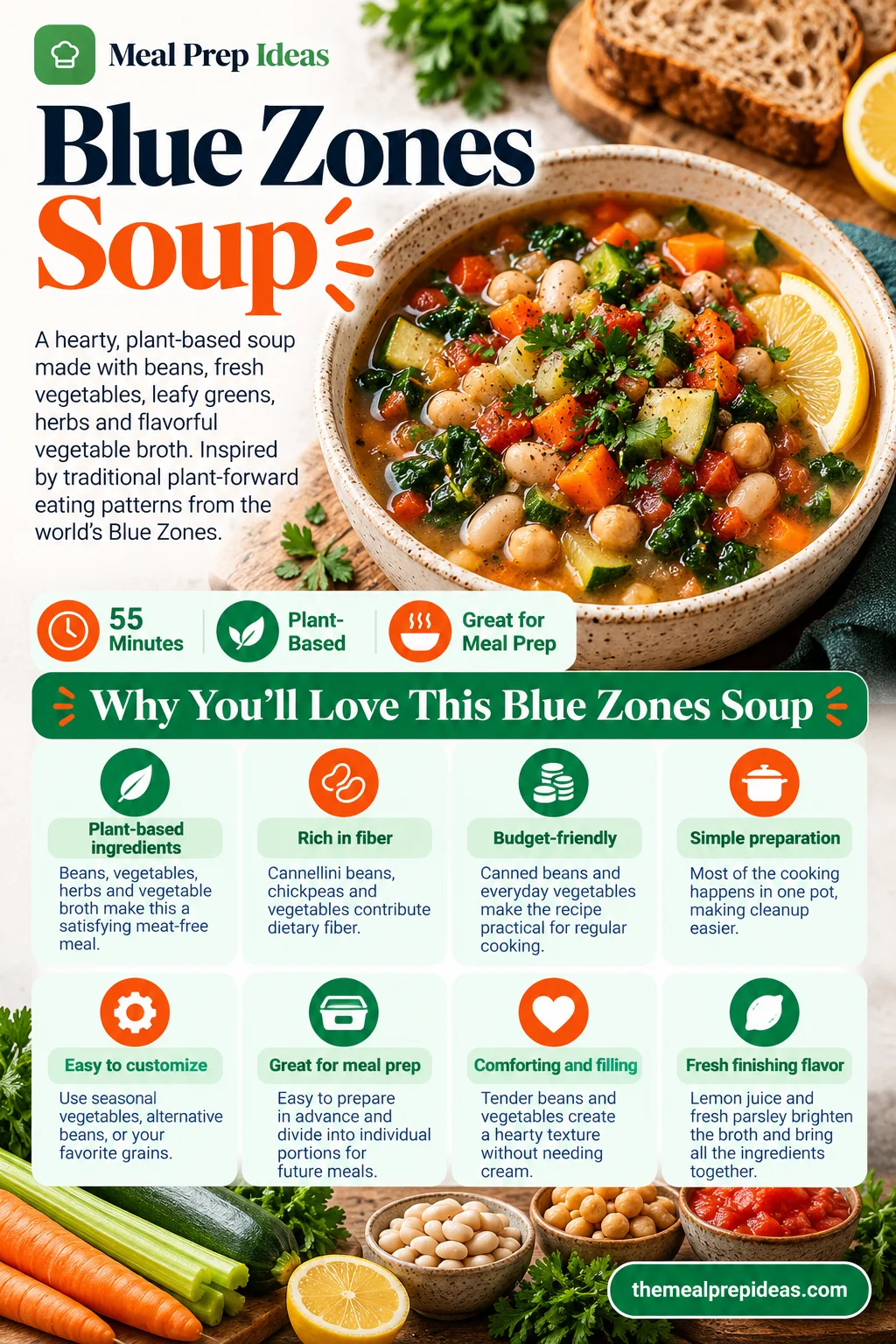
Blue Zones Soup with beans, colorful vegetables, leafy greens, and fresh herbs in a comforting vegetable broth.

Blue Zones Soup Recipe

Time

  • Prep Time: 15 minutes
  • Cook Time: 40 minutes
  • Total Time: 55 minutes
  • Servings: 6

Ingredients

  • 1 tablespoon olive oil
  • 1 medium yellow onion, finely chopped
  • 2 medium carrots, peeled and diced
  • 2 celery stalks, finely chopped
  • 3 garlic cloves, minced
  • 1 teaspoon dried oregano
  • 1 teaspoon dried thyme
  • 1 teaspoon ground cumin
  • 1 tablespoon tomato paste
  • 1 medium zucchini, diced
  • 1 cup chopped green cabbage
  • 1 can (15 ounces / 425 g) cannellini beans, drained and rinsed
  • 1 can (15 ounces / 425 g) chickpeas, drained and rinsed
  • 1 can (14.5 ounces / 411 g) diced tomatoes, with juices
  • 6 cups (1.4 liters) low-sodium vegetable broth
  • ½ cup (90 g) dry small pasta or pearled barley, optional
  • 2 cups fresh baby spinach or chopped kale
  • ½ teaspoon salt, or to taste
  • ¼ teaspoon freshly ground black pepper
  • 1 tablespoon fresh lemon juice
  • 2 tablespoons chopped fresh parsley
  • Extra-virgin olive oil, for serving, optional

Instructions

  1. 1Prepare the vegetables: Wash the fresh produce. Chop the onion, carrots, celery, zucchini and cabbage. Mince the garlic and prepare the spinach or kale. Drain and rinse the canned cannellini beans and chickpeas.
  2. 2Sauté the vegetables: Heat the olive oil in a large soup pot over medium heat. Add the onion, carrots and celery. Cook for 5–7 minutes, stirring occasionally, until the vegetables begin to soften.
  3. 3Add garlic and seasonings: Stir in the minced garlic, oregano, thyme, cumin and tomato paste. Cook for about 1 minute until fragrant.
  4. 4Add the beans and vegetables: Add the zucchini, cabbage, cannellini beans, chickpeas and diced tomatoes with their juices. Stir gently to combine.
  5. 5Pour in the broth: Add the vegetable broth and mix well. Bring the soup to a gentle boil over medium-high heat.
  6. 6Simmer: Reduce the heat to low, partially cover the pot and simmer for 20–25 minutes. Stir occasionally until the vegetables are tender and the flavors have blended.
  7. 7Add pasta or barley, if using: Stir dry pasta into the simmering soup and cook according to the package instructions. Pearled barley may need additional cooking time, so follow its package directions and add more broth if necessary.
  8. 8Add the leafy greens: Stir in the spinach or kale during the final 3–5 minutes of cooking. Let the greens wilt and soften.
  9. 9Season and finish: Add the salt and black pepper to taste. Stir in the lemon juice and chopped parsley. Taste the broth and adjust the seasonings as needed.
  10. 10Serve: Ladle the soup into bowls. Finish with fresh herbs or a small drizzle of extra-virgin olive oil, if desired. Serve warm with whole-grain bread.

Notes

  • Use canned beans for convenience: Canned cannellini beans and chickpeas reduce preparation time. Drain and rinse them before adding them to the pot.
  • Choose low-sodium broth: This makes it easier to control the salt level.
  • Adjust the consistency: Beans and grains absorb liquid during cooking. Add extra broth or water if the soup becomes too thick.
  • Cook grains separately for leftovers: Pasta and barley can continue absorbing broth during storage. Cooking them separately helps maintain the soup's texture.
  • Use seasonal vegetables: Customize your Blue Zones Soup with zucchini, cabbage, spinach, or other vegetables you already have available.
  • Add lemon at the end: Fresh lemon juice brightens the broth and balances the earthy flavors.
  • Prepare dried beans properly: If using dried beans instead of canned, cook them separately until tender before adding them to the soup. Cooking times depend on the variety.
  • Check the nutrition estimate: Actual nutritional values vary according to ingredient brands, optional grains and serving sizes.

Nutrition

Each serving contains approximately:

  • Calories: 290 kcal
  • Protein: 15 g
  • Carbohydrates: 48 g
  • Fat: 6 g
  • Fiber: 12 g
  • Sugar: 9 g
  • Sodium: 620 mg
  • Iron: 4 mg

These are estimated values per serving, based on six servings and including the optional dry pasta or pearled barley. Optional toppings and bread served on the side are not included. Actual values may vary depending on the ingredients and vegetable broth used.

Dietary

  • Vegan: The soup is naturally vegan when prepared with vegetable broth and plant-based toppings.
  • Vegetarian: The recipe is vegetarian as written, provided the broth and additional toppings contain no animal-derived ingredients.
  • Dairy-free: No milk, butter, cheese, or cream is required.
  • Gluten-free: Omit the pasta or use a gluten-free alternative. Check the labels on broth, canned ingredients and seasonings.
  • Oil-free option: Replace the olive oil with a little vegetable broth or water when sautéing the vegetables. Add more as needed to prevent sticking.
  • Higher-protein option: Add extra beans, lentils, or cooked tofu to increase the plant-based protein content.
  • Lower-sodium option: Use no-salt-added canned beans and tomatoes, choose low-sodium broth and adjust the salt gradually.

How to Make Blue Zones Soup

1. Prepare the Vegetables

Wash the fresh vegetables under cool running water. Peel and finely chop the onion, peel and dice the carrots and cut the celery into small pieces. Mince the garlic and cut the zucchini into bite-sized cubes.

Slice the cabbage into thin strips and roughly chop the spinach or kale. Drain and rinse the canned cannellini beans and chickpeas under cool running water to remove excess packing liquid and some of the added sodium. Preparing everything before you begin cooking makes the process easier and helps you add each ingredient at the right time.

2. Sauté the Aromatics

Place a large soup pot or Dutch oven over medium heat and add the olive oil. Once the oil is warm, add the chopped onion, carrots and celery. Cook for 5–7 minutes, stirring occasionally, until the onion becomes translucent and the carrots and celery begin to soften. Add the minced garlic, dried oregano, thyme, ground cumin and tomato paste. Stir continuously for about 1 minute to release the aroma of the garlic and herbs. Briefly cooking the tomato paste also deepens the flavor of the soup base.

3. Add the Beans and Vegetables

Add the diced zucchini, chopped cabbage, drained cannellini beans, chickpeas and canned diced tomatoes. Stir gently to distribute the ingredients throughout the pot.

The combination of beans and vegetables gives the soup a hearty texture and a variety of flavors. If you use fresh tomatoes instead of canned ones, you may need a little extra broth to maintain the desired consistency.

4. Pour in the Vegetable Broth

Pour the vegetable broth into the pot and stir well. Use a wooden spoon to gently scrape the bottom of the pot and release any flavorful bits left from sautéing the vegetables and herbs.

Bring the mixture to a gentle boil over medium-high heat. Once it starts boiling, reduce the heat to low to maintain a steady simmer.
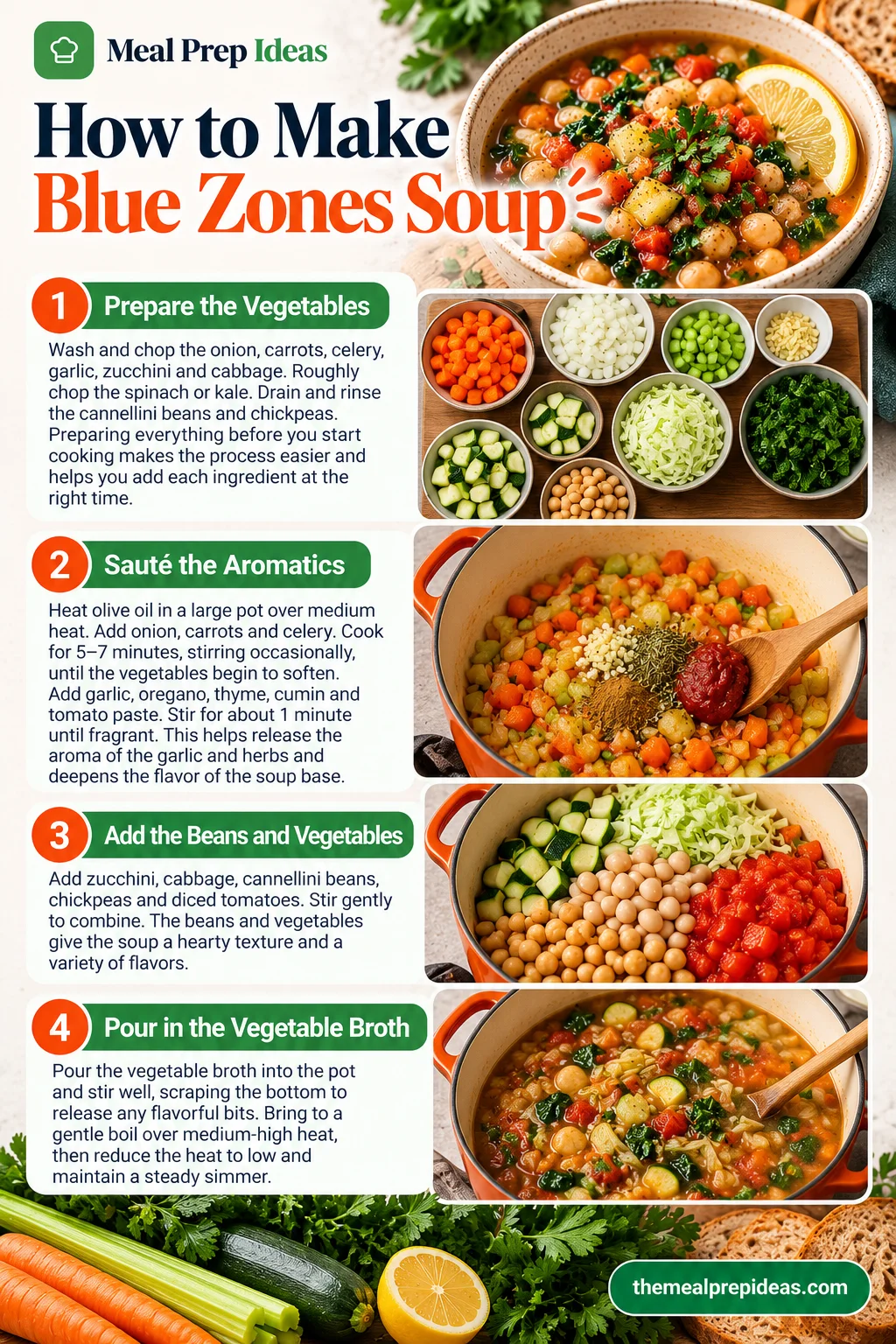
Blue Zones Soup vegetables and beans simmering together in a pot with flavorful broth and herbs.

5. Simmer Until the Ingredients Are Tender

Partially cover the pot with a lid and simmer for 20–25 minutes, stirring occasionally. This allows the carrots, celery, zucchini and cabbage to soften while the beans absorb the flavors of the broth and seasonings.

If you are adding dry pasta, stir it into the soup and cook according to the package instructions. If using pearled barley, follow the package cooking directions and allow additional time until tender. Add more broth or water if the grains absorb too much liquid. Check the vegetables before moving to the next step. They should be tender but should not be completely mushy.

6. Add the Leafy Greens

Stir the spinach or kale into the pot during the final 3–5 minutes of cooking. Allow the greens to wilt and soften while retaining some of their color and texture.

If you are using kale with thick stems, remove the stems and chop the leaves before adding them. Spinach usually softens faster, so avoid cooking it longer than necessary.

7. Season and Finish the Soup

Add salt and freshly ground black pepper to taste. Stir in the fresh lemon juice and chopped parsley, then taste the broth and adjust the seasoning if needed.

If the soup is too thick, add a little warm vegetable broth or water. For a stronger herb flavor, add a small amount of extra parsley or dried oregano. Adding the lemon juice near the end helps preserve its fresh flavor and balances the savory beans and vegetables.

8. Serve and Enjoy

Remove the pot from the heat and allow the soup to rest for a minute or two. Ladle it into bowls, making sure each serving contains a good mix of beans, vegetables and broth. Finish with chopped parsley, an extra squeeze of lemon, or a small drizzle of extra-virgin olive oil. Serve warm with whole-grain bread, toasted sourdough, or a simple green salad.
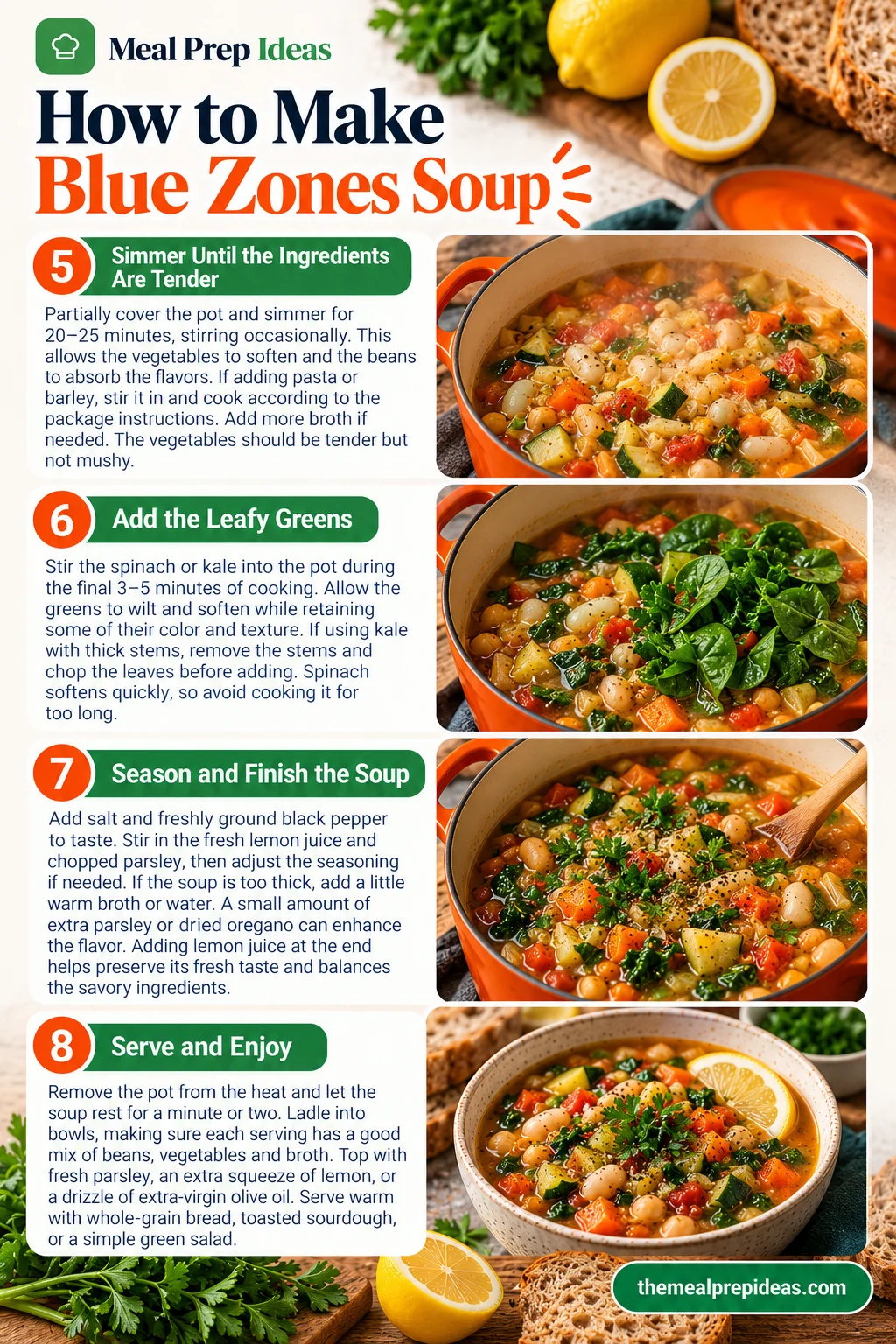
Chopped vegetables, beans, and leafy greens prepared for a hearty homemade soup.

Blue Zones Soup Variations

Bean and Legume Options

Beans and legumes are common ingredients in many traditional plant-forward eating patterns. You can use different varieties to change the flavor and texture of the soup.

  • Cannellini beans: These mild, creamy white beans become tender and pair well with vegetables and broth.
  • Chickpeas: Chickpeas have a slightly nutty flavor and hold their shape during cooking.
  • Kidney beans: These beans provide a firmer texture and a rich, earthy taste.
  • Black beans: Black beans create a heartier variation and work well with cumin, tomatoes and leafy greens.
  • Lentils: Brown or green lentils add texture and plant-based protein. Adjust the cooking time to ensure they become tender.
  • Navy beans: Small white navy beans soften easily and work well in vegetable soups.

You can replace one or both bean varieties with your preferred alternatives to customize the flavor and texture of your Blue Zones Soup. If using dried beans, cook them separately until fully tender before adding them to the soup.

Vegetable Choices

This recipe works with a variety of fresh, frozen, or seasonal vegetables.

  • Sweet potatoes: Add peeled and diced sweet potatoes for a slightly sweet flavor and a heartier texture.
  • Bell peppers: Chopped red, yellow, or green bell peppers add color and mild sweetness.
  • Green beans: Add trimmed green beans during simmering for extra texture.
  • Mushrooms: Sliced mushrooms contribute a savory flavor that pairs well with the herbs.
  • Cauliflower: Small cauliflower florets make the soup more substantial and absorb the broth's flavor.
  • Broccoli: Add broccoli florets during the final 10–12 minutes of cooking so they become tender without turning mushy.
  • Swiss chard: Replace spinach or kale with chopped Swiss chard for a different leafy-green option.

For the best texture, consider how long each vegetable takes to cook. Add firmer vegetables earlier and delicate greens near the end.

Grain Options

Adding grains can make the soup more filling and provide additional texture.

  • Pearled barley: Barley has a pleasantly chewy texture and works particularly well in bean-based soups.
  • Brown rice: Stir in cooked brown rice near the end to make the soup heartier.
  • Quinoa: Rinsed quinoa cooks relatively quickly and adds a light, slightly nutty flavor.
  • Farro: Farro provides a chewy texture and rich, nutty taste. Cook it according to the package instructions.
  • Whole-grain pasta: Small pasta shapes are easy to eat with a spoon and make the soup especially satisfying.
  • Oats: A small amount of rolled oats can thicken the broth, although they create a softer texture.

If you plan to refrigerate or freeze leftovers, consider cooking grains separately and adding them to individual servings. This helps prevent them from absorbing most of the broth during storage.

Herb and Seasoning Ideas

You can change the flavor profile without changing the basic cooking method.

  • Mediterranean-inspired: Use extra oregano, thyme, parsley and lemon juice for a fresh, herbaceous flavor.
  • Smoky: Add a little smoked paprika to complement the beans and tomatoes.
  • Warm and earthy: Increase the cumin slightly and add a pinch of coriander.
  • Garlic-forward: Add another clove of garlic for a stronger savory flavor.
  • Spicy: Stir in a pinch of chili flakes or cayenne pepper for gentle heat.
  • Fresh herb finish: Garnish with fresh basil, parsley, cilantro, or dill.
  • Bay leaf: Add one dried bay leaf during simmering and remove it before serving.

Adjust the seasonings gradually and taste the soup before adding more salt or spices. For another budget-friendly, plant-based meal, try our Easy Lentil Soup, which is ideal for make-ahead lunches and simple weeknight dinners.
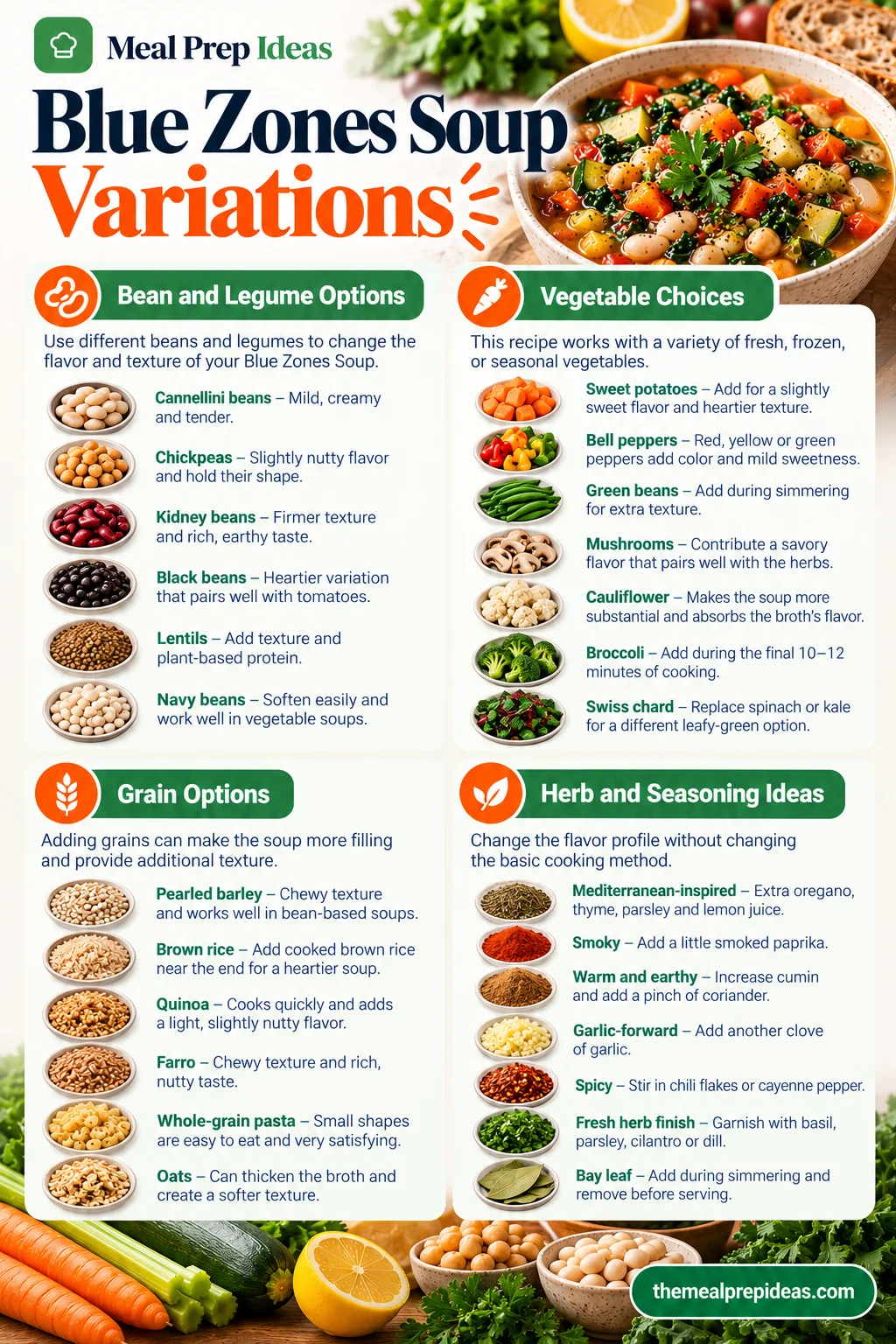
Different beans, seasonal vegetables, grains, herbs, and seasonings for customizing the soup.

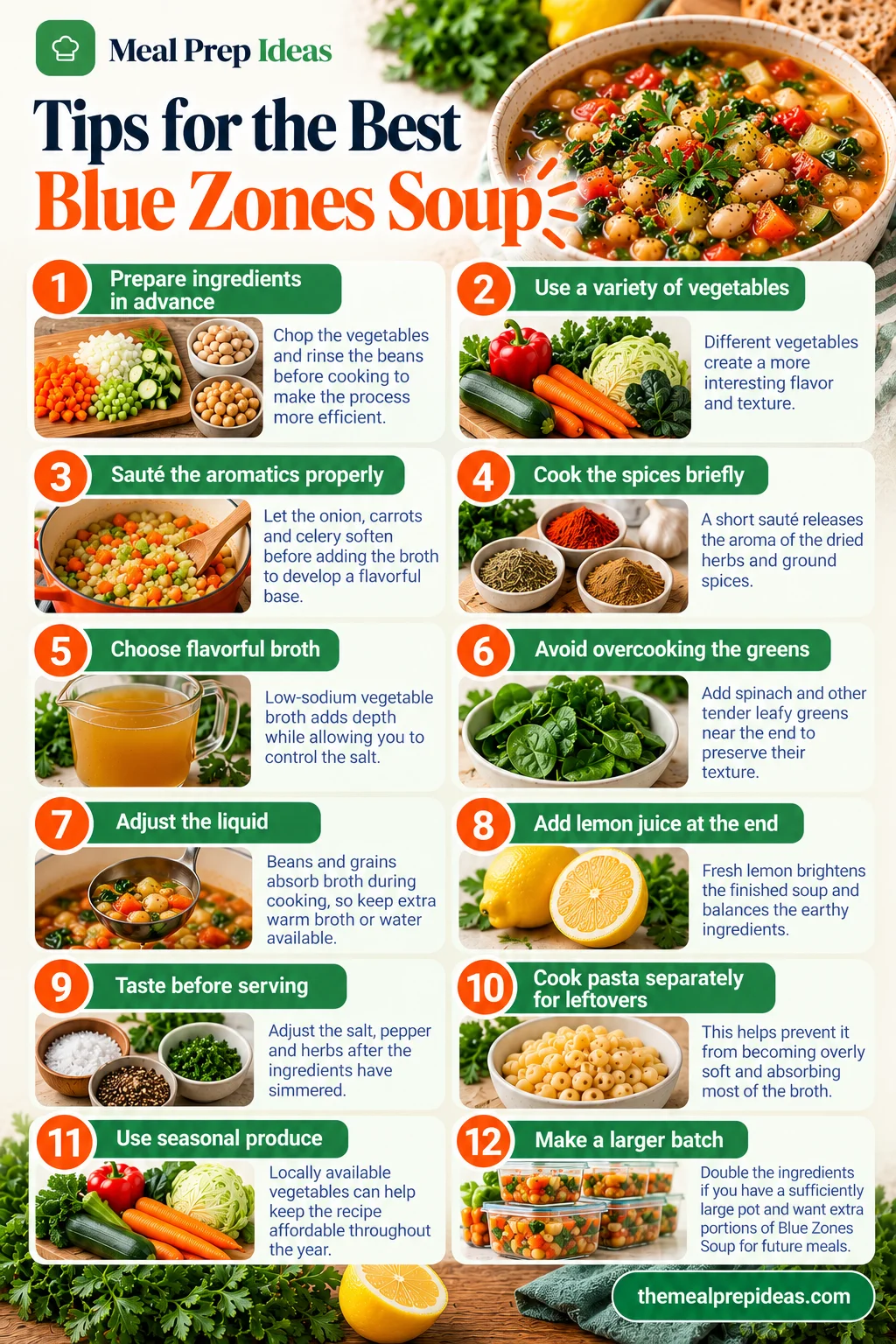
Tips for the Best Blue Zones Soup

  • Prepare ingredients in advance: Chop the vegetables and rinse the beans before cooking to make the process more efficient.
  • Use a variety of vegetables: Different vegetables create a more interesting flavor and texture.
  • Sauté the aromatics properly: Let the onion, carrots and celery soften before adding the broth to develop a flavorful base.
  • Cook the spices briefly: A short sauté releases the aroma of the dried herbs and ground spices.
  • Choose flavorful broth: Low-sodium vegetable broth adds depth while allowing you to control the salt.
  • Avoid overcooking the greens: Add spinach and other tender leafy greens near the end to preserve their texture.
  • Adjust the liquid: Beans and grains absorb broth during cooking, so keep extra warm broth or water available.
  • Add lemon juice at the end: Fresh lemon brightens the finished soup and balances the earthy ingredients.
  • Taste before serving: Adjust the salt, pepper and herbs after the ingredients have simmered.
  • Cook pasta separately for leftovers: This helps prevent it from becoming overly soft and absorbing most of the broth.
  • Use seasonal produce: Locally available vegetables can help keep the recipe affordable throughout the year.
  • Make a larger batch: Double the ingredients if you have a sufficiently large pot and want extra portions of Blue Zones Soup for future meals.
Fresh vegetables, lemon, herbs, vegetable broth, and preparation tips for a flavorful soup.

How to Store Blue Zones Soup

Refrigeration

Allow the soup to cool slightly and transfer it into shallow, airtight containers. Refrigerate it promptly within 2 hours of cooking, or within 1 hour if the surrounding temperature is above 90°F (32°C).

Store the soup in a refrigerator set to 40°F (4°C) or below and use it within 3–4 days. Dividing it into individual portions makes serving and reheating more convenient.

If the soup contains pasta or grains, they may absorb broth as they sit. Add a little vegetable broth or water during reheating to restore the consistency.

Freezing

This soup can be frozen for convenient future meals. Allow it to cool, then transfer it to freezer-safe containers or resealable freezer bags. Leave some space at the top of rigid containers to allow for expansion.

Label the containers with the date and freeze at 0°F (-18°C). For the best quality, use the frozen soup within 2–3 months.

If you plan to freeze the soup, consider leaving out the pasta or delicate grains and adding them fresh when serving. Thaw frozen soup in the refrigerator overnight, when possible, then reheat thoroughly.

Reheating Tips

Reheat refrigerated or thawed soup in a saucepan over medium-low heat, stirring occasionally until it is steaming hot throughout. Add a splash of vegetable broth or water if the soup has thickened during storage.

For individual portions, transfer the soup to a microwave-safe bowl and cover it loosely. Heat in short intervals, stirring between each interval to distribute the heat evenly.

Reheat leftovers to an internal temperature of 165°F (74°C). Only reheat the portion you plan to eat and avoid repeatedly cooling and reheating the entire batch. If you want another satisfying plant-based meal for your weekly meal plan, try our Easy Black Bean Chili, made with beans, tomatoes and warming spices.
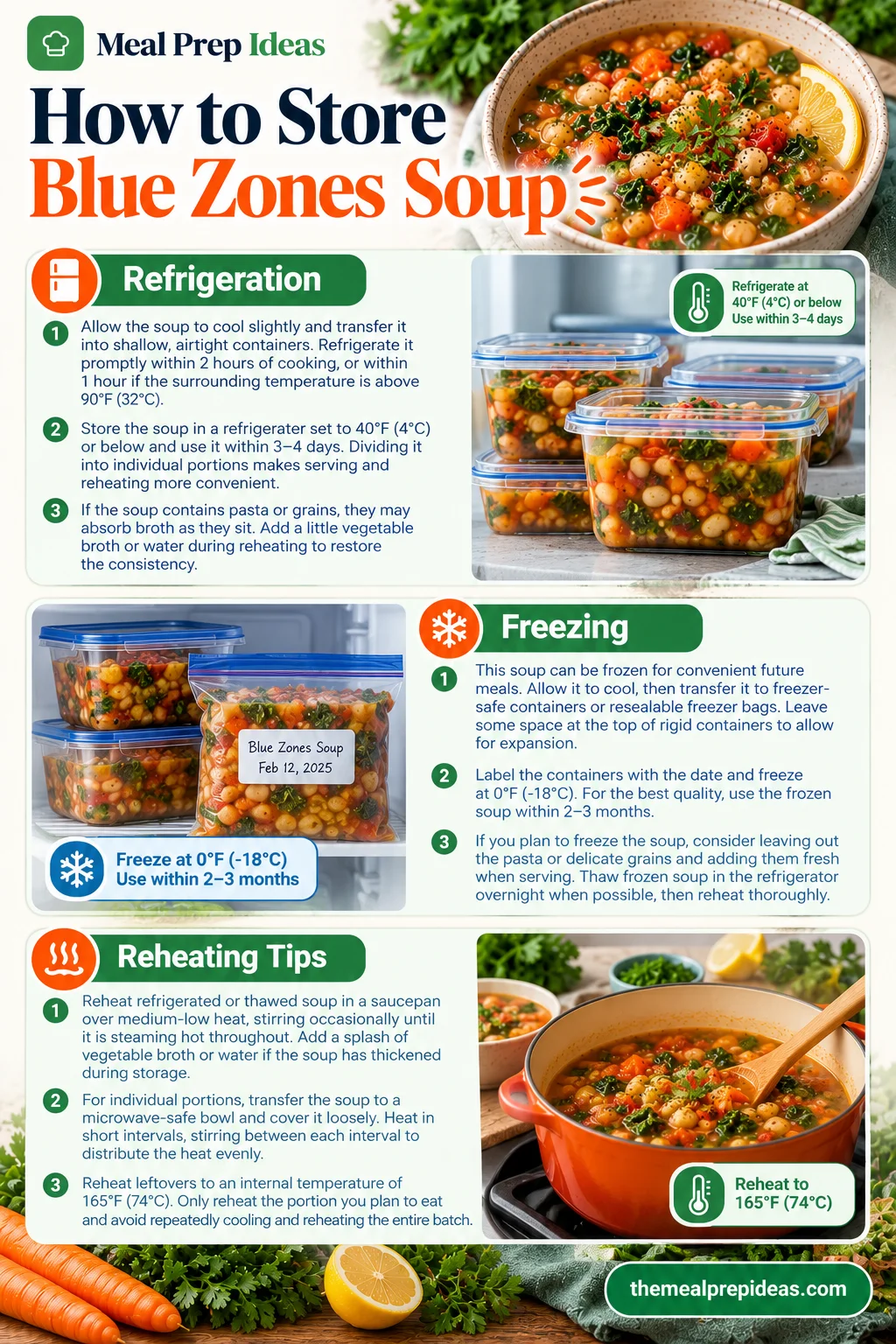
Fresh vegetables, lemon, herbs, vegetable broth, and preparation tips for a flavorful soup.

Frequently Asked Questions

What Ingredients Are Common in Blue Zones Soup?

Blue Zones-inspired soups commonly feature beans, lentils, vegetables, leafy greens, herbs and broth. Cannellini beans, chickpeas, onions, carrots, celery, tomatoes, cabbage, spinach and whole grains are practical options for making a hearty plant-based soup. There is no single official recipe, so ingredients can vary according to regional food traditions, seasonal produce and personal preferences.

Can I Use Different Beans in This Soup?

Yes, you can use different beans depending on your preferred flavor and texture. Cannellini beans, chickpeas, kidney beans, black beans and navy beans can all work well. Canned beans are convenient, while dried beans can also be used if they are cooked separately until tender. Rinse canned beans before adding them to help remove excess packing liquid and some sodium.

Can I Add More Vegetables?

Yes, this soup is easy to customize with additional vegetables. Sweet potatoes, bell peppers, green beans, mushrooms, cauliflower, broccoli and Swiss chard are all suitable options. Add firm vegetables earlier so they have enough time to soften and add delicate greens such as spinach near the end. If you increase the number of vegetables, you may need extra broth to maintain the consistency.

Is Blue Zones Soup a Good Make-Ahead Meal? 

Yes, Blue Zones Soup is convenient for meal prep because you can prepare a large batch and divide it into individual portions. Beans and vegetables make it a hearty option for lunch or dinner. Store portions in airtight containers in the refrigerator or freeze them for longer storage. If you include pasta or grains, storing them separately can help maintain their texture.

How Long Can I Keep This Soup in the Refrigerator?

The soup generally keeps for 3–4 days in an airtight container in a refrigerator set to 40°F (4°C) or below. Refrigerate it within 2 hours of cooking, or within 1 hour when the surrounding temperature is above 90°F (32°C). Reheat only the amount you need to 165°F (74°C) before serving. For longer storage, freeze individual portions and use them within 2–3 months for the best quality.

No ratings yet

Blue Zones Soup

Make this easy Blue Zones Soup with beans, fresh vegetables, leafy greens, and herbs. A hearty, plant-based soup perfect for meal prep.

Colorful vegetables simmering in broth in a large pot on the stovetop.the meal
prep ideas
15 minPrep
40 minCook
55 minTotal
Makes 6Servings
Print recipe

Ingredients

0 of 22 gathered

How to prepare

  1. 1Prepare the vegetables: Wash the fresh produce. Chop the onion, carrots, celery, zucchini and cabbage. Mince the garlic and prepare the spinach or kale. Drain and rinse the canned cannellini beans and chickpeas.
  2. 2Sauté the vegetables: Heat the olive oil in a large soup pot over medium heat. Add the onion, carrots and celery. Cook for 5–7 minutes, stirring occasionally, until the vegetables begin to soften.
  3. 3Add garlic and seasonings: Stir in the minced garlic, oregano, thyme, cumin and tomato paste. Cook for about 1 minute until fragrant.
  4. 4Add the beans and vegetables: Add the zucchini, cabbage, cannellini beans, chickpeas and diced tomatoes with their juices. Stir gently to combine.
  5. 5Pour in the broth: Add the vegetable broth and mix well. Bring the soup to a gentle boil over medium-high heat.
  6. 6Simmer: Reduce the heat to low, partially cover the pot and simmer for 20–25 minutes. Stir occasionally until the vegetables are tender and the flavors have blended.
  7. 7Add pasta or barley, if using: Stir dry pasta into the simmering soup and cook according to the package instructions. Pearled barley may need additional cooking time, so follow its package directions and add more broth if necessary.
  8. 8Add the leafy greens: Stir in the spinach or kale during the final 3–5 minutes of cooking. Let the greens wilt and soften.
  9. 9Season and finish: Add the salt and black pepper to taste. Stir in the lemon juice and chopped parsley. Taste the broth and adjust the seasonings as needed.
  10. 10Serve: Ladle the soup into bowls. Finish with fresh herbs or a small drizzle of extra-virgin olive oil, if desired. Serve warm with whole-grain bread.

Good to know

  • Use canned beans for convenience: Canned cannellini beans and chickpeas reduce preparation time. Drain and rinse them before adding them to the pot.
  • Choose low-sodium broth: This makes it easier to control the salt level.
  • Adjust the consistency: Beans and grains absorb liquid during cooking. Add extra broth or water if the soup becomes too thick.
  • Cook grains separately for leftovers: Pasta and barley can continue absorbing broth during storage. Cooking them separately helps maintain the soup's texture.
  • Use seasonal vegetables: Customize your Blue Zones Soup with zucchini, cabbage, spinach, or other vegetables you already have available.
  • Add lemon at the end: Fresh lemon juice brightens the broth and balances the earthy flavors.
  • Prepare dried beans properly: If using dried beans instead of canned, cook them separately until tender before adding them to the soup. Cooking times depend on the variety.
  • Check the nutrition estimate: Actual nutritional values vary according to ingredient brands, optional grains and serving sizes.
  • Beans and legumes are common ingredients in many traditional plant-forward eating patterns. You can use different varieties to change the flavor and texture of the soup.
  • You can replace one or both bean varieties with your preferred alternatives to customize the flavor and texture of your Blue Zones Soup. If using dried beans, cook them separately until fully tender before adding them to the soup.
  • This recipe works with a variety of fresh, frozen, or seasonal vegetables.
  • For the best texture, consider how long each vegetable takes to cook. Add firmer vegetables earlier and delicate greens near the end.
  • Adding grains can make the soup more filling and provide additional texture.
  • If you plan to refrigerate or freeze leftovers, consider cooking grains separately and adding them to individual servings. This helps prevent them from absorbing most of the broth during storage.
  • You can change the flavor profile without changing the basic cooking method.
  • Adjust the seasonings gradually and taste the soup before adding more salt or spices. For another budget-friendly, plant-based meal, try our Easy Lentil Soup, which is ideal for make-ahead lunches and simple weeknight dinners.
  • Allow the soup to cool slightly and transfer it into shallow, airtight containers. Refrigerate it promptly within 2 hours of cooking, or within 1 hour if the surrounding temperature is above 90°F (32°C).
  • Store the soup in a refrigerator set to 40°F (4°C) or below and use it within 3–4 days. Dividing it into individual portions makes serving and reheating more convenient.
  • If the soup contains pasta or grains, they may absorb broth as they sit. Add a little vegetable broth or water during reheating to restore the consistency.
  • This soup can be frozen for convenient future meals. Allow it to cool, then transfer it to freezer-safe containers or resealable freezer bags. Leave some space at the top of rigid containers to allow for expansion.
  • Label the containers with the date and freeze at 0°F (-18°C). For the best quality, use the frozen soup within 2–3 months.
  • If you plan to freeze the soup, consider leaving out the pasta or delicate grains and adding them fresh when serving. Thaw frozen soup in the refrigerator overnight, when possible, then reheat thoroughly.
  • Reheat refrigerated or thawed soup in a saucepan over medium-low heat, stirring occasionally until it is steaming hot throughout. Add a splash of vegetable broth or water if the soup has thickened during storage.
  • For individual portions, transfer the soup to a microwave-safe bowl and cover it loosely. Heat in short intervals, stirring between each interval to distribute the heat evenly.
  • Reheat leftovers to an internal temperature of 165°F (74°C). Only reheat the portion you plan to eat and avoid repeatedly cooling and reheating the entire batch. If you want another satisfying plant-based meal for your weekly meal plan, try our Easy Black Bean Chili, made with beans, tomatoes and warming spices.
VeganVegetarianDairy-freeGluten-freeOil-free optionHigher-protein optionLower-sodium option

Made this recipe?

Tag @themealprepideas on Instagram — we love seeing what you made.

Tag us

Reviews & Comments

Be the first to rate, review, or ask a question about this recipe.

No comments yet

Be the first cook to share feedback or ask a question about this recipe!

Leave a Review & Rating

Tap to rate

Comments are moderated for community safety. External links are filtered.

Keep Cooking

You Might Also Like

White Chicken Chili

5
White Chicken Chili

Make creamy White Chicken Chili with tender chicken, white beans, green chilies, and cream cheese. An easy one-pot meal perfect for dinner and meal prep!

15 min
Get Recipe

Red Lentil Soup With Lemon

Red Lentil Soup With Lemon

Make Red Lentil Soup with Lemon with tender lentils, fresh vegetables, warm spices, and bright lemon juice. An easy, comforting meal for lunch or dinner.

10 min
Get Recipe

Easy Lentil Soup

Easy Lentil Soup

Make this easy lentil soup with brown lentils, fresh vegetables, and savory herbs. A hearty one-pot meal perfect for meal prep!

15 min
Get Recipe

Get Your Free 7-Day Meal Prep Plan

Join 50,000+ subscribers getting weekly meal prep ideas, shopping lists, and time-saving tips straight to their inbox.

No spam. Unsubscribe anytime.